2027 Work Experience Requirements for Speech Pathology Degree Programs

Co-Founder and Chief Data Scientist

Reviewed by Rhea Paul, PhD
SLP Education & Research Expert
Speech pathology applicants often wonder whether they need paid clinical experience before applying, whether volunteer hours count, and how to document experience that does not fit a traditional full-time job. The answer depends on the degree level, program format, and whether the school is evaluating you for academic readiness, clinical readiness, research potential, or professional advancement.
At the undergraduate level, prior work experience is usually optional. At the master’s level, programs may admit students directly from college but still value observation, healthcare, education, or communication-disorders experience. Doctoral and professional programs often weigh experience more heavily, especially when applicants are expected to bring clinical judgment, leadership, or research maturity into the program.
The stakes are real: licensed speech pathologists earn a median annual wage of $97,870, and completing the right degree pathway can affect eligibility for advanced clinical roles, certification preparation, and long-term career mobility. This guide explains how speech pathology programs evaluate paid, unpaid, part-time, internship, co-op, online, international, clinical, and research experience so applicants can build a stronger, better-documented application.
Key Things to Know About Work Experience Requirements for Speech Pathology Degree Programs
- Work experience thresholds-ranging from 25 to over 400 clinical hours-vary widely by degree level, with doctoral programs generally requiring the most intensive clinical exposure.
- Admissions committees assess relevance, supervision quality, and setting type-paid, unpaid, or international experience often undergoes distinct evaluation protocols to ensure equivalence.
- Documentation demands include detailed logs and supervisor verification-accredited U.S. programs emphasize rigor in verifying clinical hours to align with ASHA certification standards.
What Are the Work Experience Requirements for Speech Pathology Degree Programs at the Undergraduate Level?
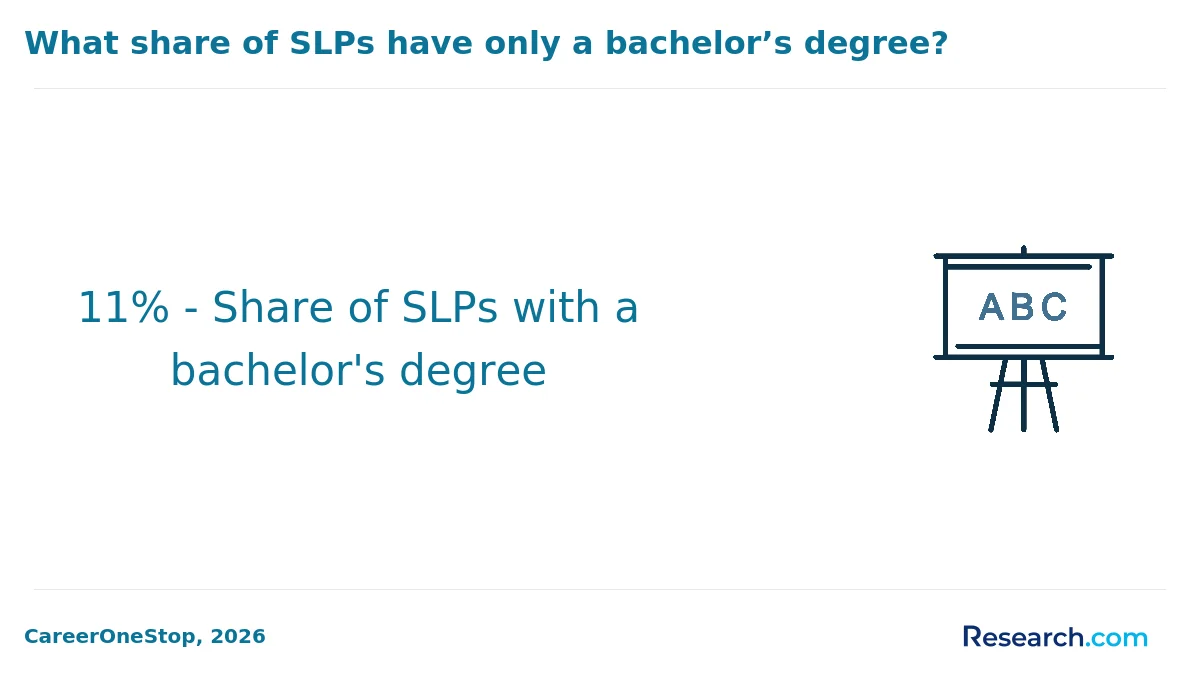
Most accredited undergraduate speech pathology programs do not require formal work experience for admission. These programs are designed to build academic foundations in communication sciences, anatomy and physiology, language development, hearing, phonetics, and introductory clinical concepts. For many applicants, especially students entering directly from high school, admissions committees focus more on academic preparation than on prior employment.
That does not mean experience is irrelevant. Volunteer work, job shadowing, tutoring, caregiving, special education support, or observation in a clinic can help an applicant show informed interest in the field. However, these experiences are usually treated as application strengths rather than mandatory prerequisites.
Undergraduate programs may also include internships, practicums, observation assignments, or service-learning projects after enrollment. These experiences are part of the curriculum and should not be confused with pre-admission work requirements. They help students test whether speech-language pathology is a good long-term fit before applying to graduate study.
| Applicant situation | How undergraduate programs usually view experience | Best strategy |
| High school applicant | Prior work experience is rarely expected. | Emphasize grades, communication skills, service, and early exposure to the field. |
| Transfer student | Relevant coursework and any observation or volunteer work may strengthen the file. | Document completed courses and explain any related healthcare or education experience. |
| Career changer | Prior work may help if it connects to communication, disability services, education, or healthcare. | Translate previous responsibilities into skills relevant to speech pathology. |
| International applicant | Experience may be considered, but schools may need clear descriptions of roles and settings. | Provide translated or well-explained documentation when possible. |
- Admission requirements: Most undergraduate programs do not require work experience, though observation or volunteer work can improve an application.
- Credit for experience: Some institutions award credit for supervised internships or practicums completed during the degree, not before admission.
- Undergraduate vs. graduate expectations: Undergraduate programs emphasize academic preparation, while graduate programs are more likely to evaluate clinical readiness and documented exposure.
- Relevant experience types: Volunteer, unpaid, observational, education-related, and disability-support roles can be useful, even when not required.
- Applicant takeaway: Choose programs with built-in field exposure if you want supervised experience without needing extensive work history before admission.
Students comparing allied health routes should note that a speech pathology bachelor’s pathway has different admissions expectations than short workforce programs such as an accelerated medical assistant program, where the training model and career outcomes differ substantially.
How Much Professional Experience Do Speech Pathology Graduate Programs Typically Require Before Admission?
Speech pathology graduate programs vary widely in how much experience they expect before admission. Many master’s programs accept applicants directly from undergraduate study, particularly if they have completed prerequisite coursework in communication sciences and disorders. Other programs prefer applicants who have spent time in healthcare, education, rehabilitation, research, or community-service settings.
The key distinction is between a formal requirement and a competitive advantage. A school may not require professional experience, but applicants with relevant exposure may write stronger personal statements, secure more informed recommendations, and demonstrate a clearer understanding of the profession.
- No experience required: Many traditional master’s programs admit students without mandatory work experience. These programs typically provide supervised clinical training during the curriculum.
- Two to three years recommended: Some programs advise applicants to have two to three years of relevant experience in healthcare, education, communication disorders, or related service settings. This may help applicants show maturity and readiness for intensive graduate training.
- Five years or more expected: Some elite doctoral and professional programs expect five years or more of prior professional experience, especially when the curriculum assumes advanced clinical judgment, leadership, or specialized practice knowledge.
Admissions committees also look beyond the number of years. They ask whether the applicant’s experience involved meaningful responsibility, exposure to clients or students, collaboration with licensed professionals, ethical judgment, and clear connection to communication or swallowing disorders. A part-time role in a highly relevant setting may be more persuasive than a full-time job with little connection to the field.
Applicants comparing graduate routes should read each school’s admissions page carefully and, when needed, ask whether paid work, volunteer service, observation hours, or international experience can satisfy the expectation. Cost and format also matter; students comparing flexible graduate options may want to review an online slp program alongside campus-based programs to understand how admissions, clinical placements, and experience verification differ.
Applicants who are still deciding between speech pathology and other healthcare careers can also compare related options, including nursing schools that do not require entrance exams, before committing to a graduate pathway.
What Types of Work Experience Are Considered Relevant for Admission Into Speech Pathology Programs?
Relevant experience is any role that helps demonstrate readiness for speech pathology study by connecting to communication, language, swallowing, hearing, disability support, clinical care, education, research, or patient services. Programs define relevance differently, so applicants should match their experience to each school’s stated priorities rather than assuming every role will be interpreted the same way.
- Clinical support roles: Work as a speech-language pathology aide, therapy assistant, rehabilitation support worker, or clinic assistant is often highly relevant because it places applicants near assessment, treatment, documentation, and client interaction.
- Related healthcare experience: Roles in audiology, occupational therapy, nursing, rehabilitation, behavioral health, or patient coordination can show familiarity with care teams, privacy expectations, and client-centered service.
- Education and disability support: Experience in special education, early intervention, tutoring, classroom assistance, autism support, developmental disability services, or literacy intervention can be valuable, especially for applicants interested in pediatric or school-based practice.
- Research experience: Work on studies involving communication sciences, language acquisition, neurogenic disorders, hearing, cognition, or evidence-based intervention may be especially useful for research-oriented master’s and doctoral programs.
- Observation and shadowing: Observation hours can show informed interest, but they are usually stronger when paired with reflection, coursework, or service experience.
- Administrative roles in relevant settings: Front-desk or scheduling work in a clinic is not automatically clinical experience, but it may still be relevant if the applicant learned about patient flow, documentation, insurance, referrals, or interprofessional communication.
- General customer service: Customer-facing jobs may demonstrate communication and professionalism, but applicants should not overstate them as speech pathology experience unless there is a clear connection to patient, student, disability, or healthcare support.
- International experience: Overseas roles can be valuable, but applicants should explain job titles, scope of practice, supervision, setting, population served, and how responsibilities compare with U.S. expectations.
A strong application does not simply list job titles. It explains what the applicant did, who they served, what skills they developed, and why the experience prepared them for graduate-level speech pathology training.
Speech pathology master’s programs often accept part-time, volunteer, internship, and unpaid experience as meaningful evidence of readiness when the work is relevant and well documented. Admissions committees understand that many applicants are students, caregivers, career changers, or working adults who cannot always complete full-time clinical employment before applying.
What matters most is the quality of the experience. A volunteer role with regular client interaction, supervision, and clear learning outcomes may carry more weight than a loosely related paid job. Programs also value consistency: sustained involvement over time usually says more about commitment than a short, one-time activity.
- Responsibility: Applicants should describe concrete duties such as assisting with therapy materials, supporting classroom communication goals, helping clients navigate services, documenting observations, or participating in team meetings.
- Duration and consistency: Committees tend to prefer recurring experience over brief exposure because it suggests commitment and a better understanding of the field.
- Relevance: The strongest part-time or volunteer roles connect clearly to communication disorders, healthcare, education, rehabilitation, disability support, or research.
- Supervision: A role supervised by a licensed clinician, educator, researcher, or healthcare professional is easier for admissions teams to evaluate.
- Recommendation quality: A detailed letter from a supervisor who can describe performance, reliability, empathy, and growth may strengthen an application significantly.
Applicants should avoid presenting part-time or volunteer work as more clinical than it was. A clear, honest description is more credible than inflated language. Use resumes, personal statements, and recommendation letters to explain what you learned and how the experience shaped your decision to pursue speech pathology.
Students exploring adjacent healthcare administrative paths may also compare programs with financial aid for medical billing and coding, though those programs prepare students for different roles than speech-language pathology.
Speech pathology MBA and professional degree programs do not follow a single minimum work experience rule. Expectations depend on whether the program is designed for early-career students, practicing clinicians, managers, or professionals moving into leadership roles in healthcare, education, or service delivery.
Part-time and evening formats often serve working professionals and may require one to three years of relevant experience. These programs depend on students bringing workplace examples into discussions about operations, leadership, ethics, staffing, budgeting, or program development. Full-time daytime programs may be more open to recent graduates or applicants with limited formal experience.
Applicants should look beyond the published minimum. The average years of work experience in the admitted class may reveal the real competitive profile. If a program says it accepts applicants with limited experience but most enrolled students are mid-career professionals, an early-career applicant should strengthen the file through leadership, internships, service, research, or strong academic preparation.
- Program format matters: Part-time, evening, and executive-style programs generally place more value on prior work experience than traditional full-time programs.
- Relevant experience is broader than clinical work: Healthcare administration, education leadership, rehabilitation services, nonprofit management, and program coordination may all be useful depending on the curriculum.
- Paid and unpaid roles may count: Programs may consider unpaid or volunteer leadership when it demonstrates responsibility and relevance.
- International experience needs explanation: Applicants should provide context for employer type, job scope, supervision, and professional credentials.
- Class profile data can help: Median or average admitted experience may be more useful than the formal minimum when judging fit.
Speech pathology doctoral programs evaluate experience differently depending on whether the degree is practice-oriented or research-intensive. A professional doctorate may place high value on advanced clinical practice, program leadership, supervision, or systems-level problem solving. A Ph.D. program is more likely to prioritize research preparation, scholarly writing, methodological training, and evidence of potential to contribute original knowledge.
| Experience type | What it may demonstrate | Best fit |
| Industry or clinical experience | Applied judgment, patient or student service, interprofessional collaboration, leadership, and real-world problem identification. | Practice-focused doctorates and clinically grounded research topics. |
| Academic research experience | Study design, data collection, analysis, literature review, scholarly writing, and readiness for independent research. | Ph.D. programs and research-intensive doctoral tracks. |
| Hybrid experience | Ability to connect clinical problems with research questions and evidence-based solutions. | Programs that value translational research or clinician-scholar preparation. |
- Program focus: Practice-driven doctorates often value hands-on clinical experience because it supports applied projects and dissertation topics grounded in real service needs.
- Research expectations: Research-focused programs look for evidence of academic readiness, such as lab work, presentations, publications, research assistantships, or strong methodology preparation.
- Documentation: Applicants may need a CV, resume, professional portfolio, writing sample, research statement, case examples, or a record of scholarly activity.
- Application strategy: A practice-focused application should emphasize clinical impact and leadership, while a Ph.D. application should emphasize research questions, faculty fit, methods, and scholarly potential.
Applicants should contact program directors before applying if they are unsure how the program weighs clinical practice against GPA, test scores, research history, or publications. Recent trends show that 67% of Speech Pathology doctoral programs in 2024 have increased emphasis on practical experience for practice-focused tracks, reflecting greater interest in clinically relevant research.
Some speech pathology degree programs, especially bachelor’s completion programs and professional master’s tracks, accept structured internships, co-op placements, or supervised practicums as partial or full substitutes for traditional full-time work history. This is most common when the experience is formally supervised, connected to learning outcomes, and documented by the school or placement site.
Applicants should not assume that every internship will count. Programs often distinguish between an informal volunteer experience and an approved experiential placement with defined duties, supervision, evaluation, and hours. When a program lists work experience as a prerequisite, ask whether internships or co-ops can satisfy the requirement before applying.
- Co-op experience: Co-ops are often more structured than internships. They may be longer, integrated into the curriculum, tied to academic credit, and supported by employer evaluations or faculty oversight.
- Internship experience: Internships vary widely. Some are rigorous and supervised; others are brief or observational. The more formal the structure, the easier it is for a program to evaluate.
- Practicum experience: Practicums embedded in coursework may count toward program requirements or demonstrate readiness, depending on the degree level and admissions policy.
- Required documentation: Programs may ask for activity logs, supervisor letters, evaluations, reflective summaries, position descriptions, or proof of academic credit.
- Admissions impact: Even when internships do not replace required work history, they can strengthen applications from recent graduates, career changers, and international applicants.
As of 2024, approximately 38% of accredited speech pathology programs in the U.S. recognize structured internships or co-op placements partially or fully as equivalent professional work experience. Applicants should still verify each program’s policy in writing because equivalency rules can differ by degree level and concentration.
Online speech pathology programs often rely on documentation rather than in-person review to verify work experience. Because many online applicants are working adults, career changers, or geographically distant students, programs commonly use resumes, employer letters, references, and supporting records to confirm experience claims.
The level of verification depends on the degree. An online undergraduate program may simply ask for a resume or personal statement. An online master’s, professional, or doctoral program may review experience more carefully, especially when work history affects admission, placement readiness, or eligibility for a specialized track.
- Resume or CV: Applicants should list paid, unpaid, part-time, full-time, volunteer, internship, and international experience clearly, with dates, settings, and responsibilities.
- Employer confirmation: Programs may request letters that verify job title, employment dates, work setting, duties, and supervisor contact information.
- Professional references: A supervisor, clinician, educator, researcher, or manager may be asked to confirm the applicant’s responsibilities and readiness for graduate study.
- LinkedIn or professional profiles: These may help corroborate timelines, but they usually do not replace official documentation.
- International records: Applicants may need translated documents or explanations of job titles, licensing systems, and clinical responsibilities in the country where experience was earned.
- Part-time work: Programs may ask applicants to clarify weekly schedule, total duration, and scope of responsibility so part-time experience can be interpreted fairly.
To avoid delays, applicants should gather documentation early and make sure the resume, recommendations, and personal statement tell a consistent story. If a program requires specific experience, ask whether the school needs original letters, official forms, notarized documents, or direct supervisor verification.
Students considering multiple allied health routes can also compare programs such as MA to LPN pathways, but they should remember that verification standards and career outcomes differ from speech pathology admissions.
Work experience can affect speech pathology program selectivity, but it is rarely the only factor. Selective programs often attract applicants with strong grades, relevant experience, clear professional goals, strong recommendations, and evidence of readiness for clinical or research training. When many applicants meet the academic minimums, relevant experience can help distinguish a candidate.
Rankings and reputation may also be influenced indirectly by student and graduate outcomes. Programs with strong employer reputation, effective clinical preparation, and successful alumni may attract more experienced applicants. In turn, a competitive applicant pool can reinforce selectivity.
- Experience benchmarks: Programs with higher average work experience among entering students may signal a cohort with stronger applied preparation.
- Employer reputation: Schools known for producing practice-ready graduates may attract applicants who already have relevant clinical, education, or healthcare exposure.
- Alumni outcomes: Strong graduate outcomes can make a program more appealing to applicants with substantial professional goals and prior experience.
- Feedback effects: Experienced students may strengthen peer learning, which can make the program even more attractive to future applicants.
- Application strategy: Applicants should compare their experience with the profile of admitted students, not just the minimum requirement.
- Fit over ranking: Cost, accreditation, clinical placement support, faculty expertise, modality, location, and career goals should matter as much as prestige.
Applicants should use rankings as one data point, not as a substitute for program research. A highly ranked program may be a poor fit if it lacks the concentration, schedule, placement model, or support structure the student needs. Likewise, a less selective program may be the better choice if it offers stronger alignment with an applicant’s goals and background.
Students comparing healthcare degree pathways outside speech pathology may find additional context in comparisons such as Capella RN to BSN vs Chamberlain RN to BSN, though nursing and speech pathology programs evaluate experience under different professional standards.
Accelerated speech pathology tracks adjust work experience expectations based on whom they are designed to serve. A 12-month master’s degree or combined bachelor’s-to-master’s pathway may be built for academically prepared students who have limited professional experience. An executive or professional accelerated format may expect applicants to bring more substantial work histories because the curriculum moves quickly and relies on workplace context.
The faster the program, the more important readiness becomes. Applicants with less experience must show they can handle intensive coursework, clinical preparation, compressed schedules, and limited time for remediation. Applicants with more experience should show that they can adapt to academic expectations and evidence-based practice, not just rely on workplace familiarity.
- Recent-graduate tracks: These programs usually place more weight on prerequisite coursework, academic performance, observation, research, and volunteer exposure.
- Executive-style tracks: These may expect stronger professional experience because students are often preparing for leadership, advanced practice, or career advancement.
- Cohort composition: Accelerated programs may have less variation in student backgrounds than traditional tracks because they are often designed around a specific applicant profile.
- Curriculum intensity: Compact schedules may reduce time for exploration, electives, and gradual adjustment, making preparation especially important.
- Applicant positioning: Students with limited experience should highlight leadership, research, service, observation, and relevant coursework. Experienced applicants should connect their work history directly to program goals.
Recent data from 2024 indicates that about 35% of accredited graduate programs have adopted or expanded accelerated speech pathology tracks. Applicants should evaluate whether the faster timeline supports their learning style, clinical readiness, and personal obligations before choosing an accelerated option.
The speech pathology concentrations that require the most prior professional experience are usually advanced clinical, leadership, administration, and policy-oriented tracks. These areas often assume that students already understand service delivery, ethical decision-making, interprofessional collaboration, and the needs of specific populations.
- Advanced clinical concentrations: Tracks focused on complex cases, specialty populations, or advanced intervention typically favor applicants with hands-on experience across varied settings.
- Leadership and administration: Concentrations in healthcare administration, clinical supervision, program development, or service management often expect applicants to understand workplace systems and organizational decision-making.
- Policy and advocacy: Policy-oriented tracks may prefer applicants with experience in public health, education, disability services, clinical practice, or community programs because coursework often addresses systems-level problems.
Entry-level or foundational concentrations are better suited to applicants with limited experience. These tracks emphasize core knowledge, supervised practice, and preparation for later specialization. Applicants should avoid applying to an advanced concentration simply because it sounds prestigious; the right track is the one that matches current preparation and future goals.
Before applying, review student profiles, alumni roles, concentration prerequisites, and faculty expectations. If most students in a concentration are experienced clinicians or administrators, an applicant with minimal exposure may need a different entry point.
Data from 2024 shows that about 65% of accredited speech pathology programs now explicitly factor work experience thresholds into their admission criteria for advanced concentrations, highlighting the growing importance of documented professional expertise alongside academic achievement.
What Graduates Say About the Work Experience Requirements for Speech Pathology Degree Programs
- Kayden: "When I pursued my online speech pathology degree, I was surprised by how much the expectations changed by degree level. Undergraduate requirements were more about academic preparation, while later stages focused much more on supervised experience and documentation. Having clear criteria helped me understand what each program expected before I applied."
- Cannon: "At the master’s level, I learned that experience was not just about recording hours. Supervisors wanted to see growth, professionalism, and the ability to apply feedback. The documentation process was detailed, but it made me more confident that my preparation was connected to real clinical expectations."
- Nolan: "Looking back, the strongest part of the experience requirement was how it connected academic learning with actual practice. Programs cared about the setting, the supervision, and the quality of the work, not only the number of hours. That made the transition into the profession much smoother."
Other Things You Should Know About Speech Pathology Degrees
Applicants lacking traditional work experience can enhance their applications by gaining relevant volunteer roles-such as assisting in clinics, schools, or community centers serving individuals with speech or language difficulties. Participating in research projects or internships related to speech pathology also adds practical insight. Demonstrating commitment through coursework, certifications, or workshops focused on communication disorders can further compensate for limited direct experience.
Most programs require official verification of work experience through letters of recommendation or signed affidavits from supervisors detailing the applicant's role and responsibilities. Documentation should specify the duration, nature of duties, and whether the experience was paid, unpaid, or part-time. Some programs may also ask for timesheets, certificates from volunteer organizations, or performance evaluations to confirm the authenticity of the experience.
Work experience can significantly impact eligibility for scholarships or fellowships, as many funding opportunities prioritize candidates with demonstrated practical engagement in the field. Programs may require a minimum amount of relevant experience to qualify for certain awards. Additionally, extensive work experience can make applicants more competitive for merit-based funding due to the maturity and readiness it suggests for advanced study.
- U.S. Bureau of Labor Statistics - Speech-Language Pathologists https://www.bls.gov/ooh/healthcare/speech-language-pathologists.htm
- ASHA EdFind - Accredited Speech-Language Pathology Programs https://find.asha.org/ed/
- ETS Praxis - Speech-Language Pathology (5331) https://praxis.ets.org/test/speech-language-pathology-5331.html
- Nova Southeastern University - SLP Program - Master of Science in Speech-Language Pathology https://osteopathic.nova.edu/degrees/masters/speech-language-pathology/index.html
- Delaware Valley University - Master of Science in Speech-Language Pathology (M.S.) https://delval.edu/programs/graduate-programs/speech-language-pathology
- Auburn University, Montgomery - Master of Science in Speech-Language Pathology https://www.aum.edu/degree/ms-speech-language-pathology/
- Pepperdine University - Master of Science in Speech-Language Pathology https://healthscience.pepperdine.edu/online-masters-in-speech-language-pathology/
- James Madison University - Master of Science (M.S.) in Speech-Language Pathology (Distance Education / Online) https://www.jmu.edu/chbs/csd/online_ms/index.shtml