2027 Speech Pathology Programs With Placement Support for Practicum or Clinicals

Co-Founder and Chief Data Scientist

Reviewed by Rhea Paul, PhD
SLP Education & Research Expert
Choosing a speech pathology program is not only about tuition, online flexibility, or admissions odds. For many students, the decisive question is whether the program can help them secure approved practicum and clinical placements in time to graduate, qualify for certification, and move toward licensure. Placement support matters because supervised clinical experience is where students turn coursework into professional judgment, client communication skills, documentation habits, and confidence with real caseloads.
Support varies widely. Some programs maintain formal partnerships with hospitals, schools, rehabilitation centers, and clinics; others expect students to find sites, negotiate approvals, and confirm supervisor eligibility largely on their own. That difference can affect completion timelines, stress levels, licensure readiness, and early career preparation. According to recent data, 68% of speech pathology graduates who experienced structured, faculty-supported clinical placements passed their national certification exam on the first attempt, underscoring why applicants should examine clinical infrastructure as closely as curriculum.
This guide explains what placement support means in speech pathology programs, how practicum and clinical requirements are defined, what accreditation standards apply, how online and on-campus options differ, and what questions to ask before enrolling.
Key Things to Know About Speech Pathology Programs With Placement Support for Practicum or Clinicals
- Placement support in speech pathology programs often includes dedicated coordinators, partnerships with diverse clinical sites, and structured timelines to ensure timely practicum placements of high professional quality.
- Programs vary significantly-traditional universities may offer extensive on-campus resources, while online formats rely on regional partnerships, affecting consistency and accessibility of clinical placement.
- Robust placement support directly impacts licensure success and employment rates, with up to 85% of graduates citing clinical experiences as critical to securing their first job.
What Are Speech Pathology Programs With Placement Support for Practicum or Clinicals, and Why Do They Matter?
Speech pathology programs with placement support actively help students complete required practicum and clinical experiences instead of leaving the entire search process to the student. In a strong program, clinical education is managed as a core part of the degree: the school identifies approved sites, verifies supervisors, tracks required hours, monitors student progress, and helps resolve problems before they delay graduation.
This support matters because speech-language pathology is a practice-based field. Students must complete supervised clinical training that meets program, accreditation, certification, and state licensure expectations. A placement that is convenient but not approved, poorly supervised, or misaligned with required competencies may not count toward completion.
- Placement coordination: The program maintains agreements with vetted clinical sites such as hospitals, schools, rehabilitation centers, private practices, and clinics.
- Administrative guidance: Staff help students understand onboarding paperwork, site policies, background checks, scheduling, documentation, and supervisor communication.
- Licensure readiness: Coordinators help ensure that clinical hours and experiences align with accreditation standards and relevant state requirements.
- Quality control: Faculty or clinical education teams monitor whether students are receiving appropriate supervision, feedback, and caseload exposure.
- Career preparation: Well-designed placements can help students build references, explore specialties, and enter the job market with clearer evidence of clinical competence.
Placement support is especially important for online students, working adults, students in rural areas, and anyone who cannot easily relocate for clinical training. A program may advertise flexibility, but that flexibility has limited value if students must independently secure scarce placements that meet strict professional standards.
Speech pathology graduates may work in settings such as Healthcare Facilities, including hospitals and rehabilitation centers; Educational Settings, including public and private schools; Private Practices, including specialized speech and language therapy clinics; and Research and Development, including clinical research institutions focused on communication disorders. Because these environments differ substantially, students should ask whether placements expose them to the populations and service models that match their goals.
Applicants should treat placement support as a risk-reduction feature, not a bonus. When comparing clinical fields, avoid assuming that requirements work the same way across professions; for example, a DNP program without clinical hours serves a very different purpose and should not be used as a direct model for speech pathology training.
How Do Speech Pathology Programs Define Practicum or Clinical Requirements, and What Counts Toward Completion?
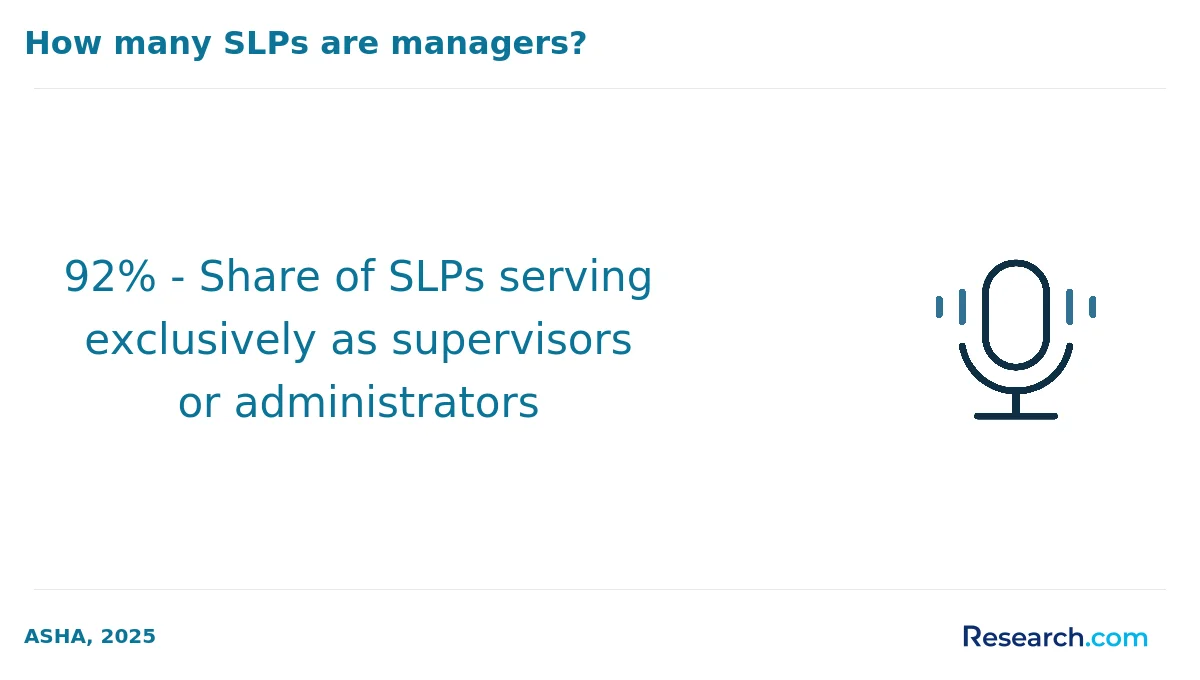
Speech pathology programs define practicum and clinical completion through a combination of supervised clock hours, approved clinical settings, qualified supervision, documented competencies, and program-specific evaluation standards. Accredited programs typically align with the Council on Academic Accreditation in Audiology and Speech-Language Pathology (CAA), requiring a minimum of 400 supervised clinical clock hours to qualify for certification. The actual requirements often encompass a range between 375 and 400 hours, with rules about what counts as direct clinical contact and what may count as related clinical activity.
Students should not assume that every client-facing activity counts. Observation, volunteering, employment in a related role, or work completed at an unapproved site generally does not satisfy practicum requirements unless the program has formally approved it and documented it under the applicable standards.
- Clock hours: Programs generally require substantial supervised clinical hours, usually spanning 375 to 400, depending on how the institution applies accreditation and certification expectations.
- Direct client contact: Hours usually must involve supervised assessment, intervention, consultation, or related clinical service with clients or patients.
- Qualified supervision: Clinical work must be overseen by an approved speech-language pathology supervisor who meets credential, licensure, and program criteria.
- Approved sites: Eligible settings may include hospitals, schools, rehabilitation centers, private practices, clinics, and other environments that satisfy program and accreditation requirements.
- Competency documentation: Completion is not only about reaching an hour total; students must also demonstrate clinical skills, professional behavior, ethical practice, documentation ability, and readiness for increasing responsibility.
- State alignment: Some state licensing boards may have additional expectations, so students should confirm that their intended placement path supports licensure in the state where they plan to practice.
The quality of placement support affects whether students can complete these requirements efficiently. Programs with strong systems help students avoid common problems such as logging hours under an unapproved supervisor, completing too narrow a caseload, missing documentation deadlines, or discovering late that a site does not satisfy state requirements.
Students evaluating online options should be especially careful. In other health fields, such as nursing programs online, clinical coordination can be a major differentiator; the same logic applies to speech pathology, where local site access and supervision rules can determine whether a flexible program is actually workable.
What Types of Placement Support Do Speech Pathology Programs Actually Provide, and How Extensive Is It?
Placement support exists on a spectrum. Some speech pathology programs provide little more than a list of possible sites, while others manage the full placement process through dedicated clinical education staff. Applicants should look past broad phrases such as “placement assistance available” and ask what the program actually does, who is responsible, and what happens if a placement falls through.
| Level of support | What the program provides | What students should watch for |
| Basic resource access | A directory of potential practicum or clinical sites that students contact on their own. | This can help with research, but it may leave students responsible for availability, approvals, documentation, and supervisor verification. |
| Site identification and pre-approval | The program identifies eligible sites and confirms that they meet academic and accreditation expectations. | Students should ask whether sites are current partners or merely possible contacts. |
| Student-site matching | Clinical placement staff match students with sites based on location, schedule, specialty interests, and site capacity. | This is stronger support, but applicants should ask how far in advance placements are confirmed. |
| Administrative and compliance support | The program assists with affiliation agreements, liability insurance, onboarding requirements, and supervisor credentialing. | Weak administrative support can delay start dates even when a site is willing to host a student. |
| Ongoing monitoring | Faculty or clinical coordinators track hours, collect evaluations, support supervisors, and intervene when issues arise. | This is often the clearest sign that clinical education is treated as a managed part of the degree. |
On-campus programs often benefit from long-standing local relationships with hospitals, schools, and community clinics. Online programs may need broader regional or national networks, remote advising tools, and stronger administrative processes because students are distributed across different locations and regulatory environments.
Applicants should ask direct questions: How many placement coordinators support the program? Are students guaranteed a placement if they meet requirements? How many sites are available near my location? Who verifies supervisor credentials? What happens if a site cancels? How often do faculty check in during clinicals?
- : "A graduate I spoke with described the placement coordinator as the difference between confusion and progress. The coordinator helped identify sites close to home, explained approvals and paperwork, and confirmed that supervisors were qualified. That kind of support reduced stress and helped the student stay on track for licensure."
On-campus and online speech pathology programs can both provide strong clinical training, but their placement models often differ. On-campus programs usually rely on established local relationships and may place students in affiliated hospitals, schools, university clinics, and nearby practices. Online programs must support students across wider geographic areas, which makes site approval, supervisor verification, and state-specific guidance especially important.
| Factor | On-campus programs | Online programs |
| Placement network | Often concentrated near the campus and built through long-term local partnerships. | May use regional or broader networks to place students near where they live. |
| Student flexibility | Students may need to commute to sites within the program’s service area. | Students may complete clinicals closer to home, depending on site availability and approval. |
| Administrative complexity | Processes may be familiar because sites regularly host students from the same institution. | Processes can be more complex because each location may require new agreements, onboarding, or state review. |
| State licensure considerations | Often designed around the state where the campus is located. | Must account for the student’s state and intended practice location. |
| Best fit | Students who can attend campus-based activities and use local partner sites. | Students who need geographic flexibility but want structured placement coordination. |
Online students should confirm whether the program has placed students in their state before, whether it can support licensure planning for that state, and whether there are restrictions on where clinicals may be completed. A program that cannot clearly explain its placement process for your location may create unnecessary risk, even if the coursework is convenient.
Students comparing flexible healthcare pathways, such as online LPN programs, should remember that speech pathology clinical requirements are discipline-specific. The key question is not whether the program is online or on campus; it is whether the program has a reliable, compliant, and student-specific placement system.
Speech pathology practicum and clinical placements are shaped by programmatic accreditation, institutional accreditation, and state licensure expectations. Accreditation does not guarantee that every student will have a perfect placement experience, but it does establish standards for supervision, clinical hours, evaluation, and preparation for professional practice.
- Council on Academic Accreditation (CAA): The CAA, under the American Speech-Language-Hearing Association (ASHA), is the primary programmatic accreditor for speech-language pathology and audiology programs. The CAA mandates a minimum of 400 supervised clinical practicum hours, including at least 375 hours directly involving client interaction. Supervisors must hold ASHA certification and relevant clinical expertise. The CAA also emphasizes supervision quality, diverse clinical settings, adequate caseloads, and regular formal student evaluations.
- Regional accreditation bodies: Institutions may also hold regional accreditation through agencies such as the Higher Learning Commission (HLC) or Middle States Commission on Higher Education (MSCHE). These agencies evaluate institutional quality, but they do not replace CAA standards for speech pathology clinical education.
- State licensure boards: State boards are not accreditors, but they influence whether a graduate is eligible for licensure. They may set expectations related to supervised experience, documentation, and acceptable training conditions.
Students should verify that a program’s accreditation is current and that its clinical training structure aligns with the state where they intend to practice. This is especially important for online students and students who may complete placements in one state but seek licensure in another.
Strong programs can explain how accreditation standards translate into daily clinical practice: who approves sites, how supervisors are verified, how student performance is evaluated, and how hours are documented. Weak answers to those questions may indicate that the program’s placement support is less developed than its marketing suggests.
- : "One practicing speech-language pathology professional emphasized that clinical training was not simply about “clocking hours.” The quality of supervision, the structure of site partnerships, and consistent evaluations helped her build confidence and competence before entering the field."
Graduate speech pathology programs generally set minimum undergraduate GPA requirements between 2.75 and 3.0. Some highly selective programs require 3.25 or above, particularly when applicant pools are strong and clinical placement capacity is limited. The published minimum, however, is only the baseline. The average GPA of admitted students may be higher.
GPA matters because speech pathology programs must admit students who can handle graduate coursework, clinical documentation, evidence-based practice, and professional responsibilities in supervised settings. Programs with competitive placements may use GPA as one indicator of readiness, though it is rarely the only factor considered.
- Minimum GPA: The lowest GPA a program will usually consider for regular admission.
- Competitive GPA: The GPA range that is more typical among accepted students, which may be higher than the minimum.
- Prerequisite performance: Grades in communication sciences, language development, anatomy, physiology, statistics, or related coursework may carry special weight.
- Conditional admission: Some programs may consider applicants below the official GPA threshold if they complete prerequisites, show recent academic improvement, or demonstrate relevant experience.
Applicants with a lower GPA should not rely only on broad admissions averages. They should contact programs directly, ask whether conditional admission is available, and build a stronger application through prerequisite coursework, clinical exposure, recommendation letters, and a clear statement of purpose. Students should also ask whether admission to the program automatically includes access to clinical placement support or whether placements are competitive after enrollment.
Since 2020, many accredited speech pathology programs have shifted toward test-optional or test-free admissions. Others still require the GRE or allow applicants to submit scores voluntarily. A GRE requirement is not, by itself, a sign of better placement support; it is an admissions policy, not proof of clinical infrastructure.
- Programs that require scores: Some research-intensive or highly selective programs continue to use the GRE as one standardized measure of academic preparation.
- Test-optional programs: These programs allow applicants to decide whether scores strengthen their file. Strong scores may help, but weak scores can often be omitted if the policy permits.
- Test-free programs: These programs do not consider GRE scores and instead focus on GPA, prerequisites, recommendations, essays, experience, and interviews.
- Holistic review: Many programs now place more emphasis on communication skills, relevant work or volunteer experience, academic trajectory, diversity of experience, and fit with the profession.
- Placement connection: A program with extensive clinical placement support may still be test-optional, and a program requiring the GRE may still offer limited placement help. Applicants should evaluate these issues separately.
If you have strong standardized test scores, submitting them may strengthen your application where allowed. If you do not, focus on evidence that you can succeed in both coursework and clinical training: prerequisite grades, observation or service experience, professional maturity, and a clear understanding of speech-language pathology practice.
Most speech pathology graduate programs with practicum or clinical requirements take two to four years, depending on whether the student enrolls full time or part time and how the program schedules clinical experiences. Full-time master’s students typically finish in about two years when coursework and supervised clinical training are integrated. Part-time students often need three or four years because they take fewer courses and may complete clinical hours at a slower pace.
Accelerated programs may condense completion to roughly 12 to 18 months, but they usually require intense full-time commitment and very dependable clinical scheduling. Students considering accelerated speech pathology programs online should pay close attention to how placements are arranged, because a compressed calendar leaves little room for site delays.
| Program pace | Typical completion time | Placement risk to consider |
| Full-time | About two years | Students must balance coursework and clinical hours, so placement timing needs to be coordinated carefully. |
| Part-time | Three or four years | Longer timelines can help working students, but site availability across multiple terms must remain stable. |
| Accelerated | Roughly 12 to 18 months | Any placement delay can have a larger impact because the schedule is compressed. |
Clinical placement support can directly affect time to completion. Students who must find their own sites may face delays if local providers are full, supervisors are not approved, paperwork takes too long, or a site changes availability. Programs with established partnerships and dedicated coordinators are better positioned to keep students moving through the required 400 clinical hours outlined by the American Speech-Language-Hearing Association.
Students comparing time-intensive professional programs should not assume all healthcare degrees handle placements the same way. For example, an online dietitian degree may involve different practicum structures, timelines, and credentialing pathways than speech pathology.
Tuition for speech pathology programs with strong placement infrastructure often reflects the cost of clinical education systems: placement coordinators, affiliation agreements, supervisor support, compliance tracking, student evaluations, and site relationship management. Tuition ranges widely, from about $20,000 to $50,000 at public universities to over $70,000 at prestigious private institutions, depending on format, location, residency status, and institutional reputation.
Students should evaluate total cost, not just tuition. Clinical training can add expenses that are easy to overlook, including commuting to sites, parking, background checks, immunization records, professional attire, liability-related fees, technology, and possible lost work hours. A lower-tuition program may cost more in practice if weak placement support delays graduation or forces extensive travel.
Common financial aid options include:
- Federal loans: Stafford and Grad PLUS loans are frequently foundational funding sources for graduate students.
- Graduate assistantships: Some programs offer tuition waivers, stipends, or both in exchange for teaching, research, or administrative work.
- Employer tuition benefits: Working professionals may be able to use employer-sponsored education benefits if their workplace supports graduate study.
- Discipline-specific scholarships: Professional organizations such as the American Speech-Language-Hearing Association may offer scholarship opportunities that help offset costs.
When comparing offers, ask each program for a full cost estimate and a clear explanation of clinical placement fees. Also ask whether students commonly graduate on time, whether placement delays occur, and whether the program publishes employment or licensure-related outcomes. A program with higher tuition may be worth considering if its placement infrastructure reduces the risk of extended enrollment, but applicants should verify that claim with evidence.
Students exploring other flexible clinical career pathways, such as RN to BSN online programs, should apply the same cost logic: compare net price, required clinical or practice experiences, support services, and likely return on time invested.
Speech pathology placement networks may include a wide range of settings, and the mix of available sites can shape a student’s clinical strengths and career direction. A student interested in school-based practice needs different exposure than a student drawn to adult rehabilitation, acute care, private practice, or telepractice.
- Hospitals: Acute and rehabilitation settings may expose students to neurological conditions, swallowing concerns, pediatric care, adult care, interdisciplinary teams, and medical documentation.
- Schools and educational settings: These placements focus on children and adolescents with communication disorders and are especially relevant for students interested in school-based careers.
- Private practices and clinics: Outpatient settings may offer varied caseloads and insight into private sector operations, scheduling, billing workflows, and family communication.
- Rehabilitation facilities: Inpatient and outpatient rehabilitation sites support clients recovering from injury, illness, surgery, or neurological events.
- Government agencies: Veterans Affairs centers and public health departments may provide specialized experiences with distinct populations and service systems.
- Community mental health centers: These settings can expose students to clients with communication needs alongside behavioral health or social service concerns.
- Corporate wellness and telepractice: Emerging or specialized settings may involve adult populations, remote service delivery, consultation, or communication-focused support.
The best programs do more than offer variety. They help students sequence experiences so they develop broad competencies while also exploring career interests. Applicants should ask whether placements include both pediatric and adult populations, whether medical placements are available, whether school placements meet state education requirements, and how competitive specialty placements are.
Programs with mature networks are usually more transparent. They may share examples of recent placement sites, placement rates, geographic coverage, specialty availability, and alumni employment outcomes. If a program cannot describe where students train or how placements are secured, applicants should investigate further before enrolling.
Clinical supervisors are central to the quality and validity of speech pathology practicum experiences. Programs with strong placement support verify that supervisors meet professional, licensure, certification, and program requirements before students begin clinical work. This protects students from completing hours that may later be challenged or rejected.
Supervisor vetting usually includes confirmation of current licensure, relevant clinical expertise, appropriate certification, and ability to provide supervision consistent with accreditation and state expectations. Strong programs also clarify supervisor responsibilities, evaluation procedures, documentation requirements, and communication channels before the placement starts.
- Credential verification: The program confirms that the supervisor holds required professional credentials and is eligible to supervise students.
- Site approval: The clinical setting is reviewed to ensure it can provide appropriate caseloads, learning opportunities, and supervision.
- Supervisor orientation: Programs may provide expectations for feedback, evaluation, hour documentation, ethics, and student support.
- Ongoing monitoring: Faculty or clinical coordinators collect evaluations, review student progress, and respond to concerns.
- Student reporting process: Students should have a clear way to report supervision problems, unsafe conditions, or inadequate learning opportunities.
Weak supervision can create serious problems. Students may receive limited feedback, fail to develop required competencies, or risk having clinical hours questioned because documentation or oversight was inadequate. Applicants should ask how supervisors are approved, how often the program communicates with sites, how student concerns are handled, and whether the program keeps records of supervisor qualifications.
What Graduates Say About the Speech Pathology Programs With Placement Support for Practicum or Clinicals
- : "The placement support in my speech pathology program was truly exceptional. Faculty coordinated closely with different clinical sites so our practicum experiences matched our learning goals. I also noticed that university-based programs often had more established local options than purely online formats, which is something applicants should consider. The real-world exposure helped me prepare for licensing exams and build confidence. — Kayden"
- : "My hybrid program gave me scheduling flexibility, but it still prioritized strong clinic partnerships. That mattered because finding relevant clinical hours on my own would have been stressful. Guided placements helped me understand my career direction and made the transition into professional work much smoother. — Cannon"
- : "Placement support is not an extra feature; it is the backbone of speech pathology training. My program provided personalized guidance during clinicals, and I saw how much support can vary between traditional campuses and online institutions. That difference affected my practical skills and how quickly I was ready to begin my career. — Nolan"
Other Things You Should Know About Speech Pathology Degrees
Speech Pathology programs with strong placement support typically have contingency plans to address placement conflicts or site issues. If a clinical site fails to meet standards or becomes unavailable, programs reassign students to alternative approved sites to ensure uninterrupted practicum progress. Communication between faculty, placement coordinators, and students is vital to manage reassignment promptly and minimize disruptions.
Practicum and clinical placements offer hands-on experience essential for licensing exam readiness in Speech Pathology. These placements provide supervised patient interaction and application of clinical skills aligned with licensure competencies. Programs with structured placement support help students gain diverse clinical exposure, which enhances confidence and knowledge for the licensing examination.
Prospective students should assess how programs facilitate placement assignments-looking at site variety, partnership depth, and the assistance provided during placement challenges. Evaluating accreditation status and alumni outcomes related to clinical hours and licensure rates also offers insight. Asking about conflict-resolution protocols and opportunities for diverse clinical experiences helps determine the strength of placement support.
- U.S. Bureau of Labor Statistics - Speech-Language Pathologists https://www.bls.gov/ooh/healthcare/speech-language-pathologists.htm
- ASHA EdFind - Accredited Speech-Language Pathology Programs https://find.asha.org/ed/
- Audiology and Speech-Language Pathology Interstate Compact https://aslpcompact.com/compact-map/
- James Madison University - Master of Science (M.S.) in Speech-Language Pathology (Distance Education / Online) https://www.jmu.edu/chbs/csd/online_ms/index.shtml
- New England Institute of Technology - Master of Science in Speech Language Pathology https://www.neit.edu/academics/graduate-degrees/speech-language-pathology-ms
- Idaho State University - Master of Science in Speech-Language Pathology (Online/Distance Education) https://www.isu.edu/slp/programs-offered/slp-graduate-program/
- Delaware Valley University - Master of Science in Speech-Language Pathology (M.S.) https://delval.edu/programs/graduate-programs/speech-language-pathology
- California State University-Northridge - Master of Science in Communicative Disorders (Online) https://tsengcollege.csun.edu/programs/CDS