2027 Speech Pathology Degree Completion Programs for Working Adults

Co-Founder and Chief Data Scientist

Reviewed by Rhea Paul, PhD
SLP Education & Research Expert
Choosing a speech pathology degree completion program is usually a practical decision, not just an academic one: can you finish a credible credential without leaving work, losing prior credits, or enrolling in a program that will not support your next career step? For working adults, the best programs are built around transfer credit, predictable scheduling, recognized accreditation, transparent costs, and advising that understands adult learners.
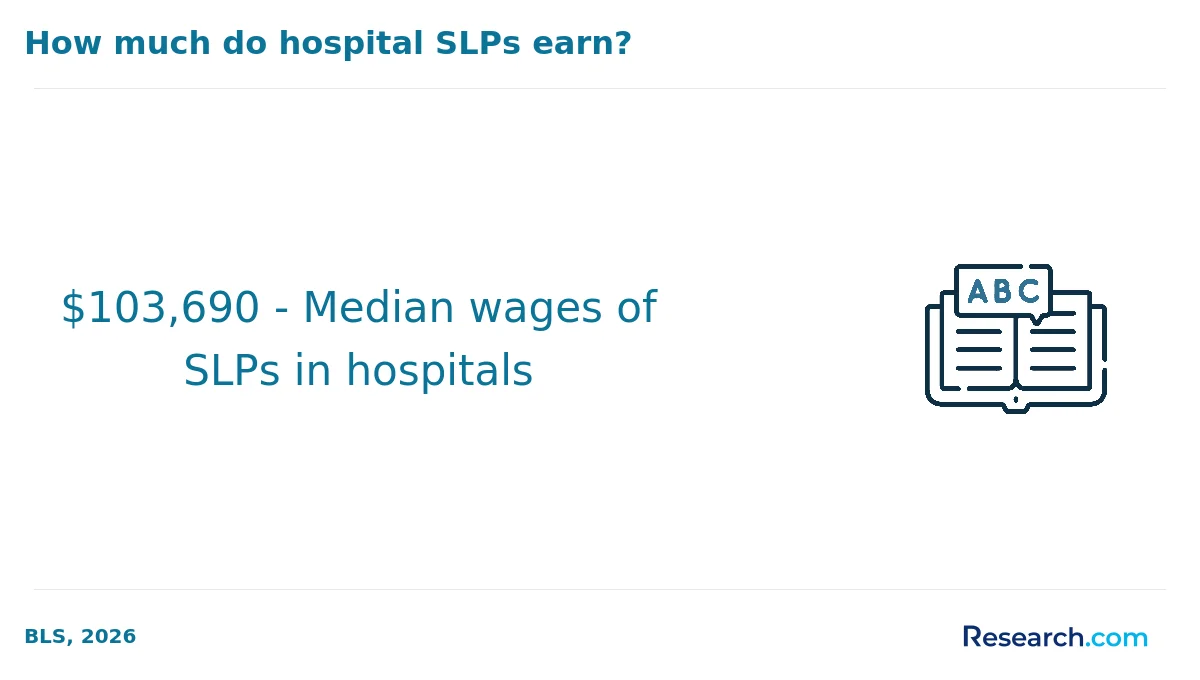
This guide explains how speech pathology completion programs work, how they compare with traditional campus degrees, what prior credits may count, what GPA and admission standards to expect, and how online or hybrid formats fit around full-time employment. It also covers accreditation, cost, financial aid, employer perception, and realistic career outcomes. Salary data shows that speech pathologists earn a median annual wage of $97,870, but students should understand that licensure, graduate study, state rules, and employer requirements can affect which roles they qualify for after completing a bachelor’s-level pathway.
Key Things to Know About Speech Pathology Degree Completion Programs for Working Adults
- Maximize credit for prior learning by submitting military transcripts and employer training records-over 70% of speech pathology completion programs award credit for ACE-verified coursework in 2023.
- Choose programs accredited by ASHA and recognized by state licensing boards to ensure licensure eligibility and employer acceptance-critical for mid-career advancement.
- Access financial aid tailored to working adults via employer tuition benefits, federal aid, and scholarships-over 50% of adult learners use mixed funding sources as of 2023.
What Are Speech Pathology Degree Completion Programs, and Who Are They Designed For?
Speech pathology degree completion programs are designed for adults who have already earned college credit but have not finished a bachelor’s degree in speech pathology, communication sciences and disorders, or a closely related field. Instead of starting over in a traditional four-year program, students use eligible prior credits to complete the remaining major, general education, and graduation requirements.
These programs are most useful for students who need a recognized undergraduate credential before pursuing graduate study, changing careers, or qualifying for roles that require a degree. They are not the same as a master’s program in speech-language pathology, and a bachelor’s degree alone may not be enough for full professional licensure in many settings. The value is that it can create a structured bridge toward graduate admission, school-based support roles, healthcare support positions, or advancement in related education and human services jobs.
- Adults with unfinished college credit: Students who completed part of a degree can often apply prior coursework toward remaining requirements instead of repeating classes.
- Working professionals: Flexible formats help students continue earning income while completing coursework during evenings, weekends, or online study periods.
- Military veterans and service members: Programs may evaluate ACE credit recommendations and official military transcripts to recognize eligible training.
- Career changers: Students from education, healthcare, psychology, linguistics, or human services may use a completion pathway to build the academic background needed for speech pathology-related study.
- Students preparing for graduate school: A completion program can help satisfy bachelor’s-level prerequisites for advanced study, depending on the graduate program’s requirements.
Strong programs usually share four traits: regional institutional accreditation, clear transfer-credit policies, adult-focused advising, and coursework aligned with the expectations of employers, graduate schools, and state licensing boards. Research from the Lumina Foundation, National Student Clearinghouse, and AASCU has emphasized that adult learners often need targeted financial aid, flexible scheduling, and career support to persist through completion.
Students comparing professional pathways may also review related healthcare education models, such as a DNP program guide, to understand how credential requirements, scheduling, and return on investment differ across fields.
How Do Speech Pathology Degree Completion Programs Differ From Traditional On-Campus Degree Programs?
The main difference is design. Traditional on-campus programs are typically built for full-time students who can attend classes during the day. Speech pathology degree completion programs are built for adults who already have credits, jobs, family responsibilities, or military experience and need a more efficient path to graduation.
- Scheduling: Completion programs commonly offer evening, weekend, online, or hybrid courses. Traditional programs are more likely to rely on daytime, in-person schedules.
- Pacing: Some completion pathways use accelerated terms, cohort models, or part-time plans. Traditional programs usually follow a standard semester sequence.
- Transfer credit: Completion programs are more likely to conduct detailed evaluations of prior college coursework, ACE-reviewed military training, CLEP, DSST, or other prior learning.
- Residency requirements: Adult-focused programs may reduce campus time, and some offer over 50% of courses asynchronously. Traditional programs often require regular campus attendance.
- Advising: Completion programs typically provide transfer-focused advising so students know which requirements remain before committing.
- Student experience: Traditional students may have more campus access, labs, and face-to-face interaction. Completion students often gain convenience but must be disciplined with online learning and independent study.
Data from NCES and IPEDS show that enrollment in degree completion programs has steadily increased over the past decade, reflecting demand among working adults, while traditional undergraduate enrollment has plateaued or declined. That trend does not automatically make one format better. It means students should choose based on schedule fit, credit transfer, accreditation, cost, and long-term credential goals.
The credential awarded is often the same type of degree, such as a Bachelor of Science or Bachelor of Arts in Speech Pathology or a related communication disorders field. Employers and graduate schools usually care more about accreditation, transcript quality, prerequisites, and performance than whether the program was labeled “completion.”
Students comparing cost structures across flexible healthcare degrees may find useful parallels in affordable online nursing programs, especially around tuition, transfer credit, and adult learner financial aid.
What Prior Credits and Experiences Count Toward a Speech Pathology Degree Completion Program?
Most speech pathology degree completion programs evaluate several forms of prior learning, but acceptance is never automatic. The school decides which credits meet its degree requirements, which count only as electives, and which do not transfer. Students should request a written credit evaluation before enrolling so they know the actual time and cost required to finish.
Transfer credits from regionally accredited colleges are usually the easiest to apply. General education courses, introductory science courses, psychology, linguistics, statistics, education, and communication-related coursework may count if grades, course content, and credit levels meet the receiving school’s policy. Credits from nationally accredited or non-accredited institutions may receive more limited review.
Military training may count when it appears on official records such as Joint Services Transcripts and aligns with ACE credit recommendations. Veterans should ask whether the program has a dedicated military credit evaluator and whether ACE-recommended credits can satisfy major, elective, or general education requirements.
Professional certifications and work experience may be reviewed through Prior Learning Assessment, often called PLA. PLA can include portfolios, documentation of training, supervisor verification, competency exams, or faculty review. It is most useful when the experience maps clearly to college-level learning outcomes.
Standardized exams such as CLEP and DSST may help students satisfy general education or elective requirements. Policies vary by subject, minimum score, and the total number of exam credits a school allows.
Because transfer credit rules differ widely, students should collect official transcripts from every institution attended and ask these questions before applying:
- How many total transfer credits can be applied to the degree?
- Will prior credits satisfy major requirements or only electives?
- Does the school accept ACE-recommended military training?
- Are CLEP, DSST, or PLA credits accepted?
- Will accepted credits reduce tuition, time to graduation, or both?
- Can the school provide a degree plan showing remaining courses?
Research from the Council for Adult and Experiential Learning (CAEL) has shown that credit for prior learning can reduce time-to-degree by months or even years. Students should also be cautious with schools that reject ACE credits without explanation or impose arbitrary transfer limits. AACRAO guidance can help students understand what fair and transparent transfer evaluation practices look like.
One graduate described the credit review process as time-consuming but worthwhile. After gathering transcripts, training records, and certification documents, he received a clear degree plan and avoided retaking material he had already mastered. That up-front clarity made it easier to manage work, family, and coursework.
Many speech pathology degree completion programs require a prior college GPA between 2.0 and 2.5 on a 4.0 scale, though standards vary by institution. A higher GPA may be expected for competitive programs, prerequisite-heavy majors, or students planning to use the degree for graduate school preparation.
- Standard admission: A cumulative GPA in the 2.0 to 2.5 range may meet the minimum requirement at many adult-focused programs.
- Conditional admission: Some schools admit students below the standard threshold if they complete an initial term successfully, use tutoring, or meet advising requirements.
- Holistic review: Regionally accredited schools, including HLC-accredited institutions and others, may consider work history, military service, recommendations, personal statements, and recent academic performance.
- Fresh-start or academic forgiveness policies: Returning students with older low grades may be able to separate past performance from current readiness after a designated break in enrollment.
- Program-level standards: Even if the university admits the student, the speech pathology major may require specific prerequisite grades or a higher GPA to progress.
Applicants with a weaker academic record should not assume they are disqualified. A strong strategy is to request a pre-admission transcript review, identify missing prerequisites, and ask whether taking a few recent courses with strong grades could improve admission chances. Students should also ask how GPA is recalculated after transfer, because some institutions count only accepted credits while others review all prior coursework.
Adults comparing admission models in other healthcare fields may find similar experience-based review policies in programs such as a doctor of nursing practice online pathway, though requirements differ by discipline and credential level.
Programs built for working adults usually assume that students may be employed 40 or more hours each week. To make completion realistic, they often use evening cohorts, weekend intensives, asynchronous online courses, hybrid meetings, and advising schedules outside standard business hours.
For many full-time employees, a course load of 6 to 9 credits per term is more sustainable than a traditional full-time load. It may extend the timeline, but it reduces the risk of burnout, course withdrawal, and poor grades. Students with rotating shifts, caregiving responsibilities, or travel-heavy jobs should be especially careful about programs that require fixed live attendance.
Common scheduling models
- Asynchronous online courses: Students watch lectures, complete assignments, and participate in discussions on their own weekly schedule.
- Evening live classes: Courses meet after work hours, which can help students who prefer instructor interaction but may be difficult for shift workers.
- Weekend intensives: Programs group labs, simulations, or advising into scheduled weekend blocks.
- Cohort programs: A group of students moves through the curriculum together, creating predictable course sequencing and peer accountability.
- Hybrid formats: Students complete most work online but attend occasional campus or site-based sessions.
The cohort model can be especially helpful for adults because it removes guesswork about what to take next. Research from the National Student Clearinghouse Research Center shows that students in cohort-based completion programs experience higher persistence and graduation rates compared to traditional enrollment formats. The trade-off is that cohort programs may offer less freedom to pause, change pace, or choose electives.
Before enrolling, ask direct questions about course cancellation policies, make-up provisions, and student success support. A program may look flexible on paper but become difficult if required courses are offered only once per year or if missed live sessions cannot be made up.
One working graduate said the most valuable feature was predictability. Knowing the course calendar months in advance made it possible to coordinate job shifts, childcare, and assignments. When unexpected work demands arose, clear make-up policies and responsive advisors helped her stay enrolled without sacrificing job performance.
Yes. Online and hybrid delivery are common in speech pathology degree completion programs, especially for adult learners. Approximately 65% of adult learners pursuing speech pathology degrees enroll in fully online programs, while 25% opt for hybrid formats combining online coursework with periodic in-person requirements, according to 2023 data from the NCES Integrated Postsecondary Education Data System and the Online Learning Consortium. The COVID-19 pandemic also accelerated universities’ investment in online platforms for complex health and education content.
Online and hybrid formats compared
- Synchronous online: Students attend live video classes at set times. This format supports real-time discussion but may conflict with work schedules.
- Asynchronous online: Students complete weekly coursework on their own schedule. This is often best for working adults, but it requires strong time management.
- Hybrid: Students complete most coursework online and attend required in-person sessions for labs, intensives, assessments, or field-related experiences.
Online convenience should not be confused with lower academic expectations. Students still need time for readings, discussion boards, exams, projects, group work, and any required observation or field components. In speech pathology-related programs, hands-on learning, supervised experiences, or prerequisite labs may create in-person obligations even when most coursework is online.
To judge quality, ask whether online students receive the same curriculum, faculty qualifications, library access, tutoring, academic advising, and career support as campus students. Faculty credentials, student-to-faculty ratios, and virtual support services matter because remote students can easily fall behind if the program is poorly organized.
Students should also confirm technology expectations before enrolling. Reliable internet, video capability, learning management system access, and software requirements can affect both cost and feasibility. If a program requires clinical observation, labs, or practicum-style experiences, ask whether placements can be completed locally or require travel.
Completion time depends mainly on how many credits transfer and how many credits the student can take each term. Students entering with approximately 60 prior credits—about halfway through a bachelor’s degree—can often expect two to three years of full-time study. Students entering with around 90 credits may finish in one to two years if the remaining requirements are available in the right sequence.
Veterans and professionals with ACE-credited or similarly assessed prior learning may shorten the timeline further, but only if the school applies those credits to actual degree requirements. Credits that transfer only as electives may not reduce the number of major courses still required.
- Transfer credit: The more applicable credits accepted, the fewer courses remain.
- Enrollment status: Full-time enrollment can shorten the calendar, while part-time enrollment is often more realistic for working adults.
- Course sequencing: Some required courses must be taken in order, which can delay graduation if they are offered infrequently.
- Field or capstone requirements: Internships, observations, projects, or capstones may have fixed timelines that cannot be accelerated.
- Academic performance: Repeating a prerequisite or withdrawing from a course can add terms to the plan.
- Financial strategy: Faster completion can reduce total tuition and opportunity costs, but an overloaded schedule can create academic and personal risk.
Students should ask for written average time-to-degree information for applicants with similar credit profiles. Advertised minimum timelines often assume ideal transfer credit, uninterrupted enrollment, and course availability. A personalized degree audit is more reliable than a marketing estimate.
Accreditation is one of the most important quality checks for a speech pathology degree completion program. It affects credit transfer, federal financial aid, graduate school admission, employer acceptance, and—in regulated roles—licensure eligibility. Students should verify accreditation independently rather than relying only on a school’s website or admissions materials.
Regional accreditation is the most widely accepted institutional accreditation in the United States. Agencies such as the Higher Learning Commission (HLC), the Middle States Commission on Higher Education, and SACSCOC review colleges and universities for academic quality, governance, student support, and financial stability. For most students, regional accreditation is the safest baseline because it is commonly recognized by employers, graduate schools, and the federal student aid system.
National accreditation is often associated with career, technical, vocational, or distance education institutions. The Distance Education Accrediting Commission (DEAC) is one example. Nationally accredited schools may be legitimate, but students should be cautious because credits from nationally accredited institutions may be harder to transfer, and some employers, graduate schools, or licensing boards may not treat them the same way as regionally accredited credentials.
Programmatic accreditation reviews specific professional programs. In other fields, examples include ABET for engineering and technology, ACBSP or AACSB for business, and CSWE for social work. Speech pathology students should look for program approval or accreditation that is relevant to communication sciences and disorders and accepted by state licensing boards or intended graduate programs. Requirements can differ depending on whether the credential is bachelor’s-level preparation or a graduate degree leading to professional practice.
Unrecognized accreditation is a serious warning sign. Some programs advertise accreditation from organizations that are not accepted by the U.S. Department of Education or relevant professional bodies. Students should search the U.S. Department of Education’s Database of Accredited Postsecondary Institutions and Programs (DAPIP) to confirm the institution’s status.
Before enrolling, contact the state licensing board, intended graduate schools, or employer HR offices if your career goal requires a specific credential. Accreditation does not guarantee admission, employment, or licensure, but weak or unrecognized accreditation can block those outcomes.
Students comparing adult-friendly completion structures in adjacent fields may also review an online exercise science degree guide to see how accreditation, transfer credit, and flexible delivery affect degree value.
Speech pathology degree completion program costs vary by school type, residency status, transfer credit, and required in-person components. Public regional universities typically charge $300 to $600 per credit hour for in-state students, while private nonprofit colleges range from $700 to $1,200 per credit. For-profit schools often have higher rates and additional fees.
Mandatory fees averaging $200 to $500 per term may cover technology, library access, advising, or student services. Required residencies or intensives can add $1,000 to $3,000 to total expenses, especially if students must travel, take time off work, or pay for lodging.
The best way to compare programs is to calculate total net cost, not just tuition per credit. A school with a higher per-credit price may be cheaper if it accepts more transfer credits. A lower-cost program may become expensive if it rejects prior coursework or requires repeated travel.
Financial aid options for working adults
- Pell Grants: Eligible part-time and full-time adult learners may receive Pell Grants based on income and federal aid rules, with no repayment obligation.
- Federal student loans: Students who file the FAFSA may qualify for federal loans, though borrowing should be weighed against expected career outcomes.
- Employer tuition reimbursement: Some employers help pay tuition for job-related education, but annual limits, grade requirements, and repayment rules vary.
- Military benefits: GI Bill and MyCAA programs may help veterans, active-duty personnel, and military spouses fund eligible education.
- Institutional scholarships: Some schools offer awards for non-traditional adult students, transfer students, veterans, or students in health and education fields.
- Tax benefits: Students may be able to use the Lifetime Learning Credit or the employer-provided educational assistance exclusion under IRS Section 127, allowing up to $5,250 per year tax-free. A tax advisor can clarify eligibility.
Adult learners should file the FAFSA annually, even if they attend part time. They should also ask whether scholarships are renewable, whether aid applies to summer or accelerated terms, and whether employer reimbursement is paid up front or only after final grades are posted.
Students researching short, targeted credentials in related healthcare fields may compare funding structures with options such as an FNP post master’s certificate guide, while keeping in mind that speech pathology degree requirements and licensure pathways are different.
A completed bachelor’s degree in speech pathology or a related communication disorders field can improve career mobility, but outcomes depend on the student’s state, employer, prior experience, and whether additional graduate education is required. Many licensed speech-language pathologist roles require graduate-level preparation, so students should view a degree completion program as a key step rather than the final requirement for every speech pathology career.
- Graduate study eligibility: A bachelor’s degree often provides the academic foundation needed to apply to master’s or doctoral programs in speech pathology or related fields.
- Career advancement: Working adults may qualify for promotions or degree-required roles in education, healthcare administration, rehabilitation support, human services, or communication-related settings.
- Credential access: Completing the degree can remove barriers for jobs that require a bachelor’s credential, even when the applicant already has substantial experience.
- Salary premium: Data from sources such as College Scorecard and the Georgetown University Center on Education and the Workforce indicate that degree holders often earn 15-20% annually more than individuals with some college but no credential.
- Stronger positioning: Adults who finish a degree while employed can combine new academic credentials with existing work history, which may help them avoid being treated as entry-level applicants.
- Licensure planning: Students should verify whether their intended role requires a master’s degree, supervised clinical experience, exams, or state approval.
Those planning to become licensed speech-language pathologists should confirm the next educational step early; comparing online speech pathology masters options can help students understand how bachelor’s completion fits into a longer professional pathway.
The strongest career outcomes usually come from programs that are accredited, transparent about graduate school preparation, and willing to help students map the connection between coursework, state rules, and employer expectations.
Employers generally focus on the awarding institution, accreditation, degree title, relevant experience, and demonstrated skills—not whether the student completed the degree through an adult-focused pathway. Employer surveys from SHRM and NACE indicate that accreditation is a primary factor in how degrees are evaluated. A regionally accredited degree that meets relevant program standards usually carries more weight than the delivery format.
Diplomas typically do not state that a degree was earned through a completion program. On a resume, graduates should list the institution, degree, major, and graduation date in the standard format. They do not need to label the credential as “accelerated,” “completion,” “online,” or “adult program” unless the employer specifically asks.
- Accreditation matters most: A degree from a recognized institution is more credible than a faster program with weak or unclear accreditation.
- Experience can strengthen the credential: Working adults can present degree completion as evidence of persistence, time management, and professional commitment.
- Licensing roles may receive closer review: State licensure boards, school districts, healthcare systems, and federal OPM qualification standards may check coursework, accreditation, and degree level carefully.
- Resume framing matters: Candidates should emphasize competencies, supervised experience, relevant coursework, and measurable work accomplishments.
- Verification is wise: Before enrolling, students targeting a specific employer or regulated role should ask whether the program satisfies hiring or credential requirements.
The completion format is not automatically a disadvantage. The risk comes from enrolling in a poorly recognized program, failing to meet prerequisite or licensure requirements, or assuming that a bachelor’s degree alone qualifies graduates for every speech pathology role.
What Graduates Say About Speech Pathology Degree Completion Programs for Working Adults
- : "The flexibility of the scheduling formats really stood out to me as a working professional. It allowed me to balance my job and family life while completing the degree. The program’s accreditation standards also gave me confidence that I was investing my time in a credential recognized by employers. Understanding the credit transfer policies helped me make the most of my previous coursework and shortened my time to graduation. — Kayden"
- : "What I appreciated most was the cost transparency. The program explained tuition and fees clearly, which made it easier to plan financially. I also valued the structure: online learning gave me flexibility, while practical placements helped connect coursework to the realities of the field. — Cannon"
- : "Accreditation was non-negotiable for me. It separated credible speech pathology completion programs from generic options that might not support my goals. I also appreciated that the program recognized prior learning through transfer credit and offered evening and weekend courses that made completion realistic with life obligations. — Nolan"
Other Things You Should Know About Speech Pathology Degrees
Speech pathology degree completion programs for working adults typically provide a range of support services tailored to their unique needs. These often include academic advising, tutoring, and career counseling designed to accommodate irregular schedules and professional commitments. Many programs also offer online or hybrid formats, which allow students to balance coursework with work and family responsibilities.
Yes, credits earned in a speech pathology degree completion program often transfer to graduate programs, especially if the undergraduate program maintains regional accreditation and aligns with graduate curricular standards. This transferability can shorten the time required to complete a master's or doctoral degree in speech pathology. However, students should verify specific articulation agreements or credit transfer policies with both institutions before enrollment.
Speech pathology degree completion programs in 2027 often provide working adults with access to professional networking resources such as online forums, alumni networks, and industry conferences. These opportunities enable students to connect with peers, mentors, and potential employers while balancing their professional responsibilities.
Military veterans can use education benefits like the GI Bill to enroll in speech pathology degree completion programs that meet Department of Veterans Affairs approval. Many programs recognize ACE-military credits, enabling veterans to maximize their prior learning and reduce time to degree completion. Additionally, veterans often have access to dedicated support services that assist with navigating benefit eligibility and academic transition.
- U.S. Bureau of Labor Statistics - Speech-Language Pathologists https://www.bls.gov/ooh/healthcare/speech-language-pathologists.htm
- ASHA EdFind - Accredited Speech-Language Pathology Programs https://find.asha.org/ed/
- Audiology and Speech-Language Pathology Interstate Compact https://aslpcompact.com/compact-map/
- Maryville University - Master of Science in Speech-Language Pathology https://www.maryville.edu/masters/speech-language-pathology/
- Idaho State University - Master of Science in Speech-Language Pathology (Online/Distance Education) https://www.isu.edu/slp/programs-offered/slp-graduate-program/
- California State University-Northridge - Master of Science in Communicative Disorders (Online) https://tsengcollege.csun.edu/programs/CDS
- Abilene Christian University - Master of Science in Speech-Language Pathology (Online) https://acu.edu/academics/graduate/master-of-science-in-speech-language-pathology/
- Ithaca College - Online Master of Science in Speech-Language Pathology https://slponline.ithaca.edu/programs/masters-speech-language-pathology-online