2027 Can a Speech Pathology Degree Lead to Remote Jobs?

Co-Founder and Chief Data Scientist

Reviewed by Rhea Paul, PhD
SLP Education & Research Expert
Choosing a speech pathology degree now often means thinking beyond the traditional clinic, hospital, or school office. Telepractice has expanded access to speech-language services, especially for clients in rural areas, students with service gaps, and adults who need flexible care. At the same time, speech pathology remains a regulated clinical field, so remote work depends on licensure, supervision rules, client needs, employer policies, and the type of role you want.
Many Speech Pathology programs now expose students to telepractice platforms, electronic health record tools, digital documentation workflows, and supervised virtual service models. These skills matter because remote roles usually require more than being comfortable on video. Graduates must know how to protect client privacy, document services correctly, adapt therapy activities for online delivery, and communicate clearly with caregivers, teachers, and healthcare teams.
A report by the Bureau of Labor Statistics highlights a 15% growth in telepractice roles within speech therapy services, reflecting shifting service delivery preferences and geographic access challenges. This guide explains where remote speech pathology work is realistic, which entry-level and senior roles are most common, how salaries may differ, what challenges to expect, and how students can prepare for remote hiring without overlooking licensure and clinical experience requirements.
Key Points About Speech Pathology Degrees That Lead to Remote Jobs
- Remote speech pathology roles often require specialized telepractice certification, which limits entry but signals employer confidence in candidates' ability to deliver effective virtual care under regulatory standards.
- Employment growth in telehealth speech pathology is rising, driven by aging populations and digital adoption, prompting employers to prioritize candidates with robust remote clinical practicum and tech proficiency.
- Flexible online speech pathology programs have expanded access for adult learners balancing cost and time constraints, yet prolonged certification pathways affect how quickly graduates enter the remote workforce.
Is it possible for Speech Pathology graduates to work remotely?
Yes, Speech Pathology graduates can work remotely, but most opportunities are better described as telepractice or hybrid roles rather than fully remote clinical jobs. Speech-language pathology often requires direct observation, standardized assessment procedures, caregiver coaching, and coordination with schools or healthcare providers. Because of that, employers may still require in-person evaluations, onsite meetings, or occasional travel even when therapy sessions are delivered online.
The strongest remote opportunities are typically found in schools, private practices, teletherapy companies, early intervention support programs, documentation roles, research teams, and health technology companies. Hospitals, rehabilitation centers, and acute care settings are less likely to offer fully remote roles because many patients require hands-on assessment, interdisciplinary bedside care, or specialized medical supervision.
Licensure is a major factor. A clinician generally must be authorized to provide services in the state where the client is located, not only where the clinician lives. New graduates may also need supervised clinical experience before they can practice independently. This makes remote work possible, but not always simple.
- Most realistic remote path: teletherapy or school-based virtual service delivery under the correct licensure and supervision structure.
- Most realistic hybrid path: a role that combines virtual therapy, in-person assessments, team meetings, and documentation.
- Most realistic non-clinical path: research, documentation, care coordination, clinical content, training, or health technology support.
- Least realistic path for new graduates: fully independent remote clinical practice without supervision, state authorization, or employer infrastructure.
Graduates who want remote work should evaluate each job posting carefully. Look for the client population, required license, supervision model, platform used, documentation expectations, caseload size, and whether the employer provides technology and privacy-compliant tools.
What are the typical entry-level remote positions for new Speech Pathology graduates?
Entry-level remote roles in speech pathology usually fall into two categories: supervised clinical support and non-clinical support. Graduates who are not yet fully licensed may find more options in assistant, documentation, screening, research, or teletherapy support roles. Those who meet state licensure and supervision requirements may qualify for more direct service roles.
- Telepractice Speech-Language Pathology Assistant: Supports a licensed speech-language pathologist during virtual therapy sessions. Duties may include preparing materials, helping clients use the platform, collecting practice data, and carrying out assigned activities under supervision. This role is common in school-based or pediatric service models.
- Remote Speech-Language Screening Specialist: Helps conduct initial screenings using approved digital tools or structured protocols. These positions may appear in school districts, community programs, or early identification initiatives. They are not the same as a full diagnostic evaluation and usually require clear referral procedures.
- Speech-Language Pathology Research Coordinator: Supports communication disorder studies by recruiting participants, managing data, coordinating schedules, preparing study materials, and assisting with reports. This is a strong fit for graduates interested in evidence-based practice, graduate school preparation, or academic research.
- Clinical Documentation Specialist: Reviews records, organizes treatment notes, supports billing documentation, and helps maintain compliance with payer or employer requirements. This path is less client-facing but valuable for graduates who understand speech-language services and enjoy detail-heavy work.
- Remote Speech Therapy Support Specialist: Helps clients, families, clinicians, or school staff use teletherapy systems effectively. This role blends communication skills, troubleshooting, training, and knowledge of remote service workflows.
New graduates should compare roles by asking three questions: Will this position count toward required supervised experience? Does it require state licensure or assistant registration? Will it build skills that lead to independent speech-language pathology practice, or is it mainly administrative?
Students considering broader health-related career options can compare admissions flexibility and allied health pathways through resources on accessible nursing school options, but speech pathology students should still prioritize accredited speech-language pathology preparation if their goal is clinical SLP practice.
Are there senior-level remote positions for Speech Pathology professionals?
Yes. Senior-level remote speech pathology roles are more realistic for experienced professionals than for new graduates. These jobs usually require a strong clinical record, independent licensure, experience with supervision or program development, and confidence managing compliance across virtual service models. Many are hybrid because leadership still involves site visits, staff training, audits, or meetings with schools and healthcare partners.
- Telepractice Program Manager: Oversees virtual speech therapy services across schools, clinics, regions, or client groups. Responsibilities may include staffing, caseload planning, quality assurance, documentation standards, platform selection, and compliance monitoring.
- Clinical Director of Speech Services: Leads speech-language pathology teams, develops clinical protocols, evaluates service quality, and coordinates with administrators. Some duties can be handled remotely, but organizations may expect periodic onsite leadership.
- Senior Speech-Language Pathologist Consultant: Advises schools, rehabilitation providers, private practices, or technology companies on clinical models, assessment processes, treatment planning, and service improvement.
- Speech Pathology Research Coordinator: Manages research projects involving communication disorders, intervention outcomes, telepractice delivery, or clinical tools. Senior versions of this role may involve grant coordination, publication support, and cross-site collaboration.
- Telehealth Training Specialist: Designs and delivers training for clinicians who provide virtual speech-language services. This role requires practical telepractice experience, knowledge of privacy requirements, and the ability to teach clinicians how to adapt treatment online.
Remote leadership roles reward professionals who can translate clinical judgment into systems: policies, training materials, measurable outcomes, documentation workflows, and staff coaching. They also require careful attention to state practice rules, payer expectations, and employer standards. Professionals who want to move from clinical practice into management may benefit from studying healthcare operations; one related option is an affordable online healthcare administration degree that can complement clinical experience with management training.
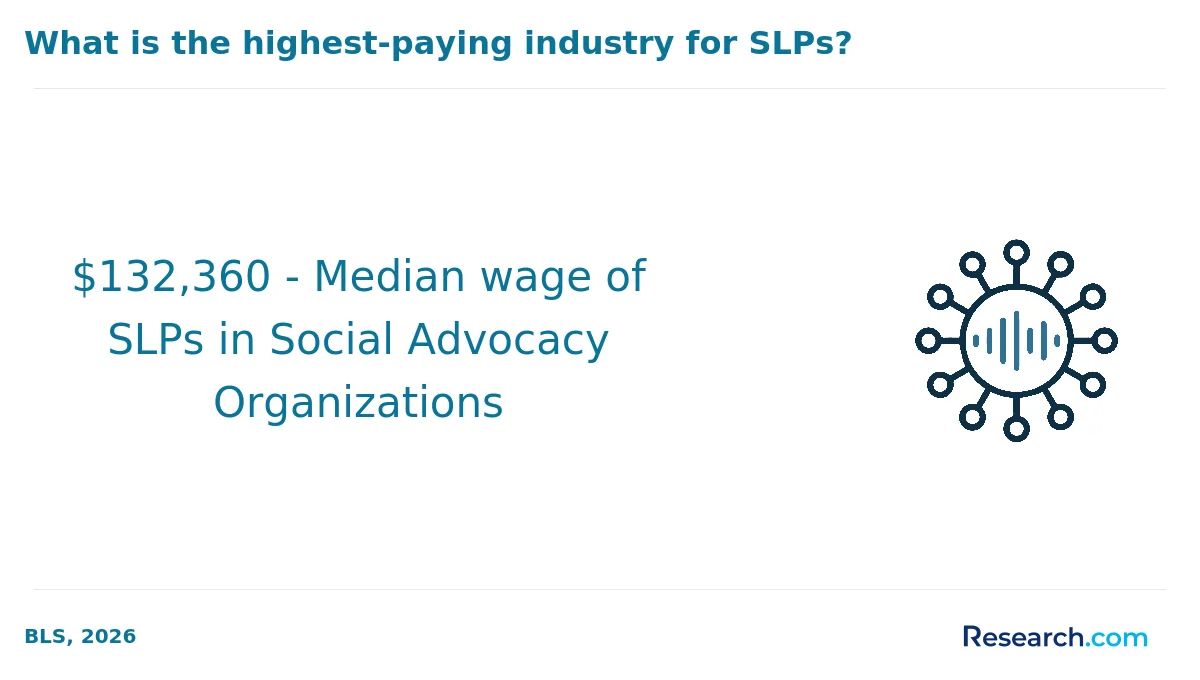
Remote hiring for Speech Pathology graduates is strongest in industries that can deliver services, training, documentation, or clinical expertise through digital systems. The best fit depends on whether the graduate wants direct client care, school-based services, research, technology work, or administrative roles.
- Healthcare: Telepractice roles may include virtual therapy, follow-up sessions, caregiver coaching, care coordination, and consultation. These jobs can serve clients who have limited access to local providers, but they still require appropriate licensure and privacy-compliant systems.
- Education: Schools and districts hire remote speech-language professionals to support students with communication needs. These roles often involve virtual therapy, IEP-related documentation, teacher consultation, parent communication, and coordination with onsite staff.
- Health Technology: Companies that build teletherapy platforms, clinical tools, learning software, or assessment products may hire speech pathology graduates for clinical content, user testing, training, product support, or research. These positions may not require direct patient care, but they do require subject-matter credibility.
- Insurance and Managed Care: Remote roles may involve case review, claims support, documentation review, utilization management, or policy development. These jobs suit professionals who understand clinical services and can evaluate records carefully.
- Non-profits and Government: Organizations focused on disability services, public health, early intervention, education access, or advocacy may hire speech pathology professionals for program design, training, outreach, and service coordination.
Graduates should not assume every remote job with “speech” or “communication” in the title is a clinical SLP role. Some positions are support, education, research, policy, or technology jobs. That can be an advantage for graduates who want remote flexibility, but it is important to understand whether a role advances clinical licensure, builds direct practice experience, or leads toward a non-clinical career track.
Remote speech pathology salaries can be lower, similar, or occasionally competitive with on-site salaries depending on employer type, caseload, specialization, licensure, and geography. A common issue is geographic pay adjustment: some employers base remote compensation on the worker’s location, while others base it on the employer’s market or the client service area. This can create meaningful differences between remote and on-site offers.
On-site roles may pay more when employers need clinicians for high-demand settings, hard-to-staff districts, medical environments, or specialized patient populations. In-person work may also include benefits tied to onsite employment, such as local differentials, mileage reimbursement, school district benefits, or facility-based advancement opportunities.
Remote roles may offer value in other ways: reduced commuting costs, schedule flexibility, access to employers outside the graduate’s immediate area, and the ability to work with clients in multiple service settings. However, graduates should compare the full offer, not just the hourly or salary figure.
- Check whether pay is hourly, salaried, per session, or per completed service. Per-session pay may look attractive but can fluctuate with cancellations.
- Ask whether documentation, meetings, evaluations, and parent consultations are paid. Unpaid administrative time can reduce real earnings.
- Confirm who provides technology, materials, platform access, and liability coverage. Out-of-pocket costs can make a remote role less profitable.
- Review benefits carefully. Some remote contract roles do not include the same benefits as full-time onsite jobs.
- Consider specialized skills. Knowledge of documentation, compliance, coding, and adjacent credentials such as CPC vs. CCS certification may support certain administrative or managed care roles, though they do not replace speech-language pathology licensure.
The best approach is to calculate effective compensation: expected paid hours, unpaid work, benefits, taxes if contracting, equipment costs, supervision requirements, and promotion potential. A remote role with slightly lower pay may still be worthwhile for flexibility, but a poorly structured remote contract can underpay clinical labor.
Remote speech pathology work can be effective, but it changes how clinicians build rapport, assess communication, manage privacy, and coordinate care. The challenges are practical, not just technical.
- Technology limitations: Teletherapy depends on stable internet, clear audio, reliable video, accessible materials, and a platform that clients can use. Poor connectivity can interrupt sessions and affect client engagement. Clinicians need backup plans, troubleshooting routines, and activities that can be adapted when technology fails.
- Privacy and security risks: Remote work requires careful handling of protected information. Clinicians must use secure platforms, avoid public networks, protect home workspaces, follow employer policies, and document services appropriately. Personal devices and casual communication channels can create unnecessary risk.
- Limits of virtual assessment: Some evaluations are difficult to complete remotely, especially when standardized procedures, oral-motor observation, hearing concerns, behavior, or medical complexity require in-person review. Clinicians must know when telepractice is appropriate and when referral or onsite assessment is needed.
- Proximity bias and reduced visibility: Remote clinicians may receive less informal feedback and fewer spontaneous leadership opportunities. They need to communicate progress clearly, document outcomes, participate in meetings, and make their work visible without overloading supervisors.
- Professional isolation: Remote work can reduce peer learning and informal consultation. Clinicians should schedule case discussions, join professional communities, and seek mentorship rather than waiting for support to appear naturally.
- Coordination challenges: Remote SLPs often work with caregivers, teachers, interpreters, nurses, administrators, and other specialists. Coordinating schedules and responsibilities requires clear workflows, written follow-ups, and consistent expectations.
A speech pathology professional who graduated from an online bachelor's program shared that adjusting to remote work involved more than technical setup issues. He emphasized the emotional side, noting, "It can feel lonely when you don't have the immediate feedback or camaraderie of an office." He also pointed out that scheduling across time zones complicated coordination with schools and caregivers. For him, the most helpful habits were planned virtual check-ins, stronger digital organization, and clear routines for managing client communication.
Certifications and licenses can improve remote hiring outcomes, but they do different things. Licensure determines whether a clinician can legally provide services. Professional credentials can signal competence. Telepractice training can show readiness for virtual delivery. Graduates should not treat these as interchangeable.
- Certificate of Clinical Competence in Speech-Language Pathology (CCC-SLP): Issued by the American Speech-Language-Hearing Association (ASHA), this credential is widely recognized by employers and indicates professional competence. It typically requires accredited graduate education, supervised clinical experience, and passing a national exam.
- State Licenses for Audiologists and Speech-Language Pathologists: State licensure is essential for legal practice. Remote clinicians must pay close attention to the state where the client receives services because that may determine licensure requirements. Some roles may require multiple state licenses.
- International Certificate of Competence in Speech-Language Pathology (ICCSLP): This credential may help professionals seeking roles that involve international standards or cross-border recognition, although graduates should still verify the rules for each jurisdiction and employer.
- Board Certified Specialist Credentials: Specialty credentials in areas such as pediatric or neurogenic communication disorders can strengthen applications for advanced or specialized remote caseloads. These credentials generally require documented experience and additional professional development.
- Telepractice-specific Certifications: Training in telepractice can help candidates show that they understand virtual assessment limits, online therapy adaptations, privacy, documentation, caregiver coaching, and platform-based service delivery.
Students planning for remote clinical practice should focus first on accredited education, supervised clinical experience, and state licensure. Those comparing graduate pathways can also review online masters in speech pathology programs to understand how online study, clinical placement requirements, and affordability may fit their career plans.
Related allied health pathways, such as medical assistant to LPN programs, may be useful for readers comparing healthcare careers, but they do not substitute for the education and licensure required to become a speech-language pathologist.
Speech Pathology students who want remote roles should build evidence that they can deliver high-quality services without constant onsite support. Employers look for clinical judgment, documentation accuracy, technology fluency, and the maturity to manage remote communication with clients, families, and teams.
- Build a focused clinical portfolio: Include de-identified case summaries, sample treatment plans, telepractice adaptations, progress-monitoring examples, and reflections on clinical decision-making. Keep all materials compliant with privacy rules.
- Seek telepractice exposure during practicum or internship: Even limited supervised experience with virtual sessions can make a resume stronger. Students should ask programs how telepractice is incorporated and whether placements include remote or hybrid service delivery.
- Learn HIPAA-conscious digital workflows: Employers want candidates who understand secure video platforms, electronic documentation, consent procedures, data protection, and professional boundaries in virtual settings.
- Practice remote communication: Students should be able to explain treatment goals clearly over video, coach caregivers, write concise follow-up notes, and collaborate asynchronously with teachers or healthcare team members.
- Target the right job boards and employers: School teletherapy companies, private practices with virtual services, health technology firms, research programs, and documentation-focused employers may be more remote-friendly than traditional medical facilities.
- Prepare for remote interviews: Candidates should test their equipment, use a professional background, be ready to discuss teletherapy ethics, and explain how they handle engagement, cancellations, technical problems, and documentation.
- Clarify supervision and licensure before accepting an offer: New graduates should confirm whether the role supports required supervised experience and whether the employer understands state-specific practice rules.
Students comparing other flexible healthcare education models may look at options such as a 2 year nutrition degree online, but remote speech pathology hiring depends most on supervised clinical preparation, licensure readiness, and telepractice competence.
Remote speech pathology roles can support long-term advancement, but promotion depends less on being physically visible and more on measurable performance. Remote clinicians need to show outcomes, documentation quality, responsiveness, collaboration, and leadership in ways supervisors can easily see.
Career growth may be strong for professionals who become skilled in telepractice systems, virtual supervision, program development, school contracts, compliance, training, or specialized caseloads. Remote work can also expose clinicians to diverse clients and service models, which may broaden experience faster than a single local setting.
The risk is that remote professionals can become isolated from informal mentorship and leadership opportunities. Without hallway conversations or daily onsite contact, it is easier for strong work to go unnoticed. Remote SLPs should be intentional about career visibility.
- Track outcomes: Maintain clear data on client progress, attendance, service completion, documentation timeliness, and team feedback.
- Ask for structured feedback: Schedule regular supervision or performance conversations instead of waiting for annual reviews.
- Volunteer for visible projects: Training materials, workflow improvements, onboarding, quality audits, and caregiver resources can demonstrate leadership.
- Build cross-functional relationships: Stay connected with teachers, administrators, clinical supervisors, caregivers, and technology support teams.
- Keep credentials current: Promotion in remote clinical work often depends on licensure, continuing education, specialty expertise, and demonstrated telepractice competence.
Remote work can lead to senior clinical, consulting, training, documentation, technology, or management roles. It is most effective for professionals who document their value and actively seek leadership opportunities rather than assuming flexibility alone will translate into advancement.
A remote career in speech pathology can be sustainable, but it is unlikely to replace all in-person care. The most durable career path will likely combine telepractice skills with strong clinical fundamentals, licensure awareness, and the ability to decide when virtual care is appropriate and when in-person service is necessary.
Technology will continue to shape the field through video platforms, digital therapy tools, AI-supported progress monitoring, mobile health apps, and electronic documentation systems. These tools can improve access and efficiency, but they do not remove the need for clinical judgment, ethical practice, individualized treatment, and careful assessment.
Regulatory and reimbursement issues will remain important. Remote clinicians may face changing payer policies, state licensing requirements, employer compliance rules, and documentation standards. Professionals who want long-term remote stability should expect ongoing learning rather than a fixed set of skills.
Economic pressure also supports continued interest in flexible service delivery. Schools, healthcare systems, and private practices may use telepractice to reach clients in areas where staffing is difficult. However, employers will continue to look for evidence that remote services produce appropriate outcomes, protect client privacy, and operate efficiently.
When discussing sustainability with a speech pathology professional who graduated from an online bachelor's program, he highlighted the initial struggle to build client trust remotely. He noted that "establishing rapport over video requires more deliberate communication and patience." He also described licensure across states as involving "lots of paperwork and wait times" that delayed full practice. Still, he sees potential in remote work for professionals who commit to ongoing training, maintain professional networks, and keep pace with changing technology and client expectations.
What Graduates Say About Speech Pathology Degrees That Lead to Remote Jobs
- Kayden: "After earning my degree in speech pathology, I quickly realized many remote roles prioritize practical experience over licensure, so I focused on completing internships and building a diverse portfolio. Working remotely has allowed me to collaborate with clients across different states, but it also demands strong self-discipline and clear communication to navigate the challenges of teletherapy effectively."
- Cannon: "My transition into a remote speech pathology role was shaped by the limited availability of traditional positions in my area, which pushed me to pursue specialized certifications alongside my degree. While the flexibility of remote work is a definite plus, I've noticed that salary growth can plateau without pursuing full licensure, so I'm currently balancing continuing education with hands-on experience to keep my career moving forward."
- Nolan: "Graduating with a speech pathology degree put me in a competitive field where employers often look beyond just the degree-internships and real-world skills were crucial for landing my remote job. Remote work has opened doors to serve a broader client base, but it also means adapting to the nuances of virtual assessments and making sure I maintain strong professional relationships without in-person interaction."
Other Things You Should Know About Speech Pathology Degrees
In 2027, Speech Pathology programs increasingly integrate technology and telepractice training to prepare students for remote work. However, hands-on clinical experience remains crucial, requiring balanced curricula to ensure graduates are equally adept in virtual and in-person settings, ultimately enhancing their readiness for remote roles.
The intensive theoretical workload in many speech pathology degrees can limit time available to cultivate essential remote competencies like digital communication proficiency and independent time management. While comprehensive coursework builds foundational knowledge, students must consciously balance academic demands with gaining hands-on experience in telehealth settings. Those who neglect this balance risk graduating well-prepared academically but underprepared for the autonomy and technical independence required in remote roles. Prioritizing internships or practicums that emphasize remote delivery methods can mitigate this risk.
Employers hiring remote speech pathologists often expect more than clinical credentials; they seek demonstrated ability in navigating telehealth platforms, managing asynchronous communications, and maintaining client engagement without physical presence. New graduates who lack verifiable remote work experience or practical proficiency with relevant technologies may face limited job access or entry into lower-tier remote roles. Candidates should thus consider gaining targeted certifications or completing remote internships to meet these specific employer expectations and improve competitiveness.
Specializing early in remote service delivery can restrict exposure to in-person clinical settings, potentially narrowing skill diversity. While this focus suits those committed to remote work, it might limit adaptability if future employers or roles require hands-on assessment skills or multidisciplinary collaboration available mostly on-site. Students weighing program options should consider how much emphasis on remote training aligns with their anticipated career trajectory and whether broad clinical versatility or niche expertise better supports their advancement goals over time.
- U.S. Bureau of Labor Statistics - Speech-Language Pathologists https://www.bls.gov/ooh/healthcare/speech-language-pathologists.htm
- ASHA EdFind - Accredited Speech-Language Pathology Programs https://find.asha.org/ed/
- Audiology and Speech-Language Pathology Interstate Compact https://aslpcompact.com/compact-map/
- Abilene Christian University - Master of Science in Speech-Language Pathology (Online) https://acu.edu/academics/graduate/master-of-science-in-speech-language-pathology/
- Delaware Valley University - Master of Science in Speech-Language Pathology (M.S.) https://delval.edu/programs/graduate-programs/speech-language-pathology
- University of Wisconsin-Eau Claire - Master of Science in Speech-Language Pathology (Online) https://www.uwec.edu/speech-language-and-hearing-sciences-department/graduate-program/speech-language-pathology-online
- University of North Carolina at Greensboro - Speech-Language Pathology, M.A. (Online) https://csd.uncg.edu/graduate/masters-of-arts-online/
- Emerson College - Master of Science (M.S.) in Communication Disorders (Speech@Emerson, online) https://speech.emerson.edu/