2027 Easiest Online Speech Pathology Doctorate Programs to Get Into: Admission Requirements, GPA, and Workarounds
Audited and Verified:
Our Editorial and Data Verification Process
Research.com uses government datasets, official education statistics and primary institutional information to support its career and degree guides. Our review process checks factual accuracy, occupational definitions, source dates and the requirements associated with the credentials discussed.
How This Article Was Fact-Checked
Our editorial team verifies salary estimates, employment projections, education requirements and program information against original data providers and official organizations. Salary figures are checked against the relevant occupational definitions and reporting periods. Information about licensure, accreditation and required in-person training is reviewed separately.
Fact-checked and verified on:

Co-Founder and Chief Data Scientist

Reviewed by Rhea Paul, PhD
SLP Education & Research Expert
Online Speech Pathology doctorates are becoming more accessible as working clinicians look for advanced credentials without pausing their careers. The U.S. Bureau of Labor Statistics projects 17% growth for speech-language pathologists from 2025 to 2035, with a 2024 median pay of $95,410, making advanced clinical, teaching, and leadership preparation increasingly relevant.
This guide is for applicants worried about selective admissions, older low GPAs, or testing rules. You will learn which doctoral formats tend to be easier to enter, what requirements matter most, and which workarounds can strengthen your application.
Key Things About the Easiest Online Speech Pathology Doctorate Programs
- The easiest online Speech Pathology doctorates are usually applied SLPD or post-professional clinical doctorates, not research-heavy PhD programs. They often prioritize a master's degree, clinical credentials, work experience, and fit over a single admissions metric.
- A 3.0 graduate GPA is the most common baseline, but some schools review applicants holistically through GPA explanations, recent graduate coursework, conditional admission, or evidence of strong upper-division and master's-level performance.
- GRE and GMAT requirements are increasingly uncommon for applied health doctoral programs, and many online SLP doctorates use capstones, applied projects, or clinical portfolios instead of a traditional dissertation.
Are online Speech Pathology doctorate programs competitive?
Online Speech Pathology doctorate programs can be competitive, but they are usually competitive in a different way than entry-level master's programs or funded on-campus PhD programs. The most selective path is often the research PhD because faculty mentorship capacity, lab fit, research funding, and dissertation supervision can limit seats.
Applied online SLPD programs are commonly designed for licensed or credentialed working professionals, so they may evaluate readiness through professional experience, clinical goals, writing ability, and evidence of graduate-level success.
There is no single national acceptance-rate database that reliably reports admission rates for online Speech Pathology doctorates. That means applicants should be cautious when a school appears "easy" only because it does not publish selectivity data. A better strategy is to compare structural access factors that influence how hard it is to get in.
The table below shows the practical admissions signals that usually make one doctoral route more accessible than another. Use it to judge competitiveness even when a school does not publish acceptance rates.
| Doctoral route | Typical access level | Why it may be easier or harder | Best fit |
| Online applied SLPD | Often more accessible | Usually built for practicing clinicians and may use holistic review, cohort expansion, and applied project evaluation | Licensed SLPs seeking leadership, teaching, advanced practice, or clinical specialization |
| Hybrid post-professional doctorate | Moderately accessible | May require short residencies but can admit working professionals from multiple regions | Applicants who can travel occasionally and want stronger faculty interaction |
| On-campus PhD in Communication Sciences and Disorders | Usually more selective | Admission depends heavily on research match, faculty capacity, funding, and dissertation readiness | Applicants aiming for tenure-track research, grants, and academic scholarship |
| Entry-level clinical pathway leading to SLP licensure | Highly competitive at the master's level | Seats are limited by clinical placement capacity and accreditation requirements | Applicants who are not yet licensed SLPs |
Applicants who are still trying to enter the profession should not confuse doctoral accessibility with initial licensure access. If you do not yet have the required master's-level preparation, start by comparing the easiest SLP programs to get into before targeting a doctorate.
What are the easiest online Speech Pathology doctorate programs to get into?
The easiest online Speech Pathology doctorate programs to get into are generally not "easy" academically. They are easier because their admissions model is more flexible: online delivery, rolling or multiple start dates, test-optional policies, professional-experience review, and applied capstone pathways.
In practice, the lowest-barrier option is often a post-professional Doctor of Speech-Language Pathology for applicants who already hold a master's degree in SLP or Communication Sciences and Disorders and have professional credentials.
The table below summarizes program types rather than ranking schools by unpublished acceptance rates. This is the safest way to identify realistic options because admission policies can change by cohort.
| Program type | Common admission profile | Typical barriers | Why applicants consider it lower-barrier |
| Post-professional online SLPD | Master's in SLP, clinical credential, professional goals, writing sample | May require CCC-SLP, state license, or current practice | Designed for working clinicians rather than first-time researchers |
| Online or hybrid clinical doctorate with capstone | Graduate degree, relevant clinical experience, leadership interest | Capstone topic must align with faculty capacity | Applied project can be more accessible than a dissertation for practice-focused students |
| Interdisciplinary health sciences doctorate with SLP focus | Health-related master's degree, professional experience, clear specialization plan | May not be an SLP-specific credential | Can fit clinicians seeking administration, education, or health systems leadership |
| Research PhD with online coursework components | Strong research background, faculty match, academic writing, statistics preparation | Funding, dissertation supervision, and publication potential matter heavily | Best for applicants with research goals, but usually not the easiest path |
Lower-barrier programs make the most sense if your goal is clinical advancement, university teaching in some settings, supervision, private practice leadership, program development, or specialization. They may not be the best fit if you want a tenure-track research role at a research-intensive university, where a PhD, publications, and funded research experience may carry more weight.
Before applying, ask each school whether the doctorate is regionally accredited through the institution, whether it is post-professional rather than entry-level, whether it changes licensure eligibility, and whether it requires campus visits.
Students comparing cost and flexible formats may also want to review related online SLP programs if they still need the master's-level foundation before doctoral study.
What is the minimum GPA requirement for online Speech Pathology doctorate programs?
The most common minimum GPA requirement for online Speech Pathology doctorate programs is around 3.0, especially for graduate GPA. Some schools specify a 3.0 cumulative GPA, while others care more about the GPA from the applicant's master's degree, recent coursework, or discipline-specific classes. A few programs may consider applicants below the stated minimum if the rest of the file shows readiness for doctoral work.
GPA rules matter because doctoral programs want evidence that you can handle advanced writing, research interpretation, evidence-based practice, and independent project work. However, a lower undergraduate GPA from years ago is usually less damaging for a post-professional doctorate than a weak master's GPA or poor grades in communication sciences courses.
The table below shows how GPA is commonly interpreted in applied online Speech Pathology doctoral admissions. It is a decision tool, not a universal policy, because each school sets its own rules.
| GPA profile | Likely admissions interpretation | Applicant risk level | What schools may look for next |
| 3.5 or higher graduate GPA | Strong evidence of academic readiness | Low | Professional fit, recommendations, writing sample, capstone goals |
| 3.0 to 3.49 graduate GPA | Meets common minimum expectations | Moderate | Clear goals, clinical experience, recent performance, leadership potential |
| 2.75 to 2.99 graduate GPA | May need exception, conditional review, or additional evidence | High | GPA addendum, post-master's coursework, license history, strong recommendations |
| Below 2.75 graduate GPA | Often difficult unless the program has formal alternative review | Very high | Substantial recent coursework, direct advisor conversation, documented improvement |
Applicants should always ask whether the program calculates cumulative GPA, graduate GPA, last 60 credits, prerequisite GPA, or upper-division GPA. This distinction can change your competitiveness dramatically, especially if your early undergraduate record is weaker than your later academic work.
It may be possible to get accepted into an online Speech Pathology doctorate with a low GPA, but the path is rarely passive. You need to give the admissions committee a reason to believe your old grades do not reflect your current doctoral readiness.
The strongest low-GPA applications replace excuses with evidence: newer academic success, professional responsibility, strong writing, and a realistic plan for completing doctoral work while employed.
If your GPA is below 3.0, use a structured repair strategy before submitting applications. The following steps are the most practical workarounds because they directly address the admissions risk created by weaker grades:
- Ask admissions advisors which GPA they use for screening: cumulative, graduate, last 60 credits, prerequisite, or master's-only GPA.
- Write a concise GPA addendum that explains the context, identifies what changed, and points to stronger recent evidence without blaming instructors or circumstances.
- Complete one or two recent graduate-level courses in statistics, research methods, evidence-based practice, leadership, neuroscience, or communication disorders and earn strong grades.
- Request recommendations from supervisors or faculty who can directly discuss your writing ability, clinical judgment, reliability, and readiness for doctoral-level projects.
- Apply to programs that advertise holistic review, conditional admission, probationary admission, or petition-based exceptions rather than programs with rigid automatic cutoffs.
A good GPA addendum is short and specific. It should state what happened, when it happened, why it no longer predicts your performance, and what objective proof now shows improvement. For example, strong master's grades, licensure, clinical leadership, continuing education, presentations, or quality-improvement projects can help offset an older low undergraduate GPA.
Low-GPA applicants should avoid applying only to the most prestigious research PhD programs unless they also have substantial research experience and a strong faculty match. An applied online SLPD may provide a more realistic route if your goal is advanced practice rather than a research career.
Many online Speech Pathology doctorate programs do not require GRE or GMAT scores, especially applied SLPD programs for practicing clinicians. When tests are required, waivers may be available for applicants with a completed graduate degree, a strong graduate GPA, professional licensure, CCC-SLP credentials, significant clinical experience, or prior doctoral-level coursework.
This shift fits a broader graduate admissions trend. Many health and education programs now rely more heavily on holistic review, professional evidence, and writing samples than standardized tests. For applicants, the practical takeaway is simple: do not assume you must take the GRE until you have verified the current catalog and waiver policy for each program.
The table below summarizes common testing policies and what they usually mean for Speech Pathology doctoral applicants.
| Testing policy | What it means | Best applicant response | Risk to watch |
| No GRE or GMAT required | The application is reviewed without standardized test scores | Focus on statement, recommendations, CV, writing sample, and fit | Weak writing or vague goals may carry more weight |
| GRE optional | Scores may be submitted but are not required | Submit only if scores strengthen the file | Optional does not mean unimportant for every applicant |
| GRE required with waiver | Applicants can petition based on credentials or prior performance | Ask for waiver criteria before paying for a test date | Waiver deadlines may be earlier than application deadlines |
| GRE required without waiver | Scores are part of the admissions file | Prepare early and confirm minimum score expectations | Low scores may reinforce a weak GPA profile |
To pursue a test waiver, email admissions with a concise summary of your strongest qualifying evidence. Mention your completed master's degree, graduate GPA, state license, CCC-SLP status if applicable, years of practice, leadership roles, and any recent graduate coursework. Ask whether the waiver is automatic, petition-based, or reviewed after application submission.
Prior professional experience is not always required for every Speech Pathology doctorate, but it is often central to applied online SLPD admissions. Many post-professional programs are built around practicing clinicians who bring real cases, workplace problems, supervision experience, or program-development goals into doctoral coursework. For that reason, experience can function as an admissions advantage even when it is not listed as a hard requirement.
Experience is especially important if your application has a weaker GPA, no GRE score, a degree mismatch, or a long gap since graduate school. Admissions committees may view sustained professional responsibility as evidence that you can manage doctoral work, collaborate with faculty, and complete an applied capstone.
The table below shows which types of experience tend to strengthen an online Speech Pathology doctoral application and how they are usually interpreted.
| Experience type | Admissions value | Best evidence to include | Most relevant doctoral goal |
| Clinical SLP practice | Shows direct field readiness and patient-care context | CV, license, CCC-SLP, caseload description, supervisor letter | Advanced practice or specialization |
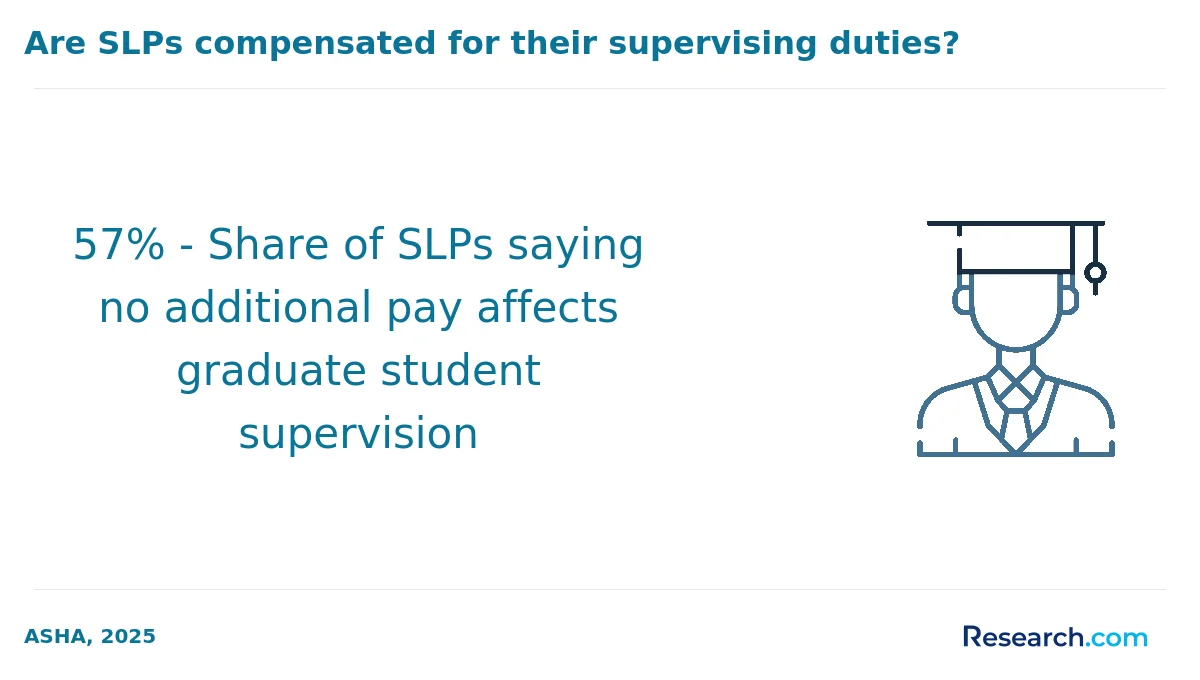
| Supervision or mentoring | Shows leadership and professional maturity | Mentorship duties, student supervision, onboarding roles | Clinical education or administration |
| Program development | Shows capacity for applied improvement projects | Quality initiatives, protocols, outcome tracking | Capstone or systems leadership |
| Teaching or training | Shows communication and curriculum skills | Workshops, adjunct teaching, CE presentations | Higher education or professional training |
| Research assistance or publication | Shows scholarly readiness | Posters, publications, data collection, faculty collaboration | PhD or research-focused doctorate |
If you have limited experience, choose programs that do not explicitly require multiple years of practice and use your application to show readiness in other ways. Strong recent coursework, a focused capstone idea, faculty-aligned interests, and excellent recommendations can help, but applicants with no clinical background should verify whether they are eligible at all.
Employer Confidence in Online vs. In-Person Degree Skills, Global 2024

Non-Speech Pathology majors can sometimes qualify for doctoral study in the discipline, but the route depends on the type of doctorate. A post-professional SLPD usually expects a master's degree in Speech-Language Pathology or Communication Sciences and Disorders because it builds on clinical preparation.
A research PhD may admit students from related fields such as linguistics, psychology, neuroscience, education, rehabilitation sciences, or public health if their research goals align with faculty expertise.
The biggest issue for non-SLP majors is not the word "doctorate." It is if the program assumes prior clinical knowledge. If the curriculum starts at advanced dysphagia, motor speech, language disorders, clinical supervision, or evidence-based intervention, missing prerequisites can make admission unlikely and completion difficult.
The table below compares the main routes for applicants with degree mismatches. Use it to decide whether to complete prerequisites first or target a broader doctoral pathway.
| Applicant background | Most realistic route | Common gap | Admission outlook |
| Bachelor's in psychology, linguistics, education, or health science | Leveling courses followed by master's-level SLP preparation | Communication disorders prerequisites and clinical requirements | Good if willing to complete bridge work |
| Master's in a related health or education field | Interdisciplinary doctorate or research PhD with related focus | SLP-specific clinical training | Possible if goals fit faculty expertise |
| Licensed SLP with nontraditional earlier undergraduate major | Post-professional SLPD | Usually minimal if master's and credentials are complete | Often realistic |
| Career changer with no CSD coursework | Bridge or leveling pathway before clinical SLP route | Foundational CSD sciences and supervised clinical sequence | Doctorate is usually premature |
For career changers, an SLP bridge program can be a more practical first step than applying directly to a doctorate. Bridge coursework can help establish prerequisite readiness and show admissions committees that the applicant can handle discipline-specific material.
Prior Learning Assessment can help in some adult-focused or interdisciplinary programs, but it is less likely to replace core clinical SLP prerequisites tied to licensure or professional competencies. Ask whether PLA can reduce elective credit, document professional learning, or support admission review, but do not assume it will substitute for required communication sciences coursework.
Online Speech Pathology doctorate programs may be less competitive than on-campus programs in some cases, but format alone does not determine selectivity. The easier admission route usually comes from program purpose.
Online applied doctorates often serve working professionals and may have broader geographic reach, multiple start dates, and flexible cohort design. On-campus PhD programs may be smaller because they depend on faculty research supervision, assistantship funding, lab capacity, and dissertation alignment.
The U.S. Department of Education's National Center for Education Statistics reported in 2024 that distance education remains a major part of graduate enrollment after the pandemic-era shift. For applicants, that means online doctoral formats are no longer unusual; they are part of mainstream graduate education, especially for working adults who need flexible scheduling.
The table below compares online and on-campus options by factors that affect admissions difficulty and student fit.
| Factor | Online applied doctorate | On-campus research doctorate | Decision impact |
| Admissions focus | Professional readiness, goals, credentials, writing | Research fit, faculty mentor, funding, scholarly potential | Applied programs may be more forgiving of nontraditional profiles |
| Cohort flexibility | May support geographically diverse working students | Often tied to local faculty and lab capacity | Online programs can sometimes scale more flexibly |
| Academic rigor | Advanced coursework and applied project expectations | Advanced research, methods, dissertation, publication expectations | Online does not mean easier coursework |
| Career target | Clinical leadership, supervision, teaching, specialization | Research faculty, grant-funded scholarship, academic research | Choose based on outcome, not perceived ease |
| Cost structure | May reduce relocation and commuting costs | May offer assistantships or funding in selective PhD tracks | Lower admission barrier does not always mean lower total cost |
The trade-off is important. A high-acceptance applied doctorate can be the smarter choice if you need flexibility and want practice-focused advancement. A lower-acceptance PhD may be worth pursuing if your goal requires research training, dissertation depth, publication mentorship, or funded doctoral study.
Some online Speech Pathology doctorate programs, especially applied SLPD programs, use a capstone, scholarly project, clinical portfolio, quality-improvement project, or applied evidence-based practice project instead of a traditional dissertation.
This can make the program feel more accessible for working clinicians because the final project is often connected to a real clinical, educational, or administrative problem rather than an original research dissertation.
A capstone is not a shortcut. It still requires literature review, project design, writing, faculty feedback, and a final product. The difference is that it may emphasize practice application over theory generation. This can be a strong fit for students who want to improve patient services, design training, evaluate clinical protocols, or build leadership tools.
The table below explains the main completion models and what they mean for admissions and student fit.
| Completion model | Typical expectation | Best fit | Potential drawback |
| Applied capstone | Practice-based project tied to a clinical or organizational problem | Working clinicians and leaders | May not carry the same research weight as a dissertation |
| Scholarly project | Evidence synthesis, implementation plan, or professional contribution | Students seeking advanced practice or teaching roles | Scope varies widely by school |
| Clinical portfolio | Documented competencies, reflections, and applied artifacts | Experienced practitioners with broad evidence of growth | May be less familiar to research-focused employers |
| Traditional dissertation | Original research under faculty supervision | Future researchers and tenure-track academics | Often longer and more dependent on faculty research match |
If you are choosing an easier-entry program, ask what the final project requires before enrolling. A program with no dissertation can still be rigorous, and a weakly structured capstone can create problems if expectations are unclear. Ask for examples of completed projects, faculty supervision models, project timelines, and whether the capstone can be completed at your current workplace.
How can students increase their chances of getting into a Speech Pathology doctorate program?
Students increase their chances of admission by applying strategically, not by looking only for the lowest stated requirements. The best application presents a coherent case: you understand the profession, you know why the doctorate fits your goal, you can handle doctoral writing, and you have selected programs that match your background.
Use the following steps to build a stronger application, especially if your GPA, major, or testing profile is not ideal:
- Verify institutional accreditation first; for U.S. schools, prioritize regionally accredited institutions and confirm whether the doctoral program is post-professional or tied to any licensure pathway.
- Match the degree type to your goal: choose an SLPD for applied clinical leadership or teaching-oriented advancement, and choose a PhD if you need deep research training and dissertation preparation.
- Contact admissions before applying and ask about GPA calculation, conditional admission, GRE waivers, prerequisite exceptions, transfer credit, and capstone expectations.
- Create a one-page fit map that connects your experience, faculty interests, program outcomes, and proposed capstone or research direction.
- Strengthen weak metrics with recent graduate coursework, a focused GPA addendum, a polished writing sample, and recommendations from people who can discuss doctoral readiness.
- Apply to a balanced list that includes flexible applied programs, not only highly selective research doctorates or brand-name universities.
Common mistakes can weaken even a qualified application. Avoid applying without checking accreditation, assuming an online doctorate automatically changes state licensure status, ignoring transfer-credit policies, submitting a generic personal statement, relying only on high acceptance claims, or choosing a doctorate that does not match your career path.
Cost and time should also shape your decision. Online doctorates may reduce relocation and commuting expenses, but tuition, fees, residencies, technology costs, reduced work hours, and capstone expenses can still affect ROI. Ask whether the program offers employer partnership discounts, payment plans, transfer credits, or part-time pacing.
If speed matters, compare doctoral timelines with related accelerated speech pathology programs so you understand whether a faster pathway fits your credentials and goals.
Before committing, ask admissions advisors direct questions:
- How many students are admitted per cohort?
- What percentage of applicants receive test waivers?
- How is GPA reviewed?
- Are applicants below 3.0 ever admitted?
- What final project is required?
- Are campus visits mandatory?
- What support exists for working students?
- What career outcomes do graduates typically pursue?
Clear answers to these questions are often more useful than a school's marketing language.
Other Things You Should Know About Speech Pathology Doctorates
It can be, especially when the institution is properly accredited and the curriculum matches the role you want. Employers may value an SLPD for clinical leadership, supervision, teaching, program development, or advanced practice, but research universities may still prefer a PhD for tenure-track research roles.
Many applied online SLPD programs take about two to four years, depending on part-time status, transfer credit, course load, and capstone pace. Research PhD programs often take longer because of dissertation, research, and funding expectations.
It may support advancement into higher-responsibility roles, but salary outcomes depend on employer type, region, setting, experience, and whether the role actually rewards doctoral preparation. Use the degree as part of a career strategy, not as a guaranteed income boost.
Not automatically. Choose the most accessible program that is still accredited, rigorous, affordable, and aligned with your career goal. A low-barrier program is a good choice when it offers the right credential and support, but a poor fit can waste time and money.
- U.S. Bureau of Labor Statistics - Speech-Language Pathologists https://www.bls.gov/ooh/healthcare/speech-language-pathologists.htm
- ASHA EdFind - Accredited Speech-Language Pathology Programs https://find.asha.org/ed/
- Audiology and Speech-Language Pathology Interstate Compact https://aslpcompact.com/compact-map/
- Maryville University - Master of Science in Speech-Language Pathology https://www.maryville.edu/masters/speech-language-pathology/
- Delaware Valley University - Master of Science in Speech-Language Pathology (M.S.) https://delval.edu/programs/graduate-programs/speech-language-pathology
- Baylor University - Master of Science in Speech-Language Pathology (Online) https://csd.robbins.baylor.edu/graduate/online-csd-graduate-program
- California State University-San Marcos - Online MS in Speech-Language Pathology https://www.csusm.edu/slp/programs/mastersonline/index.html
- New York University - Online MS, Communicative Sciences and Disorders (Speech@NYU) https://steinhardt.nyu.edu/degree/online-ms-communicative-sciences-and-disorders