2027 Admission Requirements for Online Speech Pathology Doctorate Programs: GPA, Prerequisites, Experience, and Eligibility
Audited and Verified:
Our Editorial and Data Verification Process
Research.com uses government datasets, official education statistics and primary institutional information to support its career and degree guides. Our review process checks factual accuracy, occupational definitions, source dates and the requirements associated with the credentials discussed.
How This Article Was Fact-Checked
Our editorial team verifies salary estimates, employment projections, education requirements and program information against original data providers and official organizations. Salary figures are checked against the relevant occupational definitions and reporting periods. Information about licensure, accreditation and required in-person training is reviewed separately.
Fact-checked and verified on:

Co-Founder and Chief Data Scientist

Reviewed by Rhea Paul, PhD
SLP Education & Research Expert
Determining whether you qualify for an online speech pathology doctorate can be confusing because requirements differ by SLPD, PhD, EdD, and post-professional pathways. GPA, prerequisites, clinical credentials, research fit, and experience all matter.
NCES data released in 2024 show that more than half of U.S. graduate students took at least one distance education course, making online doctoral options increasingly relevant. This guide helps prospective applicants compare eligibility rules, identify gaps, and prepare a stronger application.
Key Things You Should Know
- Most online clinical speech pathology doctorates are post-professional programs that expect a master's degree in speech-language pathology, CCC-SLP or state licensure, and a minimum GPA commonly around 3.0.
- Applicants without an SLP background usually need prerequisite coursework or a bridge/master's pathway before doctoral admission; a doctorate alone generally does not replace the accredited master's degree required for SLP licensure.
- Competitive applicants typically show graduate-level readiness through strong academic records, relevant clinical or research experience, focused goals, and application materials that explain fit with the program's faculty, format, and outcomes.
What Are the Basic Admission Requirements for an Online Speech Pathology Doctorate Program?
Basic admission requirements depend on the type of online speech pathology doctorate. A clinical doctorate, often called an SLPD or CScD, is usually designed for practicing speech-language pathologists who already hold the professional credentials needed to work in the field. A PhD or EdD is more likely to emphasize research, teaching, policy, leadership, or higher education roles.
Before comparing programs, separate entry-level SLP education from doctoral study. In the U.S., the standard clinical pathway to become a speech-language pathologist is typically a graduate program that meets licensure and certification requirements; applicants still exploring that route may want to compare online SLP programs before targeting a doctorate.
The table below summarizes common admission expectations by doctorate type. Use it as a screening tool, then verify each school's official catalog because doctoral admissions can vary significantly.
| Doctorate type | Common applicant profile | Typical baseline requirements | Best fit |
| Online SLPD or clinical doctorate | Licensed or certified practicing SLP | Master's in speech-language pathology or closely aligned field, graduate GPA near 3.0 or higher, resume, recommendations, professional statement, and often CCC-SLP or state license | Clinicians seeking advanced practice, leadership, supervision, or specialization |
| Online or hybrid PhD in communication sciences and disorders | Research-focused applicant, often with prior graduate work | Strong GPA, research interests aligned with faculty, writing sample, recommendations, and sometimes prior thesis or research experience | Future faculty, researchers, grant writers, or academic leaders |
| Online EdD with communication disorders or special education focus | Educator, clinician, administrator, or policy-focused professional | Master's degree, professional experience, leadership goals, academic writing ability, and program-specific prerequisites | School-based leadership, administration, advocacy, and applied education research |
At a practical level, most applications ask for proof of prior degrees, official transcripts, a professional resume or CV, letters of recommendation, a statement of purpose, and sometimes an interview. Some programs also require a valid state SLP license, ASHA Certificate of Clinical Competence in Speech-Language Pathology, evidence of clinical employment, or a proposed research area.
Do not assume that online format means easier admission. Online doctorates often use the same academic review standards as campus programs, and some are designed for working clinicians who can immediately apply advanced coursework to professional practice.
Do You Need a Master's Degree to Apply for an Online Speech Pathology Doctorate?
For most online clinical speech pathology doctorate programs, yes, a master's degree is usually required. The reason is that post-professional SLPD programs are built for applicants who have already completed the entry-level graduate preparation needed for clinical practice. The doctorate deepens expertise; it usually does not function as the first professional degree for becoming an SLP.
PhD and EdD programs can be more variable. Some doctoral programs admit bachelor's-prepared students into an integrated master's-to-doctoral route, while others require a completed master's degree before admission. Fully online bachelor's-to-doctorate options in speech-language pathology are uncommon, especially when the program includes clinical licensure preparation.
The table below shows how prior degree level affects eligibility. This is important because applying to the wrong pathway is one of the most common reasons applicants waste time and application fees.
| Current education level | Likely eligibility for online SLP doctorate | What to check before applying |
| Bachelor's in communication sciences and disorders | May qualify for some PhD tracks, but usually not post-professional SLPD programs | Whether the program includes master's-level clinical preparation or requires a master's before doctoral admission |
| Bachelor's in another field | Usually needs prerequisites, leveling coursework, a bridge route, or a master's before doctoral admission | Required foundational courses, clinical observation hours, and whether non-SLP majors are considered |
| Master's in speech-language pathology | Strongest fit for most SLPD programs and many PhD programs | GPA minimum, CCC-SLP or licensure expectations, faculty fit, and experience requirements |
| Master's in education, psychology, linguistics, public health, or related field | May qualify for some EdD or PhD programs, but clinical SLPD eligibility may be limited | Whether the program requires clinical SLP credentials or accepts allied professional backgrounds |
If your goal is to move quickly from a bachelor's degree into graduate SLP preparation, compare doctorate requirements with master's and accelerated speech pathology programs. A faster master's pathway may be more appropriate than a doctorate if you still need the degree required for state licensure or CCC-SLP eligibility.
What GPA Do You Need for an Online Speech Pathology Doctorate Program?
A 3.0 GPA is the most common minimum threshold for online speech pathology doctorate admission, especially for programs that use a standard graduate admissions cutoff. However, minimum GPA and competitive GPA are not the same. A program may review applicants at 3.0, but stronger candidates often show higher graduate-level performance, especially in research methods, statistics, evidence-based practice, and communication disorders coursework.
Admissions committees usually look at several GPA measures. Your overall undergraduate GPA matters less in some post-professional programs if you have a strong master's GPA and substantial clinical experience.
The table below explains how GPA is commonly evaluated. Use it to identify which part of your record may carry the most weight.
| GPA measure | Why it matters | How committees may interpret it |
| Undergraduate cumulative GPA | Shows long-term academic consistency | Important for applicants entering from a bachelor's degree or applying to research doctorates without extensive graduate work |
| Major or prerequisite GPA | Shows preparation in communication sciences, language, hearing, anatomy, and related foundations | Can offset a weaker cumulative GPA if relevant coursework is strong and recent |
| Graduate GPA | Shows readiness for advanced doctoral work | Often most important for SLPD applicants who already completed a master's in SLP |
| Last 60 credits GPA | Shows recent academic trend | May help applicants who improved after a weak early academic record |
If you are close to the cutoff, ask admissions advisors whether the program calculates GPA from all transcripts, the last 60 credits, graduate coursework only, or prerequisite coursework. This detail can change whether you appear ineligible, borderline, or competitive.
Yes, some applicants can be considered with a GPA below 3.0, but it depends on the program's policy. Some schools have a hard minimum set by the graduate college, while others allow conditional admission, faculty review, or exceptions when the applicant has strong professional credentials, recent graduate coursework, or a compelling explanation.
A low GPA is easier to address when the rest of the file shows doctoral readiness. The goal is not to make excuses; it is to give the committee evidence that your current academic ability is stronger than the number suggests.
Applicants below or near 3.0 should usually take these steps before applying:
- Confirm whether the GPA minimum is absolute or whether conditional admission, probationary admission, or petition review is available.
- Ask whether the program recalculates GPA using graduate credits, prerequisite courses, or the most recent 60 credits.
- Complete one or two recent graduate-level courses in statistics, research methods, evidence-based practice, dysphagia, language disorders, or a related area and earn strong grades.
- Use the statement of purpose to briefly explain the academic pattern, then focus on evidence of improvement, readiness, and fit.
- Choose recommenders who can speak directly to your analytical writing, clinical judgment, leadership, or research potential.
Applicants looking for less selective options should still avoid choosing a program only because it appears easier. A better strategy is to compare admission flexibility, accreditation context, licensure relevance, faculty support, and outcomes. If you are still considering master's-level admission, a guide to the easiest SLP programs to get into can help you understand how GPA flexibility may differ earlier in the education pathway.
Be cautious with any program that suggests a low GPA will not matter at all. Doctoral work requires advanced reading, writing, evidence evaluation, and independent project management, so committees need credible evidence that you can succeed.
Prerequisite requirements depend heavily on whether the doctorate is post-professional, research-focused, or designed for applicants from broader education or health backgrounds. Post-professional SLPD programs may not list many undergraduate prerequisites because they assume applicants already completed a qualifying master's in SLP. PhD and EdD programs may review prerequisite preparation more individually.
For applicants without a communication sciences and disorders background, prerequisite or leveling coursework is often the biggest barrier. If you are coming from another major, an SLP bridge program may help you complete foundational coursework before pursuing graduate or doctoral admission.
The table below shows common prerequisite areas and why they matter. Individual programs may require different course names, credit minimums, grades, or recency rules.
| Prerequisite area | Why programs require it | Examples of related coursework |
| Speech and language development | Supports advanced work in language disorders, literacy, and assessment | Language acquisition, child language development, phonetics |
| Anatomy and physiology of speech and hearing | Builds the clinical foundation for motor speech, voice, swallowing, and hearing-related topics | Speech science, hearing science, neuroanatomy, anatomy of the speech mechanism |
| Audiology and hearing disorders | Helps applicants understand hearing screening, intervention, and interdisciplinary practice | Introduction to audiology, aural rehabilitation, hearing disorders |
| Research methods and statistics | Prepares students for evidence appraisal, doctoral projects, dissertations, and applied research | Graduate statistics, research design, evidence-based practice |
| Biological, physical, behavioral, and social sciences | May be needed for certification or graduate-level clinical preparation | Biology, physics or chemistry, psychology, sociology, human development |
When reviewing prerequisites, pay attention to recency and grade rules. Some programs accept older coursework, while others prefer recent coursework or require a minimum grade such as B or C. If the school does not clearly state whether a course qualifies, send the syllabus to admissions before you apply.
You can apply to some speech pathology doctoral programs with a degree in another field, but eligibility depends on the doctorate type and your career goal. If you want to become a licensed speech-language pathologist, a non-SLP bachelor's degree usually means you must complete foundational communication sciences coursework and then an accredited graduate clinical pathway before independent practice.
Applicants from education, psychology, linguistics, neuroscience, public health, rehabilitation sciences, special education, or related fields may be considered for some PhD or EdD programs if their goals align with the program. However, they may not be eligible for post-professional SLPD programs that require CCC-SLP, state licensure, or prior supervised clinical practice as an SLP.
Use the following checklist before applying from another field. It will help you avoid applying to a doctorate that does not match your background.
- Confirm whether the doctorate is clinical, research-focused, or education-leadership focused.
- Ask whether the program requires a master's specifically in speech-language pathology or accepts related graduate degrees.
- Verify whether CCC-SLP, state SLP licensure, school-based SLP certification, or supervised clinical employment is required.
- Request a prerequisite review if your transcripts include linguistics, psychology, neuroscience, education, or health science coursework that may overlap with SLP foundations.
- Clarify whether completing the doctorate would change your licensure eligibility or simply add advanced academic training.
The most important distinction is this: being eligible for a doctoral program does not automatically mean you are eligible for SLP licensure. Licensure rules are state-specific, and certification requirements are tied to clinical preparation, supervised experience, and exams, not simply to holding a doctorate.
Professional or research experience expectations vary by program type. Online SLPD programs often value clinical experience because students are expected to connect doctoral coursework to real practice problems. PhD programs usually place more weight on research potential, faculty fit, writing ability, and evidence that the applicant understands scholarly work.
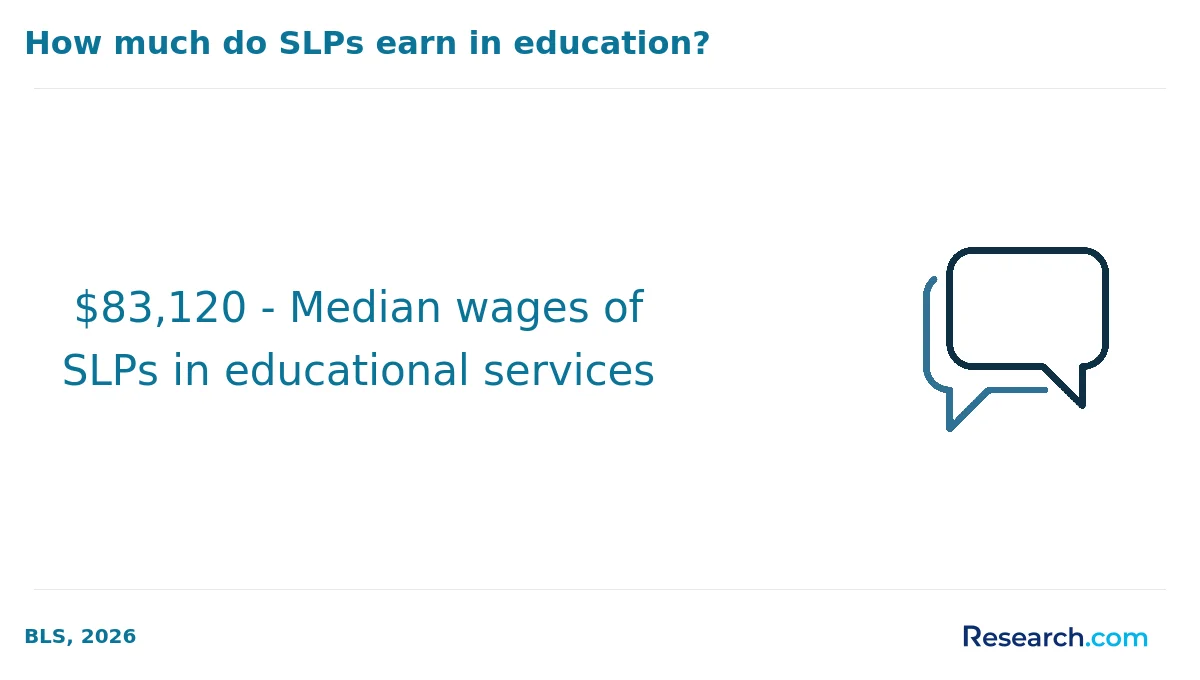
The labor market helps explain why advanced clinical and leadership preparation is attractive. The U.S. Bureau of Labor Statistics projects 17% employment growth for speech-language pathologists from 2025 to 2035, and the median annual pay for SLPs was $97,870 in May 2026. These figures do not predict individual outcomes, but they show why programs may prioritize applicants who can contribute to complex service delivery, supervision, research, and systems improvement.
The table below compares common experience expectations. It can help you decide whether your background is stronger for a clinical doctorate, research doctorate, or education-focused doctorate.
| Program type | Experience commonly valued | What strengthens the application |
| Online SLPD | Clinical practice, supervision, specialty caseloads, interprofessional work, leadership, or program development | Evidence of advanced clinical reasoning, outcomes improvement, mentoring, or commitment to a focused practice area |
| PhD in communication sciences and disorders | Research assistantships, thesis work, conference presentations, data analysis, literature reviews, or scholarly writing | Clear research question, faculty match, writing sample, and readiness for independent inquiry |
| EdD or leadership doctorate | School-based practice, administration, advocacy, curriculum work, training, or policy-related experience | Documented leadership problem, applied improvement goal, and professional setting where research can be implemented |
If you lack experience, do not simply wait another year without a plan. Seek targeted opportunities that match your intended doctorate, such as joining a clinical quality-improvement project, assisting with a faculty research study, presenting a case study, supervising students, collecting outcome data, or writing a professional article.
GRE and GMAT requirements have become less common in many health and education graduate programs, but policies vary. Some online speech pathology doctorates are test-optional, some have removed standardized tests entirely, and some PhD programs may still request GRE scores or allow them as optional evidence.
The GMAT is rarely relevant unless the doctorate has a business, administration, or executive leadership structure. For most speech pathology doctoral applicants, the more common testing questions involve the GRE and English-proficiency exams.
Before applying, verify these testing rules directly with each program:
- Whether the GRE is required, optional, waived for applicants with a graduate degree, or not accepted.
- Whether optional scores can help offset a lower GPA or whether the committee does not consider them.
- Whether international applicants must submit TOEFL, IELTS, Duolingo English Test, or another approved English-proficiency score.
- Whether English-proficiency waivers are available for applicants who completed a degree at a U.S. institution or in an English-language program.
- Whether score reports must arrive by the application deadline or can be submitted after initial review.
If a program is test-optional, submit scores only if they strengthen your file. Strong recommendations, a focused statement, relevant experience, and high-quality writing samples usually matter more than an optional score that does not add new evidence.
Application documents are where you prove that you meet the published requirements and are prepared for doctoral-level work. A strong application is not just complete; it is coherent. Every document should support the same basic message: your background fits the program, your goals require doctoral training, and you can succeed in an online learning environment.
Most online speech pathology doctorate applications include several core documents. Requirements vary, so build a program-specific checklist instead of reusing the same packet for every school.
- Official transcripts from every college or university attended, including transfer, prerequisite, and graduate coursework.
- Resume or CV showing clinical roles, research experience, leadership, presentations, publications, certifications, and specialized training.
- Statement of purpose explaining your doctoral goals, program fit, relevant experience, and how you plan to use the degree.
- Letters of recommendation from faculty, supervisors, clinical leaders, researchers, or administrators who can evaluate doctoral readiness.
- Proof of credentials when required, such as state SLP license, CCC-SLP, school certification, or professional employment verification.
- Writing sample, scholarly paper, capstone, thesis excerpt, case analysis, or research proposal if requested.
- International transcript evaluation and English-proficiency documentation when applicable.
Some programs also ask for an interview, video response, portfolio, proposed capstone idea, or faculty consultation. Treat these requirements seriously. In online doctoral admissions, committees often use interviews to judge communication skills, time-management readiness, and whether the applicant understands the demands of remote doctoral study.
Transfer-credit rules also vary. Some programs allow a limited number of doctoral or post-master's credits to transfer, but credits usually must be recent, graduate-level, relevant to the curriculum, and not already counted toward another completed degree. Always ask whether transfer credit affects tuition, timeline, or residency requirements.
What Do Admissions Committees Look for in Online Speech Pathology Doctorate Applicants?
Admissions committees look for more than minimum eligibility. They want evidence that you can handle doctoral reading and writing, contribute to the cohort, complete an applied doctoral project or dissertation, and use the degree for a realistic professional goal. For research doctorates, faculty fit can be especially important because a strong GPA cannot compensate for a mismatch in research interests.
Current graduate admissions trends favor holistic review, especially in professional fields. That means committees may consider GPA, experience, writing, recommendations, leadership, equity-focused work, and academic trajectory together rather than relying on one metric alone. Holistic review can help applicants with uneven records, but it also means generic applications are easy to reject.
The table below summarizes common red flags and better alternatives. Use it as a final audit before submitting applications.
| Common mistake | Why it hurts | Better approach |
| Assuming the minimum GPA guarantees admission | Minimum eligibility is not the same as competitiveness | Show graduate-level strength through recent coursework, writing, recommendations, and experience |
| Applying before prerequisite review | Missing coursework can delay or block admission | Ask for a transcript evaluation and confirm course substitutions in writing |
| Using a generic statement of purpose | It does not show program fit or doctoral-level goals | Name the program features, faculty interests, practice problems, or research areas that match your plan |
| Choosing recommenders based only on title | A prestigious recommender may write a weak or vague letter | Choose people who can describe your clinical judgment, scholarship, leadership, or readiness in detail |
| Ignoring licensure and accreditation context | A doctorate may not provide the credentials needed for clinical practice | Verify state licensure rules, certification expectations, and whether the program is intended for already-credentialed SLPs |
| Underestimating online workload | Doctoral study requires sustained writing, reading, projects, and often synchronous participation | Confirm weekly time expectations, residency requirements, technology needs, and employer support |
To strengthen your application, start with a gap analysis. Compare your transcripts, GPA, credentials, experience, and goals against each program's admission page. Then contact admissions with specific questions, not broad requests such as "Am I eligible?" The more precise your question, the more useful the answer will be.
Good questions to ask include whether your master's degree meets the program's requirement, how GPA is calculated, whether CCC-SLP or licensure is mandatory at the time of application, whether prerequisites can be completed after admission, whether faculty are accepting students in your area, and whether online students must attend campus residencies.
Other Things You Should Know About Speech Pathology
Usually no. Most post-professional online SLP doctorates are designed for licensed or certified SLPs. If you are not already eligible for clinical practice, verify whether you first need an accredited master's program, supervised clinical experience, and state-specific licensure steps.
Some do. Even fully online programs may require short residencies, intensive weekends, dissertation or capstone defenses, clinical demonstrations, or orientation sessions. Check travel requirements before applying, especially if you work full time or live far from campus.
Many online SLPD and EdD programs are designed for working professionals, but the workload can still be demanding. Ask each school about weekly time expectations, synchronous class times, practicum or project requirements, and whether your workplace can support applied assignments.
It depends on your goals. A doctorate may be useful for advanced clinical specialization, supervision, leadership, teaching, program development, or research-informed practice. It may be less necessary if your goal is entry-level licensure, where the master's degree is typically the required credential.
- U.S. Bureau of Labor Statistics - Speech-Language Pathologists https://www.bls.gov/ooh/healthcare/speech-language-pathologists.htm
- ASHA EdFind - Accredited Speech-Language Pathology Programs https://find.asha.org/ed/
- ETS Praxis - Speech-Language Pathology (5331) https://praxis.ets.org/test/speech-language-pathology-5331.html
- Delaware Valley University - Master of Science in Speech-Language Pathology (M.S.) https://delval.edu/programs/graduate-programs/speech-language-pathology
- Auburn University, Montgomery - Master of Science in Speech-Language Pathology https://www.aum.edu/degree/ms-speech-language-pathology/
- James Madison University - Master of Science (M.S.) in Speech-Language Pathology (Distance Education / Online) https://www.jmu.edu/chbs/csd/online_ms/index.shtml
- California State University-East Bay - Online Master of Science in Speech-Language Pathology https://ce.csueastbay.edu/programs/speech-language-pathology/
- New England Institute of Technology - Master of Science in Speech Language Pathology https://www.neit.edu/academics/graduate-degrees/speech-language-pathology-ms