2027 Shortest Online Speech Pathology Doctorate Programs: Fast PhD, DBA, EdD, DNP, PsyD, and Professional Doctorate Options
Audited and Verified:
Our Editorial and Data Verification Process
Research.com uses government datasets, official education statistics and primary institutional information to support its career and degree guides. Our review process checks factual accuracy, occupational definitions, source dates and the requirements associated with the credentials discussed.
How This Article Was Fact-Checked
Our editorial team verifies salary estimates, employment projections, education requirements and program information against original data providers and official organizations. Salary figures are checked against the relevant occupational definitions and reporting periods. Information about licensure, accreditation and required in-person training is reviewed separately.
Fact-checked and verified on:

Co-Founder and Chief Data Scientist

Reviewed by Rhea Paul, PhD
SLP Education & Research Expert
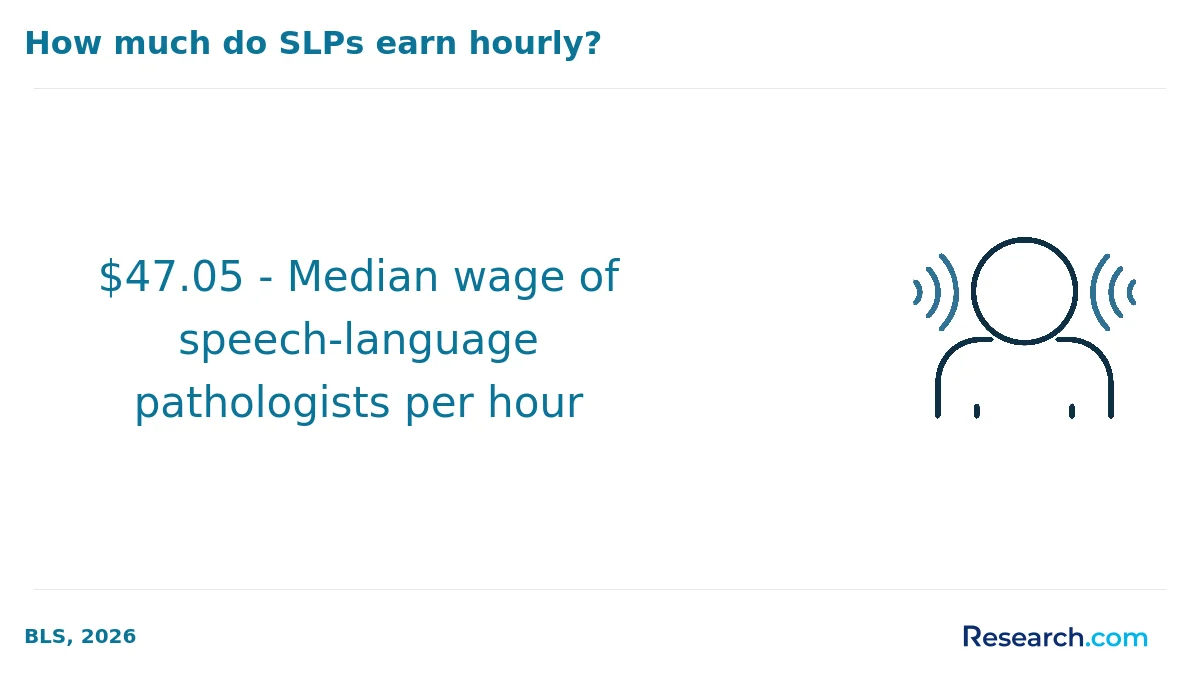
Choosing the fastest online speech pathology doctorate is really a question of fit: clinical leadership, research, university teaching, administration, or a related healthcare role. The decision matters because the U. S. Bureau of Labor Statistics reports a 2024 median annual wage of $95,410 for speech-language pathologists, and advanced credentials can influence leadership, academic, and specialty opportunities. This guide helps licensed SLPs, educators, clinicians, and career changers compare accelerated PhD, EdD, SLPD, DBA, DNP, PsyD, and related professional doctorate options without sacrificing accreditation, flexibility, or long-term value.
Key Things You Should Know
- The fastest online speech pathology doctorates are usually professional doctorates or EdD programs with applied capstones, often designed for completion in about 2 to 3 years; PhD programs commonly take longer because of original research and dissertation requirements.
- DBA, DNP, and PsyD programs are not standard speech-language pathology licensure pathways, but they may fit SLPs pursuing healthcare leadership, nursing-led clinical systems, behavioral health, or executive roles outside traditional SLP practice.
- According to 2024 federal loan rules, graduate students may borrow up to $20,500 per year in Direct Unsubsidized Loans, so a shorter doctorate can reduce borrowing exposure, but only if the program's total tuition and pace are manageable.
Which Online Speech Pathology Doctorate Programs Can Be Completed the Fastest?
The shortest online speech pathology doctorate programs are typically designed for experienced professionals who already hold a master's degree, professional licensure, or substantial clinical experience. In speech-language pathology, the most relevant accelerated options are usually the SLPD, EdD, and select low-residency PhD programs; DBA, DNP, and PsyD programs can be useful for adjacent career goals but should not be mistaken for SLP licensure programs.
Before comparing schools, separate "advertised minimum time" from "realistic time to completion." A program may say it can be finished in 24 months, but students often take longer if they work full time, need IRB approval, delay a dissertation proposal, or must complete residencies. If you are still exploring master's-level pathways before doctoral study, reviewing accelerated speech pathology programs can help you understand how compressed formats differ from traditional degree pacing.
The table below compares common doctorate types by speed and career alignment. Use it to identify which degree category is likely to match your goals before you compare individual universities.
| Doctorate type | Typical fastest online or hybrid timeline | Best fit | Main speed limitation |
| SLPD or clinical doctorate in speech-language pathology | About 2 to 3 years | Licensed SLPs seeking clinical leadership, advanced practice, supervision, or specialty expertise | Capstone project, clinical portfolio, and cohort course sequence |
| EdD with speech-language pathology, communication sciences, special education, or health leadership focus | About 2.5 to 3.5 years | SLPs moving into education leadership, program administration, curriculum, or university clinical education | Applied dissertation or capstone approval process |
| PhD in communication sciences and disorders or related field | About 3 to 6 years | Future researchers, tenure-track faculty, grant writers, and academic scientists | Original dissertation research, methodology training, and faculty mentorship capacity |
| DBA in healthcare administration or organizational leadership | About 3 years | SLPs aiming for executive, operations, consulting, or private-practice leadership roles | Business research project and limited speech-pathology-specific coursework |
| DNP | About 2 to 4 years depending on entry point | Nurses working in clinical systems, advanced nursing practice, or healthcare quality improvement | Requires nursing credentials; not an SLP doctorate |
| PsyD | About 4 to 6 years, often with in-person clinical requirements | Students pursuing psychology practice rather than speech-language pathology practice | Practicum, internship, licensure requirements, and limited fully online availability |
| Professional doctorate in health science, rehabilitation science, or education | About 2.5 to 4 years | Clinicians seeking interdisciplinary leadership, teaching, policy, or rehabilitation management roles | Capstone design, residency, and program-specific prerequisites |
The fastest realistic choice for a licensed SLP is usually a professional clinical doctorate or applied EdD because these programs are built around practice improvement rather than a traditional research apprenticeship. A PhD may be the better investment if your goal is a research university position, even though it usually takes longer.
Which Type of Online Speech Pathology Doctorate Offers the Fastest Path to Graduation?
For most speech-language pathologists, the fastest path is the doctorate that builds directly on existing credentials. A post-master's SLPD or applied EdD generally allows students to use their clinical background, workplace access, and professional experience as the foundation for projects, assignments, and capstones.
The right degree type depends less on the initials after your name and more on the outcome you want. The following comparison shows how to think about speed, academic depth, and career purpose together.
| Goal | Fastest suitable doctorate | Why it may be faster | When to choose a longer route |
| Become an advanced clinical leader in speech-language pathology | SLPD or related clinical doctorate | Coursework and capstone are usually practice-focused and designed for working SLPs | Choose a PhD if you want to produce original research or pursue research-intensive faculty roles |
| Move into school, district, or university program leadership | EdD | Applied dissertation topics can often be based on workplace problems | Choose a PhD if you want a research faculty track in communication sciences and disorders |
| Run a clinic, department, or healthcare organization | DBA or health administration doctorate | Programs may emphasize executive decision-making, finance, operations, and applied research | Choose an SLPD if you need the degree to signal deeper speech-pathology clinical expertise |
| Lead quality improvement in nursing or advanced nursing practice | DNP | Designed for nurses with defined practice-change projects | Do not choose this route unless you are a nurse and the degree matches your licensure path |
| Practice psychology or pursue psychological assessment roles | PsyD | Practice-oriented compared with a psychology PhD | Expect a longer path because psychology licensure usually requires supervised clinical training |
A common mistake is assuming that a DBA, DNP, or PsyD is simply a faster substitute for a speech pathology doctorate. These degrees can be powerful credentials in the right context, but they prepare graduates for different professional ecosystems. If your identity and licensing are tied to speech-language pathology, confirm that the curriculum, faculty, and final project are relevant to SLP practice.
What Program Features Help Students Finish an Online Speech Pathology Doctorate Faster?
Accelerated completion usually comes from program design, not shortcuts. The fastest legitimate programs reduce scheduling friction, clarify milestones early, and give students structured support for the final research or capstone requirement.
Look for features that make progress predictable. These are especially important if you plan to continue working while enrolled.
- Post-master's admission structure: Programs built for applicants who already have a graduate degree usually avoid duplicated foundational coursework.
- Cohort-based pacing: A fixed course sequence can prevent scheduling gaps that delay graduation.
- Year-round terms: Summer enrollment and shorter academic sessions may help students complete credits faster than programs that follow only fall and spring terms.
- Embedded dissertation or capstone milestones: Programs that require topic approval, literature review, proposal work, and data planning inside regular courses tend to reduce end-stage delays.
- Low-residency or fully online format: Limited travel requirements can reduce missed work time and scheduling conflicts.
- Faculty with SLP or communication sciences expertise: Relevant mentoring can make final projects more efficient because students spend less time translating their topic for advisors outside the field.
Students who are comparing online SLP programs at earlier stages should apply the same logic later at the doctoral level: format, accreditation, clinical relevance, and student support matter as much as advertised speed. A short program with weak advising can take longer than a nominally slower program with stronger structure.
The most common delays happen after coursework is finished. In doctoral education, "all but dissertation" or "all but capstone" status can stretch for months or years if the student lacks a feasible topic, reliable data access, or consistent faculty feedback.
These requirements are the ones most likely to turn a short online doctorate into a longer commitment. Check them before enrolling, not after you finish your core courses.
- Dissertation design: Original research may require extensive methodology preparation, committee review, IRB approval, recruitment, data collection, analysis, and revisions.
- Capstone scope: Applied projects can still take time if they require organizational permission, stakeholder participation, pilot testing, or measurable outcomes.
- Residency requirements: Even short campus visits can create delays if they are offered only once or twice per year.
- Clinical or field-based expectations: Some related doctorates require supervised practice, internship, practicum, or workplace-based implementation hours.
- Comprehensive exams: Programs that require written or oral exams may delay students who cannot advance until exams are passed.
- Course availability: A missed prerequisite in a lockstep sequence can postpone graduation by an entire term.
The best way to avoid these delays is to ask direct questions: What is the average time to completion, not just the minimum? How many students finish the dissertation or capstone on schedule? How often do students change committee chairs? What happens if a required course is not offered when expected?
Enrollment pace has a major effect on completion time, but faster is not always better. A full-time online doctorate may compress the calendar, while a part-time format may be more realistic for SLPs managing caseloads, family responsibilities, private practice, or school-year schedules.
The table below shows how enrollment choices affect the student experience. Use it to estimate whether the shortest route is actually sustainable for your schedule.
| Enrollment choice | Likely effect on timeline | Best for | Risk to watch |
| Full-time, year-round enrollment | Fastest completion if the program allows continuous progress | Students with flexible work schedules or employer support | Burnout, reduced income, or rushed final project planning |
| Part-time enrollment | Longer calendar time but often more manageable | Working clinicians, school-based SLPs, caregivers, and private-practice owners | Loss of momentum during dissertation or capstone stages |
| Cohort model | Predictable pace with fewer scheduling decisions | Students who want structure and peer accountability | Limited flexibility if life events interrupt the sequence |
| Self-paced or flexible model | Can be fast for highly disciplined students | Students with strong time management and prior research experience | Procrastination and unclear milestone tracking |
| Hybrid low-residency model | Efficient if residencies are scheduled well in advance | Students who value face-to-face advising or cohort intensives | Travel conflicts, added costs, and fixed residency windows |
A practical rule is to choose the fastest pace you can maintain without compromising the final project. If you can complete weekly coursework but cannot protect time for reading, writing, and revision, an advertised 2-year doctorate may become a 4-year experience.
The best online speech pathology doctorate for working professionals is not necessarily the shortest one. It is the program that lets you keep making steady progress while maintaining your clinical responsibilities and avoiding unnecessary travel, scheduling conflicts, or unpaid time away from work.
Working SLPs should prioritize programs with design features that support adult learners. The right format can make the difference between finishing quickly and stopping out.
- Asynchronous coursework with clear weekly deadlines: This format gives working professionals flexibility without removing structure.
- Evening or weekend synchronous sessions: Live sessions can be helpful when they are predictable and recorded for review.
- Applied projects based on the student's workplace: Capstones tied to real clinical, school, or organizational problems can reduce the need to create an artificial research setting.
- Transparent residency calendar: Programs should publish campus or virtual residency requirements far enough ahead for students to plan leave and travel.
- Dedicated dissertation or capstone advising: Regular mentoring protects students from losing momentum after coursework.
- Employer-aligned outcomes: The curriculum should support goals such as clinical supervision, program evaluation, policy leadership, faculty work, or administration.
In many cases, a part-time professional doctorate with strong advising is better for working professionals than a full-time accelerated program. The goal is not only to finish sooner; it is to finish with a project, portfolio, and credential that actually support your next role.
Finishing faster can reduce indirect costs such as extra semesters, technology fees, delayed promotions, and lost time. However, an accelerated doctorate is not automatically cheaper. Some programs charge by credit, some charge by term, and some include premium tuition for executive or professional formats.
Federal Student Aid rules for the 2024-25 award year set the annual Direct Unsubsidized Loan limit for most graduate and professional students at $20,500. That matters because students in longer programs may need more years of borrowing, while students in faster programs may face heavier annual cash-flow demands.
Quality should be evaluated separately from speed. A legitimate short doctorate should still have qualified faculty, clear learning outcomes, institutional accreditation, defensible assessment standards, and meaningful research or applied project expectations. Speed becomes a red flag when the program minimizes doctoral-level inquiry, provides little faculty access, or is vague about final project requirements.
Use these checks to balance cost, speed, and academic quality before committing.
- Calculate total tuition and required fees, not just cost per credit.
- Ask whether tuition changes if you need extra dissertation, capstone, or continuation terms.
- Confirm institutional accreditation through recognized U.S. accreditation channels.
- Ask whether the degree title and transcript language match your career goal.
- Review faculty backgrounds for speech-language pathology, communication sciences, education, healthcare leadership, or your intended specialization.
- Compare average time to completion with the advertised minimum timeline.
A shorter doctorate is a good value only when it shortens time without weakening advising, credibility, or career relevance. If a slightly longer program has stronger mentorship and better alignment with your goals, it may deliver better long-term value.
The careers that benefit most from a faster doctorate are usually roles where the credential helps a qualified professional move into leadership, teaching, consulting, or specialized practice sooner. The doctorate can strengthen a resume, but it does not replace state licensure, the CCC-SLP where required or preferred, or employer-specific experience expectations.
The U.S. Bureau of Labor Statistics projects much faster-than-average employment growth for speech-language pathologists over the 2024 to 2034 period. For readers, the important takeaway is not that a doctorate is required for most SLP jobs; it is that an expanding labor market may create more opportunities for advanced clinicians who can supervise, teach, design programs, and lead interdisciplinary teams.
These career paths may benefit from completing an online doctorate efficiently.
- Clinical director or rehabilitation program leader: A practice-focused doctorate can support roles involving protocol development, quality improvement, staff supervision, and service delivery strategy.
- University clinical educator: An EdD, SLPD, or PhD may strengthen preparation for supervising graduate students, teaching clinical courses, and developing training programs.
- Faculty or researcher: A PhD is usually the strongest fit for research-intensive academic roles, even when it is not the fastest option.
- School district specialist or administrator: An EdD may support leadership in special education services, intervention systems, assistive technology, or program evaluation.
- Private practice owner or consultant: A DBA, SLPD, or health leadership doctorate may help clinicians deepen expertise in operations, evidence-based services, and business strategy.
- Policy, advocacy, or healthcare systems role: Professional doctorates can support work in access, reimbursement, service models, and interdisciplinary care improvement.
The biggest career mistake is choosing a doctorate because it is short rather than because it matches the role you want. A fast DBA may help with executive leadership, but it may not carry the same meaning as an SLPD or PhD in a communication sciences department.
Students who finish fastest usually enter with a clear professional purpose, a realistic schedule, and a final-project idea that can be completed with accessible data or workplace support. Doctoral speed depends heavily on preparation before enrollment.
If you are coming from another field, timeline planning starts even earlier because prerequisite coursework and master's-level preparation may be required before doctoral admission. Reviewing an SLP bridge program can clarify how non-SLP majors move toward communication sciences and disorders before considering advanced clinical or doctoral study.
Students who complete online doctorates efficiently often share these characteristics.
- They know the career outcome they want: They can explain whether they need clinical leadership, research preparation, education leadership, business training, or healthcare systems expertise.
- They protect writing time every week: Doctoral progress depends on sustained reading, synthesis, analysis, and revision, not only attending online classes.
- They choose feasible project topics: Strong topics are specific, ethical, measurable, and realistic within the student's setting.
- They communicate early with advisors: Regular feedback reduces the risk of major revisions late in the process.
- They understand their work calendar: School-based SLPs, medical SLPs, and private practitioners may have different peak workload periods.
- They have support from an employer or site: Access to data, participants, implementation settings, or administrative permission can speed applied projects.
Students who struggle often underestimate the independence required after coursework. If you need frequent external structure, choose a program with embedded milestones, not one that leaves the dissertation or capstone largely self-directed.
How Should Students Compare the Shortest Online Speech Pathology Doctorate Programs?
The best comparison process starts with career fit, then filters by quality, speed, flexibility, and cost. This prevents a common mistake: enrolling in the shortest available doctorate and later discovering that it does not support the intended role.
Applicants who are still building toward graduate admission may also want to compare easiest SLP programs to get into carefully, because easier admission at one stage does not necessarily mean weaker quality or faster doctoral progress later. For doctoral programs, admissions selectivity should be weighed alongside faculty fit, student support, and completion outcomes.
Use this step-by-step process to compare programs in a way that protects both speed and value.
- Define the role you want after graduation: Decide whether your priority is clinical leadership, research, teaching, administration, business ownership, policy, or interdisciplinary healthcare leadership.
- Eliminate mismatched doctorate types: Do not choose a DBA, DNP, or PsyD unless its professional pathway fits your credentials and career plans.
- Verify accreditation and institutional legitimacy: Confirm that the university is appropriately accredited and that any professional expectations align with your state, employer, or licensing board.
- Compare average completion time: Ask for typical timelines for students who work full time, not only the fastest possible schedule.
- Map the final project timeline: Find out when students choose a topic, form a committee, submit proposals, receive IRB approval if needed, and defend or present their work.
- Calculate total cost under realistic pacing: Include tuition, fees, travel, books, technology, continuation credits, and lost income if you reduce work hours.
- Review faculty alignment: Look for mentors whose expertise matches your interests in dysphagia, language disorders, AAC, neurogenic communication, school services, leadership, or research methods.
- Ask about support after coursework: Strong dissertation or capstone coaching is one of the clearest signs that a program can help students finish efficiently.
The shortest online speech pathology doctorate is the one that you can complete on time, afford responsibly, and use meaningfully. A program that is fast on paper but weak in advising, unclear about project requirements, or misaligned with your career goal is rarely the best choice.
Other Things You Should Know About Speech Pathology
No. In most U.S. settings, entry into speech-language pathology practice requires a qualifying master's degree, supervised clinical experience, state licensure, and often the CCC-SLP credential. A doctorate is usually pursued for advanced clinical expertise, leadership, research, teaching, or specialized professional goals.
Yes, but the best degree depends on the teaching role. A PhD is typically preferred for tenure-track research faculty positions, while an EdD, SLPD, or other professional doctorate may fit clinical faculty, supervision, program leadership, or practice-focused teaching roles.
They can be, especially when offered by an accredited institution with strong faculty, rigorous coursework, and a meaningful dissertation or capstone. Employers usually care less about the online format itself and more about degree relevance, institutional credibility, professional experience, and demonstrated expertise.
Yes. Doctoral study usually does not replace state licensure requirements, but licensing rules, title usage, supervision requirements, and continuing education expectations vary by state. Check with your state board before choosing a program if your goal involves clinical practice, supervision, or a new professional scope.
- U.S. Bureau of Labor Statistics - Speech-Language Pathologists https://www.bls.gov/ooh/healthcare/speech-language-pathologists.htm
- ASHA EdFind - Accredited Speech-Language Pathology Programs https://find.asha.org/ed/
- O*NET OnLine - Speech-Language Pathologists https://www.onetonline.org/link/summary/29-1127.00
- California State University-East Bay - Online Master of Science in Speech-Language Pathology https://ce.csueastbay.edu/programs/speech-language-pathology/
- University of Wisconsin-Eau Claire - Master of Science in Speech-Language Pathology (Online) https://www.uwec.edu/speech-language-and-hearing-sciences-department/graduate-program/speech-language-pathology-online
- Idaho State University - Master of Science in Speech-Language Pathology (Online/Distance Education) https://www.isu.edu/slp/programs-offered/slp-graduate-program/
- Ithaca College - Online Master of Science in Speech-Language Pathology https://slponline.ithaca.edu/programs/masters-speech-language-pathology-online
- New England Institute of Technology - Master of Science in Speech Language Pathology https://www.neit.edu/academics/graduate-degrees/speech-language-pathology-ms