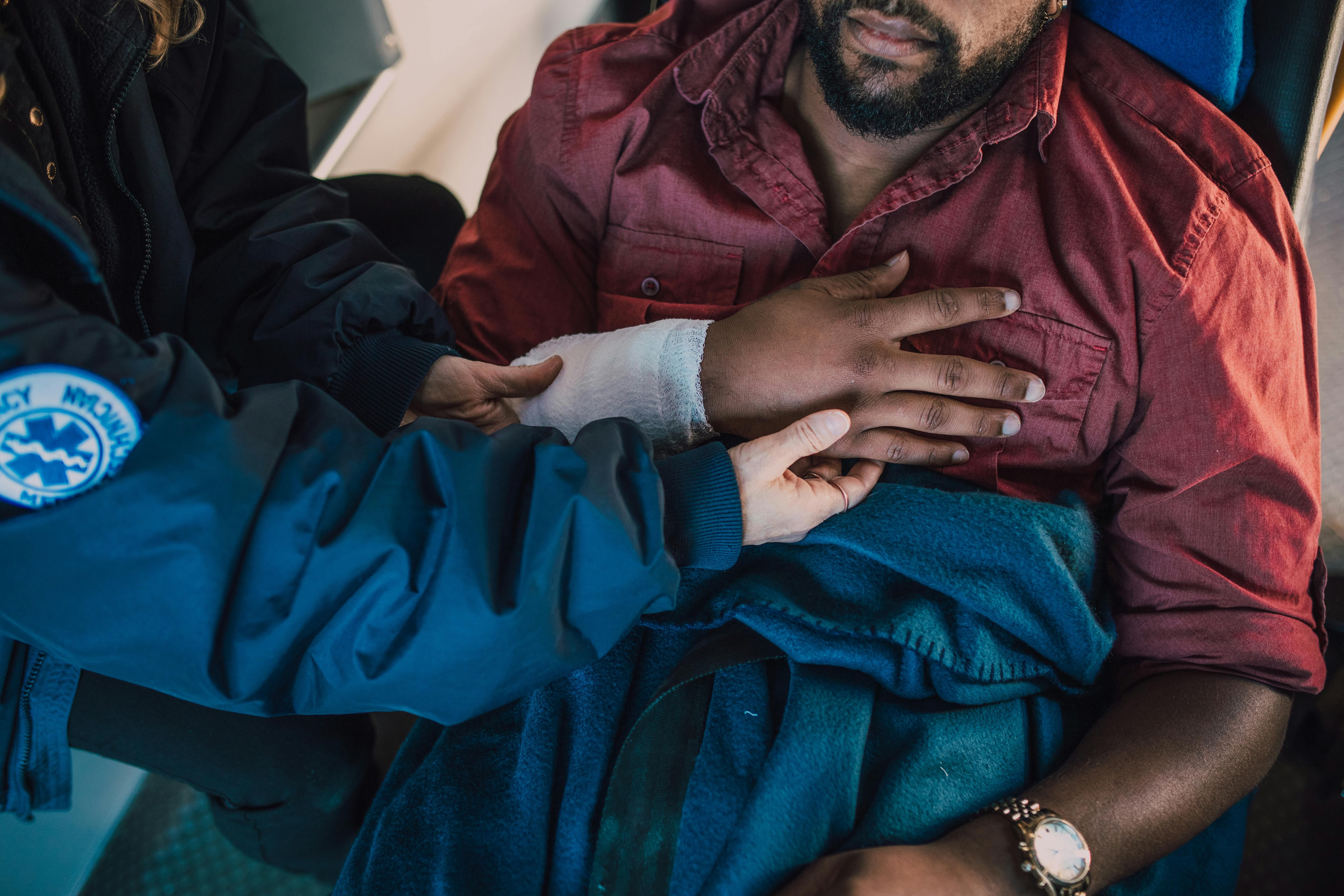
Choosing a Florida speech pathology program means balancing clinical preparation, licensure eligibility, cost, and the setting where you hope to work. This guide is for future speech-language pathologists and career changers comparing graduate pathways. It explains accreditation, admissions, timelines, aid, and job prospects so you can judge return on investment. It will also feature a 2027 Best Speech Pathology Degree Programs Ranking in Florida created by the Research.com team of data scientists to help students make an informed choice about which programs are worth considering.
Key findings about speech pathology degrees in Florida
Florida licensure planning should begin with a master's or doctoral program that meets Florida Board and Council on Academic Accreditation requirements; a bachelor's degree alone does not qualify someone to practice independently as a speech-language pathologist.
The national median annual wage for speech-language pathologists was $97,870 in May 2025, and BLS projects 17% employment growth from 2025 to 2035; these figures support demand but do not predict an individual graduate's pay or placement.
Program cost is driven less by a single published tuition figure than by residency, required clinical semesters, living costs, completion time, aid, and whether a program can arrange suitable placements near the student's Florida residence.
What can I expect from a speech pathology degree in Florida?
A speech pathology degree usually refers to a graduate degree in speech-language pathology, communication sciences and disorders, or speech, language, and hearing sciences. It prepares students to assess and treat communication, swallowing, voice, language, fluency, and cognitive-communication disorders across the lifespan. In Florida, the professional entry point for clinical speech-language pathology is typically a master's degree followed by supervised postgraduate experience and state licensure steps.
Most applicants first complete a bachelor's degree in communication sciences and disorders or complete prerequisite coursework after earning a degree in another field. The graduate curriculum combines evidence-based diagnosis and intervention with supervised clinical education. Students seeking a flexible route should distinguish between a genuinely distance-accessible clinical program and a program that merely places lectures online; compare curriculum sequencing, local placement support, and licensure disclosures when reviewing cheapest online slp programs.
The comparison below shows which educational route fits common starting points. A graduate clinical degree, not a short certificate, is normally necessary for Florida SLP licensure.
Starting point
Typical next step
Best fit
Important limitation
Related bachelor's degree
Master's in SLP/CSD
Students ready for clinical graduate study
Competitive admission and clinical scheduling still apply
Unrelated bachelor's degree
Prerequisites, then master's degree
Career changers with time for foundational science and communication coursework
Prerequisites can extend total time and cost
SLP assistant interest
Assistant-specific education or employer pathway
People seeking supportive clinical roles
Does not substitute for graduate SLP education or independent licensure
Practicing SLP
Doctoral or continuing education options
Professionals pursuing research, teaching, leadership, or advanced expertise
Usually not required for entry-level clinical practice
For most applicants, the degree is worth considering when they want direct clinical responsibility, can complete the required supervised experiences, and have a realistic financing plan. It is a weaker fit for someone seeking a quick, fully self-paced credential or who prefers work with no patient-facing evaluation, documentation, or family collaboration.
Where can I work with a speech pathology degree in Florida?
Speech-language pathologists work wherever communication and swallowing needs are assessed or treated. Florida's large population of children, older adults, rehabilitation patients, and multilingual communities creates varied practice settings, but the daily work differs significantly by employer.
These settings affect the skills you should prioritize in clinical placements and electives.
Work setting
Common client needs
Program feature to prioritize
Public schools
Language, speech sound, fluency, and educational access needs
Pediatric practicum and school-based documentation experience
Hospitals and rehabilitation facilities
Adult neurogenic disorders, voice, cognition, and dysphagia
Medical placements and swallowing-focused coursework
Skilled nursing and home health
Functional communication and swallowing support for older adults
Interprofessional and medically complex caseload experience
Private practice and outpatient clinics
Mixed pediatric or adult caseloads
Broad assessment practice, family counseling, and business exposure
University clinics and research centers
Specialized assessment, intervention, and research participation
Faculty research alignment and specialty-clinic access
Metro areas such as Miami, Orlando, Tampa Bay, Jacksonville, and South Florida generally offer more potential clinical partners and employer types, while rural placements may require commuting or temporary relocation. That is not automatically a disadvantage: a rural placement can provide broad caseload exposure, but applicants should ask who arranges it, whether travel costs are theirs, and whether the placement supports their intended population.
The strongest national wage benchmark is the U.S. Bureau of Labor Statistics median annual wage of $97,870, or $47.05 per hour, for speech-language pathologists in May 2025. This is a national occupational median, not a Florida starting-salary estimate; pay can differ by region, setting, experience, caseload, benefits, and whether the role is school-calendar-based or year-round.
Use salary data as one part of an ROI analysis rather than as a promise. A hospital role may offer a different compensation structure than a school-district role, while private-practice earnings can vary with scheduling, payer mix, and business costs. Review local job postings and salary schedules in the Florida metro area where you expect to live before borrowing for a higher-cost program.
Career direction also affects earning potential and lifestyle. Readers comparing settings and advanced roles can explore highest-paying speech pathology jobs and careers, then match those paths to the clinical experiences available through each graduate program.
Florida's leading program options share a core goal: preparing students for supervised clinical practice and the next steps toward certification and licensure. Their meaningful differences are usually found in program location, clinical network, research environment, curriculum design, and fit with particular populations - not in broad claims about "hands-on learning." Applicants should verify current degree requirements and accreditation directly with the school because curricula and placement agreements can change.
The following program-level distinctions help clarify which type of applicant may benefit most from each option.
Florida State University: FSU houses communication disorders within its College of Communication and Information, creating a direct connection between clinical communication study and a broader communication-focused academic environment. It may suit students who want a Tallahassee-based program and value departmental access to communication-disorders teaching and research.
University of Central Florida: UCF's Communication Sciences and Disorders offerings sit within the College of Health Professions and Sciences, emphasizing an allied-health context. This structure may appeal to students seeking Orlando-area clinical training with potential exposure to interdisciplinary healthcare education.
University of Florida: UF's Speech, Language, and Hearing Sciences program is located in the College of Public Health and Health Professions. Students interested in connecting speech-language pathology with public health, rehabilitation, and health-professions research may find that organizational setting particularly relevant.
Florida International University: FIU's Communication Sciences and Disorders program is based in Miami, a location that can be especially relevant for applicants seeking experience in a linguistically diverse South Florida community. Students should ask how bilingual assessment, culturally responsive practice, and local placements are incorporated into the current curriculum.
University of South Florida: USF's Communication Sciences and Disorders program gives applicants access to a Tampa-based public-university option within a major Gulf Coast metro area. It can be a practical choice for students whose placement, commuting, or post-graduation employment plans center on Tampa Bay.
Jacksonville University: Jacksonville University provides a private-university option in Northeast Florida, which may be meaningful for students seeking a Jacksonville-centered cohort experience rather than relocating to Central or South Florida. Compare its tuition, clinical-placement policies, and cohort schedule carefully against public alternatives; private status alone does not determine value.
Albizu University-Miami: Albizu University-Miami offers a Miami-based option for students who want graduate study in a behavioral-health-oriented institutional environment. Its location may be especially useful for applicants planning to build professional networks in South Florida, but they should confirm current accreditation, clinical-hour structure, and Florida licensure alignment before enrolling.
A common mistake is treating a ranking position as proof that a program fits your situation. Narrow the list by asking each school whether it can support your preferred client population, whether placements are assigned or student-sourced, what out-of-pocket clinical costs are expected, and how many semesters of full-time availability are required.
For students who already have the needed undergraduate preparation, a full-time clinical master's program commonly takes about two academic years, often including summer coursework and clinical experiences. The calendar can be longer for students completing prerequisite courses, attending part time where permitted, repeating a required course, or needing a placement outside their home area.
After the graduate degree, new clinicians generally complete the supervised Clinical Fellowship required for the American Speech-Language-Hearing Association's Certificate of Clinical Competence, while separately meeting Florida's licensure requirements. The Florida Board of Speech-Language Pathology and Audiology, not the university, determines whether an applicant meets state licensure standards.
Acceleration can reduce time away from work only when a program has the necessary course sequence and clinical capacity; it should not mean reduced supervised preparation. Students considering compressed formats can compare accelerated speech pathology programs and confirm whether intensive schedules are compatible with their employment and caregiving responsibilities.
An online speech pathology degree can make lectures and advising more accessible, but it cannot remove the need for supervised clinical education. On-campus programs usually provide more immediate access to campus clinics, faculty, peers, and local placement relationships. Online or hybrid programs can be a better fit for Florida residents who need to remain in their community, provided the school can secure and supervise approved placements where they live.
The comparison below focuses on the practical trade-off that matters most in a clinical profession: how the program delivers supervision and placement support.
Factor
Online or hybrid program
On-campus program
Course access
Often more location-flexible
Usually scheduled in person at a set campus
Clinical placements
May require local site coordination and travel planning
May draw more directly on campus-area partners
Peer and faculty contact
Often scheduled virtually with periodic in-person requirements
Typically more frequent informal in-person contact
Best fit
Students who need geographic flexibility and can meet placement demands
Students who want a campus clinic and local cohort experience
Key risk to check
Assuming "online" means fully remote or Florida-licensure eligible
Underestimating relocation, commuting, and opportunity costs
Before committing, obtain written answers on Florida authorization, accreditation, required campus visits, placement responsibility, expected travel, background checks, and whether part-time enrollment changes clinical sequencing. Never assume an online degree is licensure-ready simply because the institution is located in Florida.
There is no single reliable statewide average cost for a Florida speech pathology degree because published tuition varies by institution, residency classification, enrollment intensity, fees, and program length. For a decision-ready estimate, compare the total cost of attendance: tuition and mandatory fees, health insurance if required, books and testing, clinical clothing or materials, transportation, housing, and income lost while completing full-time clinical semesters.
Public universities can offer a lower tuition starting point for eligible Florida residents, but residency rules and available seats matter. Private nonprofit institutions may have higher published tuition yet offer institutional scholarships; evaluate net cost after aid rather than assuming either institutional type is automatically cheaper. A focused comparison of cheapest speech pathology programs in Florida can help build a lower-cost shortlist.
This cost framework shows why two programs with similar tuition can produce very different borrowing needs.
Cost component
Why it varies
Decision implication
Tuition and fees
Residency, public or private pricing, credit load, and annual changes
Request the current program-specific estimate, not only university-wide tuition
Living costs
Campus city, relocation, household obligations, and clinical-site travel
A lower tuition rate may not offset a high-cost move
Clinical costs
Transportation, screening, immunizations, supplies, and possible unpaid time
Ask for a written list of recurring placement expenses
Opportunity cost
Reduced work hours during intensive coursework and practica
Compare schedule design with your current earnings and obligations
Financial aid
Grants, scholarships, assistantships, loans, and employer support
Compare net cost and likely debt, not sticker price alone
A sound ROI estimate also considers completion probability, expected time to degree, baseline earnings, likely post-degree earnings in the intended setting, debt repayment horizon, and the time value of money. Salary potential can support the investment, but it cannot compensate for a program that is unaffordable or poorly aligned with your licensure plan.
Federal aid begins with the Free Application for Federal Student Aid (FAFSA). Eligible graduate students may be considered for Federal Direct Unsubsidized Loans, school-administered aid, and - in qualifying circumstances - Federal Graduate PLUS Loans. Graduate PLUS is available to eligible graduate or professional students enrolled at least half time in a participating program who meet federal student-aid requirements and do not have an adverse credit history, according to Federal Student Aid; loan eligibility is limited by the school's cost of attendance minus other aid.
Florida applicants should also ask each institution about graduate assistantships, tuition waivers, department scholarships, clinical-research positions, and payment plans. These forms of support can be particularly important because clinical schedules may limit outside employment. State and institutional eligibility criteria may change, so verify renewal rules, enrollment requirements, and whether awards apply during summer clinical terms.
Prioritize aid that lowers borrowing before comparing loans. A practical funding review should include:
Submitting the FAFSA early enough to meet both federal and institutional deadlines.
Asking the department whether assistantships are available to first-year clinical students and whether they are realistic alongside practicum obligations.
Comparing scholarship renewal conditions, including grade-point average, full-time enrollment, and clinical-progress requirements.
Reviewing Federal Direct Unsubsidized and Graduate PLUS terms before considering private loans.
Calculating borrowing across the entire program, including summers and placement-related expenses, rather than one semester at a time.
Do not assume an assistantship will cover a clinical degree or that every graduate student qualifies for the same federal aid. The financial-aid office can provide individualized eligibility information, while the program can clarify whether employment conflicts with required daytime placements.
View the chart data as a table
Annual wage by percentile for Speech-Language Pathologists (Florida) (Source: U.S. Bureau of Labor Statistics (OEWS May 2025))
Category
Value
10th
69,970
25th
83,120
50th (median)
99,990
75th
105,460
90th
122,050
Admission requirements differ by school, but applicants commonly need a bachelor's degree, prerequisite coursework, transcripts, recommendation letters, a personal statement, and evidence of academic readiness. Programs may require foundational courses in speech and hearing science, language development, phonetics, anatomy and physiology of speech and hearing, statistics, and biological or behavioral sciences. Some programs accept career changers but require them to complete leveling coursework first.
Applicants should not confuse "easier admission" with a weaker commitment to clinical standards. Programs must still assess whether students can manage graduate science, documentation, interpersonal demands, and clinical decision-making. Use lists of speech pathology programs as a starting point for research, then check each Florida program's current prerequisites, deadlines, and cohort capacity.
Before applying, complete these checks to avoid preventable delays:
Map every completed course against each program's prerequisite list and ask for written guidance on any uncertain equivalencies.
Confirm whether observation experience is required, recommended, or built into the curriculum.
Check whether standardized-test scores are required for the application cycle you plan to enter.
Review technical standards, background-screening expectations, immunization requirements, and clinical-site policies.
Verify that the degree and clinical curriculum support Florida licensure and any other state where you may later practice.
Graduate coursework develops both scientific knowledge and clinical judgment. Although course titles vary, Florida programs generally cover the major disorders and populations encountered in practice, then reinforce learning through observation, simulation, clinic, and external practicum.
The course areas below matter because they signal whether a curriculum supports your intended setting, such as schools, medical facilities, or bilingual practice.
Course area
What students learn
Why it matters
Speech sound and phonological disorders
Assessment and intervention for speech production needs
Core preparation for many pediatric caseloads
Language disorders
Developmental and acquired language assessment and treatment
Relevant in schools, clinics, and rehabilitation settings
Voice and fluency
Evaluation and evidence-based intervention approaches
Supports specialized outpatient and medical practice interests
Neurogenic communication disorders
Aphasia, cognitive-communication, and motor speech disorders
Important for adult medical and rehabilitation settings
Dysphagia
Swallowing assessment and management principles
Especially relevant to hospital, rehabilitation, and skilled-nursing work
Research methods and ethics
Evidence appraisal, professional conduct, and clinical reasoning
Helps clinicians make defensible, current treatment decisions
Ask whether electives and placements give meaningful access to the populations you hope to serve. A student aiming for medical SLP should not rely solely on a program's general clinical label; they should ask how adult medical placements are allocated and whether every student is guaranteed that experience.
Speech-language pathology specializations are often developed through electives, faculty research, clinic assignments, and practicum placements rather than a formally named concentration. The most useful specialization is one supported by actual supervised opportunities, not only a course description.
Common areas of focus include:
Pediatric language and speech sound disorders: a strong fit for future school-based clinicians and pediatric private-practice providers.
Medical speech-language pathology and dysphagia: relevant to hospital, rehabilitation, skilled-nursing, and home-health work with adults.
Autism and neurodevelopmental differences: useful for students interested in family-centered, interdisciplinary pediatric care.
Voice, fluency, and motor speech disorders: suited to applicants seeking more focused assessment and intervention expertise.
Neurogenic communication disorders: relevant to stroke, traumatic brain injury, dementia, and other adult neurological populations.
Bilingual and culturally responsive practice: especially meaningful in multilingual Florida communities, where assessment and service delivery must be appropriate to the client's language background.
Research and academic careers: appropriate for students considering doctoral education, clinical research coordination, or university teaching.
Choose a specialty direction after reviewing placement availability, not just personal interest. A program may offer coursework in dysphagia or bilingual practice without guaranteeing every student a specialized placement. Ask how sites are assigned, what supervision is available, and whether graduates can document the experience needed for the roles you want.
Start with nonnegotiables: accreditation, Florida licensure alignment, total expected cost, and a schedule you can realistically complete. Then compare the clinical populations, placement system, faculty expertise, and geographic access that match your goals. A program with a lower tuition rate may be the better choice only if it does not add avoidable relocation, commuting, or delayed-completion costs.
Use this short comparison process before paying an application fee:
Verify the program's current accreditation status through the Council on Academic Accreditation and confirm its curriculum meets Florida Board expectations.
Request a program-specific cost-of-attendance estimate that includes summer enrollment and clinical expenses.
Ask whether the school assigns placements, how far students may travel, and what happens if a placement falls through.
Compare first-time completion, certification examination, and employment information only when schools define the measures and reporting periods similarly.
Talk with admissions staff about prerequisite gaps, transfer-credit limits, part-time availability, and clinical sequencing.
Choose the school whose requirements you can complete reliably, not merely the highest-ranked or lowest-priced option.
Price comparisons can be useful across states when relocation is genuinely feasible, but tuition systems, licensure considerations, and living costs differ. For perspective on another public-market comparison, review the Most Affordable Speech Pathology Degree Programs Ranking in Illinois; use it to sharpen your questions, not as a substitute for Florida-specific planning.
Red flags include vague answers about accreditation, a requirement that students independently find all clinical sites without meaningful support, unclear disclosures about out-of-state authorization, and cost estimates that omit mandatory fees or clinical travel. Another common mistake is applying only to highly selective programs; a balanced list should include several accredited options that fit your academic profile and budget.
A clinical graduate degree supports several career paths, but the setting determines the skills, schedule, and credentialing emphasis. The central path is licensed speech-language pathology; related roles may require additional employer-specific training, business preparation, research experience, or advanced education.
This table links common career paths to the preparation applicants should seek while in school.
Career path
Typical workplace
Preparation to prioritize
School-based SLP
Public or private schools
Pediatric language, educational documentation, and school practicum
Medical SLP
Hospitals and rehabilitation facilities
Adult neurogenic disorders, dysphagia, and medical placements
Skilled nursing or home-health clinician
Post-acute and community settings
Functional communication, swallowing, and interdisciplinary care
Private-practice clinician
Outpatient clinics or self-employment
Broad caseload exposure, family counseling, and business awareness
Clinical researcher or faculty pathway
Universities, research centers, healthcare systems
Research mentorship and, commonly, doctoral study for faculty roles
Licensure does not guarantee a particular job, and employers may prefer experience with a specific population. Select placements strategically, keep records of supervised experience, and build references in the setting where you hope to begin. Florida students considering compensation-oriented choices should connect job-setting research with the broader guide to highest-paying speech pathology jobs and careers.
View the chart data as a table
Total tuition + mandatory fees (resident, this ranking) (Source: Research.com SLP dataset)
Category
Value
20,000-25,000 USD
2
25,000-30,000 USD
2
30,000-35,000 USD
0
35,000-40,000 USD
0
40,000-45,000 USD
1
45,000-50,000 USD
0
50,000-55,000 USD
1
55,000-60,000 USD
0
60,000-65,000 USD
0
65,000-70,000 USD
1
The job outlook for speech-language pathologists is favorable nationally: the Bureau of Labor Statistics projects employment growth of 17% from 2025 to 2035, with about 12,500 openings projected each year on average during the decade. BLS describes this as much faster than the average for all occupations. These are national projections, so they should be treated as a demand signal rather than a guarantee of openings in a particular Florida county or specialty.
Florida's demand can differ across metropolitan and smaller communities, and school, medical, and post-acute employers do not hire on identical cycles. Students can improve their market position by pursuing placements relevant to the setting they want, maintaining flexibility about initial location, and gaining experience with high-need populations without assuming that one specialty will always pay more.
Current practice is also shaped by telepractice, electronic documentation, and increasing attention to culturally and linguistically responsive assessment. These tools can expand service access, particularly across distance, but they do not replace clinical judgment, supervision, state authorization, or the need for valid assessment practices. Programs that teach technology in a clinical and ethical context may be especially useful for students planning to serve geographically dispersed communities.
2027 Best Speech Pathology Degree Programs Ranking in Florida
Education is a major financial and career decision, particularly in a licensed healthcare profession where the wrong program format or accreditation status can delay practice eligibility. Research.com's ranking is designed to give prospective students a consistent starting point for comparing programs, while recognizing that the best choice depends on personal finances, location, academic preparation, and professional goals.
Research.com evaluates programs through academic and research strength, cost, graduate outcomes, student profile, and institutional quality, then ranks institutions according to the dimension described by the ranking. On-campus rankings use data-driven, entropy-based weights established for the individual ranking. Online rankings use a distance-learning-adapted model that excludes campus-based indicators and applies fixed weights: graduation rate 30%, research 25%, institutional profile 15%, and students, cost, and course factors 10% each.
The ranking draws from established education datasets and is reviewed for consistency and credibility. Its data sources include:
IPEDS database, for institution and program reporting data.
Readers can use the ranking to identify schools worth closer investigation, compare similarly situated options, and create a shortlist before verifying current tuition, accreditation, admissions deadlines, and clinical-placement policies directly with each institution. For a fuller explanation of the scoring approach, visit Research.com's methodology page.
Master's in Communication Science & Disorders (Tallahassee / Residential Campus)
98.45
/ 100
Final score
Program length
6 semesters
Required credits
61
Acceptance rate
25% (100 of 405 applications)
GPA range
2.95 - 4.00
Offers with funding
~8% (8 of 100 offers)
Application deadline
Fall admission: January 15
Class size
64
Degrees granted
69
Application process
University online application
Prerequisites
Undergraduate prerequisites required: Yes; prerequisite courses offered; available online
Additional requirements
Comprehensive exam
Accreditation
Council on Academic Accreditation in Audiology and Speech-Language Pathology (CAA) of ASHA
Status AccreditedID 46a191d6-e555-4e52-84ae-d801ab24c7a5Valid 2025-2033
Last known review scheduled for August 2032
Verify accreditation
Florida State University earned a Research.com SLP Program Score of 98.45/100, supported by 98% Praxis pass rate and 99% program completion rate. Its Master's in Communication Science & Disorders (Tallahassee / Residential Campus) is listed by ASHA EdFind as CAA-accredited through 2033, with the most recently listed accreditation review scheduled for 2032.
Admissions data from
ASHA EdFind
(updated 10/14/2024)
Council on Academic Accreditation in Audiology and Speech-Language Pathology (CAA) of ASHA
Status AccreditedID c4462928-2616-4352-a5c5-f46d0c2b007cValid 2024-2032
Last known review scheduled for August 2031
Verify accreditation
University of Central Florida earned a Research.com SLP Program Score of 98.24/100, supported by 98% Praxis pass rate and 98% program completion rate. Its Master of Arts in Communication Sciences and Disorders is listed by ASHA EdFind as CAA-accredited through 2032, with the most recently listed accreditation review scheduled for 2031.
Admissions data from
ASHA EdFind
(updated 10/29/2025)
Master of Arts in Communication Sciences and Disorders
97.19
/ 100
Final score
Program length
5 semesters (full-time, residential)
Acceptance rate
20% (60 of 300 applications)
GPA range
3.50 - 4.00
Application deadline
Fall admission: January 15
Class size
30
Degrees granted
32
Application process
CSDCAS University online application
Prerequisites
Undergraduate prerequisites required: Yes; prerequisite courses offered; available online
Additional requirements
Comprehensive exam
Accreditation
Council on Academic Accreditation in Audiology and Speech-Language Pathology (CAA) of ASHA
Status AccreditedID 11216134-3216-4e86-b748-72710dbc8d5cValid 2024-2032
Last known review scheduled for 2032
Verify accreditation
University of Florida earned a Research.com SLP Program Score of 97.19/100, supported by 100% Praxis pass rate and 99% program completion rate. Its Master of Arts in Communication Sciences and Disorders is listed by ASHA EdFind as CAA-accredited through 2032, with the most recently listed accreditation review scheduled for 2032.
Admissions data from
ASHA EdFind
(updated 10/31/2024)
Council on Academic Accreditation in Audiology and Speech-Language Pathology (CAA) of ASHA
Status AccreditedID b04f4346-f046-409d-8a7d-4d26dd4c3d5aValid 2024-2032
Last known review scheduled for February 2032
Verify accreditation
Florida International University earned a Research.com SLP Program Score of 95.32/100, supported by 97% Praxis pass rate and 98% program completion rate. Its Master of Science in Speech-Language Pathology is listed by ASHA EdFind as CAA-accredited through 2032, with the most recently listed accreditation review scheduled for 2032.
Admissions data from
ASHA EdFind
(updated 09/04/2026)
Undergraduate prerequisites required: Yes; prerequisite courses offered; available online
Additional requirements
Comprehensive exam
Accreditation
Council on Academic Accreditation in Audiology and Speech-Language Pathology (CAA) of ASHA
Status AccreditedID c239bf01-cfd8-4f09-b6b5-635b38df324bValid 2021-2029
Last known review scheduled for August 2028
Verify accreditation
University of South Florida earned a Research.com SLP Program Score of 92.85/100, supported by 100% Praxis pass rate and 98% program completion rate. Its M.S. in Speech-Language Pathology is listed by ASHA EdFind as CAA-accredited through 2029, with the most recently listed accreditation review scheduled for 2028.
Admissions data from
ASHA EdFind
(updated 10/16/2025)
Undergraduate prerequisites required: Yes; prerequisite courses offered; available online
Additional requirements
Capstone
Accreditation
Council on Academic Accreditation in Audiology and Speech-Language Pathology (CAA) of ASHA
Status AccreditedID ca2851fa-54ae-4ef8-8a92-675419fa6d73Valid 2023-2031
Last known review scheduled for February 2030
Verify accreditation
Jacksonville University earned a Research.com SLP Program Score of 74.41/100, supported by 98% Praxis pass rate and 98% program completion rate. Its Master of Science in Speech-Language Pathology is listed by ASHA EdFind as CAA-accredited through 2031, with the most recently listed accreditation review scheduled for 2030.
Admissions data from
ASHA EdFind
(updated 10/30/2025)
Master of Science in Speech and Language Pathology
53.56
/ 100
Final score
Program length
2 years and 2 semesters (8 academic terms)
GPA range
3.00 - 4.00
Application deadline
Fall admission: March
Class size
63
Degrees granted
71
Application process
CSDCAS application; university supplemental application required
Prerequisites
Undergraduate prerequisites required: Yes; prerequisite courses offered; available online
Additional requirements
Comprehensive exam; Thesis
Accreditation
Council on Academic Accreditation in Audiology and Speech-Language Pathology (CAA) of ASHA
Status AccreditedID c0b77275-60a4-42f4-b78b-e818b1a84ea3Valid 2023-2028
Last known review scheduled for 2027
Verify accreditation
Albizu University-Miami earned a Research.com SLP Program Score of 53.56/100, supported by 82% Praxis pass rate and 95% program completion rate. Its Master of Science in Speech and Language Pathology is listed by ASHA EdFind as CAA-accredited through 2028, with the most recently listed accreditation review scheduled for 2027.
Admissions data from
ASHA EdFind
(updated 10/03/2025)
Frequently asked questions about speech pathology degree in Florida
Do I need a master's degree to become a speech-language pathologist in Florida?
Yes, independent clinical practice generally requires a qualifying graduate degree plus the supervised experience, examination, and other requirements set by the Florida Board of Speech-Language Pathology and Audiology.
Does CAA accreditation matter?
Yes. Accreditation through ASHA's Council on Academic Accreditation is a critical program-screening factor because it supports the educational pathway used for certification and licensure planning. Confirm the program's current status directly before enrolling.
Can I become an SLP with a bachelor's degree in another major?
Often, yes. Many programs consider career changers, but you may need prerequisite communication-science and science courses before or within a leveling pathway.
Are online SLP programs fully online?
Usually not. Coursework may be online, but supervised clinical practicum, skills activities, and occasional campus requirements may still require in-person participation.
How long will the full path take?
A prepared student commonly spends about two years in a full-time graduate program, followed by postgraduate supervised experience. Prerequisites, part-time study, and placement timing can extend that timeline.
What should I ask before accepting admission?
Ask about accreditation, Florida licensure alignment, total cost, placement assignment, travel expectations, clinical schedule, completion policies, and the types of settings where recent students completed practica.
See What Experts Have To Say About Studying Speech Pathology
ASHA EdFind - Accredited Speech-Language Pathology Programs Used to verify CAA accreditation or candidacy status for graduate SLP programs. https://find.asha.org/ed/
Audiology and Speech-Language Pathology Interstate Compact Used to verify interstate practice privileges and participating states for speech-language pathologists. https://aslpcompact.com/compact-map/