2027 What Do You Learn in a Communication Disorders Degree: Curriculum, Skills & Core Competencies

Co-Founder and Chief Data Scientist

Reviewed by Rhea Paul, PhD
SLP Education & Research Expert
A communication disorders degree is usually the starting point for students who want to understand how people speak, hear, use language, swallow, and communicate across the lifespan. The key decision is not only whether the major sounds interesting, but whether it fits the career path you want: speech-language pathology, audiology, research, special education support, rehabilitation, or another helping profession.
The field matters because communication needs are rising in schools, hospitals, rehabilitation centers, long-term care, and private clinics. According to the U.S. Bureau of Labor Statistics, employment of speech-language pathologists is projected to grow 17% from 2025 to 2035, much faster than average. That demand makes it important to understand what the degree actually teaches, what it does not qualify you to do by itself, and what additional graduate study or licensure may be required.
This guide explains the typical curriculum, common specializations, technical and interpersonal skills, clinical experiences, certification preparation, job paths, and salary considerations so you can evaluate communication disorders programs with a clearer career plan.
Key Benefits of a Communication Disorders Degree
- The curriculum integrates anatomy, phonetics, and language development theories to build a strong foundation in diagnosing communication disorders.
- Students develop critical assessment and intervention skills, preparing them for clinical practice with diverse populations.
- Graduates gain core competencies in evidence-based treatment strategies, interdisciplinary collaboration, and ethical professional conduct.
What Is a Communication Disorders Degree?
A communication disorders degree studies the science of human communication and the conditions that affect speech, language, hearing, voice, fluency, cognition, and swallowing. Programs are commonly housed in health sciences, education, behavioral science, or communication sciences departments. The degree is especially relevant for students considering speech-language pathology, audiology, clinical support roles, education-based services, or graduate study in communication sciences and disorders.
At the undergraduate level, this major is usually a pre-professional foundation rather than a stand-alone license to practice as a speech-language pathologist. Students learn the anatomy and physiology of speech and hearing, language development, phonetics, audiology, neuroscience, psychology, and research methods. They also begin learning how clinicians observe, assess, document, and support people with communication and swallowing needs.
The degree is valuable because it connects science with direct service. Students examine how communication develops, how disorders are identified, and how treatment planning works in schools, hospitals, clinics, and community settings. Employment in this field is growing rapidly; the U.S. Bureau of Labor Statistics projects a 17% increase in jobs for speech-language pathologists from 2025 to 2035, underscoring the degree's relevance in today's workforce.
Students may complete communication disorders programs on campus, through hybrid formats, in accelerated tracks, or online. Online and hybrid formats can help working adults and place-bound students complete prerequisites for graduate study, but students should verify how observation hours, labs, and clinical experiences are handled. Learners comparing flexible helping-profession pathways may also look at options such as an online MSW, though the licensure and clinical requirements differ from communication disorders.
The best fit depends on your end goal. If you want to become a licensed speech-language pathologist or audiologist, confirm that the program prepares you for the next required degree level and that its coursework aligns with graduate admissions expectations. If you want a support, research, or education-adjacent role, review internship options, advising quality, and job placement outcomes.
What Core Courses Are Included in a Communication Disorders Degree?
Core courses in a communication disorders degree give students the scientific and clinical foundation needed for graduate study and entry-level support roles. While course names vary by school, strong programs usually cover speech production, language development, hearing science, assessment concepts, research literacy, and the neurological basis of communication.
Common required courses include:
- Introduction to Communication Sciences and Disorders: Surveys speech, language, hearing, voice, fluency, swallowing, and cognitive-communication disorders. This course helps students understand the profession’s scope and the populations served.
- Anatomy and Physiology of Speech and Hearing: Examines the respiratory, phonatory, articulatory, auditory, and nervous systems involved in communication. This is essential for understanding why certain disorders occur and how treatment targets are chosen.
- Phonetics and Speech Sound Disorders: Teaches students how to transcribe, classify, and analyze speech sounds. These skills support later coursework in articulation, phonology, and clinical assessment.
- Language Development: Covers typical and atypical language growth from early childhood through adulthood. Students learn milestones, red flags, and how language differences and disorders may appear across contexts.
- Introduction to Audiology: Introduces hearing anatomy, hearing loss, screening methods, audiograms, and basic intervention concepts. This course is important even for students who do not plan to become audiologists because hearing affects speech and language development.
- Neurology for Communication Disorders: Connects brain structure and function with communication, cognition, swallowing, and motor speech. Students use this knowledge to understand conditions such as stroke, traumatic brain injury, and neurodevelopmental disorders.
Many programs also include courses in research methods, statistics, multicultural communication, clinical methods, observation, counseling, and professional ethics. When comparing schools, check whether courses meet prerequisites for graduate programs you may apply to later. Students planning for graduate-level preparation can also compare online speech language pathology programs to understand how prerequisite coursework, clinical requirements, and affordability may differ.
Coursework is often designed with professional expectations in mind, including competencies associated with the American Speech-Language-Hearing Association (ASHA). If cost is a major factor, it can also be useful to compare tuition models across related counseling and human services fields, including affordable online counseling degree programs, while remembering that each profession has distinct licensing rules.
What Specializations Are Available in a Communication Disorders Degree?
Specializations help students focus their studies, choose relevant electives, and prepare for specific graduate or career pathways. Not every undergraduate program offers formal concentrations, but many allow students to shape their preparation through electives, research labs, observation settings, and practicum experiences.
Common areas of focus include:
- Speech-language pathology: Focuses on speech, language, fluency, voice, cognitive-communication, and swallowing disorders. Students interested in this pathway often continue to graduate study before pursuing state licensure and clinical certification.
- Audiology: Emphasizes hearing, balance, auditory assessment, hearing technology, and auditory rehabilitation. Students who want to become audiologists typically need doctoral-level preparation after completing prerequisite coursework.
- Speech and hearing sciences: Centers on research, laboratory methods, communication science, and evidence-based practice. This path can be a strong fit for students interested in graduate research, clinical investigation, or academic careers.
Students may also find coursework or experiences related to pediatric communication disorders, adult neurogenic disorders, bilingual service delivery, augmentative and alternative communication, autism-related communication needs, school-based services, or swallowing disorders. These focused experiences can help clarify whether a student prefers working with children, adults, medical populations, school communities, or research teams.
The right specialization should match both your interests and the credential you eventually need. For example, a student drawn to pediatric language development may look for school partnerships and child-focused clinics, while a student interested in stroke rehabilitation should prioritize programs with medical settings, neuroscience coursework, and adult clinical observation opportunities.
Employment for speech-language pathologists is projected to grow 17% from 2025 to 2035, reflecting strong demand and workforce diversification. Still, specialization alone does not replace required graduate education, supervised clinical experience, certification, or licensure where those are required.
The time required depends on the degree level, enrollment pace, transfer credits, clinical or observation requirements, and whether the program follows a traditional, accelerated, online, or hybrid format. Students should plan not only for the bachelor’s degree timeline but also for any graduate education required for their intended profession.
- Full-time bachelor's: Usually completed in about four years. This route works best for students who can carry a standard course load each term and complete prerequisites in sequence.
- Part-time bachelor's: Often extends from five to six years. This option may suit working adults or caregivers, but students should confirm how long science prerequisites and major courses remain valid for graduate admissions.
- Accelerated bachelor's: Designed to finish in approximately three years. Accelerated programs can reduce time in school, but the pace is demanding and may leave less room for work, volunteering, or clinical observation.
- Online bachelor's: May take three to six years depending on pacing, transfer credits, and course availability. Online students should ask how labs, observation hours, advising, and graduate school preparation are delivered.
- Graduate programs (e.g., speech-language pathology): Typically requiring around two years after completing a bachelor's, these vary based on delivery method and clinical practicum demands.
Timeline planning should include more than credit hours. Some courses must be taken in order, and clinical observation or practicum placements may depend on site availability. If you plan to apply to graduate school, build in time for prerequisites, recommendation letters, application materials, and any required observation documentation.
A recent graduate who completed a hybrid communication disorders program described the format as flexible but not easy. He had to coordinate clinical hours with online coursework, communicate regularly with supervisors, and protect study time around placement schedules. “It wasn't just about keeping up with classes,” he said, “but also feeling connected with instructors and peers despite the distance.” His experience highlights a common reality: hybrid and online formats can improve access, but they still require careful planning and strong time management.
Communication disorders students build technical skills that help them observe, measure, analyze, and support communication and hearing needs. These skills are introduced through lectures, labs, simulations, observation, and supervised experiences. They are especially important in healthcare and education settings, where decisions must be documented clearly and based on evidence.
The U.S. Bureau of Labor Statistics projects a 17% employment growth for speech-language pathologists from 2025 to 2035, reflecting the increasing demand for specialized assessment and intervention skills.
- Assessment familiarity: Students learn how screening and assessment tools are used to identify speech, language, hearing, and related concerns. At the undergraduate level, this often means learning principles and procedures rather than independently diagnosing clients.
- Phonetic transcription: Students practice listening to speech, using phonetic symbols, and identifying speech sound patterns. This is a core skill for understanding articulation and phonological disorders.
- Audiometric concepts: Programs introduce hearing screening, audiograms, hearing loss types, and basic audiology equipment. These concepts help students understand the connection between hearing and communication development.
- Data collection and analysis: Students learn to gather accurate observations, track progress, read research, and interpret clinical data. Strong data habits are essential for evidence-based practice.
- Acoustic and speech analysis: Coursework may introduce software or lab methods used to examine voice, speech sounds, fluency, or resonance. These tools help students understand measurable aspects of communication.
- Augmentative and alternative communication (AAC): Students learn how AAC systems support people with limited or unreliable speech. This may include low-tech communication boards, speech-generating devices, and app-based systems.
- Documentation and treatment planning concepts: Students learn how clinicians connect assessment findings, goals, intervention strategies, and progress notes. Clear documentation is central to ethical and coordinated care.
Prospective students should ask whether a program offers hands-on labs, observation opportunities, simulation tools, and access to current clinical technologies. A course list alone may not show how much practical skill-building is included.
Technical knowledge is not enough in communication disorders. Students also learn how to communicate with clients, families, caregivers, teachers, and healthcare teams in situations that may be emotional, time-sensitive, or complex. These interpersonal skills often determine how effectively clinical knowledge is applied.
- Clear communication: Students learn to explain observations, goals, and next steps in language that clients and families can understand without oversimplifying important information.
- Active listening: Effective support begins with understanding a person’s communication needs, cultural background, daily routines, and priorities. Listening also helps build trust.
- Empathy and patience: Communication progress can be slow, frustrating, or nonlinear. Students develop the patience needed to support clients without discouragement or pressure.
- Teamwork: Communication disorders professionals often collaborate with physicians, teachers, occupational therapists, physical therapists, psychologists, interpreters, caregivers, and administrators.
- Problem-solving: Students learn to adjust strategies when a plan is not working, a client’s needs change, or a setting has limited resources.
- Critical thinking: Students practice evaluating information from observations, assessments, research, and client history before making decisions or recommendations.
- Adaptability: Client needs, technologies, service models, and workplace expectations change. Students must be able to learn continuously and modify their approach.
- Professional judgment: Coursework and placements introduce confidentiality, boundaries, documentation standards, and ethical decision-making.
A professional who completed a communication disorders program said the curriculum challenged more than her academic knowledge. “Early on, I encountered situations where no textbook solution fit; I had to listen carefully, think critically, and adjust on the spot,” she explained. She described patience and empathy as just as important as clinical technique, especially when working with diverse clients and families.
Group projects, clinical observation, and practicum experiences also helped her build teamwork skills under pressure. “Those soft skills shaped not just how I practice, but how I grow professionally,” she said. For students comparing programs, this is a reminder to look for supervised experiences, collaborative assignments, and faculty feedback—not just course titles.
Yes. About 85% of communication disorders programs in the United States incorporate internships or clinical practicums as a mandatory part of their curriculum. These experiences are commonly required because students need supervised exposure to real clients, professional documentation, ethical practice, and interdisciplinary teamwork.
Placements may take place in hospitals, schools, university clinics, rehabilitation centers, private practices, early intervention programs, or community agencies. Depending on the degree level and program design, students may observe licensed professionals, assist with screenings, help prepare therapy materials, collect data, support sessions under supervision, or participate in case discussions.
These experiences serve several purposes. They help students connect classroom knowledge to real communication needs, test whether a career path fits them, build professional confidence, and develop references for graduate school or employment. They also expose students to different age groups and service settings, which can clarify whether they prefer pediatric, adult, school-based, medical, or research-oriented work.
Many programs require completion of several hundred clinical hours before graduation to build confidence and ensure readiness for independent professional practice. Requirements differ by degree level, accreditation status, and state rules, so students should verify what hours are required, who supervises them, where placements occur, and whether the school helps secure placement sites.
Before enrolling, ask these questions:
- Are clinical observations, internships, or practicums required?
- Does the program arrange placements, or must students find their own sites?
- Are placements available near online or hybrid students?
- Who supervises students, and what credentials do supervisors hold?
- Do hours count toward graduate admissions, certification preparation, or licensure requirements?
Certifications are usually not automatically included in a communication disorders curriculum. Instead, degree programs provide the academic foundation, supervised experiences, and prerequisite knowledge students may need before pursuing professional credentials later.
For students aiming to become speech-language pathologists, certification and licensure typically involve graduate education, supervised clinical experience, examinations, and state-specific requirements. Programs may align coursework and clinical preparation with standards from the American Speech-Language-Hearing Association (ASHA), but a course sequence alone is not the same as earning a professional credential such as the Certificate of Clinical Competence (CCC).
Some programs may include training or certificates in areas such as basic life support, mandated reporting, school-based requirements, bilingual service exposure, or augmentative communication tools. These can strengthen a student’s résumé, but they should not be confused with full professional certification or state licensure.
Students should read program language carefully. “Prepares students for certification” does not mean “certification is granted at graduation.” Ask admissions advisers which credentials graduates commonly pursue, what pass-rate or placement information is available, and whether additional exams, supervised hours, or graduate degrees are required.
Many graduates pursue additional credentials independently, especially in specialized areas like bilingual services or augmentative communication. Students comparing flexible or lower-cost pathways in related behavioral health fields may also review affordable accredited online psychology degree options, while keeping in mind that psychology, counseling, speech-language pathology, and audiology have separate credentialing systems.
Communication disorders graduates work in schools, clinics, hospitals, rehabilitation facilities, hearing centers, research settings, social service organizations, and private practices. The exact job options depend heavily on degree level. A bachelor’s degree may qualify graduates for support, assistant, research, or education-related roles, while independent clinical practice as a speech-language pathologist or audiologist generally requires additional graduate education and licensure.
The U.S. Bureau of Labor Statistics projects a 17% growth in employment for speech-language pathologists from 2025 to 2035, indicating strong demand fueled by aging populations and increased awareness of communication disorders.
Common career paths include:
- Speech-language pathologists: Assess, diagnose, and treat speech, language, communication, and swallowing disorders in schools, hospitals, rehabilitation centers, clinics, and private practices. This role typically requires graduate-level preparation and licensure.
- Audiologists and audiologist assistants: Work with hearing and balance concerns in clinics, hospitals, hearing centers, and specialized practices. Audiologists generally need advanced professional preparation, while assistant roles vary by state and employer.
- Speech therapy assistants: Support speech-language pathologists by helping deliver services under supervision. These roles often involve data collection, therapy preparation, and direct client support within defined legal and professional limits.
- Special education aides: Assist students with communication, learning, developmental, or behavioral needs in classroom settings. A communication disorders background can help aides understand language development and communication supports.
- Rehabilitation counselors: Help clients address barriers that affect daily functioning, employment, and social participation. Communication disorders coursework can be useful when working with clients who have speech, hearing, or cognitive-communication challenges.
- Research or lab assistants: Support faculty, clinicians, or research teams studying speech, hearing, language development, neuroscience, or intervention outcomes.
- Case management or program support roles: Work in healthcare, disability services, early intervention, or community agencies where communication access and client advocacy are important.
When evaluating job outcomes, ask programs for recent graduate destinations by degree level. A general list of possible careers can be misleading if it does not distinguish between jobs available after a bachelor’s degree and jobs requiring a master’s, doctorate, certification, or state license. Students who want to finish undergraduate study faster may also compare an accelerated bachelor's degree online route, as long as it preserves the prerequisites needed for the next step.
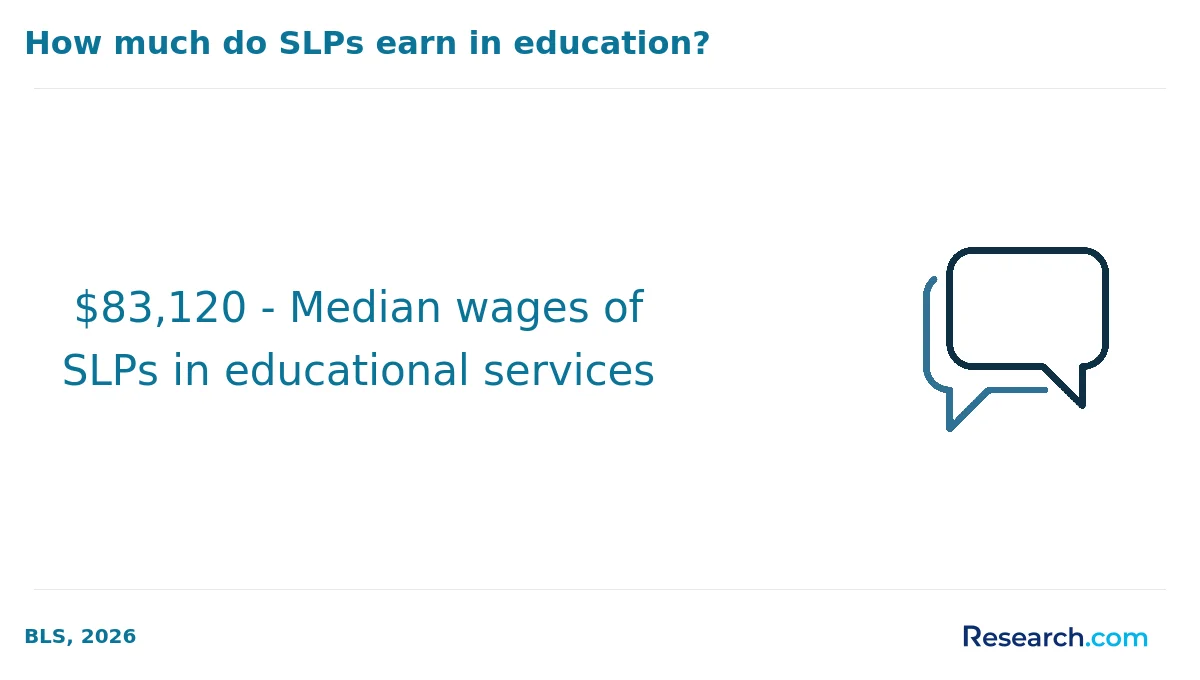
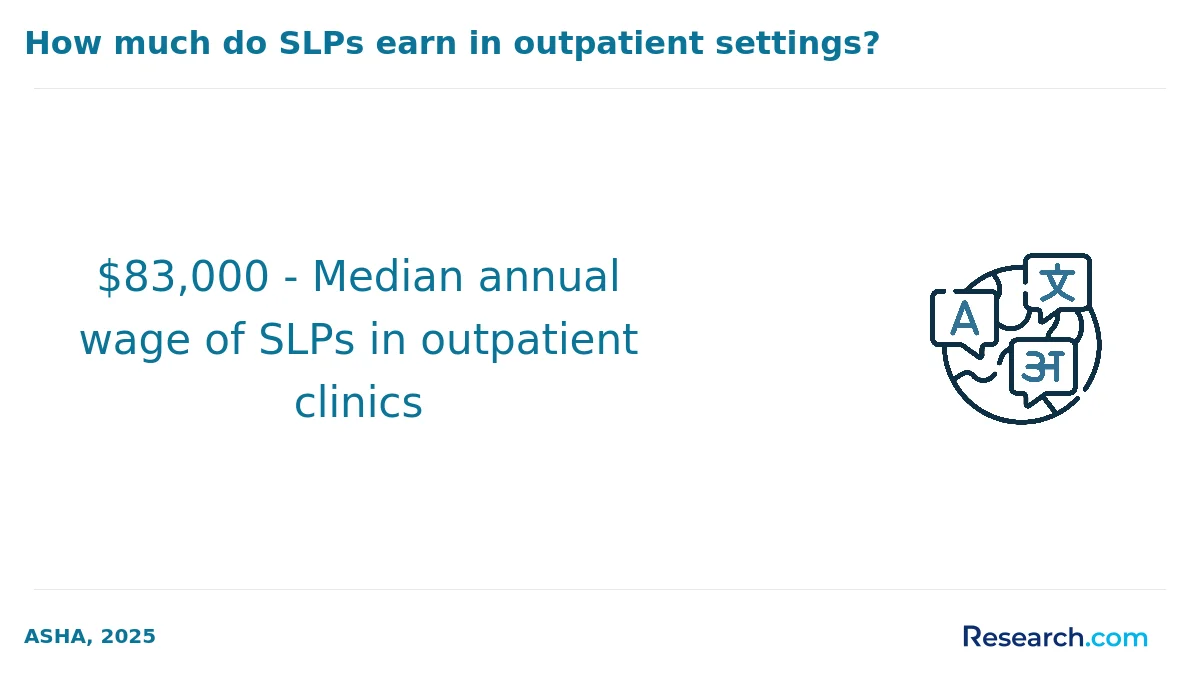
Earnings vary by role, degree level, work setting, location, experience, and credentials. The clearest benchmark is for speech-language pathologists, one of the most common long-term career outcomes. According to the U.S. Bureau of Labor Statistics, the median annual wage for speech-language pathologists was approximately $79,060 as of 2022.
Students should treat that figure as a profession-specific benchmark, not a guaranteed salary for every communication disorders graduate. Bachelor’s-level support roles, assistant positions, school-based roles, and clinical roles that require graduate credentials can have different pay structures.
- Early-career salaries: Entry-level positions, often found in schools, hospitals, or rehabilitation centers, typically offer starting salaries between $60,000 to $65,000 per year. Actual compensation depends on role requirements, employer type, and location.
- Mid-career potential: With experience and advanced certifications, mid-career professionals can expect salaries rising to $80,000 to $90,000. Specializations in pediatric or neurological communication disorders often command higher earnings due to demand and expertise.
- Industry impact: Hospitals, medical facilities, and private practice may offer different pay than public schools because funding sources, caseloads, reimbursement models, and contract structures vary.
- Location considerations: Urban areas with greater demand and higher cost of living usually offer increased salaries, reflecting regional economic variations.
- Credentials matter: Credentials such as the Certificate of Clinical Competence (CCC) from the American Speech-Language-Hearing Association are key factors that can enhance job prospects and salary levels.
To estimate return on investment, compare tuition, fees, living costs, graduate school requirements, expected debt, assistantship options, and local salary data. Students exploring efficient routes to credentials may also review online degrees that can lead to strong career outcomes, but they should verify accreditation and licensure alignment before choosing any program.
What Graduates Say About Their Communication Disorders Degree
- : "“Completing the communication disorders degree gave me an in-depth understanding of speech, language, and hearing sciences. The core curriculum challenged me to think critically and develop practical skills, such as diagnostic evaluations and intervention strategies. This foundation has been invaluable in my role as a speech-language pathologist, where I apply these competencies daily to improve clients' lives. The investment was worth every penny, especially considering the average cost of attendance was reasonable for such a comprehensive program.” — Kyle"
- : "“Reflecting on my journey through the communication disorders program, I appreciate how the diverse coursework strengthened my analytical and interpersonal skills. The program's blend of theory and practicum prepared me thoroughly for the realities of clinical work. Now, as an audiologist, I rely on the solid framework of knowledge and hands-on experience gained, which has advanced my professional confidence and effectiveness.” — Dylan"
- : "“The communication disorders degree was pivotal in equipping me with advanced competencies in assessment and therapeutic techniques. The curriculum balanced scientific rigor with patient-centered approaches, which helped me transition seamlessly into a clinical setting. This degree not only expanded my expertise but also opened numerous career doors, making the average tuition cost a worthwhile investment in my professional future.” — Shannon"
Other Things You Should Know About Communication Disorders Degrees
Research experience is highly valuable during a communication disorders degree as it helps students develop critical thinking and evidence-based practice skills. Engaging in research projects allows students to stay current with emerging therapies and interventions. It also improves their ability to analyze clinical studies, which is essential for effective client care.
In 2027, communication disorders programs integrate cutting-edge technology, including AI-driven speech therapy tools, virtual reality simulations for clinical practice, and digital platforms for telehealth services. These advancements enhance therapeutic techniques and provide students with hands-on experience using innovative tools in the field.
Ethical considerations are a critical component of communication disorders education. Students learn about confidentiality, client rights, professional boundaries, and informed consent. This training ensures graduates uphold high ethical standards when providing assessment and treatment services.
- U.S. Bureau of Labor Statistics - Speech-Language Pathologists https://www.bls.gov/ooh/healthcare/speech-language-pathologists.htm
- ASHA EdFind - Accredited Speech-Language Pathology Programs https://find.asha.org/ed/
- Audiology and Speech-Language Pathology Interstate Compact https://aslpcompact.com/compact-map/
- Abilene Christian University - Master of Science in Speech-Language Pathology (Online) https://acu.edu/academics/graduate/master-of-science-in-speech-language-pathology/
- New England Institute of Technology - Master of Science in Speech Language Pathology https://www.neit.edu/academics/graduate-degrees/speech-language-pathology-ms
- New York University - Online MS, Communicative Sciences and Disorders (Speech@NYU) https://steinhardt.nyu.edu/degree/online-ms-communicative-sciences-and-disorders
- Delaware Valley University - Master of Science in Speech-Language Pathology (M.S.) https://delval.edu/programs/graduate-programs/speech-language-pathology
- West Virginia University - Speech-Language Pathology, M.S. - Online https://medicine.hsc.wvu.edu/communications-sciences-and-disorders/speech-language-pathology-ms/future-students/curriculum/online-slp-program/