2027 Communication Disorders Degree vs. Certificate: Which Should You Choose?

Co-Founder and Chief Data Scientist

Reviewed by Rhea Paul, PhD
SLP Education & Research Expert
Choosing between a communication disorders degree and a certificate is really a choice between two different career strategies. A degree is the stronger route if you want broad academic preparation, graduate-school eligibility, licensure potential, or long-term clinical advancement. A certificate is usually better if you already have a degree, need prerequisite coursework, want a faster entry point, or plan to build focused skills without committing to a full program.
The right option depends on your current education, timeline, budget, and target role. Students aiming to become licensed speech-language pathologists typically need a graduate degree and supervised clinical preparation. Those pursuing assistant, paraprofessional, prerequisite, or continuing education goals may find that a certificate is enough for the next step.
This guide compares communication disorders degrees and certificates by time to completion, online availability, admissions, credits, tuition, transfer options, accreditation, jobs, and starting salary so you can choose the credential that fits your goals rather than paying for more—or less—education than you need.
Key Points About Communication Disorders Degree vs. Certificate Programs
- Degree programs offer comprehensive training, increasing salary potential by up to 20% and qualifying graduates for clinical roles requiring certification like speech-language pathology licensure.
- Certificate programs focus on specialized skills or continuing education, ideal for professionals seeking quick skill enhancement without extensive time or financial investment.
- Degrees support broader professional growth with internships and research opportunities, while certificates provide targeted expertise useful for niche career advancements or role diversification.
What Are the Differences Between Communication Disorders Degree and Certificate Programs?
The main difference is scope. A communication disorders degree is a full academic credential designed to build broad knowledge in speech, language, hearing, development, assessment, research, and clinical foundations. A certificate is a shorter, more targeted credential that usually fills a specific gap, such as prerequisite coursework, assistant-level preparation, or professional development.
In practical terms, a degree is usually the better fit if you want the widest career mobility and plan to continue into graduate study or licensure-focused roles. A certificate is usually the better fit if you need a faster, lower-cost way to enter the field, test your interest, or meet missing requirements before applying to another program.
Key differences to compare
- Depth of study: Degree programs cover the field more comprehensively, including theory, research, lifespan communication development, disorders, intervention approaches, and often clinical observation or practicum preparation. Certificate programs focus on a narrower set of courses or competencies.
- Credential value: A degree is generally more recognizable for graduate admissions, licensure pathways, and long-term career advancement. A certificate can be valuable, but it usually supports a specific purpose rather than replacing a degree.
- Time commitment: Degrees require a longer and more structured commitment. Certificates are shorter and may be easier to fit around work, family, or a career change.
- Career use: Degrees can support broader roles in education, healthcare support, research assistance, case coordination, and graduate preparation. Certificates are more commonly used for assistant, paraprofessional, prerequisite, or continuing education goals.
- Flexibility: Certificate programs are often offered online or part-time. Degree programs may also be online, but they usually include more sequencing, advising requirements, and, at higher levels, clinical expectations.
A common mistake is assuming that any communication disorders credential leads to the same outcome. It does not. Before enrolling, match the program to the role you actually want, especially if your goal involves state licensure, ASHA certification, school-based practice, or supervised clinical work.
How Long Does It Take to Complete a Communication Disorders Degree vs. a Certificate Program?
A communication disorders degree usually takes longer because it includes general education, major coursework, electives, and, at the graduate level, more intensive clinical preparation. A certificate is shorter because it is built around a focused set of courses or competencies.
- Typical degree timeline: A bachelor’s degree typically requires about four years of full-time study. A master’s program usually takes two years, but it may extend to three years if prerequisite coursework is needed.
- Typical certificate timeline: A certificate can often be completed in one year or less, although some programs may take up to 18 months depending on course sequencing, part-time enrollment, or clinical requirements.
- Part-time enrollment: Both degrees and certificates may offer part-time options. Part-time study can make a program more manageable, but it can also extend the completion date and delay eligibility for jobs, graduate applications, or licensure steps.
- Prior coursework: Students with a related undergraduate background may move through degree requirements faster if they have already completed prerequisites. Career changers may need additional foundational classes before entering advanced coursework.
- Transfer credits: Transferable credits can shorten a degree timeline, but only if the receiving institution accepts them toward the specific requirement. Always confirm this before enrolling in a certificate with the expectation that it will later reduce degree time.
If speed is your top priority, a certificate is usually the faster credential. If your goal is clinical licensure or graduate-level professional practice, plan for the longer degree path. Students comparing shorter credentials across fields can also review certifications that may lead to stronger earnings.
In summary, communication disorders degree program length generally ranges from two to four years depending on level and prior preparation, while communication disorders certificate program duration is typically one year or less, with some programs taking up to 18 months.
Can You Complete a Communication Disorders Degree or Certificate Entirely Online?
You can complete many communication disorders courses online, and some programs advertise fully online coursework. However, “online” does not always mean that every requirement can be completed from home. Clinical observation, practicum, internships, residency requirements, and supervised fieldwork may still require local placement, in-person participation, or coordination with approved sites.
Online communication disorders degree programs are available from a variety of institutions. Examples in the field include programs at Maryville University and NMSU Global Campus, which provide flexible options for working adults and students balancing family responsibilities. Some programs, such as the online MA in Communication Sciences and Disorders at Cleveland State University, deliver coursework online but may require brief on-campus residencies or supervised clinical placements.
Certificates are often easier to complete fully online when they focus on foundational coursework, prerequisites, or professional development. If the certificate includes applied or clinical training, it may still require supervised experiences that cannot be completed entirely online.
What to verify before choosing an online option
- Course delivery: Confirm whether classes are asynchronous, live online, or a mix of both.
- Clinical requirements: Master’s degrees usually require completing 375-400 supervised clinical practicum hours arranged locally, which cannot be done entirely online.
- Placement support: Ask whether the school finds placements for students or expects students to secure their own sites.
- Licensure alignment: If you plan to become a speech-language pathologist, confirm that the program is designed to meet the academic and clinical requirements for your state.
- Residencies and travel: Some online programs require short campus visits, skills labs, orientations, or intensive sessions.
For foundational learning, prerequisite completion, or continuing education, a fully online certificate may be enough. Students comparing graduate-level distance options may also want to review online slp masters programs when cost, flexibility, and clinical placement support are major decision factors. For broader guidance on online study options, see online degrees that may be easier to complete.
Admission requirements differ because degree and certificate programs serve different purposes. Degree programs usually evaluate whether you are ready for a full academic pathway, while certificate programs often evaluate whether you have the background needed for a narrower set of courses.
Requirements vary by school, so applicants should use the program’s official admissions page as the final source. Still, most programs ask for some combination of transcripts, GPA history, prerequisite coursework, and application materials.
Admission Requirements for Communication Disorders Degree Programs
- Educational background: Undergraduate programs typically require a high school diploma or equivalent. Graduate programs usually require a bachelor’s degree, often in communication disorders or a related field.
- GPA standards: Minimum cumulative GPA requirements generally range from 2.5 to 3.0 for undergraduate admission. More competitive programs may expect higher GPAs, sometimes 3.20 or above for upper-division major courses.
- Prerequisite coursework: Applicants may need courses such as introductory psychology, biology, statistics, and foundational communication disorders classes before advancing to upper-division or graduate-level coursework.
- Standardized tests: ACT or SAT scores may be required for first-year undergraduate admission, although many programs have made these optional.
- Application materials: Official transcripts, completed applications, and fees are standard. Some programs admit students only during specific terms, such as fall.
- Clinical readiness: For programs with clinical practicum components, students may need to meet essential functional standards and maintain a higher GPA to continue in the major.
Admission Requirements for Communication Disorders Certificate Programs
- Educational background: Certificate programs usually require a bachelor’s degree, but not always in communication disorders. Post-baccalaureate certificates are often designed for career changers or students completing prerequisites for graduate study.
- GPA standards: Minimum GPAs are often around 2.5 to 3.0, though each institution sets its own threshold.
- Prerequisite coursework: Certificates typically have fewer prerequisites than degree programs and may include foundational courses for students new to the field.
- Application materials: Most programs require transcripts and a completed application. Standardized tests are rarely necessary.
- Experience requirements: Some certificates prefer or require relevant work or volunteer experience, especially if the program is connected to advanced clinical or assistant-level preparation.
Applicants should compare communication disorders degree admission requirements with communication disorders certificate program prerequisites before applying. If the certificate is intended to help with graduate admission, ask the graduate program whether the certificate courses satisfy its prerequisite expectations. Students also weighing the financial value of different undergraduate paths can review bachelor’s degrees with strong salary potential.
Credit requirements show the size of the commitment. A degree requires substantially more credits because it includes a full academic curriculum. A certificate uses fewer credits because it is focused on a smaller objective, such as prerequisites, skill development, or continuing education.
- Communication Disorders Degree: A degree typically requires around 120 semester credit hours. Those credits usually include general education, major courses, electives, and other institutional requirements, and they are usually completed over four years of full-time study at the bachelor’s level.
- Communication Disorders Certificate: A certificate generally requires between 12 and 18 credits. These credits usually focus on foundational communication disorders coursework and are often designed for students who already hold a bachelor’s degree.
The credit difference matters for cost, financial aid eligibility, transfer planning, and time to completion. A student who wants comprehensive preparation for graduate study may need the full degree structure. A student who already has a bachelor’s degree and only needs missing prerequisites may be better served by the smaller certificate requirement.
Before enrolling, ask how the credits apply. Some certificate credits may count only toward the certificate, while others may be transferable to a degree later. The answer depends on accreditation, course level, grades earned, and the receiving school’s transfer policy.
Communication disorders degrees usually cost more than certificates because they require more credits, more semesters, and, at the graduate level, more clinical preparation. Certificates usually cost less overall, but the lower price is only a good value if the credential actually supports your next step.
Average Tuition for Communication Disorders Degree Programs
- Tuition range: Degree programs, especially at the master’s level, generally cost between $14,000 and over $50,000 per year, with total expenses often surpassing $80,000 at private institutions.
- Public vs. private schools: Public universities usually have lower tuition, averaging about $9,561 per year for in-state undergraduates and around $25,496 for out-of-state students. Private institutions may charge more than $46,000 annually for graduate-level study.
- Online vs. on-campus: Online degrees may be less costly, with some accredited programs charging as little as $7,190 annually. However, top-tier online programs may exceed $20,000 per year.
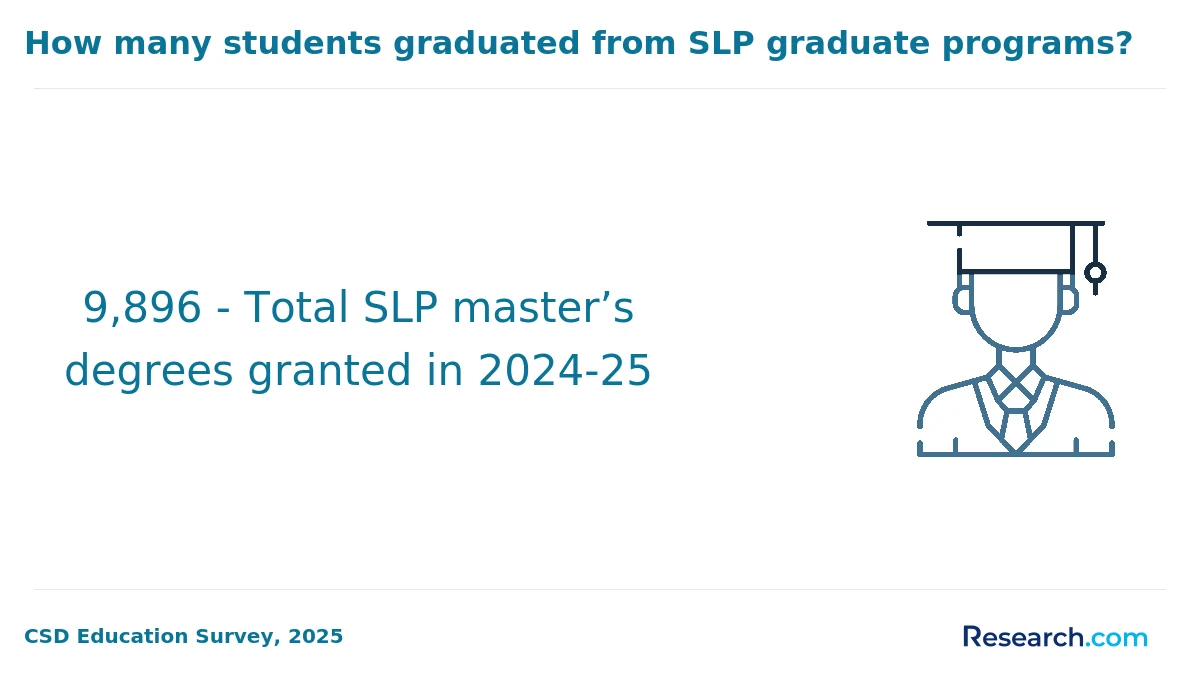
- Program length: Master’s degree programs often require two years of full-time study, leading to total tuition between $28,000 at public schools and over $100,000 at prestigious private universities.
- Additional fees: Students should budget for clinical placements, technology fees, health screenings, and other program costs, which can add several hundred to a few thousand dollars in total.
Average Tuition for Communication Disorders Certificate Programs
- Tuition range: The cost of communication disorders certificate programs is typically much lower, with total tuition ranging from $2,000 to $12,000 depending on the institution and format.
- Program length: Certificates usually take a few months to one year to complete, which keeps the total cost lower than most degree programs.
- Public vs. private schools: Public institutions often offer more affordable certificate programs, while private schools may charge more, though still significantly less than degree options.
- Online vs. on-campus: Online certificate programs may reduce or eliminate campus-based costs, though students should still check for technology, proctoring, or administrative fees.
- Additional fees: Certificate students may pay for materials, background checks, or clinical requirements, but these costs are generally lower than those associated with degree programs.
When comparing tuition, look beyond the sticker price. Ask whether the program qualifies for financial aid, whether credits transfer, whether the credential meets your target employer’s expectations, and whether additional graduate study will still be required. For students thinking far beyond the master’s level, resources on short online doctoral program options may help with long-term academic planning.
Certificate credits may transfer into a communication disorders degree, but transfer is never automatic. Each school decides whether it will accept outside credits, how many it will accept, and which degree requirements those credits can satisfy.
Credits are more likely to transfer when they come from an accredited institution, match the receiving program’s course content, were completed recently enough to meet school policy, and were earned with acceptable grades. Universities may also review syllabi, course descriptions, credit hours, instructor qualifications, and whether the course was undergraduate or graduate level.
Many institutions limit the number of certificate credits that can be applied to a degree. Some cap transfer credits at a percentage of the total degree requirement. Grade minimums also apply, often requiring at least a “C” or higher, with some schools asking for a minimum GPA like 3.0 on certificate course work.
How to protect yourself before enrolling
- Ask the degree-granting school first: Do not rely only on the certificate provider’s statement that credits are “transferable.” The receiving institution makes the final decision.
- Request written confirmation: If possible, get an email or advising note showing which certificate courses may apply to which degree requirements.
- Keep course documentation: Save syllabi, assignments, catalog descriptions, and proof of grades in case the school requests a transfer review.
- Check expiration rules: Some programs will not accept older coursework for clinical, science, or professional preparation requirements.
- Confirm financial aid implications: Taking extra credits that do not transfer can increase total cost and delay graduation.
A certificate can be a smart bridge into a degree, especially for students missing prerequisites. It can also become an expensive detour if the credits do not apply. Confirm transferability before you start, not after you finish.
No. Certificate programs in communication disorders are generally not accredited in the same way as degree programs. Accreditation matters most when a program is tied to licensure, professional certification, graduate eligibility, or employer recognition.
Most communication disorders degrees, particularly at the master’s level, require accreditation from the Council on Academic Accreditation in Audiology and Speech-Language Pathology (CAA), which is part of the American Speech-Language-Hearing Association (ASHA). This accreditation indicates that the program meets national academic and clinical standards and is essential for professional licensure and certification, such as the ASHA Certificate of Clinical Competence (CCC-SLP).
Certificate programs—often at the undergraduate or post-baccalaureate level—may not need CAA accreditation. They typically have less standardized accreditation and are usually not sufficient by themselves for licensure or certification as a speech-language pathologist or audiologist.
What accreditation means for your decision
- For degree seekers: Verify CAA/ASHA accreditation if the program is intended to lead to professional licensure, certification, or graduate clinical practice.
- For certificate seekers: Confirm whether the certificate is meant for prerequisites, continuing education, assistant preparation, or professional development. Do not assume it qualifies you for licensed practice.
- For transfer students: Accreditation can affect whether credits are accepted by another institution.
- For employment: Employers may recognize accredited degrees more consistently than stand-alone certificates, especially for clinical and school-based roles.
Before enrolling, check the program’s accreditation status through recognized bodies, ask whether the credential qualifies for licensure in your state, and review available exam pass rates, completion rates, and employment statistics. If the program cannot clearly explain what its accreditation does and does not cover, treat that as a warning sign.
A degree generally supports broader job options and stronger advancement potential than a certificate. A certificate can still be useful, especially for support roles, prerequisite completion, or specialized training, but it usually does not replace the academic and clinical preparation required for licensed speech-language pathology or audiology roles.
Jobs You Can Get with a Communication Disorders Degree
- Speech-language pathology assistant: Supports licensed pathologists by assisting with therapy-related activities and administrative tasks in clinical or school settings, where state rules permit the role.
- Audiology assistant: Helps audiologists with hearing screenings, equipment preparation, patient flow, and related support duties in healthcare or hearing care settings.
- Early intervention specialist: Works with young children and families to support developmental needs in home, school, or community programs.
- Paraeducator: Provides classroom support to students with communication challenges under the direction of teachers and specialists.
- Case manager: Coordinates services, referrals, documentation, and care plans for clients with communication or developmental needs.
Jobs You Can Get with a Communication Disorders Certificate
- Speech-language pathology assistant: Performs supervised support duties, depending on state requirements and employer policies.
- Audiology assistant: Assists with hearing screenings, equipment preparation, and administrative tasks under licensed audiologists.
- Support specialist: Provides targeted support for speech, language, hearing, or educational service teams, typically in entry-level or supervised roles.
- Paraprofessional: Supports students or clients with communication needs in classrooms, clinics, or community settings under professional supervision.
The safest way to evaluate career fit is to start with job postings in your target state and setting. Look for the required credential, preferred degree level, state registration rules, supervision requirements, and whether the employer accepts certificates for the role you want.
Starting salary is usually higher for degree graduates than for certificate holders because degree pathways can qualify graduates for roles with greater responsibility, broader scope, and, at the master’s level, licensure-linked employment. Certificate holders more often begin in support roles, where pay is typically lower and advancement may require additional education.
- Typical salary range for certificate holders: Most individuals with a communication disorders certificate start in supporting roles such as speech-language pathology assistants (SLPAs), earning between $35,000 and $50,000 per year depending on region and employer.
- Typical salary range for degree graduates: Graduates with a communication disorders degree, especially at the master’s level, usually begin their careers as licensed speech-language pathologists (SLPs) with starting salaries between $57,000 and $66,000 per year. The national median wage for SLPs is $97,870 as of May 2026.
- Key salary factors: Education level, professional certification, work setting, geographic location, prior experience, and state requirements all influence earnings for both certificate and degree holders.
- Career outlook: Degree holders have a strong employment outlook, with SLP jobs projected to grow 17% from 2025 to 2035. Certificate holders may still find opportunities, but advancement and earning potential are generally more limited without additional education.
- Additional resources: Students comparing shorter career-focused credentials can review a guide to online trade schools for broader certificate and training pathways.
The average salary with a communication disorders degree is substantially higher than the communication disorders certificate starting salary because advanced degree holders can qualify for positions with more clinical responsibility and stricter licensure requirements. Still, salary should not be the only factor. Consider total program cost, time out of the workforce, licensing requirements, and whether the credential gives you access to the role you actually want.
Here's What Graduates of Communication Disorders Programs Say About Their Degree or Certificate
- Aries: "Choosing the communication disorders certificate program was the right move for my schedule. I needed a shorter option that would help me build useful skills without taking on the larger financial commitment of a degree program, which averaged around $15,000. The certificate helped me start sooner and gave me enough practical knowledge to feel confident about entering the field."
- Massimo: "The communication disorders degree program required more planning, time, and money, but it made sense for my long-term goals. The broader curriculum and deeper preparation justified the higher cost, roughly $40,000 on average, because it opened career paths I could not have accessed with a shorter credential alone. For me, the investment was tied to professional growth and credibility."
- Angel: "Completing both the certificate and degree gave me a clearer path. The certificate was a faster way to enter the field and confirm that I wanted to continue, while the degree gave me the depth I needed for long-term development. Spreading the costs over time made the process more manageable, and the combination helped me balance immediate goals with future plans."
Other Things You Should Know About Communication Disorders Degrees
In 2027, communication disorders certificates are often seen as a stepping stone toward a degree, rather than a standalone qualification. While they can be valuable for gaining specific skills, a degree generally provides broader career opportunities and is often favored by employers for roles that require extensive expertise.
Yes, certificate programs often focus on specialized areas within communication disorders, such as speech-language pathology assisting, hearing screening, or augmentative communication techniques. These programs provide targeted skills useful in specific work settings but typically do not cover the full scope of topics included in a degree program.
In some cases, credits earned through a communication disorders certificate program can be applied toward a related degree, but this depends on the institution's policies. Students should confirm articulation agreements or credit transfer options before enrolling if they plan to pursue further education later.
- U.S. Bureau of Labor Statistics - Speech-Language Pathologists https://www.bls.gov/ooh/healthcare/speech-language-pathologists.htm
- ASHA EdFind - Accredited Speech-Language Pathology Programs https://find.asha.org/ed/
- Audiology and Speech-Language Pathology Interstate Compact https://aslpcompact.com/compact-map/
- University of Scranton - Master of Science (M.S.) in Speech-Language Pathology https://www.scranton.edu/academics/pcps/health-and-human-performance/programs/speech-language-pathology/index.shtml
- West Virginia University - Speech-Language Pathology, M.S. - Online https://medicine.hsc.wvu.edu/communications-sciences-and-disorders/speech-language-pathology-ms/future-students/curriculum/online-slp-program/
- Auburn University, Montgomery - Master of Science in Speech-Language Pathology https://www.aum.edu/degree/ms-speech-language-pathology/
- Delaware Valley University - Master of Science in Speech-Language Pathology (M.S.) https://delval.edu/programs/graduate-programs/speech-language-pathology
- California State University-Northridge - Master of Science in Communicative Disorders (Online) https://tsengcollege.csun.edu/programs/CDS