2027 Easiest Online Master's in Psychology Degree Programs Ranking in the USA

Co-Founder and Chief Data Scientist
Are you considering advancing your career with an online master's in psychology? Choosing the right program can be overwhelming, but this article is here to help.
Featuring the 2027 Easiest Online Master's in Psychology Degree Programs Ranking in the USA, created by the Research.com team of data scientists, this guide offers clear insights to help you make an informed decision.
Discover programs that balance quality and convenience, so you can pursue your passion with confidence. A psychology degree opens doors to meaningful work and personal growth-let this ranking be your first step.
Key benefits of getting online psychology degree in America
- Salary benefits: Graduates with a psychology degree can earn competitive salaries, such as $91,990 annually for school psychologists and $154,380 for industrial-organizational psychologists, reflecting strong earning potential across diverse roles.
- Career paths: Psychology graduates often find rewarding careers in counseling, therapy, rehabilitation, and organizational roles, offering fulfilling opportunities to impact lives and communities positively.
- Online degree advantages: Earning a psychology degree online from a respected university provides flexibility for working adults and access to quality education without relocating, making it easier to balance life and study successfully.
- Key benefits of getting online psychology degree in America
- What can I expect from online psychology degree in America?
- Where can I work with online psychology degree in America?
- How much can I make with online psychology degree in America?
- 2027 Easiest Online Master's in Psychology Degree Programs Ranking in the USA
- Key Findings
- How long does it take to complete online psychology degree in America?
- Admission Requirements and Process
- What's the difference between online and on-campus psychology degree?
- Accreditation and Licensing Requirements for Online Psychology Degrees
- What is the average cost of online psychology degree in America?
- What financial aid is available to online psychology degree students in America?
- What are the prerequisites for enrolling in online psychology degree program in America?
- Licensing and Certification Requirements
- What courses are typically in online psychology degree programs in America?
- What types of specializations are available in online psychology degree programs in America?
- How do you choose the best online psychology degree in America?
- What career paths are available for online psychology degree students in America?
- What is the job market for online psychology degree in America?
- Top Trending Psychology Rankings
- See What Experts Have To Say About Studying Psychology
What can I expect from online psychology degree in America?
The average cost of an online psychology degree in America generally falls between $10,000 and over $30,000 for the entire program. Many students find this range manageable, especially with financial aid or employer tuition reimbursement. Graduates from well-known institutions like the University of Southern California or Arizona State University often share how these programs balance affordability with high-quality instruction.
Imagine a working professional at a popular university juggling family commitments while attending virtual lectures and group discussions, appreciating the flexibility without sacrificing academic rigor. The investment feels worthwhile as they engage deeply with courses on behavioral science or clinical psychology, preparing for licensure with confidence.
Online programs also increasingly incorporate interactive elements such as virtual internships or live residencies, enhancing practical skills while keeping costs relatively controlled. For many students, the chance to study at renowned schools from their own homes creates a positive, motivating atmosphere that fuels both personal growth and career advancement.
Where can I work with online psychology degree in America?
Graduates from online psychology programs at universities like Arizona State or University of Florida often find themselves thriving in diverse roles across America. Many step into healthcare settings as licensed professional counselors or behavioral health specialists, where they experience firsthand the rewarding impact of guiding individuals through mental health challenges.
Others leverage their degrees into educational environments, working in schools as psychological assistants or support staff, helping address students' growing mental wellness needs. These roles, frequently pursued by graduates from institutions like Penn State World Campus, offer meaningful opportunities to shape the future of youth development.
In corporate America, psychology graduates from places such as University of Southern California often enter human resources or organizational psychology positions. Here, they apply psychological principles to improve employee well-being and workplace productivity, creating positive, energizing environments.
With rising demand in public health and nonprofit sectors, graduates increasingly contribute to community outreach and research programs, paving the way for new mental health initiatives. This evolving landscape shows that an online psychology degree in America opens doors to impactful, fulfilling careers across multiple fields.
How much can I make with online psychology degree in America?
Graduates from online psychology programs in America often find rewarding salary opportunities that grow with education and specialization. For instance, those stepping into roles like school psychologists, a common path for online degree holders from universities such as Arizona State or University of Florida, see mean annual wages near $91,990, according to US BLS data. This reflects solid earning potential early in their careers.
Others pursuing careers as mental health counselors or marriage and family therapists, popular choices among psychology students from institutions like Penn State or Oregon State University, typically earn around $60,080 and $68,730 annually, respectively. Graduates express excitement about applying their skills to make a positive impact while securing stable incomes.
For those aiming higher, industrial-organizational psychology specialists, often with doctoral degrees from prestigious schools, can anticipate mean salaries soaring to about $154,380. Imagine working in dynamic corporate environments shaping workplace culture while seeing this level of financial reward.
Ultimately, these figures demonstrate that an online psychology degree in America not only opens doors to fulfilling careers but also offers a promising financial trajectory that encourages both personal and professional growth.
2027 Easiest Online Master's in Psychology Degree Programs Ranking in the USA
How do we rank schools?
Investing in your education is a significant decision that can shape your future, and the Research.com team understands the importance of making informed choices. To assist prospective students, we have meticulously crafted the "2027 Easiest Online Master's in Psychology Degree Programs Ranking in the USA." Our commitment to quality, credibility, and accuracy is reflected in the extensive research and analysis conducted to compile this ranking.
We utilized the following reputable data sources to ensure a comprehensive evaluation of psychology programs:
By exploring this ranking, readers will gain valuable insights into the easiest and most accessible online Master's in Psychology programs available in the USA, helping them make well-informed decisions regarding their educational paths. For more details on our methodology, please visit our Research.com methodology page.


# 5 position
University of the Incarnate Word
Master of Administration, Industrial and Organizational Psychology


# 7 position
Augustana University
M.Ed. SPED-ABA Master of Education in Special Education-Applied Behavior Analysis

# 8 position
Kansas State University
Master of Psychology with an emphasis in Industrial and Organizational Psychology


# 13 position
Missouri University of Science and Technology
Master of Industrial-Organizational Psychology


# 15 position
Bob Jones University
Master of Biblical Counseling

# 16 position
Cameron University
Master of Behavioral Science


# 19 position
Walden University
Master of Psychology


Key Findings
- Accredited online psychology degrees follow the same regional standards as traditional programs, ensuring nationwide recognition.
- Tuition for online bachelor's degrees ranges from $15,000 to $30,000, and master's degrees cost between $20,000 and $50,000.
- The median annual salary for psychologists was around $81,000 in 2022, with entry-level roles typically paying $40,000 to $55,000.
- Psychology jobs in the U.S. are projected to grow 8% from 2021 to 2031, which is faster than the average for all jobs.
- Admission requirements usually include a high school diploma or bachelor's degree, along with possible standardized test scores or prerequisites.
How long does it take to complete online psychology degree in America?
Completing an online psychology degree in America typically spans from about four years for undergraduate programs to several years for advanced degrees. Graduates from well-known universities like Arizona State University often share how their Bachelor of Science in Psychology took the expected four years when balancing part-time work and studies. Graduate students pursuing a master's degree report a range from 1.5 to 3 years, with many appreciating the flexibility to extend up to 4 years if managing full schedules or family commitments.
Doctoral students at institutions such as Johns Hopkins University experience unique timelines; some finish in just over four years by taking advantage of accelerated courses and year-round research opportunities, while others stretch up to seven years, especially when internships or dissertation work demand more time. These adaptable online formats motivate students to stay engaged and complete their degrees with confidence, even amid busy lives.
Asynchronous classes and multiple enrollment periods allow students across America to tailor their pace. This personalized approach makes completing an online psychology degree feel achievable and rewarding, inspiring many to envision new career paths without sacrificing current responsibilities.
Admission Requirements and Process
Admission requirements for online psychology programs in America vary by degree level, institution, and specialization. For an online master’s in psychology, schools commonly look for evidence that applicants can handle graduate-level research, writing, statistics, and behavioral science coursework. Applicants who are changing fields may still be considered, but they may need prerequisite courses before or after admission.
At the undergraduate level, applicants to an online bachelor’s degree in psychology typically need a high school diploma or equivalent. Many programs expect a minimum GPA of 2.5 or higher. Some colleges may also require SAT or ACT scores, with average scores ranging from 1000 to 1300 for SAT and 20 to 26 for ACT. Common prerequisite or recommended courses include statistics, biology, or psychology 101.
Graduate psychology programs usually ask for a more complete application package. Requirements often include official transcripts, letters of recommendation, a personal statement, and sometimes an interview or writing sample. Some programs require a psychology background, while others accept applicants from related fields such as sociology, education, health sciences, social work, or human services.
Common application materials
- Completed online application and application fee, if required.
- Official transcripts from prior colleges or universities.
- Minimum GPA, often 2.5 or higher for undergraduate admission and around 3.0 for many graduate programs.
- Letters of recommendation from academic or professional mentors.
- Personal statement explaining career goals, interest in psychology, and fit with the program.
- Prerequisite coursework such as statistics, biology, or psychology 101.
- Test scores when required, including SAT or ACT for some undergraduate programs.
- Background check and immunization records when clinical, school-based, or counseling placements are involved.
The strongest applicants do more than meet the minimum requirements. They show a clear reason for pursuing psychology, understand the limits of the degree, and can explain how the program supports their goals. Before applying, compare each school’s admission checklist, transfer credit policy, practicum expectations, and licensure disclosures. Planning early helps you avoid delays caused by missing prerequisites, late transcripts, or field placement requirements.
What's the difference between online and on-campus psychology degree?
Online psychology degrees in America have reshaped how students balance education with life demands. Graduates from programs at institutions like Arizona State University often describe the flexibility of accessing lectures anytime, which allows them to study between work shifts or family time. This contrasts sharply with the traditional rhythm experienced by those at places such as UCLA, where attending on-campus lectures and engaging in face-to-face seminars fosters a sense of community and immediate feedback that many find motivating.
Practicums highlight another key difference. Online students frequently coordinate local placements themselves, a task that builds independence but can sometimes feel daunting without direct university support. At the same time, on-campus students benefit from streamlined access to university-affiliated labs or counseling centers, enriching their hands-on experiences.
Costs vary too; online psychology students may pay less in tuition or avoid out-of-state fees common at public universities, easing financial stress. Yet some appreciate spending more on on-campus resources that feel tangible and reassuring during their studies.
Looking ahead, as technology advances, hybrid models may blend these benefits, creating even more personalized learning journeys for future psychology students in America.
Accreditation and Licensing Requirements for Online Psychology Degrees
Accreditation should be one of the first items you verify before enrolling in an online psychology program. A degree from a properly accredited institution is more likely to be recognized by employers, graduate schools, financial aid providers, and state licensing boards. Regional accreditation is especially important because it can affect credit transfer, graduate admission, and eligibility for many professional credentials.
Students should also understand the role of programmatic accreditation. The American Psychological Association (APA) accredits doctoral programs, internships, and postdoctoral residencies rather than most stand-alone master’s programs. If your long-term goal is to become a licensed psychologist, you should confirm whether your intended pathway eventually requires an APA-accredited doctoral program or internship. For master’s-level counseling, school psychology, or applied psychology pathways, licensing rules may be tied to state board approval, institutional accreditation, required coursework, supervised practice, and examinations.
Licensure requirements differ by state. After graduation, aspiring practitioners may need supervised practicum or post-degree hours, the Examination for Professional Practice in Psychology (EPPP), jurisprudence exams, background checks, and specific coursework. For example, California requires 3,000 hours of supervised experience, while New York mandates coursework in substance abuse and child abuse recognition.
What to verify before enrolling
- Whether the institution is regionally accredited.
- Whether the program meets education requirements for your intended state license.
- Whether online students can complete practicum, internship, or fieldwork requirements locally.
- Whether the program provides state-by-state licensure disclosures.
- Whether graduates are eligible for the exams or credentials required in your target profession.
The safest approach is to contact your state psychology or counseling licensing board before you enroll, not after you graduate. Ask whether the program’s coursework, fieldwork, and accreditation status match the credential you plan to pursue. If you are still comparing options, a best psychology online degree resource can help you weigh accreditation, flexibility, and licensure support together.
What is the average cost of online psychology degree in America?
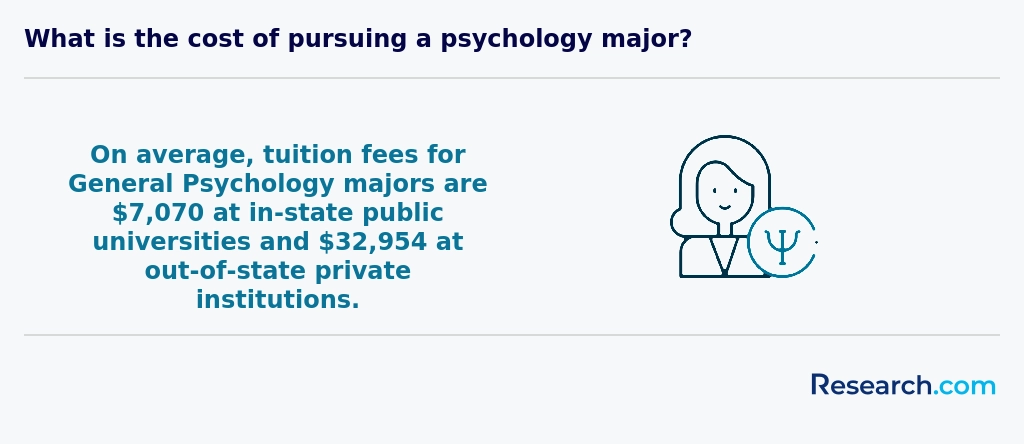
The average cost of an online psychology degree in America generally hovers around $23,400 in total, with variations depending on residency and institution type. Graduates from well-known public universities often share that in-state tuition offers a more affordable path, with costs near $15,774, while out-of-state students might face expenses closer to $22,392. These figures reflect tuition combined with essential fees, making it easier to budget ahead for the total expenses for online psychology master's USA students commonly encounter.
Many students pursuing an online psychology degree appreciate the flexibility of programs offered by prominent colleges in America, where affordable options blend with quality education. Learners often describe how balancing studies and work is rewarding, especially when financial aid or employer tuition support helps ease the load. For those exploring options, researching the best psychology online degree programs can reveal a range of prices that fit diverse budgets and career goals.
Beyond tuition, graduates note supplementary costs-such as textbooks and technology fees-that contribute meaningfully to the overall investment in their education. While these additional expenses add some pressure, the excitement of advancing in psychology fields fuels motivation. As the demand for accessible education grows, the landscape of online psychology programs in America is likely to become more budget-friendly and adaptable to students' unique financial needs.
What financial aid is available to online psychology degree students in America?
Students pursuing online psychology degrees at institutions like Arizona State University or the University of Florida often find federal financial aid to be a crucial support. By filing the FAFSA, many unlock access to Federal Direct Unsubsidized Loans and Grad PLUS Loans, helping cover tuition and living expenses without immediate financial strain. Graduates frequently share how these loans allowed them to focus on studies without constant money worries.
Scholarships tailored for psychology majors add another financial lifeline. For example, the American Psychological Association's awards have helped countless students nationwide fund research projects or defray costs, creating a meaningful sense of accomplishment and belonging in their academic communities.
Working professionals enrolled part-time at institutions like Penn State World Campus benefit immensely from employer tuition assistance programs, drastically reducing out-of-pocket expenses and providing peace of mind.
Additionally, state grants and veteran benefits, such as those from the GI Bill, create hope for military-affiliated students, fostering renewed motivation to achieve their goals in psychology careers while managing costs effectively.
What are the prerequisites for enrolling in online psychology degree program in America?
Enrolling in an online psychology degree in America typically starts with basic educational achievements, such as a high school diploma or equivalent, with many students feeling encouraged after meeting GPA standards around 2.5 to 3.0. Graduates from well-known universities often share how their early focus on science and writing skills boosted their confidence during admissions. For example, students aiming for schools like Arizona State University or Penn State Online have highlighted how submitting strong SAT or ACT scores, even if optional, gave them a competitive edge.
At the graduate level, requirements become more tailored. Applicants usually present a bachelor's degree in psychology or related fields and sometimes retake core courses like statistics or research methods. Many students relayed feeling proud when their letters of recommendation from professors helped personalize their applications, especially at institutions such as UCLA or Boston University.
Emerging trends suggest doctoral applicants might increasingly showcase practical experience through internships or research portfolios rather than relying solely on GRE scores. Those targeting clinical psychology pathways appreciate how internships at prominent hospitals or community centers enhance their applications while fueling their passion for mental health.

Licensing and Certification Requirements
An online master’s in psychology can support many career goals, but it does not automatically qualify graduates for every psychology license. Licensure depends on the state, the exact degree title, the curriculum, supervised experience, and the type of role you want. Students should distinguish between becoming a licensed psychologist, a licensed counselor, a marriage and family therapist, a school-based professional, or an applied psychology specialist.
Most licensing pathways include several common requirements:
- Accredited degree and approved coursework: State boards usually require a degree from a regionally accredited institution. Some clinical or counseling pathways may require specific coursework in assessment, ethics, human development, diagnosis, research, counseling theory, or multicultural practice.
- Supervised clinical hours: Licensure as a psychologist or counselor generally mandates 1,500–3,000 post-degree supervised hours under a licensed professional. Requirements vary substantially by state and license type.
- Examinations: Aspiring psychologists must pass the Examination for Professional Practice in Psychology (EPPP). Licensed professional counselors may need the National Counselor Examination (NCE), a state-specific jurisprudence exam, or the National Clinical Mental Health Counseling Examination (NCMHCE).
- Continuing education: Licensed professionals typically complete annual or biennial continuing education units (CEUs), including topics such as ethics, diversity, trauma-informed care, and state-mandated practice updates.
- Background checks and professional conduct review: Many boards require fingerprinting, criminal background checks, and disclosures related to professional discipline.
Voluntary certifications can also strengthen a graduate’s profile, especially in specialized roles. Examples include credentials related to school psychology, neurofeedback, trauma practice, or industrial-organizational psychology. Industrial-organizational specialists may pursue Society for Industrial and Organizational Psychology (SIOP)-related professional recognition for added credibility.
Because licensing rules are detailed and state-specific, choose a program only after matching its curriculum to your target credential. Some adjacent helping professions follow different pathways; for example, students exploring pediatric healthcare support roles often ask are child life specialists in demand? Understanding these distinctions early can prevent you from choosing a degree that does not match your intended license.
What courses are typically in online psychology degree programs in America?
Online psychology degrees in America typically include courses that ground students in both theory and application, creating a strong foundation for understanding human behavior. Graduates from well-known programs at universities like Arizona State or University of Florida often recall how Introduction to Psychology sparked their curiosity about why people think and act the way they do.
Students frequently find Research Methods and Statistics challenging but rewarding, as mastering these skills equips them to evaluate real-world studies and design their own experiments. Many describe the sense of accomplishment when applying statistical tools to data collected from community projects or campus surveys.
Courses such as Developmental Psychology and Abnormal Psychology allow students to connect textbook concepts to everyday life, like understanding childhood behaviors or mental health conditions seen in family and friends. This practical connection often inspires empathy and a desire to support others.
Emerging trends foresee increasing integration of courses on digital mental health tools and AI's role in therapy, reflecting America's tech-forward educational culture. Current students at psychology programs praised for innovation, like Penn State World Campus, anticipate these topics will soon become core parts of the curriculum.
What types of specializations are available in online psychology degree programs in America?
Online psychology degree specializations in the USA continue to evolve, offering students pathways that reflect the expanding landscape of mental health and behavioral sciences. Popular options include Clinical Psychology, Counseling Psychology, and Industrial-Organizational Psychology, each enabling graduates from institutions like Arizona State University and Pennsylvania State University to apply their skills in diverse professional settings.
Graduates often share how these specializations empower them to make a tangible difference, whether through therapeutic work or enhancing workplace dynamics. Emerging trends suggest increased integration of forensic psychology with legal systems and health psychology focusing on holistic mind-body connections. These shifts align well with some of the best psychology concentration options in American online programs, designed to meet future workforce needs.
Many students also explore school psychology, gaining meaningful experiences that connect them directly with educators and families. For those interested in unique career paths, the demand for mental health roles sometimes overlaps with allied professions, like those explored in careers that are child life specialists in demand.
How do you choose the best online psychology degree in America?
Choosing the best online psychology degree in America increasingly involves evaluating programs that blend flexibility with strong academic credentials. Graduates from renowned universities often highlight how accredited programs-especially those recognized by the American Psychological Association-offer confidence in quality and licensure prospects. Many students balancing jobs appreciate asynchronous courses that let them manage study hours around work and family demands, a trend expected to grow as technology advances.
Cost remains a major factor, and future students might benefit from emerging financial models or scholarships specifically for online learners. Those interested in best affordable online psychology degrees USA will find detailed options by exploring resources like the Affordable Psychology Degree Programs Ranking in Cambridge, MA. Hands-on training through virtual practicums is also evolving, allowing more interactive internship experiences without geographic constraints, a feature praised by recent graduates at institutions known for top online psychology programs in America.
What career paths are available for online psychology degree students in America?
Graduates of an online psychology degree in America often discover diverse career paths shaped by the evolving needs of society. Many pursue roles as licensed counselors or therapists, especially given the high demand for mental health professionals in states with progressive licensure frameworks. For example, psychology alumni from well-known programs at universities like Arizona State or Penn State report rewarding experiences working directly with clients, guided by the foundational courses offered online. This flexible educational route allows them to balance personal growth with professional advancement in dynamic environments.
Others explore opportunities in school or career counseling, helping students and adults navigate academic and vocational challenges. Such roles, accessible to graduates in various states, reflect the growing appreciation for psychological guidance within educational institutions and corporate settings. Graduates often find these careers inspiring and impactful, aligning their passion with real-world change.
Those focused on developing analytical skills find future roles in human resources or organizational psychology within American companies compelling. These paths use behavioral insights to improve workplace culture and employee relations. Additionally, an online psychology degree careers in the USA increasingly include roles in research, where graduates contribute to cutting-edge studies. This blend of applied and theoretical opportunities offers a hopeful outlook, especially for those aiming to explore majors that lead to high paying jobs.
What is the job market for online psychology degree in America?
The job market for online psychology degree holders in America is gradually expanding, reflecting a positive psychology career growth in America. Graduates from well-known programs at universities like Arizona State University and University of Florida report feeling optimistic about their prospects, often securing roles in behavioral health counseling or human resources shortly after graduation. These graduates highlight how the flexibility of online learning enabled them to continue working while gaining in-demand skills.
With many states requiring doctoral degrees for licensed clinical psychologist roles, online master's graduates frequently find meaningful employment in supportive positions, such as research assistants or marriage and family therapists. These roles are essential in urban centers and growing suburban areas with increased mental health awareness and resource investment.
Moreover, there is encouraging potential for salary growth, especially in metropolitan hubs where financial infrastructure supports larger healthcare budgets. Students from popular psychology programs often point to wage variations and the need to carefully consider regional market conditions. For those weighing costs against benefits, understanding the investment is key, and exploring options like scholarships can reduce expenses. For insights on costs and benefits, some find it useful to compare different pathways alongside options for high paying jobs trade school.
In summary, navigating the online psychology degree job outlook USA involves balancing licensure requirements, regional opportunities, and personal career goals. Early-career graduates consistently describe a rewarding journey fueled by growing demand and evolving roles in mental health services.
Frequently Asked Questions About psychology
Online psychology degree students in America can maximize their learning experience by actively engaging in course materials and utilizing available resources. Consistent communication with professors and peers through discussion boards or video calls enhances understanding and strengthens professional networks. According to the American Psychological Association (APA), students who participate in collaborative learning report higher retention rates. Time management is crucial; setting regular study schedules helps maintain steady progress. Additionally, students should take advantage of internships or practica approved by their programs to gain practical experience, a vital component in psychology education accredited by the APA or the National Association of School Psychologists.
The field of psychology in the United States is expanding into several emerging niches that reflect changing societal needs and advances in technology. One notable area is neuropsychology, which focuses on understanding brain-behavior relationships and is expected to grow by 9% from 2022 to 2032, according to the U.S. Bureau of Labor Statistics. Another developing niche is health psychology, where professionals address mental and physical health connections, supporting chronic disease management.
Additionally, forensic psychology is gaining prominence, blending psychology with the legal system to assist in criminal investigations and courtroom cases. Digital mental health is also a rising field, using technology like teletherapy to improve access to care. These specialties offer promising career paths for online psychology graduates.
Preparing for the job market after completing an online psychology degree in America requires proactive steps. First, gaining relevant experience through internships or supervised practicum hours is essential. According to the American Psychological Association, practical experience significantly improves employment chances. Networking is also vital; joining organizations like the APA or local psychology groups can open doors. Additionally, obtaining licensure or certification depending on your career path-such as becoming a licensed professional counselor-boosts credibility. Familiarity with current U.S. labor trends is important: The Bureau of Labor Statistics projects a 8% growth in psychology jobs from 2022 to 2032, signaling steady demand.
Employers in the United States highly value several core skills in psychology degree graduates. Critical thinking and analytical skills top the list, as professionals need to interpret research data and apply psychological theories effectively. According to the Bureau of Labor Statistics, about 14% job growth is expected through 2032 in psychology-related fields, emphasizing the need for strong problem-solving abilities.
Communication skills are essential, especially in client-facing roles or collaborative research environments. Graduates must demonstrate empathy and active listening to support diverse populations adequately. Additionally, proficiency in statistical analysis software like SPSS or SAS is increasingly important, as 70% of psychology jobs require data interpretation.
Finally, adaptability and ethical judgment remain prominent skills, reflecting the changing demands of healthcare and social services sectors. These competencies equip graduates to succeed in various settings, including clinical, counseling, and research positions across America.
Finding internships relevant to a psychology degree in America involves several practical steps. Students should begin by exploring university career centers, many of which partner with local clinics, hospitals, and research labs to offer psychology internships.
Additionally, platforms like the American Psychological Association's (APA) Electronic Career Center list internship opportunities nationwide. Approximately 70% of accredited psychology programs encourage or require internships, emphasizing hands-on experience.
Networking with professors and joining psychology organizations can also open doors. Many internships focus on mental health, counseling, or research, aligning with students' career goals.
Early planning is crucial, as applications for competitive internships often open six months in advance.
Obtaining an online psychology degree in America can significantly impact career mobility and advancement. The U.S. Bureau of Labor Statistics projects a 8% growth in psychology-related jobs from 2021 to 2031, faster than average for all occupations. An online degree, especially from an accredited institution, provides flexibility and access to advanced coursework essential for specialized roles.
Many employers recognize online degrees similarly to traditional ones, provided they come from reputable universities. Graduates commonly move into counseling, human resources, or research roles, where a master's degree often increases earning potential and eligibility for leadership positions.
Licensure requirements vary by state but typically require graduate coursework and supervised experience. Online programs that meet these criteria help graduates qualify for licensing exams, enhancing professional credibility. According to the American Psychological Association (APA), a master's degree is a vital step toward doctoral studies and advanced clinical roles, facilitating long-term career growth.
Studying for a psychology degree in America provides a strong foundation for interdisciplinary roles by integrating knowledge from various fields such as biology, sociology, and healthcare. Many online psychology programs emphasize research methods, critical thinking, and data analysis skills that are applicable across disciplines. These programs often include courses in neuroscience, counseling, and social sciences, facilitating collaboration with professionals in medicine, education, and social work.
According to the American Psychological Association, the demand for psychologists to work in multidisciplinary teams has grown by 14% since 2010, reflecting the expanding roles of psychology graduates.
Such training prepares graduates to address complex problems using holistic approaches, making them valuable in diverse career settings.
When choosing between a thesis and a non-thesis online psychology program in America, consider your career goals and interests. A thesis program focuses on independent research, ideal for those planning to pursue a PhD or research-oriented roles. According to the American Psychological Association, about 20% of psychology master's students opt for thesis programs to build research skills.
Non-thesis programs typically emphasize applied knowledge through coursework and internships, suitable for students aiming for clinical or counseling positions. These programs often take less time to complete.
Additionally, accreditation matters; ensure the program is regionally accredited and recognized by the APA if clinical licensure is a goal.
American students interested in studying psychology abroad through online programs have several avenues to explore. Many internationally accredited universities offer fully online psychology degrees that are accessible worldwide, including to U.S. residents. These programs often align with U.S. academic standards, making credit transfer and future licensure possible.
Some U.S. institutions partner with foreign universities to provide joint or dual degrees, allowing students to gain international perspectives without leaving home. The American Psychological Association (APA) currently accredits only U.S.-based programs, so students should verify international program credentials carefully.
Additionally, students can consider study abroad opportunities with exchange programs linked to U.S. psychology departments, combining online coursework with short-term residencies.
Part-time jobs in America that complement psychology degree education often involve roles in mental health support, research assistance, and social services. Working as a behavioral health technician or psychiatric aide provides practical experience in clinical settings, helping students apply psychological theories in real-world contexts. According to the Bureau of Labor Statistics, these roles typically offer flexible hours suitable for students.
Research assistant positions at universities or private firms expose students to experimental design and data analysis, strengthening their scientific skills. Additionally, case management or peer counseling jobs, common in community organizations, help build interpersonal and communication abilities vital for psychology careers.
Online psychology students in America have multiple networking opportunities despite studying remotely. Many accredited programs offer virtual career fairs and interactive webinars where students can connect with faculty, alumni, and employers. Professional organizations such as the American Psychological Association (APA) provide student memberships that grant access to conferences, discussion groups, and local chapter events. According to the APA, participation in these networks improves job prospects and professional growth.
Some universities also facilitate peer study groups and mentorship programs online. Platforms like LinkedIn enable psychology students to join specialized groups and engage with professionals nationwide. These tools help build relationships crucial for internships, research collaborations, and future employment.
Alumni networks provide valuable support for online psychology degree students in America by fostering professional connections. These networks often include access to job postings, mentorship programs, and exclusive events, which can significantly enhance career opportunities.
Research from the American Psychological Association highlights that strong professional networks increase job placement rates for psychology graduates by up to 20%. For online students, alumni networks counterbalance limited face-to-face interaction by creating a virtual community crucial to career development.
Moreover, alumni connections offer insights into licensure processes and continuing education, both essential for psychology professionals in the US. Engaging with alumni can thus improve both educational and career outcomes for online psychology students.
Customizing an online psychology degree program in America allows you to tailor your education to suit your career objectives. Many accredited programs offer various concentrations, such as clinical, industrial-organizational, or counseling psychology, which align with different professional paths.
Students can often select electives and internships that focus on specific skills or populations, enhancing practical experience. According to the American Psychological Association (APA), choosing a program with APA-accredited internships can improve licensure opportunities.
Further customization may include part-time or accelerated study options to fit your schedule. Additionally, some universities provide mentorship, networking, and research opportunities to better prepare you for distinct psychology careers. This flexibility helps accommodate diverse professional goals across psychology sectors.
Online psychology students in America often face challenges related to limited hands-on experience. Practical skills like clinical observation are difficult to replicate through virtual platforms alone. According to the American Psychological Association, internships and supervised training are essential parts of degree requirements, which can be harder to secure remotely.
Another common issue is maintaining motivation and time management. Distance learning demands a high level of self-discipline, especially as many students balance work and family commitments. A 2023 EDUCAUSE report found that 40% of online students cite time management as a major obstacle.
Technical difficulties and inconsistent access to reliable internet also affect learning, particularly in rural areas where coverage can lag behind urban centers.
With an online psychology degree in America, graduates can pursue several professional certifications that enhance career opportunities. Popular certifications include becoming a Licensed Professional Counselor (LPC) or Licensed Clinical Social Worker (LCSW), both requiring graduate degrees and supervised clinical hours. The National Certified Counselor (NCC) credential, offered by the National Board for Certified Counselors, is another option, requiring passing a national exam and continuing education.
Many states also allow certification as a Certified Alcohol and Drug Counselor (CADC), particularly valuable given the rising demand for substance abuse treatment. Earning credentials like these often increases employability and potential earnings in the psychology field.
Writing a winning application for an online psychology program in America requires clear focus and preparation. Start by researching accredited programs recognized by the American Psychological Association (APA) or regional accrediting bodies. These credentials matter for future licensure and career opportunities.
Highlight your academic background, especially in psychology or related fields, demonstrating a strong GPA. According to the National Center for Education Statistics, the typical admitted student for a master's psychology program holds a GPA around 3.3 or higher.
Craft a compelling personal statement that articulates your goals, relevant experience, and motivation for choosing online study. Incorporate any research, internships, or work related to psychology to strengthen your case.
Request letters of recommendation from professors or employers familiar with your skills and commitment to psychology. This adds credibility and insight into your potential as a student.
The field of psychology is recognized globally as a valuable and growing profession, with increasing demand for mental health services. In the United States, the Bureau of Labor Statistics projects a 8% growth in psychologist jobs from 2022 to 2032, faster than average for all occupations.
Worldwide, psychology careers often require advanced education and licensure, similar to U.S. standards. Many countries emphasize research, clinical practice, or counseling, reflecting the diverse specialties within psychology.
For U.S. students pursuing online psychology degrees, understanding these global standards can enhance career mobility and opportunities to collaborate in international mental health initiatives.
American programs frequently incorporate cross-cultural training to prepare graduates for global perspectives and varied populations.
Gaining practical experience during an online psychology degree in America is crucial for career readiness. Many programs incorporate internships or practicum placements, allowing students to work under supervision in clinical, research, or counseling settings. These opportunities provide direct exposure to psychological practices and client interactions, which are vital for licensing requirements, especially in states where supervised hours range from 1,500 to 4,000 (APA, 2023).
Students can also engage in virtual research projects, data analysis, or case studies offered by their universities. Joining professional organizations like the American Psychological Association can connect students with networking and volunteer opportunities relevant to psychology.
Choosing the right concentration in an online psychology degree program requires understanding your career goals and interests. Popular concentrations include clinical, counseling, industrial-organizational, and forensic psychology. According to the American Psychological Association (APA), clinical psychology remains the most common specialization, with demand growing due to mental health awareness.
Assess accreditation when comparing programs; the APA accredits many clinical psychology tracks, ensuring quality and eligibility for licensure. Also, consider job outlook-Bureau of Labor Statistics data projects a 8% growth for psychologists from 2022 to 2032.
Evaluate courses offered and whether they align with skills needed in your desired role, such as assessment techniques or organizational behavior. Flexibility and practicum options are important, especially for working professionals.
Top Trending Psychology Rankings
See What Experts Have To Say About Studying Psychology
Read our interview with Psychology experts

Robin M. Kowalski. Ph.D.
Psychology Expert
Professor of Psychology
Clemson University

Elizabeth L. Jeglic Ph.D.
Psychology Expert
Professor of Psychology
City University of New York

Catherine Caldwell-Harris, Ph.D.
Psychology Expert
Associate Professor of Psychology
Boston University

References
- A Guide to Psychology Internships | Psychology Degree Guide https://psychologydegreeguide.org/resources/internships/
- Fastest Growing Careers In Psychology | Psychology.org https://www.psychology.org/resources/fastest-growing-careers-in-psychology/
- How to Pay for Your Psychology Education in California - Psychology California https://psychologyca.org/how-to-pay/
- Online Psychology Degrees | University of Phoenix https://www.phoenix.edu/online-psychology-degrees.html
- Society for the Teaching of Psychology https://teachpsych.org/page-1784686/8675326
- Alumni Perspectives - Meet Our FPN Alumni https://www.aanmelder.nl/alumni-perspectives-june-2023
- Top 10 Best Online Bachelors in Psychology Degree Programs 2016 https://www.bestpsychologydegrees.com/top/online-bachelors/
- Have You Found a Niche? https://www.apaservices.org/practice/business/marketing/building/niche
- Financial Aid for Psychology Students https://www.onlinepsychologydegrees.com/financial-aid/
- Sample letters in psychology https://www.mystudies.com/en-in/human-and-social-sciences/psychology/letter-model/