2027 Work Experience Requirements for Communication Disorders Degree Master's Programs

Co-Founder and Chief Data Scientist

Reviewed by Rhea Paul, PhD
SLP Education & Research Expert
Applying to a master's degree in communication disorders can be confusing when programs ask for field experience before you have formally entered the field. Some applicants come from speech-language pathology, audiology, education, psychology, healthcare, or rehabilitation backgrounds. Others are career changers trying to prove readiness with limited direct exposure. With over 60% of accredited programs in the U.S. now requiring at least 100 hours of relevant clinical or volunteer experience, planning early can make the difference between a strong application and a delayed admission cycle.
This guide explains when work experience is required, what kinds of experience usually count, how online, accelerated, executive, and international admissions expectations may differ, and how prior experience can affect career outcomes after graduation. It is designed to help prospective students identify the right experience, document it clearly, and present it in a way that supports a credible graduate application.
Key Things to Know About Work Experience Requirements for Communication Disorders Degree Master's Programs
- Most master's programs require 1-2 years of relevant work experience, often emphasizing clinical, educational, or healthcare settings for practical foundation.
- Accepted backgrounds include speech-language pathology assistance, audiology support, teaching special education, and related healthcare roles.
- Traditional programs typically demand on-site experience verification, whereas online formats may allow more flexible or remote work contexts for admission.
Is Work Experience Mandatory for All Communication Disorders Master's Degrees?
No. Work experience is not mandatory for every communication disorders master's degree, but many programs expect applicants to show meaningful exposure to the field. Some schools set a formal minimum number of hours, while others evaluate experience as part of a broader review that also includes GPA, prerequisite coursework, recommendations, essays, and fit with the program's clinical or academic goals.
The key distinction is between a requirement and a competitive advantage. A requirement means the application may be considered incomplete without documented hours or a specific type of experience. A competitive advantage means the program may still admit applicants without formal work history, but candidates with strong clinical, volunteer, research, or school-based exposure may stand out.
| Program approach | What it usually means for applicants |
| Experience required | Applicants must provide proof of specific hours, employment, observation, volunteering, or related field exposure before admission. |
| Experience preferred | Applicants without experience may still apply, but relevant exposure can strengthen essays, interviews, and recommendations. |
| No formal experience requirement | The program may rely more heavily on academic preparation, prerequisite courses, and supervised clinical training built into the degree. |
| Designed for working professionals | Programs may expect applicants to bring professional context, workplace maturity, or prior service in health, education, rehabilitation, or a related field. |
Applicants should read admissions pages carefully because communication disorders programs use different terms. “Work experience,” “clinical observation,” “volunteer hours,” “related service,” and “professional exposure” may not mean the same thing. If requirements are unclear, ask the admissions office whether hours must be paid, supervised, recent, documented by a licensed professional, or completed in a specific setting.
Students planning a longer academic path may also want to compare master's admission expectations with later doctoral options, including an online PhD pathway, before committing to a timeline.
What Is the Average Work Experience Required for Admission to a Communication Disorders Master's Degree Program?
The average amount of relevant work experience varies by school, but many programs report that admitted students generally have between 1 and 3 years of related professional experience. That does not mean every applicant needs several years in the field. In many cases, the quality, relevance, and documentation of experience matter more than the exact length of time.
Applicants should treat averages as context, not as a universal admission rule. A candidate with several years of loosely related employment may be less compelling than a candidate with fewer hours of well-documented exposure to speech, language, hearing, learning, developmental, or rehabilitation services.
- Typical experience ranges: Many programs do not impose a strict minimum and may consider applicants with no experience through approximately 3 years of relevant background. Direct exposure to clients, students, patients, or clinical teams is often more persuasive than time alone.
- Clinical versus research focus: Research-oriented programs may admit students with less applied experience if they have strong academics, faculty-aligned interests, or research preparation. Clinically focused programs may place more weight on observation, volunteering, assistant roles, or work in schools and healthcare settings.
- Early-career applicants: Internships, assistant positions, tutoring, classroom support, rehabilitation aide work, or structured volunteer roles can help applicants compete even without years of full-time employment.
- Common feeder settings: Admitted students often come from healthcare, educational settings, and rehabilitation centers, where they have seen communication, swallowing, hearing, developmental, or learning challenges in practice.
- Averages versus minimums: Some programs publish a minimum requirement, while the admitted cohort's average experience may be higher. Applicants should compare both when judging competitiveness.
A practical target is to build enough experience to explain three things clearly: what you observed, what you learned about communication disorders, and why the experience confirmed your readiness for graduate training. Applicants comparing adjacent helping-profession degrees may also find useful context in accelerated social work programs, where field exposure can also shape admissions and career fit.
What Kind of Work Experience Counts for a Communication Disorders Master's Program?
Communication disorders master's programs usually value experience that shows exposure to communication, speech, language, swallowing, hearing, learning, behavior, disability services, healthcare delivery, education, or rehabilitation. The experience does not always need to be a paid job in speech-language pathology, but it should help admissions committees see that the applicant understands the realities of the profession.
| Experience type | Why it can matter in admissions |
| Full-time employment | Roles such as speech-language pathology assistant, classroom aide, rehabilitation aide, behavioral technician, or related clinical support work can show sustained responsibility and direct service exposure. |
| Part-time roles | Tutoring, school support, caregiving, after-school programming, or clinic administrative support may demonstrate communication skills, patience, reliability, and awareness of client needs. |
| Internships | Supervised placements through schools, clinics, hospitals, or community agencies can provide structured observation and practical learning that is easy to document. |
| Volunteer experience | Hospitals, disability organizations, early intervention programs, senior centers, literacy programs, and advocacy groups may offer relevant exposure when paid roles are unavailable. |
| Research experience | Assisting with faculty research, data collection, language development studies, hearing science projects, or evidence-based practice work can strengthen applications to research-oriented programs. |
| Leadership or outreach | Coordinating peer tutoring, disability awareness events, community education, or student organizations can show initiative and communication skills. |
| Industry-adjacent experience | Work in audiology clinics, special education, occupational therapy settings, rehabilitation, psychology, social services, or healthcare administration may be relevant if the applicant connects it to communication disorders clearly. |
The strongest applications do not simply list duties. They explain the applicant's role, the population served, the setting, the supervision received, and the skills gained. For example, “volunteered in a clinic” is less useful than a concise description of observing assessment sessions, assisting with materials, maintaining client confidentiality, and learning how clinicians adapt communication strategies for different ages and needs.
One common mistake is assuming only direct speech-language pathology experience counts. Direct exposure is valuable, but admissions committees may also recognize transferable experience if it shows maturity, ethical judgment, careful observation, cultural awareness, and the ability to work with people who have communication or learning needs.
Applicants still choosing schools may compare prerequisites and affordability across slp master's programs to see which programs accept their current background and which expect additional observation, volunteer, or clinical exposure.
A strong GPA can help offset limited work experience, but it rarely replaces the need to show informed commitment to the field. Communication disorders programs often use holistic review, which means academic performance is weighed alongside prerequisite completion, recommendations, personal statements, interviews, experience, and readiness for clinical or research training.
High grades are especially important because graduate coursework in communication disorders can be demanding. A strong transcript may reassure admissions committees that the applicant can handle anatomy and physiology, phonetics, language development, audiology, research methods, assessment, intervention planning, and evidence-based practice. However, GPA alone does not prove that an applicant understands client interaction, professional ethics, clinical documentation, cultural responsiveness, or the daily realities of service delivery.
- If your GPA is strong but experience is limited: Add shadowing, volunteering, research assistance, tutoring, or service work before applying if time allows. Even modest but well-documented exposure can make your application more credible.
- If your experience is strong but GPA is average: Use your resume, essay, and recommendation letters to show growth, maturity, and readiness, but also address academic preparation through prerequisite grades or recent coursework.
- If you are changing careers: Explain why the transition is logical. Connect prior work to communication, education, healthcare, counseling, disability services, leadership, or client support.
- If you lack both experience and prerequisites: Consider completing foundational courses and obtaining observation or volunteer hours before submitting applications to competitive programs.
Recommendations can be especially important for applicants without extensive work experience. A strong letter from a professor, supervisor, clinician, or research mentor can confirm that the applicant is reliable, teachable, ethical, and ready for graduate-level expectations. Applicants who are still completing undergraduate preparation may also compare timelines with options such as 2 year accelerated bachelor degrees if they need a faster route to prerequisite completion.
Work experience requirements are often similar for online and on-campus communication disorders programs, but the way experience is documented, verified, and completed can differ. Studies show that approximately 70% of programs apply consistent work experience requirements regardless of delivery mode. The remaining differences usually reflect program logistics rather than lower academic or clinical expectations.
Online programs may be more flexible for working adults, rural students, military-affiliated students, or applicants who cannot relocate. That flexibility does not mean the program is easier. Online students may need to arrange local placements, secure qualified supervisors, keep detailed logs, and meet strict documentation deadlines without the same day-to-day access to campus-based clinical networks.
| Requirement area | Online programs | On-campus programs |
| Type of experience | May accept local, remote, observational, school-based, healthcare, or previously completed relevant experience if properly documented. | May emphasize in-person observation, campus clinic exposure, local partnerships, or recent hands-on experience. |
| Hours required | May allow more flexibility in how verified paid, volunteer, or observational hours are accumulated. | May follow a more standardized process tied to campus expectations or faculty guidance. |
| Supervision | Often depends on approved local supervisors who can confirm duties, hours, and setting. | May involve direct faculty, campus clinic, or established local site supervision. |
| Documentation | Frequently requires detailed forms, supervisor signatures, logs, and verification because the program is not physically present at the site. | May use campus-based systems or direct faculty knowledge of approved sites. |
| Timing of experience | May be more open to older experience for applicants with established work histories. | May prefer recent experience that reflects current readiness for clinical training. |
Before applying to an online program, ask whether your state, location, or available clinical sites could affect your ability to complete required placements later in the degree. Admissions requirements are only one part of the decision; practicum access, supervision, licensure preparation, and schedule compatibility can be just as important.
Some accelerated communication disorders master's programs prefer or require prior industry experience because the curriculum moves quickly and leaves less time for career exploration. About 40% of these programs either prefer or require prior professional experience to ensure students can handle the accelerated pace. Applicants without experience may still be considered at some schools, but they should be ready to prove academic strength, maturity, and a clear understanding of the profession.
Accelerated programs can be appealing because they shorten the time to degree completion, but the trade-off is intensity. Students may have compressed coursework, fewer breaks, earlier clinical expectations, and limited room to adjust if they discover the field is not a good fit. Prior experience helps reduce that risk.
- Relevant background: Experience in speech therapy assistance, special education, audiology, rehabilitation, healthcare, tutoring, behavioral support, or disability services can show that the applicant understands client-facing work.
- Demonstrated competence: Work or volunteer experience can provide evidence of reliability, communication skills, documentation habits, teamwork, and professional boundaries.
- Career commitment: Prior exposure helps applicants explain why they are choosing communication disorders and why an accelerated format is appropriate.
- Adaptability to rigor: Students who have already balanced work, service, academics, or clinical exposure may be better prepared for a demanding schedule.
- Program variability: Some accelerated programs weigh experience heavily, while others prioritize GPA, prerequisites, interviews, or recommendations. Requirements should be checked school by school.
Applicants considering an accelerated track should not apply only because it is faster. A better question is whether the format gives enough time for deep learning, supervised practice, and preparation for any licensure or certification steps required after graduation. If experience is optional, gaining even a small amount before applying can help confirm that the accelerated pace is a good match.
Executive communication disorders master's programs are usually designed for established professionals rather than entry-level applicants. Typically, admitted students possess between 5 and 10 years of relevant professional experience. These programs often assume that students already understand workplace systems, professional practice issues, leadership challenges, and service delivery in health, education, rehabilitation, or related environments.
Most programs require a minimum of 5 years of full-time professional experience in communication disorders or related allied health fields. However, admissions committees usually look beyond the number of years. They want evidence that the applicant has taken on increasing responsibility and can contribute to advanced discussions about leadership, administration, policy, program development, supervision, or clinical systems.
- Experience quantity: A minimum of 5 years may be expected, with many students entering with between 5 and 10 years of relevant work history.
- Experience quality: Strong applicants show progression, such as moving from direct service to coordination, training, supervision, administration, or specialized practice.
- Leadership roles: Supervisory, managerial, program coordinator, department lead, clinical educator, or administrative responsibilities can be especially valuable.
- Industry relevance: Experience should connect clearly to communication disorders, speech-language pathology, audiology, allied health, education, rehabilitation, or closely related service fields.
- Demonstrated readiness: Resumes, essays, and recommendation letters should explain how the applicant's background supports executive-level study and future leadership goals.
Applicants should confirm whether an executive program is intended for clinical advancement, administrative leadership, research preparation, or interdisciplinary management. The title “executive” can vary by institution, so the best fit depends on the applicant's current role and career goal.
Most communication disorders master's programs apply the same stated work experience expectations to domestic and international applicants, but international experience may require additional explanation and documentation. Although fewer than 10% of surveyed programs explicitly include international work experience in their admissions guidelines, admissions committees may still evaluate whether overseas experience is comparable, verifiable, and relevant to U.S. graduate training expectations.
The main challenge is not whether international experience “counts.” It is whether the program can understand the role, setting, scope of practice, supervision structure, and professional standards behind that experience.
- Equivalency: Programs may consider whether international roles align with U.S. expectations for communication disorders, speech-language pathology, audiology, education, healthcare, or rehabilitation practice.
- Verification: Applicants may need employer letters, official forms, supervisor contact information, or institution-issued documentation confirming dates, duties, and hours.
- Documentation: Translated job descriptions, certifications, training records, professional licenses, and evaluations can help admissions committees interpret the experience accurately.
- Contextual relevance: Healthcare and education systems differ by country, so applicants should explain the populations served, service model, and relationship to communication or hearing-related needs.
- Regulatory recognition: Foreign licenses or certifications may not match U.S. credentialing standards. They may support an application but may not replace U.S. academic, clinical, or licensure requirements.
International applicants should avoid assuming admissions committees will automatically understand job titles from another country. A concise explanation of responsibilities, supervision, client populations, and outcomes can make the experience easier to evaluate. Applicants pursuing broader leadership preparation may also compare related graduate options, including an online PhD in leadership, depending on their long-term goals.
Because licensure and professional certification rules can differ from admissions rules, international applicants should review both. Being admitted to a master's program does not automatically guarantee eligibility for every credential, license, or practice pathway after graduation.
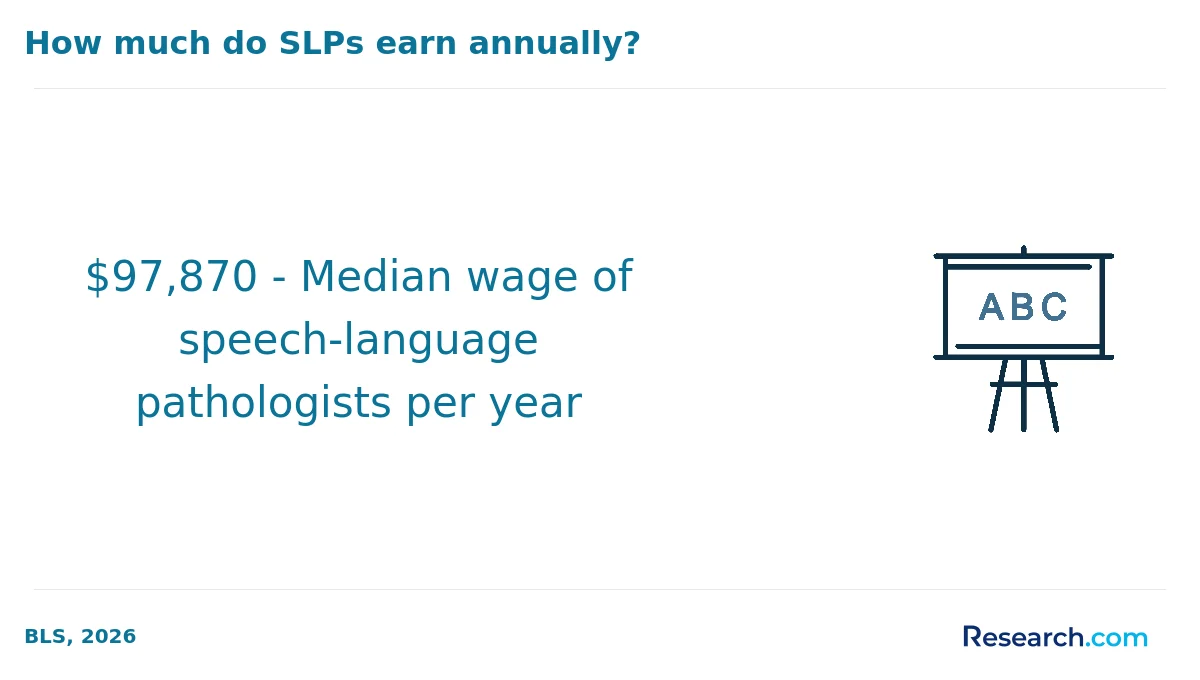
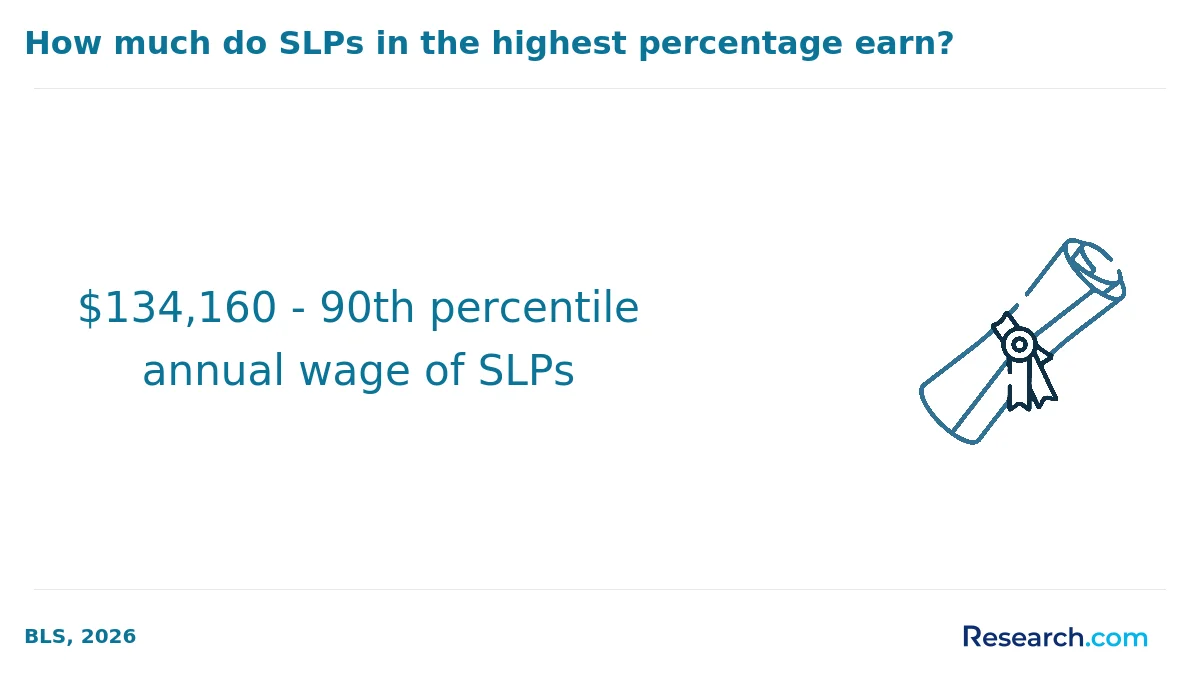
Work experience can influence salary after earning a communication disorders master's degree, but it is not the only factor. Research indicates that graduates with over three years of relevant experience earn on average 15% more than those with minimal experience. That difference may reflect stronger job readiness, better interview performance, more specialized skills, prior professional networks, or faster movement into advanced responsibilities.
Salary outcomes also depend on employer type, geographic location, role, setting, demand, credentials, licensure status, union or district pay scales, and years of post-degree experience. Prior work history can help, but it should be understood as one factor in a broader compensation picture.
- Industry relevance: Experience in speech-language pathology support, schools, clinics, hospitals, rehabilitation, audiology, or disability services can make a graduate more attractive to employers.
- Leadership experience: Prior supervision, team coordination, training, or program management may support movement into lead, coordinator, or administrative roles.
- Career progression: Applicants with a steady work history may be better prepared to advance quickly because they already understand workplace expectations.
- Technical skills: Familiarity with documentation systems, diagnostic tools, therapy materials, assistive technology, or practice management software can improve early job performance.
- Negotiation leverage: Candidates who can demonstrate relevant pre-degree accomplishments may have stronger evidence when discussing salary, setting, schedule, or role responsibilities.
Prospective students should not choose a program based only on the possibility of higher earnings. They should also examine accreditation, clinical placement support, licensure preparation, completion requirements, total cost, and local labor market demand. Students comparing experience-driven salary outcomes in other fields may find a useful contrast in programs such as a master of construction management, where prior industry experience also plays a major role in compensation.
Admissions committees value achievements that show readiness for graduate study and service-oriented professional work. Studies show that around 70% of these programs prioritize clear examples of leadership or successful project outcomes. The most persuasive achievements are specific, verifiable, and connected to skills used in communication disorders, such as observation, collaboration, ethical judgment, cultural responsiveness, problem-solving, and client-centered communication.
Applicants should focus less on impressive-sounding titles and more on evidence of impact. A small but meaningful achievement in a school, clinic, lab, or community setting may be stronger than a vague leadership claim with no clear outcome.
- Leadership roles: Serving as a team leader, project coordinator, peer mentor, clinic assistant lead, student organization officer, or training coordinator can show responsibility and initiative.
- Clinical project participation: Assisting with intervention programs, screening events, therapy materials, client support, or educational services can demonstrate applied interest in the field.
- Advanced certifications: Credentials beyond baseline requirements can show professional commitment, especially when they relate to healthcare, education, disability support, child development, language, hearing, or rehabilitation.
- Research contributions: Research assistantships, poster presentations, data collection, literature reviews, or evidence-based practice projects can strengthen applications, particularly for programs with a research emphasis.
- Community outreach: Advocacy, literacy programs, disability awareness, caregiver education, language access initiatives, or service to underserved groups can show empathy and public-facing communication skills.
When describing achievements, use clear evidence: the setting, your role, the population served, the problem addressed, and the result. For example, instead of saying “helped with outreach,” explain that you coordinated volunteers, prepared communication materials, served a specific group, and learned how access barriers affect care.
What Graduates Say About Work Experience Requirements for Communication Disorders Degree Master's Programs
- Lisa: "Choosing a communication disorders master's degree was driven by my passion for helping others find their voice, especially those with speech challenges. Completing the required work experience was initially daunting, but it offered invaluable hands-on learning that deepened my understanding beyond textbooks. This program has truly transformed my career path, equipping me to make meaningful differences every day."
- Hayden: "Reflecting on my journey, the work experience requirement was an essential part of my education in the communication disorders master's program. It allowed me to apply theories in real clinical settings, which was both challenging and rewarding. Now, as a professional, I appreciate how these experiences have prepared me to confidently support diverse clients and navigate complex cases."
- Caleb: "My decision to pursue a communication disorders master's degree came from wanting a purposeful career change with solid clinical practice. The program's mandatory work experience gave me the chance to test my skills and adapt to different environments, which was crucial for my growth. Thanks to this rigorous preparation, I've stepped into my new role with competence and a clear vision for my future."
Other Things You Should Know About Communication Disorders Degrees
Internship experiences relevant to communication disorders provide practical knowledge and demonstrate a candidate's commitment to the field. Many programs consider internships as valuable work experience that can strengthen an application by showcasing hands-on skills and exposure to clinical or educational settings. However, the specific weight of internships varies by program and may need to be supplemented with additional paid or volunteer roles.
In 2027, most communication disorders master's programs recognize volunteer work equally with paid experience, emphasizing relevant skills and commitment to the field. Admissions committees value genuine engagement and ability to work with diverse populations, seeking applicants who demonstrate passion and initiative regardless of compensation.
In 2027, speech-language pathology programs often emphasize clinical experience through internships, while audiology programs may prioritize research involvement. Both programs value diverse volunteer experiences but weigh them differently based on their focus—practical for speech and research-oriented for audiology.
Applicants should aim to begin accumulating relevant work experience during their undergraduate studies or immediately afterward. Gaining several months to a year of experience can provide a competitive advantage and allow for stronger letters of recommendation. Early engagement also helps candidates clarify their career goals and strengthens their understanding of the demands of graduate-level study in communication disorders.
- U.S. Bureau of Labor Statistics - Speech-Language Pathologists https://www.bls.gov/ooh/healthcare/speech-language-pathologists.htm
- ASHA EdFind - Accredited Speech-Language Pathology Programs https://find.asha.org/ed/
- ETS Praxis - Speech-Language Pathology (5331) https://praxis.ets.org/test/speech-language-pathology-5331.html
- Abilene Christian University - Master of Science in Speech-Language Pathology (Online) https://acu.edu/academics/graduate/master-of-science-in-speech-language-pathology/
- University of North Carolina at Greensboro - Speech-Language Pathology, M.A. (Online) https://csd.uncg.edu/graduate/masters-of-arts-online/
- Baylor University - Master of Science in Speech-Language Pathology (Online) https://csd.robbins.baylor.edu/graduate/online-csd-graduate-program
- Pepperdine University - Master of Science in Speech-Language Pathology https://healthscience.pepperdine.edu/online-masters-in-speech-language-pathology/
- Nova Southeastern University - SLP Program - Master of Science in Speech-Language Pathology https://osteopathic.nova.edu/degrees/masters/speech-language-pathology/index.html