2027 Communication Disorders Degree Master's Programs Accepting Students Now

Co-Founder and Chief Data Scientist

Reviewed by Rhea Paul, PhD
SLP Education & Research Expert
Choosing a communication disorders master’s program is a licensure, training, and financial decision—not just an academic one. The program you choose can affect whether you complete the right supervised clinical experiences, qualify for state licensure, pursue professional certification, manage graduate debt, and enter the job market without unnecessary delays.
This 2026 guide is for applicants comparing communication disorders master’s programs, including communication sciences graduates, career changers, working adults, educators, healthcare professionals, and international applicants evaluating U.S. graduate expectations. It explains what these programs prepare students to do, how admissions and prerequisites work, what GPA standards mean, how long programs take, what costs to expect, and why accreditation should be verified before you apply.
The decision has become more competitive for nontraditional applicants. According to the American Speech-Language-Hearing Association, over 60% of communication disorders graduate programs reported increased enrollment by career changers in the past five years. Applicants without a communication sciences background should plan early for prerequisite coursework, observation experience, strong recommendations, and a clear explanation of why they are entering the field.
Key Things to Know About Communication Disorders Degree Master's Program Accepting Students Now
- Programs offer flexible scheduling and online options to support working professionals balancing employment and graduate study.
- Accelerated tracks enable students to develop advanced communication disorders skills in under two years, expediting entry into the workforce.
- Access to global alumni networks and virtual collaborations enhances professional connections and cross-cultural understanding in the communication disorders field.
What Are Communication Disorders Master's Programs, and Who Are They Designed For?
A communication disorders master’s program is a graduate degree that prepares students to understand, assess, and support people with speech, language, voice, fluency, swallowing, and related communication needs. Most programs combine advanced academic coursework with supervised clinical training, so students learn not only the science of communication but also how to apply that knowledge with clients, families, schools, healthcare teams, and community agencies.
For many students, this degree is the primary academic pathway toward clinical speech-language pathology roles. It is more professionally focused than a bachelor’s degree because it emphasizes assessment, intervention planning, documentation, ethics, evidence-based practice, and supervised client care. It differs from a doctoral program, which is typically more research-intensive and may prepare graduates for academic, advanced research, or specialized leadership roles.
Who these programs are built for
- Communication sciences graduates: These applicants may already meet many prerequisite requirements and may be ready to enter the graduate sequence if admitted.
- Career changers: Students from unrelated majors often need leveling or post-baccalaureate coursework before they can begin graduate clinical training.
- Working adults: Online, hybrid, evening, and part-time formats may help students balance employment with coursework, but clinical requirements still require protected time.
- Educators and healthcare workers: Experience with children, older adults, patients, disability services, rehabilitation, language development, or special education can strengthen professional readiness.
- Applicants seeking professional advancement: A master’s degree may support entry into direct clinical pathways and, with experience, future supervisory, specialist, or program leadership roles.
What applicants should compare first
- Accreditation status: Confirm whether the institution and program meet standards tied to your intended career path.
- Clinical training model: Ask how practica and placements are assigned, supervised, documented, and evaluated.
- Prerequisite rules: Determine whether missing coursework must be completed before admission, before enrollment, or during a leveling sequence.
- Program format: Compare on-campus, online, hybrid, full-time, part-time, and accelerated formats based on weekly workload—not just convenience.
- Licensure alignment: Verify whether the program is designed to support requirements in the state where you plan to practice.
The labor market is one reason applicants continue to consider this field. The U.S. Bureau of Labor Statistics projected employment growth of 17% in speech-language pathology between 2025 and 2035-much faster than the average for all occupations. Students comparing online graduate formats may also look at broader models such as the cheapest online master’s in artificial intelligence, but communication disorders programs require clinical preparation, accreditation review, and practicum planning that nonclinical degrees usually do not.
Which Communication Disorders Master's Programs Are Currently Accepting Applications?
Communication disorders master’s programs use different admissions calendars. Some admit one fall cohort per year, while others offer spring, summer, rolling, or cohort-based starts. An application portal may be open at the university level even if the specific communication disorders track, online option, bridge pathway, or part-time cohort you want has closed or reached capacity.
Before paying an application fee, confirm the deadline with both graduate admissions and the academic department. Also check whether the program uses rolling review, priority deadlines, interviews, supplemental applications, centralized application systems, or separate scholarship deadlines. A general university deadline does not always cover every department requirement.
Program types commonly accepting applications
- Thesis-based programs: These include a formal research project and may appeal to students considering doctoral study, faculty roles, or specialized evidence-based practice. Deadlines may be fixed because faculty supervision must be arranged early.
- Professional or clinical master’s programs: These focus on preparation for supervised practice, certification, and licensure. Many admit through annual cohorts or structured review cycles.
- Accelerated master’s degrees: These can shorten time-to-degree but usually require a demanding schedule and careful clinical planning. Students comparing faster routes can review accelerated speech pathology programs online while confirming cost, accreditation, workload, and placement expectations.
- Online hybrid programs: These may deliver lectures online while still requiring clinical placements, simulations, supervised hours, campus visits, or synchronous meetings.
- Post-baccalaureate certificate pathways: These are often used by career changers who lack communication sciences coursework. They can help applicants become eligible for graduate admission, but they may not guarantee acceptance into the master’s program.
Questions to ask before applying
- Is my preferred track accepting applications now?
- Is admission limited to fall, or are multiple start dates available?
- Are prerequisite courses required before admission, before enrollment, or before clinical placement?
- Are interviews, observation hours, writing samples, or supplemental materials required?
- Does applying by a priority deadline affect scholarships, assistantships, or placement options?
- If the program is online or hybrid, who is responsible for identifying clinical sites?
Career changers should add extra time to the planning calendar. If prerequisite coursework is required before full graduate admission, the actual start date may be later than the master’s application deadline suggests. Applicants comparing accelerated graduate structures in other fields may review accelerated online MSW programs, while remembering that communication disorders programs have their own clinical and accreditation requirements.
What Are the Admission Requirements for a Communication Disorders Master's Program?
Admission to a communication disorders master’s program usually depends on academic readiness, prerequisite preparation, professional maturity, communication skills, and fit with clinical training. Strong applicants show more than a desire to help people. They demonstrate that they understand the field, can handle graduate-level science and clinical coursework, and are prepared to work ethically with clients, families, supervisors, and interdisciplinary teams.
Requirements vary widely by institution. Build a separate checklist for each program instead of assuming one application package will work everywhere. Pay close attention to prerequisite coursework, minimum prerequisite grades, observation-hour expectations, GRE policies, transcript rules, supplemental questions, and materials due after the main application is submitted.
Typical application materials
- Official transcripts: Programs review transcripts to verify degree completion, cumulative GPA, prerequisite coursework, course grades, and academic trends.
- Letters of recommendation: Most programs request two or three letters from faculty, supervisors, clinicians, or employers who can evaluate readiness for graduate study, professionalism, communication ability, and reliability.
- Statement of purpose: The essay should explain why you are pursuing communication disorders, what experiences shaped that decision, and why the specific program fits your goals.
- Resume or CV: A focused resume highlights relevant work, volunteer service, research, observation hours, language skills, certifications, and experience with children, older adults, patients, or people with disabilities.
- Standardized tests and prerequisites: Some programs require GRE scores and specific prerequisite classes, though many have waived testing requirements post-pandemic; applicants should verify each school’s current policy.
Special considerations for career changers
Applicants from unrelated majors often need foundational coursework before they can begin advanced clinical training. Common gaps may include speech and language development, anatomy and physiology related to speech and hearing, phonetics, audiology, linguistics, statistics, psychology, or biological sciences.
If a school offers conditional admission or a leveling sequence, ask how that pathway works before enrolling. Do the credits count toward the master’s degree, or do they add time and cost before the degree begins? Is completing the leveling coursework enough to continue, or must students reapply? Are online prerequisites accepted? Are minimum grades required in each prerequisite?
A professional who pursued an online communication disorders master’s degree to change careers said the process initially felt difficult while balancing work and prerequisite coursework. “I had to carefully gather recommendations and tailor my statement of purpose to reflect my unique background,” he explained.
He also found that comparing each school’s requirements took more time than expected. “Understanding exactly what each program expected helped me present myself confidently,” he said. The practical lesson is clear: the strongest applications are specific to the program, not recycled across every deadline.
Most communication disorders master’s programs require a minimum GPA of 3.0 on a 4.0 scale. That minimum is usually the threshold for review, not a guarantee of admission. More selective programs may expect GPAs above 3.2 because clinical cohort seats, faculty supervision, and placement capacity can be limited.
Admissions committees often evaluate GPA in context. An applicant with a strong upward grade trend, high prerequisite grades, and relevant experience may be viewed differently from an applicant with the same cumulative GPA but weaker recent coursework. Grades in communication disorders prerequisites, science, statistics, linguistics, and psychology can carry particular weight because they reflect readiness for graduate-level clinical study.
Several programs offer conditional admission to applicants with borderline GPAs, allowing them to prove readiness through early coursework or additional review. A 2023 survey by the American Speech-Language-Hearing Association found that over 40% of graduate programs weigh relevant experience as heavily as GPA when deciding admission. Applicants near the cutoff should contact admissions before applying to ask whether exceptions, probationary admission, or prerequisite grade improvement are considered.
How GPA is commonly interpreted
- Common minimum: A 3.0 GPA is commonly required for admission to communication disorders master’s programs.
- Competitive range: More selective programs often expect GPAs above 3.2 because cohort space and clinical placements can be limited.
- Prerequisite performance: Grades in required courses may matter as much as the cumulative GPA, especially for applicants from unrelated majors.
- Experience as context: Relevant paid, volunteer, clinical, education, or research experience can strengthen an application, though it may not override a hard GPA cutoff.
- Conditional admission: Some institutions allow students with marginal GPAs to begin conditionally if they meet performance standards in initial coursework.
Ways to strengthen an application with a lower GPA
- Retake key prerequisites if permitted: Stronger grades in required courses can show current academic readiness.
- Address academic history briefly: If earlier grades were affected by specific circumstances, explain the issue concisely and emphasize evidence of improvement.
- Build relevant experience: Observation, tutoring, research, special education support, healthcare work, volunteering, or human services experience can add credibility.
- Select recommenders carefully: Letters should directly discuss your discipline, communication skills, maturity, and ability to succeed in graduate study.
- Apply strategically: Compare GPA policies, prerequisite grade rules, conditional admission options, and cohort competitiveness before paying application fees.
Applicants planning to keep working during graduate school should also evaluate workload, cost, and scheduling flexibility. For a general comparison of flexible graduate formats, prospective students may review executive MBA programs online, while recognizing that communication disorders programs include clinical requirements that business programs do not.
Most communication disorders master’s programs take one to two years of full-time study. Part-time students typically take two to four years to finish. Some schools offer accelerated formats, including intensive 12-month tracks for highly prepared students, while combined 4+1 bachelor’s/master’s programs may allow students to complete both degrees in about five years.
The fastest option is not always the best option. Communication disorders programs depend on sequenced coursework, supervised clinical experiences, documentation, faculty evaluation, and sometimes a thesis or capstone. If clinical placements are available only during certain terms, students may not be able to graduate faster simply by taking more classes.
What affects completion time
- Full-time enrollment: This is often the most direct path, but it can be difficult for students balancing employment, commuting, caregiving, and clinical hours.
- Part-time enrollment: This may be more manageable for working adults, but it can extend completion to 2-4 years and may limit when clinical placements are available.
- Accelerated formats: These can shorten the timeline but require strong organization, schedule flexibility, and readiness for a heavy workload.
- Thesis versus non-thesis options: A thesis may add time because of proposal development, research, writing, faculty review, and revision.
- Prerequisites and transfer credits: Accepted transfer credits may shorten the plan, while missing prerequisites can add semesters before the graduate sequence begins.
- Clinical placements: Practica and internships often determine the real graduation timeline more than the catalog plan does.
How to choose a realistic pace
Ask each program for a sample plan of study for the format you are considering. Compare courses per term, expected weekly workload, clinical schedules, summer requirements, live class meetings, campus visits, and placement obligations. Students with jobs, family responsibilities, or limited local placement options should be cautious about compressed plans unless they understand the weekly commitment.
A professional who completed an online communication disorders master’s program said the hardest part was not online coursework alone but coordinating assignments with clinical expectations. “The intensity of the program pushed me to develop strong time-management skills,” she said.
The practical rule is to choose the fastest timeline you can complete well. Graduating sooner is useful only if the program remains accredited, clinically sound, financially manageable, and realistic for your work, family, and placement responsibilities.
The cost of a communication disorders master’s program includes more than tuition. Students should budget for tuition, university fees, program and clinical fees, books, technology, background checks, professional materials, travel, and living expenses. Public universities may charge different rates for in-state and out-of-state students, while some online programs use one tuition rate regardless of residency.
Nationally, the total cost to complete a master’s degree in this field commonly falls between $30,000 and $70,000, but the amount a student actually pays may be lower after scholarships, assistantships, employer support, or other aid. The best comparison is total net cost through graduation, not the lowest advertised per-credit rate.
Cost categories to include
- Tuition per credit hour: This is the base academic charge and varies by institution, residency status, and delivery format.
- Program and clinical fees: Communication disorders programs may charge fees for clinical education, lab resources, supervision, assessment tools, simulations, or program operations.
- Technology and online learning fees: Online and hybrid students may pay platform, technology, or distance-learning fees in addition to tuition.
- Living and transportation costs: On-campus students should budget for housing, meals, commuting, parking, and local cost-of-living differences. Online students may still need travel funds for campus intensives or clinical placements.
- Books, supplies, and professional requirements: Students may need textbooks, assessment materials, background checks, immunizations, liability insurance, or professional membership fees depending on program rules.
- Net cost after aid: Scholarships, assistantships, tuition remission, employer benefits, and state support can reduce out-of-pocket expenses.
Questions that reveal the real price
- What is the estimated total cost through graduation?
- Are prerequisite or leveling courses included in that estimate?
- Are summer terms required, and are they billed differently?
- Are clinical placement fees included in published tuition and fees?
- Will students pay for travel to campus intensives, placements, or conferences?
- Are online students charged technology or distance-learning fees?
- Does tuition change during clinical rotations or internships?
Before enrolling, request a full program cost estimate in writing if one is available. A program that looks affordable in the first term may become more expensive if it requires added semesters, travel, placement-related expenses, or prerequisite coursework outside the published degree plan.
Communication disorders master’s students may use several types of financial aid, including federal loans, institutional scholarships, fellowships, graduate assistantships, employer tuition benefits, state-based programs, and private scholarships. Because graduate grant funding is often more limited than undergraduate aid, applicants should apply early and compare offers carefully.
For many U.S. students, the first step is completing the Free Application for Federal Student Aid (FAFSA). The FAFSA helps determine eligibility for federal graduate loans and certain school-administered aid. Applicants should also contact the academic program, graduate school, and financial aid office because funding may come from separate campus sources with different deadlines.
Common financial aid sources
- Federal loans via FAFSA: Graduate students may use options such as Direct Unsubsidized and Grad PLUS loans, subject to federal eligibility rules and borrowing limits.
- Institutional grants and fellowships: Some universities offer merit-based, need-based, diversity-focused, or research-related awards for graduate students.
- Graduate assistantships: Teaching, research, or clinical support assistantships may provide stipends, tuition remission, or partial tuition support in exchange for assigned work.
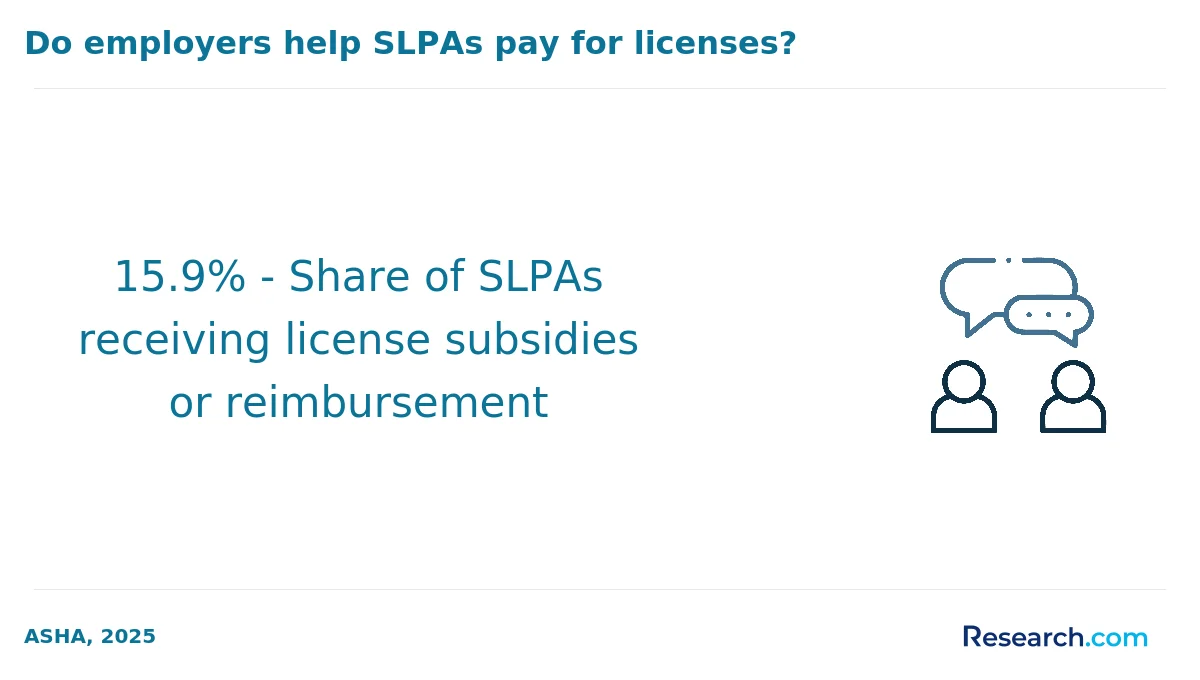
- Employer tuition benefits: Students working in education, healthcare, rehabilitation, or related fields should ask whether their employer offers reimbursement or tuition assistance.
- Private scholarships and state aid: Professional associations, foundations, state agencies, and community organizations may offer awards for communication disorders or healthcare workforce preparation.
How to compare aid offers
Separate gift aid from borrowed money. Scholarships, grants, fellowships, and tuition remission reduce the cost directly. Loans can make enrollment possible, but they must be repaid. Review whether each award is renewable, whether it requires full-time enrollment, whether it depends on a specific GPA, and whether it includes a work or service obligation.
Timing also matters. Some assistantships and scholarships are awarded only to applicants who meet priority deadlines. Others require a separate application, faculty nomination, essay, interview, or proof of financial need. Waiting until after admission may reduce the number of options available.
Yes. Communication disorders master’s students may qualify for scholarships from universities, professional associations, foundations, government agencies, and community organizations. Awards may be based on academic merit, financial need, leadership, research interests, service goals, geographic location, language background, or commitment to underserved populations.
Institutional scholarships are often managed by the graduate program, college, department, or financial aid office. External scholarships may come from organizations such as the American Speech-Language-Hearing Association (ASHA), along with foundations and professional groups connected to speech-language pathology, audiology, disability services, education, and healthcare access.
Where to search for scholarships
- Your graduate program: Ask whether admitted students are automatically considered or must submit a separate scholarship application.
- The college or department: Some awards are limited to students in communication disorders, health sciences, education, or rehabilitation-related programs.
- Professional associations: Field-specific organizations may offer awards tied to academic promise, diversity, research, service, or workforce needs.
- Scholarship platforms: Aggregator platforms like Fastweb or Scholarships.com can help identify broader awards, but students should verify legitimacy and eligibility.
- Federal and state tools: The U.S. Department of Education’s Scholarship Search and state agencies may list funding connected to healthcare, education, or workforce preparation.
According to recent statistics, nearly 40% of communication disorders graduate students rely on scholarships or grants to fund their education. Students trying to limit borrowing may also compare lower-cost graduate formats, including cheap online master’s programs, while still prioritizing accreditation and clinical training quality for communication disorders.
Before applying, review eligibility rules, award amounts, required documents, and deadlines. A smaller scholarship can still reduce borrowing, but applicants should avoid spending time on awards for which they clearly do not qualify.
The best online communication disorders master’s program is not simply the most flexible or lowest-cost option. It is the program that is accredited, clinically credible, affordable for your circumstances, and aligned with licensure requirements where you plan to practice. Online delivery can improve access for students who cannot relocate, but it does not remove supervised clinical requirements.
Start by verifying institutional accreditation and, when relevant to your career goal, programmatic accreditation. Then examine the delivery model. Some programs are mostly asynchronous, while others require live classes, campus visits, simulations, cohort activities, or scheduled clinical meetings. Flexibility matters only if the format fits your actual weekly schedule.
What strong online programs should provide
- Verified accreditation: Confirm accreditation through official sources rather than relying only on marketing language or rankings.
- Clinical placement support: Ask whether the program finds placements, approves student-secured sites, or expects students to locate placements independently.
- Qualified faculty: Look for faculty with relevant clinical, research, and supervisory expertise in communication disorders.
- Student support: Strong programs provide advising, technical support, writing help, clinical placement guidance, and career services.
- Licensure alignment: Confirm whether the program meets or is designed to meet requirements in the state where you plan to practice.
- Transparent cost and pace: Compare tuition, fees, travel, clinical costs, part-time options, and time-to-completion before choosing.
Online program trade-offs
Online programs can be a strong fit for working adults, rural students, military-connected students, and applicants who cannot move for graduate school. The trade-off is that students often need to be more proactive about time management, technology readiness, faculty communication, networking, and clinical placement planning.
Before applying, ask for placement outcome information, sample schedules, technology requirements, and licensure disclosures. If a program expects students to secure local placements, ask how many sites students typically contact, what happens if a placement falls through, and whether the school already has relationships in your area.
Prospective students comparing related healthcare and counseling graduate degrees may also review flexible formats such as MFT online programs, which raise similar questions about accreditation, licensure alignment, supervised experience, and student support.
Accreditation affects whether a communication disorders master’s degree is recognized by employers, licensure boards, certification bodies, and financial aid systems. It is one of the most important checks to complete before applying, paying a deposit, or enrolling.
Regional accreditation evaluates the institution as a whole and supports access to federal financial aid. Programmatic accreditation evaluates a specific professional program against standards in the field. In communication disorders, many programs seek accreditation from the Council on Academic Accreditation in Audiology and Speech-Language Pathology (CAA), under the American Speech-Language-Hearing Association (ASHA).
Graduates of CAA-accredited programs are typically eligible for state licensure and the Certificate of Clinical Competence (CCC), key credentials for employment in the field. Because requirements can vary by state and employer, applicants should independently verify both institutional and programmatic accreditation before committing to a program.
Why accreditation matters
- Regional accreditation: Validates the institution’s overall quality and operational standards and supports access to federal financial assistance programs.
- Programmatic accreditation: Confirms that the communication disorders program aligns with professional preparation standards in the field.
- Licensure and certification: Completing an accredited program is often necessary for state licensure and professional certifications like the ASHA CCC.
- Employer recognition: Schools, hospitals, clinics, and agencies may prefer or require graduates from accredited programs.
- Accreditation verification: Applicants should use official databases, including the U.S. Department of Education’s Database of Accredited Postsecondary Institutions and Programs, and should also confirm requirements with the state where they plan to practice.
Do not assume that terms such as “online,” “approved,” “career-focused,” or “licensure-track” automatically mean accredited. Be cautious with programs that cannot clearly explain clinical placement requirements, licensure alignment, accreditation status, or graduate eligibility for certification. If answers are vague, verify through official sources before applying.
Communication disorders master’s graduates commonly work in public schools, hospitals, rehabilitation centers, private clinics, early intervention programs, skilled nursing facilities, community agencies, and telepractice settings. Many pursue careers as speech-language pathologists after completing certification and state licensure requirements.
The U.S. Bureau of Labor Statistics reports a median annual wage of over $82,000 for speech-language pathologists in 2022, with job growth projected at 21% through 2032-much faster than average. Actual earnings vary by state, setting, experience, certification, schedule, and employer type, so students should review local labor markets before estimating return on investment.
Common outcomes and employment settings
- Employment settings: Graduates may work in schools, hospitals, outpatient clinics, private practices, rehabilitation facilities, long-term care settings, and community programs.
- Career advancement: A master’s degree can support movement into clinical specialist, supervisor, program coordinator, or leadership roles after experience is gained.
- Licensure importance: Many positions require state licensure and may also expect national certification or supervised post-graduate clinical experience.
- Salary factors: Pay can differ significantly by region, caseload, employer, union status, contract length, and healthcare versus education setting.
- Program support: Career services, alumni networks, clinical supervisors, and faculty connections can help students move from graduate training into employment.
Compared with a bachelor’s degree alone, a master’s degree in communication disorders usually opens more direct clinical career pathways. However, outcomes depend heavily on completing an appropriate accredited program, meeting licensure requirements, performing well in supervised clinical experiences, and building strong professional references before graduation.
What Graduates Say About Their Communication Disorders Degree Master's Program
- : "Choosing the Communication disorders master's degree was a pivotal decision in starting my career in speech therapy. The program's affordable tuition made it accessible without overwhelming financial strain, which was a huge relief. Since graduating, I've seen a direct impact on my ability to work confidently with diverse clients and advance professionally. — James"
- : "Reflecting on my journey through the Communication disorders master's degree, it was the comprehensive curriculum and hands-on experience that truly prepared me for real-world challenges. Although the cost was a significant consideration, the investment paid off through numerous career opportunities and professional growth. This program has been instrumental in shaping my path as a licensed clinician. — Samantha"
- : "Professionally, the Communication disorders master's degree opened doors I hadn't imagined, from advanced clinical roles to leadership positions. I appreciated the program's reasonable cost, which balanced well with the quality of education provided. It was a strategic career move fueled by passion and the desire to make a tangible difference in clients' lives. — Benedict"
Other Things You Should Know About Communication Disorders Degrees
Choosing the right communication disorders master's program involves assessing your personal and professional objectives. Look for programs that offer coursework and clinical experiences aligned with your intended career path, such as speech-language pathology or audiology. Consider factors like program accreditation, faculty expertise, location, and available resources to ensure the program supports your long-term development.
The application process typically includes submitting transcripts, letters of recommendation, a statement of purpose, and standardized test scores if required. Many programs also require a background check or proof of prerequisite coursework in related areas such as linguistics, biology, and psychology. It is important to complete all materials by the stated deadlines and to verify any additional documentation specific to each school.
Application deadlines for communication disorders master's programs can vary widely, though many typically fall between December and February for fall admission. It's crucial to check specific deadlines for each program you're considering, as some might have earlier or rolling admissions.
- U.S. Bureau of Labor Statistics - Speech-Language Pathologists https://www.bls.gov/ooh/healthcare/speech-language-pathologists.htm
- ASHA EdFind - Accredited Speech-Language Pathology Programs https://find.asha.org/ed/
- ETS Praxis - Speech-Language Pathology (5331) https://praxis.ets.org/test/speech-language-pathology-5331.html
- Baylor University - Master of Science in Speech-Language Pathology (Online) https://csd.robbins.baylor.edu/graduate/online-csd-graduate-program
- University of Nebraska at Kearney - Speech-Language Pathology, Master of Science in Education (Online Track) https://www.unk.edu/online/degrees-programs/speech-language-pathology-online.php
- University of North Carolina at Greensboro - Speech-Language Pathology, M.A. (Online) https://csd.uncg.edu/graduate/masters-of-arts-online/
- Abilene Christian University - Master of Science in Speech-Language Pathology (Online) https://acu.edu/academics/graduate/master-of-science-in-speech-language-pathology/
- California State University-East Bay - Online Master of Science in Speech-Language Pathology https://ce.csueastbay.edu/programs/speech-language-pathology/