2027 Online Speech Pathology Degree Master's Programs That Accept FAFSA

Co-Founder and Chief Data Scientist

Reviewed by Rhea Paul, PhD
SLP Education & Research Expert
Choosing an online master's degree in speech pathology is usually two decisions at once: whether the program can lead to the credentials you need, and whether you can pay for it without taking on unmanageable debt. FAFSA matters because it is the entry point for federal graduate aid at eligible institutions, including many accredited online speech pathology master's programs.
The timing is also important. According to the Bureau of Labor Statistics, employment for speech-language pathologists is projected to grow 17% through 2035, far above average, which means qualified clinicians are expected to remain in demand across schools, hospitals, rehabilitation settings, and private practices. Still, strong demand does not make every program a good financial choice.
This guide explains how FAFSA works for graduate students, what aid may be available, how to compare admissions requirements and tuition, and what to check before enrolling in an online speech pathology master's program. The goal is to help you focus on programs that are accredited, financially realistic, and aligned with licensure and career requirements.
Key Things to Know About Online Speech Pathology Degree Master's Programs That Accept FAFSA
- FAFSA eligibility for online speech pathology master's programs requires enrollment in accredited institutions and maintaining satisfactory academic progress; international students may face additional restrictions.
- Admission criteria often include a bachelor's degree, prerequisite coursework, and competitive GRE scores; application procedures typically involve transcripts, letters of recommendation, and personal statements.
- Program comparison should focus on total cost, flexibility of course delivery, and institutional reputation, as these factors impact career readiness and long-term financial investment.
How Does FAFSA Work for Graduate Students Enrolling in an Online Speech Pathology Master's Program?
FAFSA works for online speech pathology master's students the same way it works for other graduate students: it determines eligibility for federal student aid at participating, accredited institutions. The delivery format is not the deciding factor. An online program may be FAFSA eligible if the school participates in federal aid programs and meets recognized accreditation standards.
Institutional accreditation is the first checkpoint. The U.S. Department of Education recognizes certain accrediting agencies that evaluate whether schools meet acceptable academic and administrative standards. If a school is not properly accredited or does not participate in federal aid, students generally cannot use FAFSA for that program, even if the coursework is fully online.
The demand for speech-language pathologists is expected to grow 17% from 2025 to 2035, which makes program quality and financing especially important. A lower-cost program is not automatically the best choice if it does not support clinical training, licensure preparation, or recognized credentials.
Examples of FAFSA-eligible online speech pathology master's options
- University of Florida: A 2-year program requiring approximately 60 credit hours, delivered fully online with occasional on-campus sessions. The university participates in federal aid programs, making it FAFSA eligible.
- Northeastern University: This 2-3 year hybrid program includes 66 credit hours combining online coursework with local clinical placements. It qualifies for FAFSA, supporting students with federal financial aid.
- University of North Carolina at Greensboro: A fully online 2-year program with 51 credit hours, institutionally accredited and approved for federal financial aid participation.
- East Carolina University: Offering a 2-year program totaling 60 credit hours, it features online courses alongside clinical practicum components and provides federal aid to eligible students.
- Wichita State University: A 2-year, 54-credit hour online program including on-site clinicals, confirmed to participate in FAFSA and federal financial aid programs.
How to verify FAFSA eligibility before applying
- Confirm the school participates in federal aid. Use the Federal Student Aid school search tool and match the school code to the institution you plan to list on your FAFSA.
- Check both institutional and program expectations. Federal aid eligibility is tied to the institution, but licensure preparation depends heavily on the program's curriculum and clinical structure.
- Ask the financial aid office about graduate enrollment rules. Aid eligibility can depend on credit load, satisfactory academic progress, and whether prerequisite courses count toward the eligible program.
- Compare the total cost, not only tuition. Clinical travel, campus intensives, software, background checks, and fees can change the real cost of attendance.
Students comparing online graduate education costs may also find broader affordability resources useful, including Research.com's guide to an online AI degree, but speech pathology applicants should prioritize accreditation, clinical placement support, and licensure alignment over general online-program convenience.
What Types of Federal Financial Aid Are Available to Online Speech Pathology Master's Students Through FAFSA?
Online speech pathology master's students who file the FAFSA are generally looking at graduate-level federal aid, which is more loan-centered than undergraduate aid. FAFSA does not guarantee that a program will be affordable; it determines what federal aid options you may access at an eligible school.
The demand for speech pathologists is expected to grow 17% through 2035, but students should still borrow carefully. A strong career outlook can support long-term repayment planning, yet clinical placement delays, licensure timelines, and local salary differences can affect how quickly graduates can manage loan payments.
Main federal aid options for graduate students
- Federal Direct Unsubsidized Loan: Graduate students may borrow up to $20,500 annually at a fixed 7.54% interest rate. Because the loan is unsubsidized, interest responsibility begins while the student is in school.
- Grad PLUS Loan: This loan can help cover remaining costs after other aid, charges a fixed 8.05% interest rate, and requires a credit check. It can be useful for high-cost programs, but it can also increase total debt quickly.
- Limited grant options: Graduate-level grants such as the TEACH Grant exist, but eligibility is narrow and may not apply to every speech pathology pathway. Most graduate speech pathology students should plan as if federal loans will be the primary federal aid source.
- Repayment options: Income-driven repayment plans can adjust monthly payments based on earnings. Public Service Loan Forgiveness (PSLF) may be relevant for graduates who work in qualifying government or nonprofit roles after graduation.
- Accreditation-based access: Students must be enrolled in an eligible accredited program to use FAFSA-based aid. Research.com's broader guide to online college courses with financial aid can help readers understand how FAFSA eligibility works across online education, though speech pathology students should still verify program-specific requirements.
How to compare aid offers responsibly
- Separate gift aid from loans. Scholarships and grants reduce your cost; loans postpone payment and add repayment obligations.
- Look at annual and full-program borrowing. A manageable first-year loan can become difficult if clinical hours, fees, or part-time enrollment extend the timeline.
- Ask about assistantships or departmental scholarships. Some graduate programs offer limited institutional support outside the federal aid package.
- Use projected salary cautiously. Salary outcomes vary by setting, state, licensure status, and experience, so repayment planning should not rely on the highest possible earnings.
What Are the General Admission Requirements for an Online Speech Pathology Master's Program?
Admission to an online speech pathology master's program is competitive because programs must prepare students for advanced clinical training, not just online coursework. FAFSA eligibility may help with financing, but it does not lower academic or clinical readiness standards.
Online enrollment in these programs has surged by over 20% since 2018, which means applicants should expect careful review of transcripts, prerequisites, communication skills, and professional fit. Requirements vary by school, but most programs evaluate similar materials.
Common application requirements
- Bachelor's degree from an accredited institution: Most programs require a completed bachelor's degree. A major in communication sciences or a closely related field is often preferred, but some programs consider applicants from other backgrounds if they complete prerequisites.
- Official transcripts: Schools use transcripts to verify academic history and grade point average. Many programs expect around a 3.0, though a stronger overall application may help if the GPA is not ideal.
- Letters of recommendation: Recommendations from professors, supervisors, or clinical professionals can show whether an applicant is prepared for graduate study, client-facing work, and ethical professional practice.
- Personal statement or statement of purpose: This essay should explain why speech pathology is the right field for you, what populations you hope to serve, and how the online format fits your responsibilities and learning style.
- Standardized test scores: Though many schools have moved away from requiring GRE or GMAT scores since 2020, some still consider scores as part of a holistic review process.
- Prerequisite coursework and experience: Certain programs require prior classes in areas such as anatomy or psychology, observation experience, or related work experience. These expectations differ significantly by institution.
How to strengthen an application
- Match your statement to the program. Generic essays are easy to identify. Refer to the program's clinical model, online format, and populations served.
- Address gaps directly. If you changed fields, had a weaker semester, or lack clinical exposure, explain what changed and how you are now prepared.
- Choose recommenders carefully. A detailed letter from someone who knows your work is usually stronger than a vague letter from a person with a more impressive title.
- Clarify prerequisite timing. Ask whether prerequisites must be completed before applying, before enrollment, or during an initial bridge sequence.
- : "Navigating the various prerequisites felt overwhelming at times, but knowing FAFSA was available eased my financial burden considerably. The personalized support from the admissions office made a big difference in understanding which documents to prepare and how to present my background. Completing the program online meant balancing coursework with family responsibilities, but the financial aid allowed me to focus on learning without constant stress."
This kind of experience shows why applicants should contact admissions offices early. A short conversation can clarify missing prerequisites, document deadlines, and whether the program's online design fits your clinical and personal schedule.
Applying for FAFSA and applying to an online speech pathology master's program are separate tasks, but they should be planned together. The strongest approach is to build one timeline that includes admissions deadlines, FAFSA submission, transcript requests, recommendation letters, prerequisite checks, and financial aid review.
Completing the Free Application for Federal Student Aid is essential for accessing federal financial aid at eligible schools. It can also help institutions determine whether you qualify for certain school-based aid, depending on the program's policies.
Step-by-step application plan
- Create a StudentAid.gov account. Start by registering through the official Federal Student Aid website at StudentAid.gov. This account allows you to complete the FAFSA, list schools, and manage federal aid information.
- Gather financial documents. Prepare tax returns, income information, Social Security numbers, and other required records before starting the application. Accurate information helps prevent processing delays.
- Complete the FAFSA carefully. Enter the school codes for every online speech pathology master's program you are considering. Submit early enough for schools to prepare aid packages after admission decisions.
- Verify federal aid participation. Do not assume that every online or hybrid program qualifies. Confirm that the institution participates in federal aid and that your intended enrollment status supports aid eligibility.
- Request academic records. Order official transcripts from all prior colleges and universities. Transcript processing can take time, especially near application deadlines.
- Secure recommendation letters. Ask professors, supervisors, or clinical professionals who can speak specifically about your readiness for graduate-level speech pathology study.
- Write a focused statement of purpose. Explain your motivation, preparation, relevant experience, and career goals. If the program has a clinical emphasis, show that you understand the demands of client-facing training.
- Submit any additional materials. Some programs may request writing samples, prerequisite forms, interviews, or supplemental applications. Review each school's checklist rather than relying on one generic application packet.
- Compare financial aid offers after admission. Review tuition, fees, loan amounts, scholarships, clinical travel costs, and residency expenses. The best offer is not always the one with the largest loan eligibility.
Common mistakes to avoid
- Waiting to file FAFSA until after acceptance. Filing earlier can help schools process aid packages more efficiently.
- Ignoring clinical placement logistics. A program may be online academically but still require in-person clinical experiences that affect cost and scheduling.
- Comparing tuition only. Fees, technology, travel, and delayed completion can change the total cost significantly.
- Missing prerequisite deadlines. If prerequisites are incomplete, admission may be delayed or conditional.
Pursuing an online speech pathology master's degree through FAFSA-eligible programs is realistic with careful planning. Useful research sources include studentaid.gov, CHEA's accreditation directory, and the BLS Occupational Outlook Handbook. Students comparing long-term academic return may also review Research.com's guide to the highest paid college majors for broader context on career and earnings decisions.
Many online speech pathology master's programs list a 3.0 GPA on a 4.0 scale as a common baseline. In practice, GPA is usually one part of a broader admissions review. A strong GPA can help, but it does not replace prerequisites, recommendations, clinical awareness, communication skills, or a clear fit with the program.
Applicants with a GPA near or below the stated minimum should not assume they are automatically disqualified. They should, however, be strategic. Speech pathology is academically rigorous, and admissions committees need evidence that the applicant can handle graduate-level science, assessment, intervention, and clinical documentation.
How programs may evaluate GPA
- Institutional variability: GPA standards differ by school based on selectivity, applicant volume, and program capacity. Some programs may consider applicants with slightly lower GPAs if the rest of the application is strong.
- Major and coursework relevance: Grades in communication sciences, anatomy, psychology, language development, and related prerequisites may receive closer attention than unrelated coursework.
- Academic trend: An upward grade trend can help show improved readiness, especially if earlier grades were affected by circumstances that no longer apply.
- Conditional admission opportunities: Some programs may offer bridge courses, prerequisite completion pathways, or provisional acceptance for applicants who need to demonstrate current academic strength.
- Personal statement context: A lower GPA should be addressed honestly and briefly. The statement should focus less on excuses and more on readiness, growth, and evidence of future success.
What to do if your GPA is a concern
- Complete missing prerequisites with strong grades. Recent success in relevant coursework can be persuasive.
- Highlight professional experience. Work in schools, healthcare, caregiving, research, or communication-related roles can strengthen the application.
- Ask admissions offices about profile review. Some programs will advise whether additional coursework or experience would make an application more competitive.
- Use recommendations strategically. Choose recommenders who can discuss your discipline, communication skills, maturity, and ability to work with clients.
- : "The program understood that my grades didn't tell the full story, and being able to take courses online made it manageable to improve my knowledge while still working."
This perspective reflects an important admissions reality: GPA matters, but it is rarely the only factor. Applicants should treat a lower GPA as a weakness to address with evidence, not as a reason to abandon the goal.
An online speech pathology master's degree generally takes between 18 months and 3 years to complete. The exact timeline depends on full-time or part-time enrollment, prerequisite needs, clinical placement scheduling, and whether the program includes a thesis, capstone, or other culminating requirement.
Full-time students often finish within 18 to 24 months because they take heavier course loads and move through clinical milestones quickly. Part-time students may take up to three years, especially if they are working, caring for family, or coordinating clinical placements around local site availability.
About 30% of graduate students take more than two years to complete their degrees, so applicants should consider whether the advertised timeline is realistic for their situation.
Factors that affect completion time
- Full-time vs. part-time enrollment: Full-time study shortens the calendar timeline but requires more weekly availability. Part-time study offers flexibility but extends the degree.
- Program structure: Lockstep cohort programs may require students to follow a fixed sequence. More flexible programs may allow different pacing, but not all courses are offered every term.
- Clinical practicum scheduling: Clinical requirements must align with approved sites, supervisors, client populations, and program policies. This can affect graduation timing even when online coursework is complete.
- Thesis or capstone requirements: Research or culminating projects can add workload and may require faculty approval at specific points in the academic calendar.
- Prerequisites and retakes: Students who need to complete or repeat prerequisites may spend additional time before starting core graduate coursework.
- Financial aid rules: FAFSA-based aid depends on enrollment status and satisfactory academic progress, so pacing can affect both eligibility and borrowing needs.
Which pace is right for you?
- Choose full-time study if you can protect substantial weekly time for courses, clinical preparation, and synchronous requirements.
- Choose part-time study if you need to keep working, manage caregiving responsibilities, or reduce the risk of overload.
- Ask about clinical sequencing before enrolling. A flexible academic schedule is less helpful if clinical placements are offered only during certain terms.
Online speech pathology master's programs usually combine scientific foundations, assessment methods, intervention strategies, ethics, research, and supervised clinical preparation. The goal is not simply to deliver lectures online; the curriculum must prepare students to evaluate and treat communication and swallowing-related disorders across diverse populations.
Course names vary by institution, but most programs cover similar competency areas. Applicants should compare the curriculum carefully because course sequencing, clinical integration, and specialization options can affect licensure readiness and career direction.
Typical core coursework
- Anatomy and physiology of speech and hearing: Students study the structures and systems involved in speech production, hearing, swallowing, and communication.
- Language development and disorders: Courses examine typical and atypical language development and how language impairments present across age groups.
- Assessment and diagnosis: Students learn how to select, administer, interpret, and document standardized and informal assessment tools.
- Treatment and intervention: Coursework focuses on evidence-based therapy planning, goal setting, progress monitoring, and adapting treatment for different clients.
- Research and evidence-based practice: Students learn how to evaluate clinical research and apply findings responsibly in practice.
- Professional issues and ethics: Programs typically cover clinical documentation, cultural responsiveness, scope of practice, supervision, and legal responsibilities.
Common specialization areas
- Pediatric speech pathology: Focuses on assessment and intervention for children, often in school, early intervention, or pediatric healthcare settings.
- Neurogenic communication disorders: Addresses communication challenges associated with brain injury, neurological disease, and related conditions.
- Fluency disorders: Includes work with stuttering and other fluency-related needs.
- Clinical or setting-based electives: Some programs allow students to choose electives that align with schools, medical settings, rehabilitation, or specific populations.
Practical and culminating experiences
Most programs require supervised clinical practicum experiences, and many include a capstone project, thesis, or comprehensive assessment. These components help students move from theory to practice and demonstrate readiness for professional expectations.
When comparing curricula, look beyond the list of course titles. Ask how online students are matched with clinical sites, how faculty supervise clinical progress, and whether the program's outcomes align with your intended state and career setting. Students comparing adjacent helping-profession degrees may also find Research.com's resource on masters in psychology online useful for understanding how graduate curriculum, cost, and flexibility vary across related fields.
Tuition for an online speech pathology master's program that accepts FAFSA can vary widely, so students should calculate the total cost of attendance rather than relying on a per-credit figure alone. FAFSA eligibility helps students access federal aid, but it does not make a high-cost program low risk.
Tuition typically falls between $500 and $1,200 per credit hour depending on the institution and program. With most master's degrees requiring 45 to 60 credit hours, total tuition can range significantly, often from around $22,500 up to $72,000.
Cost factors to compare
- Tuition per credit hour: This is the easiest number to compare, but it is only the starting point. Multiply it by the required credit hours to estimate base tuition.
- Public vs. private institutions: Public universities generally offer lower tuition rates, particularly for in-state students. Private institutions often charge higher tuition regardless of residency.
- Residency rules for online learners: Some public schools extend in-state rates to online students, while others charge out-of-state tuition or a flat online rate.
- Program prestige and specialization: More selective or specialized programs may cost more. Higher tuition should be weighed against clinical support, licensure outcomes, faculty access, and completion rates.
- Additional fees: Technology fees, graduation fees, course materials, software, clinical onboarding, background checks, campus residencies, and travel can add several thousand dollars over the program.
- Cost of attendance: FAFSA can account for more than tuition, but borrowing for living costs increases long-term repayment obligations.
Simple comparison framework
| Cost question | Why it matters |
| What is the total tuition for all required credits? | Shows the base academic cost before fees and clinical expenses. |
| Are online students charged in-state, out-of-state, or flat-rate tuition? | Residency pricing can make two similar programs very different in cost. |
| Are campus visits or clinical travel required? | Travel can increase costs and create scheduling challenges. |
| How much of the aid package is loans? | Loan-heavy packages may be accessible now but costly after graduation. |
| Does the program help secure clinical placements? | Poor placement support can delay completion and increase expenses. |
Before committing, compare the published tuition, required fees, clinical costs, and likely borrowing across multiple slp master's programs online. A program that looks affordable by credit hour may become more expensive if it requires travel, extended enrollment, or additional prerequisite coursework.
Online speech pathology master's students need more than a laptop and a quiet place to study. Because these programs prepare students for clinical work, technology, software, and in-person practicum requirements are part of the academic experience and should be included in the budget.
Common technology requirements
- Reliable high-speed internet: Students need stable connectivity for live classes, recorded lectures, virtual meetings, and possible telepractice training.
- Updated computer or laptop: A webcam, microphone, current operating system, and sufficient processing capacity are typically necessary for coursework and video-based participation.
- Learning management system access: Programs commonly use platforms such as Canvas, Blackboard, or Moodle for assignments, course materials, grades, announcements, and discussion boards.
- Specialized software and virtual tools: Students may use speech analysis tools, virtual labs, simulation platforms, or telepractice systems to build practical skills remotely.
- Secure testing or proctoring tools: Some programs require identity verification, monitored exams, or specific browser settings for assessments.
Clinical and practical requirements
- Mandatory in-person clinical experiences: Accreditation standards typically require hands-on clinical placements or practicums. Online coursework does not eliminate the need for supervised client contact.
- Approved placement sites: Programs may help arrange clinical sites near the student's location, but the level of support varies. Applicants should ask whether the school secures placements or expects students to identify potential sites.
- Clinical onboarding costs: Background checks, health documentation, liability insurance, immunization records, and site-specific training may be required.
- Travel and scheduling demands: Even local placements can require daytime availability, commuting, and coordination with supervisors.
- Software and licensing fees: Some tools may require paid access, and these expenses may not be included in advertised tuition.
Questions to ask before enrolling
- What minimum computer specifications are required?
- Are live class sessions mandatory, and when are they scheduled?
- Does the program provide or charge separately for specialized software?
- Who is responsible for finding clinical placements?
- Can students complete clinical requirements near their home location?
- Are campus visits, intensives, or residency sessions required?
Because requirements differ by institution, ask each program for a current technology and clinical requirements list before enrolling. This is especially important for students balancing work, family responsibilities, or limited access to clinical sites in their area.
An online speech pathology master's degree can lead to the same broad career direction as an on-campus degree when the program is properly accredited and supports licensure preparation. Employers generally care most about whether graduates meet professional standards, hold required credentials, and can provide competent clinical services.
Common career paths
- Speech-language pathologist: Graduates may work with children or adults in schools, hospitals, outpatient clinics, rehabilitation centers, private practice, and other service settings.
- Clinical supervisor: With experience and appropriate credentials, some professionals move into supervision, mentoring, or program oversight.
- Rehabilitation specialist: Graduates may work in interdisciplinary settings that support communication, swallowing, recovery, and functional independence.
- Specialized clinician: Additional experience or certificates may support work with particular populations, disorders, or service models.
Salary expectations and job outlook
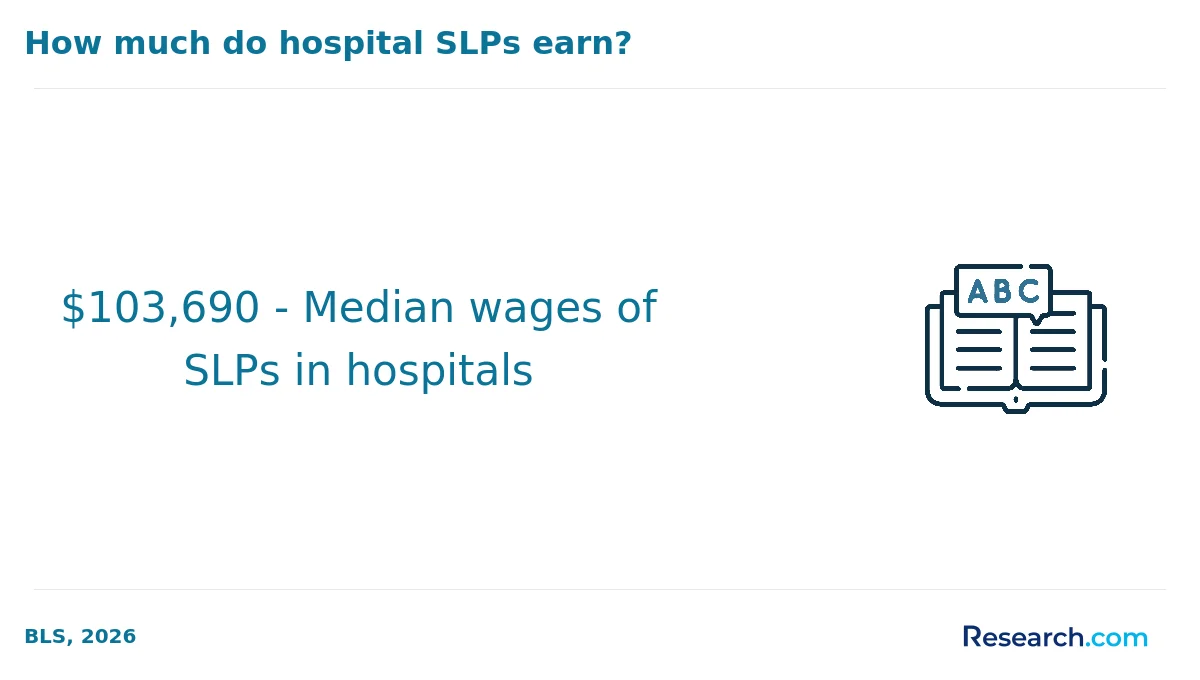
- Median wage: According to the U.S. Bureau of Labor Statistics, speech-language pathologists earn a median annual wage of about $97,870.
- Growth outlook: The field is projected to grow approximately 17% through 2035, reflecting demand for speech therapy across diverse populations.
- Salary variation: Actual earnings can differ by location, setting, experience, licensure status, specialization, and employer type.
- Degree value: A master's degree is important because professional practice typically requires advanced education, supervised clinical preparation, and state licensure.
Licensure and certification considerations
- State licensure: Practicing professionally requires state licensure. Requirements differ, so students should check the rules in the state where they plan to work.
- CCC-SLP: Many employers value or require the Certificate of Clinical Competence in Speech-Language Pathology (CCC-SLP). Accredited programs generally aim to satisfy the educational foundation for this credential.
- Clinical readiness: Career outcomes depend heavily on the quality of supervised clinical experience, not only the convenience of online coursework.
Program cost should be evaluated alongside career outcomes. FAFSA eligibility can make enrollment possible, but students should compare debt, completion time, licensure support, and expected employment setting. For broader cost comparisons across professional degrees, Research.com also provides a guide to accounting degree cost.
Employers and licensing boards generally focus less on whether a speech pathology master's degree was completed online and more on whether the program is accredited, clinically rigorous, and aligned with professional requirements. An online degree from a reputable accredited program is typically viewed differently from an unaccredited or weakly supported online program.
What licensing boards usually evaluate
- Accreditation: State boards commonly look for recognized institutional and programmatic quality, including standards associated with the Council on Academic Accreditation in Audiology and Speech-Language Pathology (CAA).
- Clinical hours and supervision: Boards may verify that clinical education met required standards, regardless of whether academic coursework was online or on campus.
- Coursework coverage: Required content areas must match the state's licensure expectations.
- Documentation: Graduates may need official transcripts, verification forms, clinical records, and certification documentation.
How employers tend to view online degrees
- Accredited online programs are increasingly accepted: Employer acceptance has grown, especially for degrees from regionally accredited institutions with strong clinical training.
- Program reputation matters: A well-known, transparent program with clear outcomes can carry more weight than a lesser-known program with limited clinical support.
- Skills matter in hiring: Employers assess communication ability, clinical judgment, documentation skills, professionalism, and readiness to work with clients.
- COVID-19 changed perceptions: The widespread use of remote learning and telepractice helped normalize online academic preparation, though hands-on clinical competence remains essential.
What students should verify before enrolling
- Does the program meet requirements for the state where you plan to seek licensure?
- Is the clinical placement model accepted by relevant licensing boards?
- Does the school publish outcomes, accreditation information, and credentialing guidance clearly?
- Will the diploma or transcript identify the degree in a way that employers or boards may question?
- Can the program provide written confirmation of licensure alignment for your intended state?
The safest choice is an accredited program that is transparent about licensure preparation, clinical requirements, and graduate outcomes. If a school avoids direct answers about accreditation or placement support, treat that as a serious warning sign.
What Graduates Say About Getting Accepted in Online Speech Pathology Degree Master's Programs That Accept FAFSA
- : "Applying for admission to an online speech pathology master's program that accepted FAFSA made a huge difference in my educational journey. I was able to focus more on learning instead of stressing about financing. Exploring accredited institutions thoroughly helped me feel confident that I was choosing a program with solid recognition. — Elodie"
- : "Navigating the landscape of online speech pathology master's programs was overwhelming at first, especially when trying to find those that accept FAFSA. After digging into official academic catalogs and cross-referencing with accrediting agencies, I felt empowered to make an informed decision. This research truly enhanced my understanding of the degree requirements and set me on a clear path forward. — Samantha"
- : "Relying heavily on federal education resources and official accrediting bodies proved essential in managing the complexities of an online speech pathology master's degree. The clarity provided by these sources helped me carefully select a program that aligned with my professional goals while also being financially manageable through FAFSA. Looking back, this strategic approach was key to my success. — Gianna"
Other Things You Should Know About Speech Pathology Degrees
In 2027, Speech Pathology master's students may access scholarships, grants, and assistantships beyond FAFSA. These options often come from universities directly or professional associations related to speech pathology, providing additional financial support that can help manage costs associated with the degree.
In 2027, many online Speech Pathology master's programs that accept FAFSA do not require the GRE for admission, but it's essential to verify each program’s specific requirements to ensure no standardized tests are needed for your application.
In 2027, experts recommend evaluating university accreditation through databases like the Council on Academic Accreditation in Audiology and Speech-Language Pathology (CAA). Additionally, students should verify FAFSA acceptance by consulting the school's financial aid office or the Federal Student Aid website.
- U.S. Bureau of Labor Statistics - Speech-Language Pathologists https://www.bls.gov/ooh/healthcare/speech-language-pathologists.htm
- ASHA EdFind - Accredited Speech-Language Pathology Programs https://find.asha.org/ed/
- Audiology and Speech-Language Pathology Interstate Compact https://aslpcompact.com/compact-map/
- Delaware Valley University - Master of Science in Speech-Language Pathology (M.S.) https://delval.edu/programs/graduate-programs/speech-language-pathology
- James Madison University - Master of Science (M.S.) in Speech-Language Pathology (Distance Education / Online) https://www.jmu.edu/chbs/csd/online_ms/index.shtml
- Maryville University - Master of Science in Speech-Language Pathology https://www.maryville.edu/masters/speech-language-pathology/
- New York University - Online MS, Communicative Sciences and Disorders (Speech@NYU) https://steinhardt.nyu.edu/degree/online-ms-communicative-sciences-and-disorders
- Idaho State University - Master of Science in Speech-Language Pathology (Online/Distance Education) https://www.isu.edu/slp/programs-offered/slp-graduate-program/