2027 Communication Disorders Degree Programs You Can Start Without Meeting All Requirements

Co-Founder and Chief Data Scientist

Reviewed by Rhea Paul, PhD
SLP Education & Research Expert
Starting a communication disorders degree is not always a straight line. Some applicants have a GPA below the posted cutoff, missing prerequisites, unfinished transfer credits, older transcripts, or work experience that does not fit neatly into a standard admissions checklist. Those issues can slow admission, but they do not always end the path.
Many programs use conditional admission, provisional enrollment, bridge coursework, community college transfer routes, and holistic review to identify students who can succeed with the right academic plan. These options matter because communication disorders programs often lead toward regulated professional pathways, and approximately 65% of communication disorders graduates secure state licensure within two years of program completion. Early planning can help students avoid delays that affect graduation timelines, financial aid, clinical preparation, and future eligibility requirements.
This guide explains how applicants may enter communication disorders programs before meeting every standard requirement, what obligations usually come with conditional status, how GPA and prerequisites are reviewed, and what questions to ask before enrolling. It is written for high school graduates, transfer students, adult learners, career changers, and applicants rebuilding an academic record.
Key Things to Know About Communication Disorders Degree Programs You Can Start Without Meeting All Requirements
- Conditional admission allows students-such as those with lower GPAs or incomplete prerequisites-to enroll while fulfilling specific academic benchmarks within a set timeline to maintain good standing.
- Bridge and foundational courses help transfer or career-changer students build essential skills before full program entry, often reducing time spent meeting all standard requirements.
- Institutions increasingly review alternative credentials like professional experience or certifications-supporting adult learners and career changers in qualifying for early enrollment in communication disorders programs.
What Is the Minimum GPA Requirement for a Communication Disorders Degree Program?
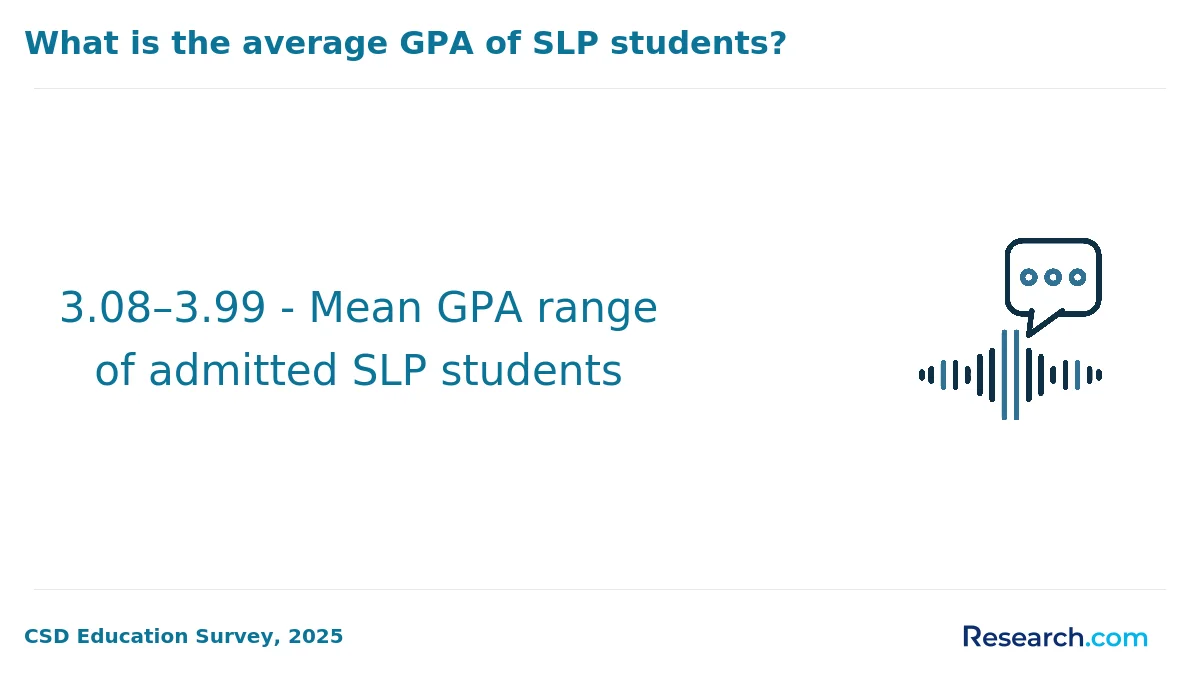
The minimum GPA for a communication disorders degree program depends on the school, degree level, applicant pool, and whether the program includes competitive clinical preparation. Selective universities often expect GPAs between 3.0 and 3.5. Moderately competitive schools may consider applicants in the 2.5 to 3.0 range, especially when the rest of the application shows readiness. Open-admission or access-focused colleges may admit students with GPAs as low as 2.0, often with required advising or academic support.
The average GPA for admission to communication disorders degree programs can therefore vary widely. A published cutoff is important, but it is rarely the only factor. Admissions teams may also review whether grades improved over time, whether low grades came from older coursework, how the applicant performed in science and writing-heavy classes, and whether the school allows grade replacement or academic renewal.
| Applicant situation | How programs may interpret it | Best next step |
| GPA below the posted minimum | The applicant may still be considered through holistic review, conditional admission, or prerequisite coursework. | Consult an admissions counselor before applying to confirm whether exceptions are possible. |
| Low early grades but stronger recent performance | An upward trend can show improved maturity, study habits, and academic readiness. | Highlight the grade trend in the personal statement and provide recent academic references. |
| Missing or weak prerequisite grades | The program may require bridge courses, retakes, or co-requisite enrollment. | Ask which courses matter most for admission and whether retakes are accepted. |
| Older transcript with career experience | Work history may support the application but usually does not erase academic requirements. | Submit a targeted resume and ask whether professional experience is considered in review. |
- GPA variability: Requirements can range from 2.0 to 3.5 depending on institutional selectivity and degree level.
- Evaluation factors: Grade trends, course rigor, prerequisite performance, and grade replacement policies can influence the decision.
- Advising: Early contact with admissions staff helps applicants avoid applying to programs where exceptions are not available.
- Conditional admission: Some schools allow students to begin coursework before meeting full GPA criteria, but continuation usually depends on meeting specific performance benchmarks.
Applicants comparing flexible admissions models in health-related fields can also review nursing schools easy to get into for broader context on how access-focused programs structure academic support.
Which Communication Disorders Programs Accept Applicants on Academic Probation or With Academic Deficiencies?
Some communication disorders programs consider applicants with academic probation histories, incomplete prerequisites, or transcript deficiencies. These applicants are usually not admitted under the same terms as fully qualified students. Instead, they may receive conditional, provisional, or probationary enrollment with written requirements for GPA, credit load, advising, and timeline.
The key issue is not whether a past academic problem exists. It is whether the applicant can show current readiness and whether the program has a formal process for monitoring progress.
- Midwestern State University: This regionally accredited undergraduate communication disorders program permits provisional admission for students with GPAs below the usual threshold. Students may enroll in up to 12 credit hours during the probationary term and must earn a minimum 2.5 GPA at its conclusion to continue without restrictions.
- Advisor oversight includes mandatory biweekly meetings to monitor academic progress and provide targeted support.
- Coastal Technical College: This associate degree bridge option serves community college transfer students with incomplete prerequisite coursework. Students admitted conditionally must maintain at least a 2.0 GPA in foundational classes within one semester to remain enrolled.
- Academic advisors conduct regular check-ins and help students plan the next semester.
- Southeastern State University: This graduate communication disorders program accepts applicants on academic probation if they maintain a 3.0 GPA over the first 9 graduate credits taken conditionally.
- Quarterly progress reviews and reflective reports submitted to advisors are required.
- Northwestern Regional College: Designed for adult learners returning after career gaps, this program allows provisional enrollment of up to 8 credits per term. Students must achieve a cumulative GPA of 2.7 or above each term to continue.
- One-on-one faculty advising focuses on career integration and rebuilding academic skills.
- Pacific Coast University: This regionally accredited program requires students with transcript deficiencies to begin foundational coursework on probation and maintain a 2.75 GPA in these courses to progress.
- Monthly academic coaching sessions help students stay aligned with performance benchmarks.
Policies can differ sharply between undergraduate and graduate communication disorders tracks. Graduate programs may be less flexible because prerequisite knowledge, clinical readiness, and accreditation expectations can be more tightly sequenced. Before applying, students should ask whether probationary status is available, whether it appears on the transcript, how many credits can be attempted, and what happens if a benchmark is missed.
A past probation record does not automatically disqualify an applicant, but it does require a stronger application. A focused personal statement, evidence of recent academic improvement, and references from instructors or supervisors who can speak to reliability and readiness are often more persuasive than a generic explanation of past difficulties.
Students considering broader health education options while completing preparatory coursework may also compare online nursing degrees to understand how flexible programs handle academic rebuilding.
How Do Conditional Admission and Provisional Enrollment Work for Communication Disorders Degree Seekers?
Conditional admission lets a student begin a communication disorders program before all standard requirements are satisfied. The student is admitted with obligations, such as earning a minimum GPA in the first term, completing specific prerequisites, submitting final documents, or passing foundational courses. If the student meets the conditions, the program may move them to full standing. If not, the student may lose eligibility to continue.
Provisional enrollment is often narrower. It may be used when an applicant is otherwise admissible but the school is waiting for official transcripts, final grades, test scores, or other documentation. Provisional status usually lasts for a short period, such as one semester. Failure to submit required paperwork can block future registration even if the student is performing well academically.
| Status | Common reason | Typical student obligation | Risk if not resolved |
| Conditional admission | GPA, prerequisite, or academic readiness requirement has not been fully met. | Maintain a required GPA, complete specified courses, and meet advising milestones. | Dismissal from the program or denial of full admission. |
| Provisional enrollment | Official records or documents are incomplete or pending. | Submit missing documents by a stated deadline. | Registration hold, removal from courses, or loss of enrollment status. |
Before accepting either status, students should get the terms in writing. Ask the program these questions:
- Trigger: What specific issue caused the conditional or provisional status?
- Timeline: When will progress be reviewed, and what date controls the decision?
- Benchmark: What GPA, course grade, credit completion, or document submission is required?
- Decision-maker: Who approves full admission once the requirements are met?
- Financial aid impact: Does this status affect aid eligibility, scholarship renewal, or satisfactory academic progress?
One professional who completed a communication disorders degree recalled, “I felt overwhelmed by the academic requirements tied to conditional admission, especially balancing foundational courses while meeting GPA minimums.” He said advisor clarity made the difference: “Knowing specific deadlines and criteria helped me focus my efforts; meeting those benchmarks felt like gradual victories that kept me motivated.” His experience shows why conditional admission should be treated as a structured academic contract, not simply an easier way in.
Applicants who lack standard prerequisites may still have several routes into communication disorders programs. The right path depends on what is missing: academic credits, subject knowledge, GPA strength, current documentation, or evidence of readiness. These options are most useful for high school graduates below GPA cutoffs, community college transfers still completing coursework, adult learners returning after time away, and career changers with incomplete academic records.
- Portfolio review: Some programs, especially those emphasizing interdisciplinary preparation or applied clinical observation, review portfolios that show relevant volunteer work, projects, writing, or communication-related experience.
- Programs most likely to recognize it: Bachelor's and master's programs with holistic admissions, community engagement, or flexible clinical observation requirements.
- Documentation needed: Reflective essays, recommendation letters, certificates of participation, and work samples that demonstrate communication skills.
- Institutional infrastructure: Admissions committees or faculty panels with clear criteria for reviewing nontraditional evidence.
- Demonstrated professional experience: Applicants who have worked or volunteered as speech-language aides, special education assistants, rehabilitation support staff, or related roles may use that experience to strengthen an application.
- Programs most likely to recognize it: Programs that collaborate with clinical sites or value experiential learning.
- Documentation needed: Employment verification, detailed résumés, supervisor evaluations, and relevant professional certifications.
- Institutional infrastructure: Staff who are trained to evaluate professional backgrounds and apply experiential admission policies consistently.
- Prior learning assessment (PLA) credit: Some schools evaluate learning gained through workshops, non-credit courses, military training, or professional development and may apply it toward prerequisite expectations.
- Programs most likely to recognize it: Institutions with established PLA policies and flexible transfer systems in speech and hearing sciences.
- Documentation needed: Transcripts, competency-based portfolios, and passing challenge exams when required.
- Institutional infrastructure: PLA offices or advisors who guide formal credit evaluations.
- Placement testing: Some programs use subject-specific exams to determine whether a student can begin coursework, needs remediation, or may enroll conditionally.
- Programs most likely to recognize it: Universities with foundational or bridge courses for communication sciences and disorders.
- Documentation needed: Test results and advisor-approved course plans.
- Institutional infrastructure: Testing centers, tutoring services, and academic support units for students admitted with conditions.
Many alternative pathways are not clearly advertised on program websites. Applicants should contact the program director, department chair, or admissions office and ask direct questions: “Do you consider prerequisite exceptions?” “Is portfolio review available?” “Can professional experience support conditional admission?” “Are bridge courses offered before full admission?”
Students researching accelerated entry routes in healthcare education can also review fast-track LPN programs online for context on how other programs structure early access while students complete academic requirements.
Some communication disorders programs allow concurrent enrollment, meaning students begin selected program courses while finishing remaining prerequisites at the same time. This is different from conditional admission. Conditional admission focuses on entering the program with academic obligations. Concurrent enrollment focuses on course sequencing, allowing a student to take a prerequisite or co-requisite alongside an introductory or early major course.
For example, a student might take “Statistics for Health Sciences” while also taking “Introduction to Communication Disorders.” This can shorten the path to graduation, but it increases workload. Students are learning foundational material while also being graded in courses that may already assume some of that knowledge.
When concurrent enrollment can make sense
- The missing prerequisite is not a gatekeeper for safety, clinical placement, or advanced coursework.
- The student has strong recent grades and enough weekly study time.
- The program provides advisor-approved sequencing rather than leaving the student to guess.
- The student can use tutoring, office hours, writing support, or study groups early in the term.
When it may be risky
- The student is already rebuilding GPA and cannot afford another weak term.
- The prerequisite supports multiple major courses, not just one.
- The student is working heavy hours or has limited study time.
- The program requires high grades in the first term to maintain conditional status.
To confirm whether a communication disorders program offers this option, students should:
- Review course catalogs: Look for language about concurrent, co-requisite, or advisor-approved enrollment.
- Consult academic advisors: Ask whether the department permits the combination and whether it has worked for similar students.
- Request degree audits: Identify exactly which prerequisites are missing and how they fit with required courses.
Students who use this path need a realistic plan. A calendar, weekly reading blocks, early tutoring appointments, and clear grade targets matter more than motivation alone.
A communication disorders graduate described the trade-off this way: “Balancing the prerequisite statistics course alongside my core classes was challenging, but the support from my advisors made it manageable. I often felt overwhelmed at first, especially while working part-time, yet setting strict schedules helped me stay on track. It was tough, but being able to start core courses early gave me a real confidence boost and shortened my time to graduation.”
Community college partnerships can give students a lower-risk way to begin communication disorders preparation before they qualify for direct admission to a four-year program. Common models include 2+2 articulation agreements, dual-enrollment options, transfer pathways, and bridge tracks. These structures let students complete general education and foundational courses while improving GPA, building a stronger transcript, and clarifying whether the field is the right fit.
Four-year communication disorders programs often pay close attention to specific community college coursework when reviewing transfer applicants, especially those applying after academic setbacks or through nontraditional routes. Useful courses may include:
- Prerequisite completion: Courses such as anatomy, physiology, linguistics, and psychology can show readiness for upper-division study.
- GPA rebuilding: Strong community college grades can demonstrate that the applicant’s recent academic performance is stronger than older records suggest.
- Foundational skill development: Writing, research, public speaking, and communication courses help build skills that admissions committees value.
Students should not assume every community college course will transfer. Before enrolling, they should compare the community college catalog with the target university’s course equivalency guide and ask both schools to confirm how credits apply. If a formal articulation agreement exists, follow it closely. If no agreement exists, transfer can still be possible, but students need written advising notes and a carefully planned schedule.
Transfer admissions may offer more flexibility than freshman admissions because the applicant can present recent college-level evidence. This can help adult learners, career changers, and students who needed time to become academically ready.
- Recent trend: As of 2023, over 60% of Communication Disorders bachelor's degree recipients started their studies at community colleges, highlighting expanding institutional support for these transfer routes.
When GPA, test scores, or prerequisites are not strong enough on their own, the personal statement and recommendation letters help admissions committees judge context, readiness, and fit. These materials cannot guarantee admission, and they do not replace required academic preparation in every program. But they can turn an incomplete or uneven application into a more credible case.
What a strong personal statement should do
- Explain the gap clearly: Address low grades, withdrawals, missing prerequisites, or time away from school without making excuses.
- Show what changed: Identify the specific steps taken to improve, such as retaking courses, reducing work hours, using tutoring, or completing relevant experience.
- Connect experience to the field: Explain how academic, volunteer, work, or caregiving experience prepared the applicant for communication disorders study.
- Make the program fit specific: Refer to the program’s structure, support services, prerequisite pathway, or clinical preparation rather than sending a generic essay.
Who should write recommendation letters
The strongest letters come from people who can evaluate academic readiness, professional discipline, communication ability, or service with relevant populations. A professor from a recent course, a supervisor in a healthcare or education setting, or a professional who has observed the applicant’s work is usually more useful than a personal acquaintance.
Key points to remember:
- Personal statements: They give applicants control over the narrative and allow them to explain gaps directly.
- Honesty: Transparent, concise explanations build more trust than vague claims about hardship.
- Relevance: Skills such as observation, writing, listening, patience, and cultural awareness should be tied to communication disorders preparation.
- Recommendation strength: Letters should include concrete examples, not only praise.
- Program specificity: Tailoring the application shows the student understands the demands of the program.
Bridge and foundational courses help applicants meet missing academic requirements before, during, or just after admission. They are especially useful for career changers, transfer students, and applicants whose bachelor’s degree did not include communication sciences and disorders prerequisites. These options vary in cost, credit value, transcript impact, and timeline.
Non-credit boot camps: Universities and community colleges may offer short, intensive preparation in areas where students lack background. These programs are commonly graded pass/fail or recorded as completion rather than regular academic credit. They may cost less than full courses and usually last a few weeks. They can demonstrate readiness, but they generally do not shorten degree completion time because they do not replace credit-bearing requirements in every program.
Post-baccalaureate preparatory sequences: Research universities and four-year colleges often use credit-bearing post-baccalaureate coursework for students who already hold a bachelor’s degree but need prerequisites. These courses appear on the academic record, can affect GPA, and may extend the timeline by one to two semesters. They are more formal than boot camps and may be important for applicants seeking graduate-level preparation.
Certificate-level prerequisite bundles: Community colleges and online universities may package prerequisite courses into a certificate. These bundles can provide a transcripted credential while helping students complete admission requirements. They may add time before full program entry, but the structure can help adult learners plan coursework, financial aid, and scheduling more predictably.
Self-paced online remediation modules: Online and hybrid programs may use asynchronous modules to address limited gaps. These modules can work well for students balancing employment or family responsibilities. Depending on the institution, completion may count as continuing education, non-credit preparation, or an internal readiness requirement.
| Option | Best for | Main advantage | Main caution |
| Non-credit boot camps | Students missing a narrow skill area | Fast and often lower cost | May not carry academic credit |
| Post-baccalaureate sequences | Career changers with a completed bachelor’s degree | Formal transcripted preparation | May add one to two semesters |
| Certificate-level bundles | Transfer students and adult learners | Organized prerequisite package | May delay official program entry |
| Self-paced modules | Students needing schedule flexibility | Flexible pacing | Recognition varies by institution |
These options may not appear prominently on admissions pages. Students should ask specifically about foundational enrollment, prerequisite bundles, and whether coursework taken before admission will count toward degree requirements. Applicants comparing advanced online options may also find it useful to review the best online DNP program resource to see how other health fields structure flexible academic pathways.
Work experience can strengthen an application to a communication disorders program, but it rarely substitutes automatically for core academic requirements. Programs with holistic admissions may use professional background to judge readiness, motivation, communication skills, and exposure to relevant populations. However, courses tied to accreditation, licensure preparation, or clinical sequencing may still be required.
- Recognized experience: Admissions committees may value industry certifications, years of direct employment in communication disorders or related healthcare fields, leadership or management roles, published or formally presented professional work, and volunteer service involving communication disorders populations.
- Documentation: Applicants should prepare an academic-style resume that emphasizes relevant responsibilities, populations served, communication skills, training, and measurable achievements.
- Supporting materials: Supervisor or colleague references can verify reliability, professionalism, leadership, and direct service experience.
- Presentation: Group related roles, use clear language, and connect each experience to program readiness rather than listing every job duty.
- Caution: Policies for recognizing professional background credit for admission in communication disorders degree programs vary. Candidates should confirm in writing that non-academic credentials are formally considered before spending significant time assembling materials.
Work experience is most persuasive when paired with recent academic evidence. A student who has worked with children, older adults, patients, or people with communication needs may still need to complete anatomy, linguistics, psychology, or statistics coursework. The best strategy is to present professional experience as proof of commitment and applied readiness while using bridge courses or conditional admission to address academic gaps.
Adult learners comparing experience-friendly health pathways may also review an RN to BSN track to understand how some programs evaluate prior professional preparation while requiring academic completion.
Financial aid for conditionally admitted communication disorders students depends on enrollment status, degree-seeking classification, credit load, and satisfactory academic progress rules. Students should clarify aid eligibility before registering, because conditional or prerequisite-only enrollment can affect what funding is available.
Federal aid: Conditionally admitted students may access federal financial aid if they meet enrollment requirements, usually at least half-time, and maintain satisfactory academic progress under institutional standards. If the student fails to meet academic benchmarks, aid can be paused until the school determines eligibility has been restored.
Institutional scholarships: Some schools offer scholarships for students completing prerequisites, transferring from community colleges, or rebuilding academic standing. These awards may have GPA, credit completion, or program progression requirements. Students should ask whether conditional status limits eligibility or delays scholarship disbursement.
Private and specialized scholarships: Private organizations may support non-traditional, re-entry, transfer, or career-changing students in communication disorders programs. These awards may consider professional experience, service, community involvement, or commitment to underserved populations in addition to grades.
Advising and planning: Students should speak with both financial aid officers and academic advisors before accepting conditional admission. Important questions include whether prerequisite courses count toward aid eligibility, whether the student is classified as degree-seeking, how satisfactory academic progress is measured, and whether dropping a course could trigger repayment or loss of aid.
Online communication disorders programs may offer more admission flexibility than some campus-based programs, especially for adult learners, working students, community college transfers, and applicants completing prerequisites. Flexibility can include conditional admission, online bridge coursework, alternative credential review, and the ability to complete foundational classes while enrolled. Still, flexible admission should not be confused with lower academic expectations.
Admission flexibility: Some online programs, including those offered by large public university systems or established for-profit institutions, provide easier initial entry than traditional campus-based alternatives. They may consider applicants who have not completed all prerequisites or whose GPA falls slightly below standard requirements. Students comparing graduate routes should also review online masters in speech language pathology options carefully for affordability, prerequisites, and program expectations.
Prerequisite waivers: Online options may be more likely to evaluate prior learning, relevant work experience, or alternative coursework. However, students should confirm whether a waiver only affects admission or whether it also satisfies graduation, certification, or licensure-related expectations.
Conditional enrollment: Online programs often build bridge courses into the first term or require students to complete specific foundational modules. These pathways can be convenient, but they require discipline. Missing deadlines or failing to meet GPA benchmarks can still end enrollment.
Support infrastructure: Students admitted conditionally to online communication disorders programs should evaluate support services before enrolling.
- Academic advising: Advisors should understand remote learning, prerequisite sequencing, and conditional admission rules.
- Tutoring services: Virtual tutoring and supplemental instruction can be important for statistics, anatomy, writing, and research-heavy courses.
- Disability accommodations: Students should confirm that accommodations apply effectively to online platforms, exams, and synchronous sessions.
- Mental health resources: Remote counseling and wellness support may vary by institution.
Quality considerations: The most important checks are accreditation, course sequencing, student support, graduation outcomes, and alignment with licensure or certification goals. A program that is easy to enter but weak in advising, clinical preparation, or academic support may create greater risk than a more selective program with clearer structure.
What Graduates Say About Communication Disorders Degree Programs You Can Start Without Meeting All Requirements
- : "Starting the communication disorders degree without meeting every prerequisite was initially intimidating, but the program's clear academic obligations helped me stay focused. I appreciated how the timeline expectations were realistic and flexible enough to accommodate my work schedule-this allowed me to progress steadily without feeling overwhelmed. The performance benchmarks set a high standard, but knowing they were there motivated me to deliver my best every term. — Mordechai"
- : "The communication disorders program's conditional admission was a blessing-it gave me a chance to prove myself even though I hadn't completed all requirements upfront. The academic commitments demand consistent dedication, which prepared me well for the real-world challenges in this field. I found the timeline clear-cut enough to keep me on track, and the emphasis on maintaining good standing through performance benchmarks was a critical factor in my persistent improvement. — Casen"
- : "Enrolling in communication disorders without all prerequisites felt daunting, but the program's structured milestones made the journey manageable. I learned that adhering to academic responsibilities-like regular coursework and assessments-is essential for success, especially when initially admitted conditionally. The program's timeline was strict yet fair, and meeting the performance benchmarks became a personal goal that boosted my confidence and academic growth. — Walker"
Other Things You Should Know About Communication Disorders Degrees
The Council on Academic Accreditation in Audiology and Speech-Language Pathology (CAA) is the primary accrediting body overseeing communication disorders degree programs. CAA standards allow programs some flexibility in admission policies, often enabling conditional acceptance based on prospective students completing prerequisite courses or meeting GPA thresholds within a specified timeframe. Program directors use these guidelines to develop bridge courses and support mechanisms that maintain academic rigor while accommodating diverse student backgrounds.
Students can strengthen their applications by demonstrating relevant work or volunteer experience in speech-language pathology or audiology settings. Submitting strong letters of recommendation and completing foundational coursework-such as biology, psychology, or linguistics-helps highlight preparedness. Some programs also consider evidence of maturity and motivation from adult learners or career changers when granting early or conditional admission.
Many programs provide tutoring, academic advising, and mentoring specifically tailored for conditionally admitted students. Supplemental workshops on study skills and scientific writing are commonly available to help students meet performance benchmarks. These services aim to ensure students transition successfully into full degree candidacy after fulfilling stipulated conditions.
- U.S. Bureau of Labor Statistics - Speech-Language Pathologists https://www.bls.gov/ooh/healthcare/speech-language-pathologists.htm
- ASHA EdFind - Accredited Speech-Language Pathology Programs https://find.asha.org/ed/
- Audiology and Speech-Language Pathology Interstate Compact https://aslpcompact.com/compact-map/
- Idaho State University - Master of Science in Speech-Language Pathology (Online/Distance Education) https://www.isu.edu/slp/programs-offered/slp-graduate-program/
- California State University-San Marcos - Online MS in Speech-Language Pathology https://www.csusm.edu/slp/programs/mastersonline/index.html
- Abilene Christian University - Master of Science in Speech-Language Pathology (Online) https://acu.edu/academics/graduate/master-of-science-in-speech-language-pathology/
- James Madison University - Master of Science (M.S.) in Speech-Language Pathology (Distance Education / Online) https://www.jmu.edu/chbs/csd/online_ms/index.shtml
- Maryville University - Master of Science in Speech-Language Pathology https://www.maryville.edu/masters/speech-language-pathology/