2027 Best Certificate Programs With No Application Fee

Co-Founder and Chief Data Scientist
Application fees can make it expensive to compare career-training options before you even enroll. No-application-fee certificate programs reduce that upfront barrier, but a waived fee does not mean free tuition, guaranteed admission, or automatic job qualification. This guide is for prospective students seeking practical, short-term training in the United States. It explains which certificates may fit your goals, how to verify quality, what costs to expect, and when a certificate is a smarter choice than a degree. For context, the College Board reported average published tuition and fees of $4,050 for public two-year colleges in 2024-25.
Key Things You Should Know
- A no-application-fee program waives the charge to submit an application; students may still pay tuition, supplies, testing, background-check, licensing, certification-exam, and clinical or lab fees.
- Choose the credential type first: a college certificate can be credit-bearing and sometimes stack toward an associate degree, while a noncredit career-training certificate may be faster but usually has limited transfer value.
- Career value depends on the field: many skilled-trade roles use apprenticeships or state licensing, healthcare roles may require clinical eligibility and certification exams, and employer-recognized portfolios can matter more than a certificate in design.
Top 10 Best Certificate Programs With No Application Fee
Popular Trade School Programs
Common no-fee-admission options include welding, HVAC/R, electrical technology, automotive service, plumbing, industrial maintenance, and CDL training certificates. Programs usually take several months to about one year, while apprenticeships can take longer but combine paid work with training.
Choose a credit-bearing community-college certificate if you may continue to an associate degree; choose employer-connected training when rapid entry is the priority. Check required tools, safety gear, lab charges, state licensing rules, and whether the program prepares you for industry examinations such as EPA Section 608 for refrigerant work.
Healthcare Programs
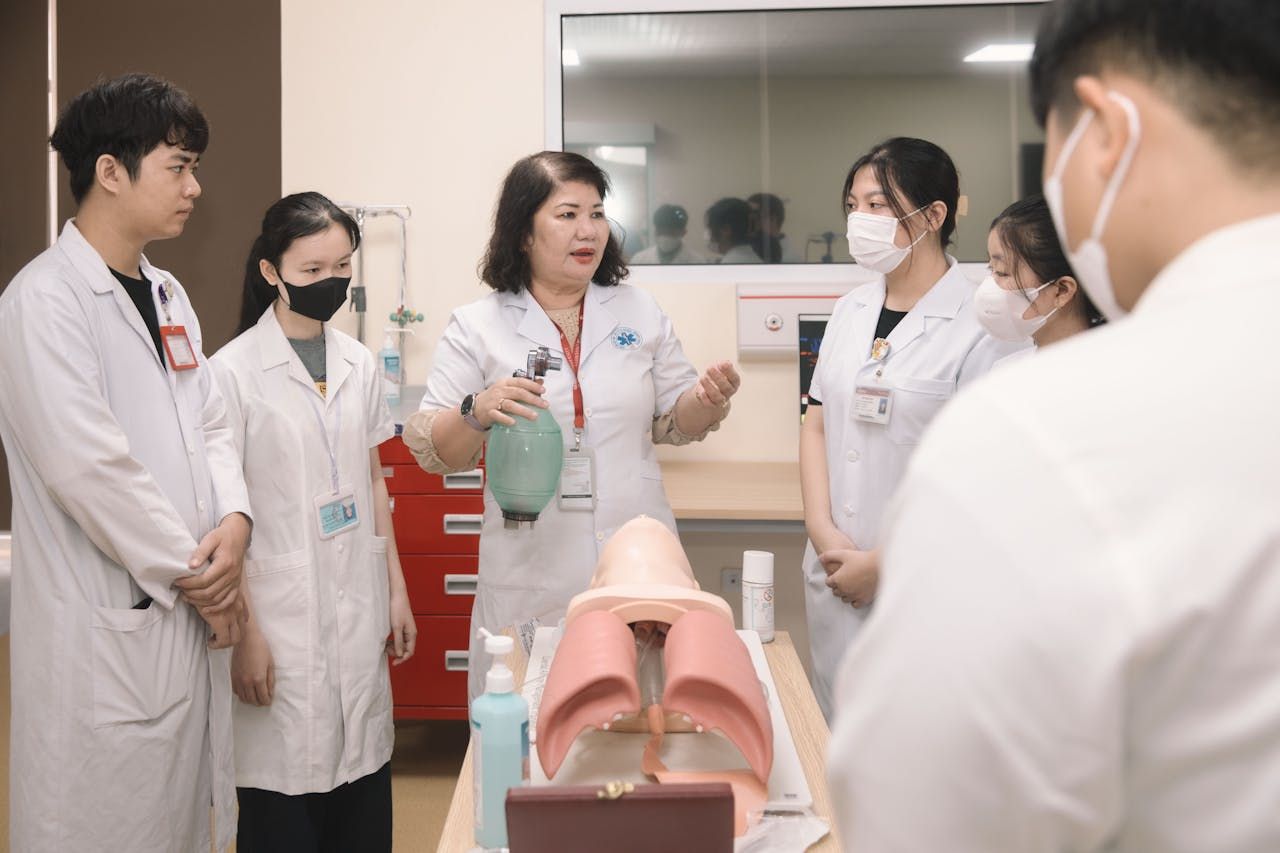
Healthcare certificates may prepare students for medical assisting, phlebotomy, pharmacy technician, dental assisting, medical billing and coding, sterile processing, or practical nursing prerequisites. Admission can require immunizations, a physical exam, drug screening, criminal-background review, CPR training, placement testing, and clinical-site approval.
A certificate is educational training; certification is a separate credential from an approved certifying body. Confirm that clinical placement is included and that the curriculum meets your state's rules before enrolling, especially for roles involving patient care, medication, or laboratory work.
Criminal Justice / Law Programs
Relevant options include criminal justice certificates, legal studies, paralegal studies, court reporting support, legal office technology, and corrections-focused training. These programs can build foundational knowledge for administrative or support roles, but they do not by themselves make a graduate a lawyer, police officer, probation officer, or licensed investigator.
For paralegal work, employer expectations vary; a program approved by the American Bar Association may be preferred by some employers. Compare internship opportunities, legal-research software training, writing instruction, and local hiring requirements before choosing a program.
Arts & Design Programs
Certificates in graphic design, digital media, UX design, photography, animation, web design, and interior design can help learners create portfolio-ready work. They are often best for career changers, freelancers, or students testing a creative field before committing to a degree. Evaluate software access, instructor feedback, portfolio reviews, project ownership, and whether the coursework reflects current employer tools.
A certificate may demonstrate structured training, but employers commonly assess design samples, communication skills, and technical capability. Verify whether specialized fields, such as interior design, have additional state or professional requirements.
What types of certificate programs commonly waive application fees?
Programs that commonly waive application fees are designed to lower enrollment friction, especially at open-access institutions and workforce-training providers. The waiver is an admissions policy, not a measure of academic quality.
The following program types are the most likely places to find no-fee applications:
- Community-college workforce certificates, particularly short credit and noncredit programs with rolling or open enrollment.
- Adult education and continuing-education courses in fields such as office technology, manufacturing, IT support, and allied health.
- Employer-sponsored training, union apprenticeship pathways, and workforce-board programs, which may use eligibility screening instead of a traditional college application.
- Online professional certificates offered directly by providers, where enrollment may require account creation and payment rather than an admissions application.
Fee policies can change by term, residency status, or application method. Confirm the policy on the institution's official application page and save a dated copy before submitting documents.
No-fee certificate programs differ from traditional certificate options mainly in the cost of applying, not necessarily in curriculum, academic standards, or career outcomes. A school may waive fees for all applicants, offer a limited-time promotion, or waive fees only for certain populations.
Traditional college certificates may charge an application fee but offer academic advising, financial-aid administration, transferable credits, labs, and pathways to associate degrees.
The comparison below helps distinguish the program model from the application policy.
| Feature | No-application-fee certificate | Traditional certificate option |
| Upfront application cost | No charge to apply under the stated policy | May charge a one-time application fee |
| Credential format | May be credit-bearing, noncredit, academic, or industry-provider training | May also be credit-bearing or noncredit |
| Admissions process | Often simplified, but prerequisites can still apply | May require fuller admissions review |
| Best use | Comparing eligible options without paying to submit applications | Accessing a specific curriculum, school, or pathway that fits the goal |
Do not select solely because the application is free. If your long-term objective is a degree, compare whether the certificate stacks into one; an accelerated degree program can be a better fit for students who already have transferable credit and need a broader credential.

Requirements depend on whether the provider is a college, a continuing-education unit, an employer, or a private training organization. Open enrollment does not mean every course or clinical placement is open to every applicant.
Most applicants should be ready to provide the following, when relevant:
- A government-issued ID and proof of age, residency, or work authorization when required for funding, campus records, or regulated training.
- High school completion records, placement results, or prerequisite coursework for college-level, technical, and healthcare programs.
- Immunization records, health clearances, CPR certification, drug screening, or background checks for programs with clinical or field placements.
- Equipment, software, or technology confirmation for online, trade, and design programs.
- English-language proficiency documentation if required by the institution or clinical partner.
Ask whether admission to the certificate also guarantees entry into required classes, labs, internships, or clinical rotations. A frequent mistake is treating general admission as a seat reservation in capacity-limited coursework.
Program quality is more important than the absence of an application fee. For credit-bearing college certificates, verify that the institution holds recognized institutional accreditation and determine whether the specific program has specialized approval.
For noncredit or third-party training, prioritize transparent curriculum details, qualified instructors, verifiable employer relationships, and clear exam or portfolio outcomes.
Use this review process before paying an enrollment deposit or tuition:
- Confirm the exact credential awarded, its total required courses, delivery format, and whether it carries academic credit.
- Check the school's institutional accreditation through an official accreditor-recognition source and review specialized accreditation where the occupation requires it.
- Match the curriculum to your state licensing board, certifying organization, or target employers when entering regulated work.
- Request written confirmation of total charges, refund rules, clinical placement arrangements, transfer-credit policy, and completion requirements.
- Compare program outcomes carefully, asking how completion, exam eligibility, and job-placement figures are defined.
Red flags include vague claims of "accreditation" without naming an accreditor, pressure to pay immediately, unclear refund terms, and promises of a license or job without explaining state and employer requirements.

Online no-fee certificate programs can reduce commuting and scheduling barriers, while campus programs may provide equipment access, supervised practice, and local employer connections. The right format depends on whether the occupation requires hands-on competency, clinical hours, or a portfolio rather than simply course completion.
This comparison highlights the practical trade-off.
| Consideration | Online format | Campus or hybrid format |
| Best suited to | Business, IT, billing, legal support, and some design theory courses | Trades, clinical healthcare, labs, and equipment-intensive training |
| Schedule | Often asynchronous, with deadlines and self-directed study | Set meeting times and access to instructors or facilities |
| Hidden cost risk | Software, proctoring, home equipment, and reliable internet | Transportation, parking, tools, uniforms, and campus fees |
| Career preparation | Can support remote-friendly skills when the curriculum includes projects | Can support supervised practice and local networking |
Students targeting flexible digital careers can also compare degrees for remote work if a short certificate will not meet the job requirements they see in postings. Never assume an online healthcare or trade program satisfies in-person clinical, lab, apprenticeship, or state licensing rules.
Short certificates can range from a few weeks for narrowly focused noncredit training to roughly one year for many college or technical certificates. Associate degree pathways typically take longer because they include general education and more extensive technical coursework. The application fee is only one cost category.
Budget for the full attendance cost, not just advertised tuition:
| Cost category | Why it matters | Questions to ask |
| Tuition and mandatory fees | Usually the largest direct expense | Is the quoted price per credit, course, term, or full program? |
| Books, software, and supplies | Can be substantial in design, technical, and healthcare programs | Which items are required, rented, or included? |
| Equipment and uniforms | Common in trades and clinical programs | Must tools, scrubs, safety gear, or a laptop be purchased? |
| Testing and compliance | May be required before graduation or employment | Are exam, background-check, drug-screen, and licensing fees separate? |
| Living and opportunity costs | Reduced work hours can affect affordability | Can the schedule be completed part time? |
Credit-bearing certificates at eligible institutions may have financial-aid options, while noncredit training often relies on employer assistance, workforce grants, payment plans, or personal funds. If your end goal is a bachelor's degree, compare the certificate's transfer policy with an accelerated bachelor's degree online option before paying for credits that may not transfer.
Certificates can support entry-level job searches when the curriculum matches a recognizable workplace skill and the student meets any external requirements. They are especially useful for people seeking a defined technical skill, a career trial, or a bridge into a longer credential. They are less suitable when the target role legally requires a degree, license, apprenticeship, or substantial supervised experience.
These examples show realistic pathways rather than guaranteed employment outcomes.
| Certificate area | Possible entry-level roles | Important limitation |
| HVAC, welding, electrical, automotive | Helper, technician trainee, shop assistant, apprentice candidate | Licensing and apprenticeship requirements vary by trade and state |
| Medical assisting, phlebotomy, billing | Medical assistant, phlebotomist, patient-service representative, billing specialist | Employers and states may require certification, clinical training, or both |
| Legal studies or paralegal studies | Legal assistant, file clerk, intake specialist, administrative support | Employers set education and experience expectations for paralegal roles |
| Graphic design and digital media | Production artist, junior design support, content assistant, freelance contributor | A strong portfolio is usually essential |
Read actual local job postings before enrolling. Record the repeated requirements, then choose the shortest credible program that addresses the largest skills gap.
Salary depends on occupation, location, experience, hours, union coverage, licensure, and employer - not on the certificate alone. As an occupational reference, the U.S. Bureau of Labor Statistics reported a 2024 median annual wage of $62,350 for electricians. Many electricians enter through apprenticeships and state-specific licensing pathways, so a pre-apprenticeship or electrical certificate can be preparation rather than a complete qualification.
Advancement is most realistic when the certificate leads to documented skills, supervised experience, a required credential, or additional education. A trade learner may progress from helper to apprentice and journey-level work; a healthcare worker may add a specialty credential; a design learner may develop a stronger portfolio and take on more complex projects.
For careers that ultimately require advanced academic study, certificate training is not a substitute for graduate education; readers considering that longer route can explore affordable online PhD programs.
Evaluate return on investment using your own likely costs, expected time out of work, local job requirements, and the program's ability to help you reach the next legitimate career step.
How do licensing, certification exams, or continuing education relate to these programs?
Licensing, certification exams, and continuing education are separate from earning a school certificate. A certificate documents completion of a course of study. A certification usually comes from a professional organization after an exam and sometimes experience or education requirements. A license is legal authorization issued by a government authority and is common in regulated occupations.
Before enrolling, verify the sequence that applies to your goal:
- Identify whether the target role requires a state license, national certification, employer credential, apprenticeship, or none of these.
- Confirm that the program's curriculum and clinical, lab, or supervised-hour components meet eligibility rules.
- Determine whether the exam fee, study materials, background check, and renewal costs are separate from tuition.
- Ask whether graduates are eligible to test immediately or must first gain documented work experience.
- Plan for continuing education or renewal requirements after initial certification or licensing.
This step is crucial in healthcare, electrical work, HVAC/R, cosmetology, and other regulated fields. Requirements vary by state and can change, so rely on the relevant licensing board or certifying organization rather than a marketing claim.
Other Things You Should Know About
No. The waived fee generally applies only to submitting an application. Tuition, books, equipment, exams, uniforms, clinical requirements, and licensing costs may still apply.
Possibly, if the program is credit-bearing and offered by an eligible institution. Many short noncredit programs do not qualify for the same federal aid options, so ask the provider about workforce grants, employer tuition support, and payment plans.
Not necessarily. Some have open enrollment, but selective courses and regulated programs may still require prerequisites, placement testing, health clearances, background checks, or limited-seat clinical admission.
A certificate can be better for a focused skill and faster entry into training. An associate degree may be better when employers expect broader education, when transfer to a bachelor's degree matters, or when the occupation requires more extensive preparation.
- The Value of Certifications: Employers Weigh In! - Career Horizons https://www.career-horizons.com/the-value-of-certifications-employers-weigh-in/
- 7 in-demand certifications in 2025 | edX https://www.edx.org/resources/in-demand-professional-certifications
- 2025's Best Online Graduate Certificate Programs in the U.S. https://www.onlinemastersdegrees.org/graduate-certificate-programs/
- Law Schools With No Application Fee https://www.enjuris.com/students/law-schools-without-application-fees/
- The Administrative Costs of Title IV-Eligible Non-Degree Programs - CapinCrouse http://capincrouse.com/8dPTO
- Best free certificate courses | Alison https://alison.com/certificate-courses
- 9 Best Online Certificate Programs that Lead to Higher Pay https://blackstone.edu/9-best-online-programs-for-higher-pay/
- Application Fee Waivers | Coalition for College https://www.coalitionforcollegeaccess.org/fee-waiver
- 16 Colleges & Universities With No Application Fee | Outlier https://articles.outlier.org/colleges-with-no-application-fee
- Calbright College: Free Online Certificate Programs in California https://www.calbright.edu/