2027 Most Affordable Computer Science Degree Programs Ranking in Claremont

Co-Founder and Chief Data Scientist
For students in Claremont aiming to enter the technology field, choosing the right computer science degree program is a big step. This article introduces the 2027 Most Affordable Computer Science Degree Programs Ranking in Claremont, thoughtfully developed by the Research.com team of data scientists. It's designed to help you find programs that balance quality and cost.
Exploring these affordable options can make pursuing your passion more accessible and rewarding. Discover which programs stand out and feel confident in your education journey.
Key benefits of getting computer science degree in Claremont
- Computer science degree graduates in Claremont can expect strong salaries, with roles like Software Engineer and Software Developer earning an average annual wage of $138,110, while Web Developers make about $95,570.
- Graduates from Claremont colleges often find diverse career paths in software development, data analysis, IT support, and web development, providing exciting opportunities to work in innovative tech environments.
- Online computer science degrees offer flexibility and accessibility, allowing students to balance studies with personal commitments, just like successful graduates from Claremont's modern online programs.
- 2027 Most Affordable Computer Science Degree Programs Ranking in Claremont
- What can I expect from computer science degree in Claremont?
- Where can I work with computer science degree in Claremont?
What can I expect from computer science degree in Claremont?
The average cost of pursuing a computer science degree in Claremont tends to be on the higher side, largely due to the private status of renowned institutions like Harvey Mudd College and Pomona College. Graduates often recall the significant tuition investment as a challenging but worthwhile commitment, especially given the exceptional quality of education and personalized attention they received. While the sticker price can initially feel daunting, many students find relief and encouragement through the availability of scholarships and financial aid, which helped make their studies more accessible.
One common reflection among alumni is how the rigorous curriculum and close faculty relationships justified the expense by opening doors to high-paying tech careers and meaningful internships. Being part of the Claremont Colleges consortium offers unique value, as cross-registration and access to diverse resources broaden the learning experience far beyond what the cost alone might suggest.
In vivid terms, students often describe balancing the financial commitment with the excitement of working on innovative projects alongside passionate professors, making the cost feel like a strategic investment in their future success.
Where can I work with computer science degree in Claremont?
Graduates with a computer science degree from Claremont's renowned colleges often find themselves in a dynamic job market thanks to the city's closeness to major tech hubs like Pasadena and downtown Los Angeles. Many have shared how their software development internships at local educational institutions led to full-time roles supporting IT infrastructure or data analysis projects-demonstrating the value of real-world experience gained nearby.
Healthcare companies focusing on medical software and health informatics also attract graduates, with several noting the rewarding challenge of applying their skills to improve patient outcomes in the Inland Empire region. The vibrant startup scene in Claremont and neighboring cities frequently hires computer science professionals, where graduates thrive working on cybersecurity and custom software for small businesses.
Others appreciate the stability found in public service roles within local government or school districts, often recalling how these positions sparked their passion for creating accessible digital services. Even defense sector jobs requiring security clearances are within reach, benefiting those ready to contribute to systems engineering in Southern California's tech ecosystem.
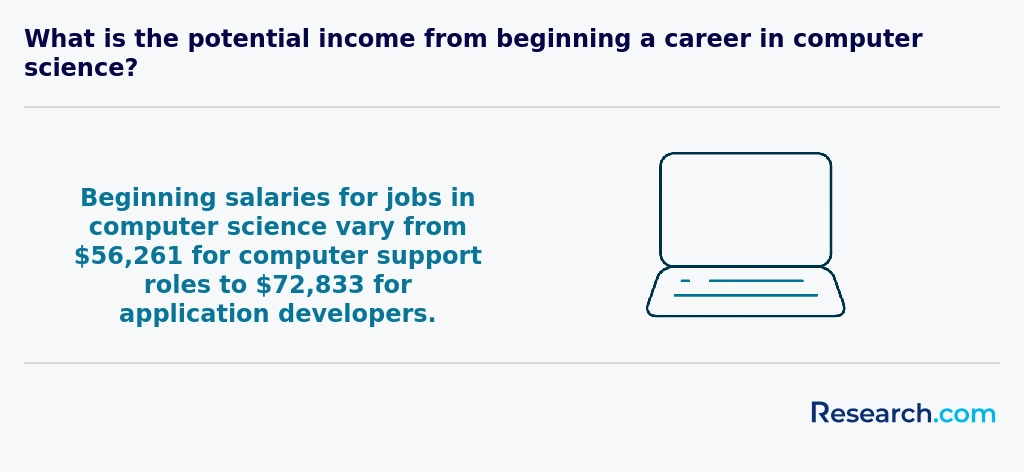
Graduates from computer science programs in Claremont, such as those at Pomona College or Claremont McKenna College, often find rewarding salary prospects that reflect their strong technical foundations. Entry-level roles like IT Support Specialists generally start around $63,640 annually, according to recent data, providing a solid foundation for new professionals. Software Developers and Software Engineers in the region command average salaries of about $138,110 per year, reflecting the deep expertise students build through their studies and internships.
Data Analysts, another common path for graduates, earn a mean wage near $119,040, especially when leveraging skills in data science or analytics gained during their programs. These earnings align well with Claremont's close proximity to tech hubs in Southern California, allowing graduates to tap into broader markets.
Many students recall how internships with companies in the LA tech scene helped them negotiate higher pay offers. The ability to work remotely for firms based in Silicon Valley or Los Angeles is also a crucial advantage, often enhancing salary potential beyond local averages.
- Annual tuition for computer science degrees in Claremont ranges from about $20,000 at public colleges to over $50,000 at private colleges, with financial aid available.
- The typical bachelor's degree takes four years and covers programming, algorithms, data structures, and software development.
- Internships are commonly offered and important due to the strong technology job market near Claremont.
- Entry-level computer science graduates can expect starting salaries around $70,000 per year, with mid-career salaries often exceeding $110,000.
- Job opportunities in software development, IT, and cybersecurity are growing faster than average in the region.
- Networking and local college partnerships enhance employment chances, with the area offering a lower cost of living compared to downtown Los Angeles.
Completing a computer science degree in Claremont generally takes about four years for full-time students, mirroring the typical U.S. undergraduate timeline. Graduates from well-known institutions like the Claremont Colleges often recount how a balanced mix of foundational courses and core computer science classes fits within this period, allowing steady progress without feeling rushed.
Part-time students, however, frequently find their journey extending to five or six years. Many share that juggling work, family, and coursework brings its own rewarding challenges, with flexibility allowing them to tailor studies around their lives. Some motivated students take advantage of accelerated options or summer sessions offered by local schools, finishing in as little as three years-a rewarding sprint for those eager to enter the tech industry sooner.
Master's programs typically require an additional one to two years, with students appreciating the focused depth and the chance to engage in industry projects near Southern California's tech hubs. These experiences add value beyond the degree timeline, creating meaningful professional connections along the way.
Graduates from Claremont's well-regarded institutions often reflect on how their experience shaped their learning and career paths. Those who attended on-campus computer science programs recall vibrant campus life-the buzz of late-night study sessions in labs, spontaneous group projects at libraries, and face-to-face guidance from professors that brought complex algorithms to life. The immersive environment fostered a strong sense of community and networking, which many credit for landing internships and job offers locally.
In contrast, graduates from online programs emphasize flexibility as their greatest asset. Balancing work, family, and study, they appreciated being able to access lectures and assignments anywhere in California. Although they missed some hands-on lab time, many found virtual collaboration tools and occasional campus visits bridged the gap well. They often praise the self-paced structure for cultivating discipline and time management skills essential in tech careers.
The financial aspect also influences choices: on-campus tuition in Claremont's private colleges typically falls between $40,000 and $60,000 yearly, while online options can cost nearly half that. For many, deciding between these formats comes down to personal learning styles and lifestyle priorities.
When evaluating the true value of a Computer Science degree, it’s essential to consider not only tuition and fees but also long-term salary prospects and debt repayment timelines. Prospective students in Claremont, CA, can compare program costs-ranging from approximately $6,930 per year in-state at public institutions to $34,041 at private colleges-with median starting salaries to calculate an accurate return on investment (ROI). For further perspective on affordability across different regions, you might explore our Cheapest Computer Science Degree Programs Ranking in Kentucky. On average, a bachelor’s degree in Computer Science from a private Claremont college carries total tuition costs of about $136,000. Graduates entering the workforce as software engineers report mean annual salaries of $132,930, while web developers start around $87,580. Assuming a student borrows the full cost at a 4.5% interest rate, with a 10-year repayment plan, monthly payments would be roughly $1,400. Against a conservative starting salary of $75,000, this payment represents under 20% of gross monthly income, allowing many graduates to manage living expenses and debt simultaneously. A public in-state student borrowing $27,720 over four years would see monthly payments near $290. With an average IT support specialist salary of $61,580, the debt-to-income ratio drops to under 6%, suggesting the break-even point-when cumulative earnings surpass total educational spending-can occur within 2–4 years post-graduation. These figures highlight how program selection, aided by scholarships and work-study opportunities, directly impacts financial outcomes. To maximize ROI, students should: • Prioritize programs offering comprehensive financial aid and low net-price guarantees. • Seek internships and co-op placements that lead to higher post-graduation offers. • Compare cost-per-credit figures alongside average graduate salaries. By thoroughly analyzing these factors, applicants can choose a Claremont Computer Science program that balances affordability with career potential, ensuring sustainable financial health long after graduation.
For those weighing the average computer science degree cost Claremont offers, the median total cost lands near $84,749, reflecting a mix of tuition and fees over the course of the degree. This figure captures the broader reality for students at places like the Claremont Colleges, where a rigorous, personalized education comes with a price that echoes the value of top-tier resources and faculty.
Graduates from these institutions often recall how the small class sizes and close mentorship justified their investment, even as they navigated expenses beyond tuition such as housing and textbooks within Claremont's charming campus-town atmosphere. While the price may feel higher compared to public universities in California, students find that the community and networking opportunities enrich their college experience in ways that extend beyond the classroom.
Additionally, understanding Claremont affordable computer science programs cost can be complex since public options directly in Claremont are limited, but nearby campuses might offer more economical alternatives. Exploring financial aid avenues is crucial; many students share stories of how scholarships or grants helped ease their financial burden, turning what initially seemed daunting into an achievable goal.
Inspired by alumni feedback, prospective students should also explore career outcomes related to an engineering degree salary, which often reflects positively on the investment in a computer science degree at Claremont colleges, adding a hopeful dimension to the financial commitment involved.

Financial aid for computer science students in Claremont is a vital resource that turns what can seem a daunting expense into a manageable investment. Many graduates recall how federal aid, particularly Pell Grants and subsidized student loans, helped pave the way during their early semesters at Claremont Colleges. These grants offer relief by not requiring repayment, while loans come with relatively low interest, easing financial pressure.
State-specific support, such as California's Cal Grant programs, is often a game changer. Numerous students pursuing computer science found that Cal Grants A and B covered significant tuition portions, especially when attending in-state institutions within the Claremont consortium. This aid connects directly with local residents, making advanced education more accessible.
Merit-based scholarships across Claremont campuses celebrate achievements, ranging from $5,000 awards to full tuition remission, encouraging students to push their limits academically and extracurricularly. Graduates frequently mention how these scholarships inspired confidence and shaped their college experience.
- Work-study programs enable students to earn income while gaining tech-related experience on campus, blending education with real-world skills.
- Private awards through organizations like the National Science Foundation amplify aid, providing additional financial comfort.
- Tuition assistance from employers benefits those balancing local work and study, a practical avenue for many Claremont residents.
Early completion of the FAFSA remains essential to access these supports fully, a lesson embraced by many successful computer science graduates who advise future students to act promptly in their financial planning.
Computer Science programs in Claremont, CA, offer more than just rigorous academics-they provide a vibrant campus culture that enhances personal growth and professional networking. Students enjoy access to state-of-the-art labs, collaborative study spaces, and technology clubs that foster innovation and creativity outside the classroom. Campus events, hackathons, and industry meetups further bridge the gap between theoretical learning and real-world application, making it easier to build lasting relationships with peers and mentors. Many students actively participate in extracurricular activities, such as coding boot camps and tech conferences, which not only enrich their college experience but also boost their resumes for the competitive job market. For those interested in combining academic excellence with a dynamic social atmosphere, checking out the most affordable computer science programs in california can provide valuable insights into schools that balance quality education with an engaging campus life. Faculty advisors and dedicated career centers support students by offering personalized mentoring and internship placement services, ensuring that every graduate is well-prepared to launch a successful career in the tech industry.
Enrolling in a computer science degree program in Claremont demands a strong foundation in mathematics and basic computing skills. Graduates from well-known institutions here often recall how their solid background in algebra, geometry, and calculus smoothed their transition into demanding coursework. Many students also emphasize the value of early exposure to programming languages like Python or Java, which can be shown through prior classes or test scores.
Applicants typically need to provide official transcripts reflecting their academic strength, especially in STEM subjects. For example, students at Claremont colleges often found that excelling in math and science helped them not only gain admission but thrive in their studies. Some schools require SAT or ACT results, focusing on the math section, although recent test-optional trends offer flexibility.
Beyond academics, students share that demonstrating enthusiasm through internships or projects related to computing significantly enhances their applications. This holistic approach ensures admitted students possess critical thinking and problem-solving skills essential for success in Claremont's competitive and innovative computer science programs.
Students pursuing computer science degrees in Claremont often find their coursework grounded in fundamentals that seamlessly blend theory with hands-on learning. Graduates from popular local colleges recall how core classes like Introduction to Programming, featuring languages such as Python and Java, built a solid coding foundation that felt immediately applicable in internship projects.
The emphasis on Data Structures and Algorithms helped these students approach problem-solving methodically, much like debugging real software or optimizing app performance in group work. Meanwhile, courses on Computer Architecture and Operating Systems revealed the unseen layers of technology they use daily, bringing satisfaction when understanding complex systems felt like unlocking a puzzle.
Many appreciate the breadth offered by electives in fields like artificial intelligence or mobile app development, which mirror the vibrant tech atmosphere of Southern California. These choices foster a sense of excitement and purpose, as students tailor their studies toward careers they genuinely envision engaging with after graduation.

Students pursuing a computer science degree in Claremont commonly select from specializations that balance foundational knowledge with rapidly evolving technology sectors. Graduates from institutions well-regarded in this area often highlight fields like Artificial Intelligence and Machine Learning, where designing intelligent systems has real-world applications in healthcare diagnostics or autonomous vehicles. Others find Cybersecurity equally rewarding, mastering skills that guard against data breaches and protect sensitive information-vital in today's digital landscape.
Many learners within Claremont affordable computer science programs with specializations appreciate the practical focus on Data Science, gaining expertise in analyzing massive datasets that drive decision-making in finance or entertainment. Software Engineering remains a favorite, equipping students to craft reliable applications and collaborate in complex project environments, with several choosing to explore the highest ranked online software engineering programs for further growth. Human-Computer Interaction also attracts those fascinated by enhancing user experiences through intuitive interface designs, reflecting the diversity of interests nurtured in Claremont's dynamic academic setting.
Choosing the best computer science degree in Claremont starts with assessing the academic reputation and accreditation of local colleges. Graduates from well-respected institutions in the Claremont Colleges consortium often emphasize the confidence that comes from a rigorous, ABET-accredited curriculum, which prepares them well for evolving tech careers. Many recall how the curriculum's flexibility allowed them to specialize in areas like cybersecurity or data science, aligning studies with their passions and the job market.
For students seeking affordable computer science degrees in Claremont, balancing tuition costs against financial aid and scholarships is essential. Some graduates fondly remember using net price calculators to understand their true expenses before enrollment. Beyond cost, one must consider how deeply programs connect students to internships and industry partners nearby. These real-world experiences create invaluable networking channels that many alumni credit for smooth transitions into rewarding tech roles.
Reviewing career outcomes is also insightful; graduates from Claremont McKenna College often share stories of strong employment rates and meaningful job placements within months of graduation. To evaluate options thoroughly, prospective students might explore resources like the U.S. Department of Education's College Scorecard. Additionally, understanding the computer science degree vs bootcamp debate can illuminate which pathway best matches personal goals in this competitive field.

Graduates from Claremont's colleges often find that computer science jobs in Claremont open doors to diverse roles, from software development to data analysis and cybersecurity. Many who studied at well-regarded institutions within the city share stories of landing positions that allow them to work on innovative projects with nearby tech firms in Los Angeles or Orange County, fostering a rewarding sense of accomplishment. These roles frequently include building applications, securing networks, or interpreting complex data, which connect theoretical knowledge with real-world problem solving.
Graduates seeking broader impact often explore career opportunities in IT management or product strategy, where they combine technical expertise with leadership skills. Internships arranged through local universities and colleges give students hands-on experience, making the transition into these roles smoother. Understanding the evolving technology landscape, especially through fields like artificial intelligence and cloud computing, empowers students to stay ahead in Claremont computer science degree career opportunities. Those curious about the journey often benefit from exploring the computer science degree benefits tied to hands-on learning and industry connections.

The computer science job opportunities in Claremont benefit greatly from the city's strategic position near major Southern California tech hubs like Los Angeles and Inland Empire. Graduates from well-regarded local colleges often share how internships and networking events offered on campus lead directly to roles in software development, data analysis, and cybersecurity. Alumni recall landing positions at startups and established firms without needing to relocate, a unique advantage tied to Claremont's location.
The Claremont computer science degree employment outlook is strengthened by both regional demand and the nationwide shortage of skilled tech professionals. Many note that the affordable education costs here, especially compared to private institutions, help students enter the workforce without heavy debt, allowing for greater flexibility and career exploration. Prospective students should also consider programs among the most affordable computer science programs in california to balance cost and quality.
2027 Most Affordable Computer Science Degree Programs Ranking in Claremont
Investing in your education is a significant decision that can shape your future, and the Research.com team understands the importance of making informed choices. To assist prospective students in Claremont, we have meticulously crafted the "2027 Most Affordable Computer Science Degree Programs Ranking in Claremont." Our commitment to quality, credibility, and accuracy is reflected in the extensive research and analysis conducted to compile this ranking.
We utilized the following reputable data sources to ensure a comprehensive evaluation of computer science programs:
By exploring this ranking, readers will gain valuable insights into the most affordable and quality computer science degree options available in Claremont, empowering them to make informed educational choices. For more details on our methodology, please visit our Research.com methodology page.


Frequently Asked Questions About computer science
Computer science students in Claremont can maximize their learning by engaging with local resources and hands-on experiences. Claremont Colleges consortium offers access to combined libraries and cross-registration, allowing students to benefit from varied course offerings. According to the National Center for Education Statistics, students who participate in internships are 14% more likely to secure employment in their field.
Joining tech clubs and attending workshops provided by community organizations in Claremont promotes real-world skills beyond lectures. Utilizing on-campus research opportunities and collaborating with faculty on projects deepens understanding of complex computer science topics.
Additionally, students should take advantage of online platforms endorsed by their institutions to stay updated on emerging technologies and hone coding skills. Building a professional network through local tech meetups and career fairs in the Inland Empire significantly enhances career prospects.
The computer science field is rapidly evolving, with several emerging niches gaining prominence. In Claremont, students and professionals are increasingly exploring areas like artificial intelligence (AI), cybersecurity, and data science. According to the National Center for Education Statistics, programs related to AI have grown by over 30% nationally and show similar trends in Claremont-area schools.
With the rise of connected devices, cybersecurity demand is also growing, emphasizing protection from increasingly sophisticated cyber threats. Data science remains a key area, where skills in big data analytics and machine learning are highly valued by employers in California's tech industry.
Other developing fields include quantum computing and human-computer interaction, reflecting the diversification of computer science careers. These niches offer Claremont students innovative paths aligned with industry needs and future job markets.
Preparing for the job market after earning a computer science degree in Claremont requires strategic planning and active skill development. Graduates should focus on building a strong portfolio showcasing practical projects, as employers highly value demonstrable coding abilities.
Internships and cooperative education programs offered by local institutions like Claremont Colleges significantly enhance real-world experience and professional networking. According to the National Association of Colleges and Employers, 60% of computer science graduates with internships received job offers within six months of graduation.
Additionally, proficiency in in-demand programming languages such as Python, Java, and C++ improves employment prospects. Engaging with Claremont's tech meetups and online communities can provide valuable connections and job leads.
Continuing education through certifications and workshops is also recommended to stay updated with evolving technologies and industry standards.
Employers in Claremont highly value computer science graduates who possess strong programming skills in languages such as Python, Java, and C++. According to the National Association of Colleges and Employers (NACE), proficiency in software development and data structures remains critical for technical roles.
Additionally, problem-solving abilities and analytical thinking are essential. The U.S. Bureau of Labor Statistics notes that these skills help graduates adapt to fast-changing technologies.
Communication and teamwork also rank highly as many Claremont employers expect graduates to collaborate effectively on projects. Knowledge of cloud computing and cybersecurity is increasingly important due to local industry demand.
Overall, a balanced mix of technical expertise and soft skills positions graduates for success in Claremont's competitive job market.
To find internships relevant to a computer science degree in Claremont, start by exploring opportunities through local colleges such as the Claremont Colleges Consortium, which includes institutions like Pomona College and Harvey Mudd College. These schools often have career centers that connect students with tech companies in Southern California. According to the National Association of Colleges and Employers, about 62% of computer science internships lead to full-time jobs, making early connections critical.
Networking with local businesses, tech meetups, and attending virtual job fairs can also provide leads. Platforms like Handshake are commonly used by nearby universities to post internships specific to Claremont students.
Additionally, employers in the tech hubs of Los Angeles and Orange County are within commuting distance, expanding internship options beyond Claremont itself.
A computer science degree significantly enhances career mobility and advancement opportunities in Claremont. The city benefits from its proximity to the Greater Los Angeles tech hub, where skilled professionals are in high demand. According to the U.S. Bureau of Labor Statistics, computer and information technology occupations in California are projected to grow by 15% from 2021 to 2031, faster than the average for all occupations.
Graduates with a computer science degree are often preferred for roles in software development, data analysis, and cybersecurity, which offer competitive salaries and pathways to leadership. Local employers value accredited degrees, which can lead to promotions and specialized positions over time.
Additionally, Claremont's colleges often provide internships and networking opportunities, supporting graduates' transitions into the workforce. This practical experience is crucial for career development and aligns with industry expectations in the region.
Studying for a computer science degree in Claremont offers students unique opportunities to engage in interdisciplinary learning. Local institutions, such as Claremont McKenna College and Pomona College, emphasize collaboration between departments, allowing students to combine computing skills with business, environmental science, or psychology. This approach reflects the broader U.S. trend where 67% of tech job roles increasingly require interdisciplinary knowledge (U.S. Bureau of Labor Statistics, 2023).
Students benefit from project-based curricula that encourage applying computer science to real-world challenges. Access to regional internships with diverse industries further strengthens practical interdisciplinary experience.
When choosing between a thesis and a non-thesis computer science degree program in Claremont, consider your career goals and learning preferences. Thesis programs focus on research, requiring students to complete an original project under faculty supervision. This path suits those aiming for doctoral studies or research roles. Non-thesis programs emphasize coursework and practical skills, ideal for students seeking industry positions or immediate employment.
Thesis options often demand more time, typically two years or more, while non-thesis programs can be completed faster. According to data from the Claremont Colleges Consortium, about 40% of local CS graduates pursue thesis tracks, reflecting interest in research careers.
Admissions criteria and funding availability may also differ, so review specific program details carefully.
Students based in Claremont interested in studying computer science abroad can take advantage of multiple US university programs offering study abroad opportunities. Many institutions within California's Claremont Colleges consortium promote exchange programs through partner universities internationally, typically in Europe and Asia. These programs often provide coursework in computer science, allowing credits to transfer back toward a degree.
According to the Institute of International Education, over 35% of US study abroad participants enroll in STEM fields, including computer science. Popular destinations include universities in the United Kingdom, Germany, and South Korea, known for strong tech sectors and advanced research opportunities.
Some Claremont students also choose semester-long internships abroad in tech hubs, which complement academic studies with practical experience. Scholarships and funding options are increasingly available to support these endeavors.
Students pursuing a computer science degree in Claremont can find several part-time job opportunities that enhance their educational experience. Local tech startups and small businesses often seek interns or junior developers to assist with software development, offering practical exposure to coding and project management.
Campus-based roles, such as lab assistants or IT support staff at Claremont Colleges, provide valuable hands-on experience with hardware and network systems. Additionally, freelance work in web design or app development through platforms like Upwork allows students to build portfolios while managing flexible hours.
According to the U.S. Bureau of Labor Statistics, employment in computer and information technology fields is projected to grow 15% from 2021 to 2031, translating to many opportunities locally and nationally.
Computer science students in Claremont benefit from a variety of strong networking opportunities supported by local colleges and the broader Southern California tech community. Claremont Colleges, including Harvey Mudd College, regularly host career fairs and tech-specific events attracting companies from Silicon Valley and nearby Los Angeles. These events often feature startups and established firms looking to recruit top talent.
Students can engage with professional clubs and organizations, such as the Association for Computing Machinery (ACM) chapters, which provide workshops, guest lectures, and mentorship programs. Additionally, regional meetups and hackathons offer hands-on collaboration and chances to connect with industry professionals.
Proximity to tech hubs in Los Angeles and Orange County expands internship options, critical for career development. According to the National Association of Colleges and Employers, 65% of computer science graduates who intern find full-time employment through internships, underscoring the value of active networking.
Alumni networks play a crucial role for computer science degree students in Claremont by providing valuable professional connections. Graduates from Claremont Colleges often participate in local tech meetups and events, fostering relationships that can lead to internships and job opportunities. According to the National Association of Colleges and Employers (NACE), 70% of jobs are found through networking, emphasizing alumni support's importance.
These networks also offer mentorship from experienced professionals who understand the challenges in computer science careers. Students benefit from guidance on skill development and industry trends, which is vital in this fast-evolving field.
Additionally, Claremont's alumni frequently collaborate on startups and research projects, boosting innovation and practical experience for current students.
Customizing a computer science degree program in Claremont involves leveraging flexible course options and specializations offered by local institutions. Many colleges allow students to tailor their studies through electives focusing on areas like artificial intelligence, cybersecurity, or software engineering. This approach helps align education with specific career goals such as data science or game development.
Students can also pursue interdisciplinary studies by combining computer science with business or mathematics, enhancing job market competitiveness. Local schools often provide internships and project opportunities in nearby tech hubs, supporting practical experience.
According to the National Center for Education Statistics, 70% of computer science graduates in California secure employment within six months, highlighting the importance of a targeted curriculum.
Computer science students in Claremont often face several common challenges during their studies. One key difficulty is managing the rigorous coursework, which includes advanced topics such as algorithms, data structures, and software development. These require strong problem-solving skills and sustained study time. According to the National Center for Education Statistics, about 35% of computer science undergraduates nationwide report high stress related to academic workload, a trend likely reflective in Claremont as well.
Access to internships and practical experience can also be limited due to competition. Claremont students must often balance seeking industry opportunities with maintaining academic performance. Additionally, the fast-evolving nature of technology demands continuous learning beyond the classroom, which some students find challenging to keep pace with.
Networking opportunities, although growing, might be fewer than in larger tech hubs, requiring students to be proactive in connecting with professionals. Lastly, financial pressures, including tuition costs and living expenses in the Claremont area, add to the overall challenge of completing a computer science degree successfully.
With a computer science degree, professionals in Claremont can pursue a variety of certifications to enhance their career prospects. Popular certifications include the Certified Information Systems Security Professional (CISSP), which is valuable for cybersecurity roles.
Other widely recognized credentials include the Certified Software Development Professional (CSDP) from IEEE and the Cisco Certified Network Associate (CCNA) for networking specialists. Data professionals often seek the Certified Data Professional (CDP) certification.
In Claremont and broader California, demand for cloud computing skills is growing, making certifications like AWS Certified Solutions Architect increasingly relevant. According to the Bureau of Labor Statistics, computer and information technology jobs are projected to grow 15% nationwide through 2031.
Local employers prioritize certifications that demonstrate practical skills and security expertise, helping graduates stand out in a competitive job market.
To write a winning application for a computer science program in Claremont, start by thoroughly researching the specific schools, such as Claremont McKenna College or Harvey Mudd College, known for their strong STEM curricula. Highlight relevant academic achievements, including advanced math or coding coursework. Admissions often value practical experience, so include internships, projects, or competitions related to computer science.
Standardized test scores remain important, especially the SAT Math section, though some schools have test-optional policies as of 2024. Strong letters of recommendation from teachers familiar with your technical skills can boost your application.
Finally, write a clear, focused personal statement emphasizing your passion for computer science and how studying in Claremont aligns with your career goals.
Computer science careers have a strong global outlook, with increasing demand for skilled professionals across many countries, including the United States. In Claremont and similar regions, technology companies and startups drive a local need for graduates trained in software development, data analysis, and cybersecurity.
According to the U.S. Bureau of Labor Statistics, employment for computer and information technology occupations is projected to grow 15% from 2021 to 2031, much faster than the average for all occupations. This growth reflects global digital transformation trends and expanding remote work opportunities.
Graduates with a computer science degree in Claremont can access diverse roles in sectors like finance, healthcare, and entertainment. Additionally, many global firms with offices in California prefer U.S.-educated candidates, valuing locally accredited programs for their rigorous curricula and practical training.
Gaining practical experience during a computer science degree in Claremont is vital for career readiness. Many local institutions encourage hands-on learning through internships with nearby tech companies in the Los Angeles metropolitan area, which is just over 30 miles away. According to the National Association of Colleges and Employers, about 60% of computer science students nationwide complete at least one internship before graduation.
Additionally, students can participate in on-campus hackathons and collaborative projects to build portfolios. Claremont Colleges often offer access to research opportunities, allowing undergraduates to work alongside professors on real-world problems. Utilizing these resources significantly enhances practical skills and employability.
Choosing the right concentration within a computer science degree program in Claremont depends on your career goals and interests. Popular concentrations include artificial intelligence, cybersecurity, software engineering, and data science. Researching local job trends is key: the Claremont area, part of Southern California's tech corridor, has seen a 12% growth in software-related jobs over the last five years, according to the U.S. Bureau of Labor Statistics.
Evaluate the curriculum focus of programs offered by institutions such as Claremont Colleges or nearby universities. Seek concentrations with strong practical components and internship opportunities in the local tech sector.
Consider programs accredited by ABET for quality assurance. Additionally, speak with academic advisors and current students to understand how each concentration aligns with emerging industry demands and whether it offers sufficient hands-on experience.
- 2027 Most Affordable Computer Science Degree Programs Ranking in Irvine
- 2027 Most Affordable Computer Science Degree Programs Ranking in Los Angeles
- 2027 Most Affordable Computer Science Degree Programs Ranking in La Jolla
- 2027 Most Affordable Computer Science Degree Programs Ranking in Riverside
- 2027 Most Affordable Computer Science Degree Programs Ranking in San Diego
- 2027 Most Affordable Computer Science Degree Programs Ranking in Santa Barbara
- 2027 Most Affordable Computer Science Degree Programs Ranking in Santa Cruz
- 2027 Most Affordable Computer Science Degree Programs Ranking in Berkeley
- 2027 Most Affordable Computer Science Degree Programs Ranking in San Francisco
- 2027 Most Affordable Computer Science Degree Programs Ranking in Davis
See What Experts Have To Say About Studying Computer Science
Read our interview with Computer Science experts

Kathleen M. Carley
Computer Science Expert
Professor of Computer Science
Carnegie Mellon University

Martin Kang
Computer Science Expert
Assistant Professor
Loyola Marymount University

Elan Barenholtz
Computer Science Expert
Associate Professor
Florida Atlantic University

Derek Riley
Computer Science Expert
Professor, Program Director
Milwaukee School of Engineering

- New Requirements for Computer Science , Claremont McKenna College https://www.cmc.edu/math/cs/new-requirements-for-computer-science-claremont-mckenna-college
- Top Careers in Computer Science | Careers, Salaries, and Resources https://www.computerscience.org/careers/
- What Can You Do With a Computer Science Degree? https://alcheducation.com/what-can-you-do-with-a-computer-science-degree/
- Computer Science Department Courses and Requirements | Pomona College in Claremont, California - Pomona College https://www.pomona.edu/academics/departments/computer-science/courses-requirements
- Letter of Motivation for applying Computer Science related fields https://essayforum.com/letters/motivation-applying-computer-science-related-11858/
- Why your computer science degree won't get you an IT job https://targetjobs.co.uk/careers-advice/information-technology/why-your-computer-science-degree-wont-get-you-it-job
- Computer Science http://www.claremont-high.org.uk/Computer-Science/
- How to Find Computer Science Work Experience in Year 12 https://www.savemyexams.com/learning-hub/careers/how-to-find-computer-science-work-experience-year-12/
- FAQ - Center for Information Systems & Technology - Claremont Graduate University https://www.cgu.edu/school/center-for-information-systems-and-technology/faq/
- 5 Challenges Faced by Computer Science Students and How to Overcome Them https://informatika.almaata.ac.id/5-challenges-faced-by-computer-science-students/