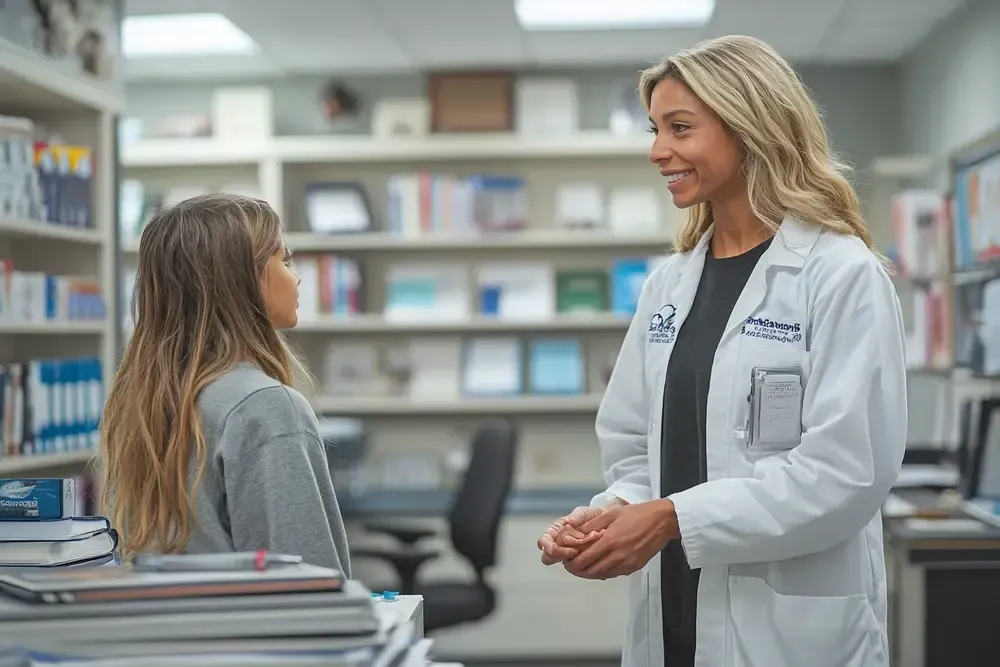
2027 Online Nurse Leadership Doctorate Programs with Strong Student Support: Advising, Writing Help, and Career Services
Audited and Verified:
Our Editorial and Data Verification Process
Research.com uses government datasets, official education statistics and primary institutional information to support its career and degree guides. Our review process checks factual accuracy, occupational definitions, source dates and the requirements associated with the credentials discussed.
How This Article Was Fact-Checked
Our editorial team verifies salary estimates, employment projections, education requirements and program information against original data providers and official organizations. Salary figures are checked against the relevant occupational definitions and reporting periods. Information about licensure, accreditation and required in-person training is reviewed separately.
Fact-checked and verified on:

Co-Founder and Chief Data Scientist
Choosing an online nurse leadership doctorate is not just a curriculum decision; it is a support-system decision. The Bureau of Labor Statistics reports that medical and health services managers had a median pay of $117,960 in May 2024, with much-faster-than-average projected growth, making doctoral preparation attractive for nurses moving into executive, academic, policy, or systems roles.
This guide is for working nurses comparing online DNP, PhD, or leadership-focused doctoral programs. You will learn how to judge advising, writing help, dissertation support, faculty access, and career services before enrolling.
Key Things You Should Know
- Strong online nurse leadership doctorate programs usually combine academic advising, faculty mentoring, dissertation or project support, writing help, library access, technology support, and career coaching that is available to fully online students, not only campus-based learners.
- Career outcomes vary by role and employer, but the BLS reported a $117,960 median salary for medical and health services managers in May 2024, so leadership-focused doctoral students should look for career services that support executive advancement, academic roles, consulting, and healthcare systems leadership.
- Support quality differs widely: dedicated doctoral advisors, clear response-time expectations, live virtual writing consultations, dissertation committee access, and doctoral-level career coaching are stronger signs than vague promises of "student success support."
What Student Support Services Should Strong Online Nurse Leadership Doctorate Programs Provide?
Strong student support in an online nurse leadership doctorate means the program has structured, accessible services that help distance learners progress academically, complete a dissertation or doctoral project, and translate the degree into leadership outcomes. It is not enough for a school to say it has advising or a writing center; the key question is whether those services are designed for doctoral nurses who may be working full time, managing clinical or administrative responsibilities, and studying outside normal business hours.
Online nurse leadership doctorates may include Doctor of Nursing Practice programs with executive leadership, health systems, or organizational leadership tracks; PhD in Nursing programs with leadership, policy, education, or research emphases; or EdD-style nursing leadership pathways at some institutions.
Students comparing these options should also consider whether they want an applied practice doctorate, a research doctorate, or a leadership credential that supports academic, policy, consulting, or executive work. Those comparing master's-level clinical pathways may also want to review online nurse practitioner programs to understand how doctoral leadership programs differ from advanced clinical preparation.
The table below summarizes the support services that matter most and how to tell whether they are genuinely useful for online doctoral students:
| Support area | What strong support looks like | Red flag to watch for |
| Academic advising | Dedicated doctoral advisor, degree map, proactive check-ins, registration guidance, and help with policy questions | Only a general call center or advising by email with unclear ownership |
| Faculty mentoring | Regular access to faculty with nurse leadership, healthcare systems, policy, research, or executive experience | No clear faculty contact until late in the program |
| Dissertation or project support | Clear milestones, the committee formation process, proposal guidance, IRB support, and feedback timelines | Students must "find their own way" through dissertation or project requirements |
| Writing support | Doctoral-level writing consultations, APA support, literature review help, and revision coaching | Only generic undergraduate tutoring or automated grammar tools |
| Career services | Leadership resume review, executive interviewing, academic job-market preparation, networking, and career coaching | Only a job board with no doctoral or nursing leadership focus |
| Technology and accessibility | Reliable learning platform, 24/7 technical help, disability accommodations, and orientation for online learners | Support hours that do not fit working nurses' schedules |
The best programs make support visible before enrollment. If the admissions team cannot explain who your advisor will be, how dissertation support works, or whether career coaching is available to online doctoral students, treat that as a sign to ask deeper questions.
How Does Academic Advising Work in Online Nurse Leadership Doctorate Programs?
Academic advising in an online nurse leadership doctorate should help you plan, persist, and avoid delays. At the doctoral level, advising goes beyond course registration. A strong advisor helps you understand degree requirements, sequencing, practicum or project expectations, transfer-credit rules, residency requirements, time limits, academic policies, and when to begin preparing for the dissertation or doctoral project.
There are several advising models, and the difference matters. A dedicated doctoral advisor is usually stronger for working nurses than a rotating general advising team because the advisor can track your progress, recognize early signs of delay, and connect you with the right faculty or support office. However, a well-run team model can also work if the school documents every interaction and assigns clear responsibility for follow-up.
When you speak with a program, ask for practical details rather than accepting broad assurances. These questions help reveal whether advising is proactive or only available when a student is already struggling:
- Will I have a dedicated advisor from enrollment through graduation, or will I work with a general advising pool?
- How often does the advisor proactively contact online doctoral students?
- What is the expected response time for emails, appointment requests, and urgent academic issues?
- Can advising appointments be scheduled in evenings or on weekends?
- Does the advisor help with dissertation or doctoral project milestone planning, or is that handled entirely by faculty?
- How does the program identify students who are falling behind before they fail or withdraw from a course?
A useful advising model should also help students understand the financial effect of delays. For federal graduate borrowers, Direct Unsubsidized Loans first disbursed in the 2024-2025 award year carry an 8.08% interest rate, so extending a program by extra terms may increase total cost even when tuition per credit looks manageable. Advising cannot eliminate cost, but it can help students avoid avoidable retakes, missed milestones, and poorly planned course sequences.

What Dissertation Mentoring and Committee Support Should Online Nurse Leadership Doctoral Students Expect?
Dissertation and committee support is one of the biggest differences between average and strong online nurse leadership doctorate programs. In a PhD program, students usually complete a dissertation that contributes original research. In a DNP program, students typically complete a scholarly practice project focused on quality improvement, systems change, patient outcomes, leadership practice, or evidence-based implementation. Both require sustained faculty feedback, research support, and realistic milestone management.
Strong programs do not leave committee formation to chance. They explain when you will choose a chair, how committee members are assigned or approved, what qualifications they must have, and how conflicts or stalled feedback are handled. Online students should receive the same clarity as campus-based students, including access to virtual meetings, recorded workshops, proposal templates, and research ethics guidance.
Use the following sequence to evaluate dissertation or project support before enrolling. The goal is to understand whether the program has a structured path from topic idea to final defense or presentation.
- Ask when dissertation or project planning begins and whether it starts before coursework ends.
- Request a sample milestone map showing topic approval, proposal development, IRB review, data collection, analysis, writing, revision, and final approval.
- Ask how committee chairs are matched with students and whether students can review faculty research or practice interests in advance.
- Clarify feedback timelines for chapters, proposals, project drafts, and final documents.
- Ask what happens if a chair leaves the university, becomes unavailable, or is not responsive.
- Confirm whether final defenses, project presentations, and committee meetings can be completed virtually.
A common mistake is choosing the shortest advertised program without checking the dissertation or project phase. Coursework may be accelerated, but scholarly work often slows down when committee access, feedback timelines, or IRB preparation are weak. A realistic, well-supported completion path is usually more valuable than an aggressive marketing timeline.
Doctoral writing support should be more advanced than basic grammar help. Nurse leadership doctoral students write literature reviews, policy analyses, evidence syntheses, research proposals, executive briefs, manuscripts, and dissertation or project chapters. Strong programs recognize that many excellent nurses have been away from academic writing for years and need structured support to transition from clinical or managerial writing to scholarly writing.
Students considering research-intensive doctoral routes should compare writing support carefully, especially if they are also weighing affordability. Low tuition can be attractive, but students reviewing the cheapest online nursing PhD programs should still ask whether the writing center offers doctoral-level help, dissertation coaching, literature review support, and APA or manuscript-format guidance.
The most useful writing support usually combines human feedback, structured resources, and discipline-specific expectations. Look for services that directly support the kinds of writing nurse leaders actually complete.
- Live virtual consultations with writing specialists who understand doctoral-level argument, synthesis, structure, and revision
- Dissertation or DNP project writing workshops that cover problem statements, theoretical or conceptual frameworks, methods, results, and discussion sections
- APA, citation management, plagiarism prevention, and responsible AI-use guidance
- Literature review support that teaches synthesis rather than simple article summaries
- Manuscript, poster, and conference abstract coaching for students planning academic or professional dissemination
- Writing accountability groups or dissertation boot camps that help online students maintain momentum
AI tools are also changing doctoral writing support. A good program should have clear rules on acceptable AI use, academic integrity, citation practices, and human authorship. Programs that ignore AI entirely may leave students vulnerable to policy violations, while programs that teach responsible use can help students use technology for brainstorming, organization, and editing without replacing scholarly judgment.
Yes, strong online nurse leadership doctorate programs should provide research, statistics, and library support, even when the degree is practice-focused. Leadership doctoral students often need to evaluate outcomes, interpret organizational data, review evidence, understand quality metrics, and design defensible scholarly projects. The depth of statistical support may vary between DNP and PhD programs, but online students should not be expected to manage research design and data analysis without guidance.
Library support is especially important for distance learners because doctoral work depends on access to peer-reviewed nursing, health policy, leadership, education, and healthcare management literature. A strong library system gives online students remote access to databases, interlibrary loan, librarian consultations, citation tools, and tutorials on systematic or integrative searching.
Before enrolling, confirm whether the research infrastructure fits your intended project or dissertation. These support features are particularly important for nurse leadership doctoral students who plan to study staffing, quality improvement, safety, policy, organizational culture, education, or healthcare operations.
- Remote access to major nursing, medical, business, education, and health policy databases
- Appointments with health sciences librarians for literature searches and search-strategy refinement
- Statistics tutoring or consulting for quantitative, qualitative, mixed-methods, or quality-improvement projects
- IRB guidance, human-subjects training, and templates for consent, recruitment, and data security
- Support for citation managers, evidence tables, data visualization, and research documentation
- Guidance on whether a DNP project is quality improvement, evidence-based practice, program evaluation, or research requiring IRB review
A red flag is a program that requires sophisticated data collection or analysis but offers no accessible statistics help. If you are not comfortable with research methods, ask whether support is built into courses, available through a consulting center, or dependent on individual faculty availability.

Career services for online nurse leadership doctoral students should be more specialized than resume templates and job postings. Many students in these programs are already experienced nurses, managers, educators, or advanced practice clinicians. They may be targeting executive leadership, academic appointments, healthcare consulting, policy roles, quality and safety leadership, or system-level practice change. Career support should reflect that level of experience.
Career value also depends on the path a student chooses. Some nurses pursue leadership doctorates after completing advanced clinical preparation, while others compare leadership roles with clinical specialties. For example, those evaluating advanced practice income alongside leadership options may find salary context helpful through resources on psychiatric nurse practitioner salary, but leadership doctorate decisions should also account for management responsibilities, organizational influence, and long-term career goals.
The table below shows what doctoral-level career services should include and why each service matters for nurse leadership students:
| Career service | Why it matters for nurse leadership doctoral students | Evidence of quality |
| Executive resume and CV review | Leadership candidates need to present outcomes, budgets, teams, quality metrics, publications, and systems impact | Reviewers understand healthcare leadership and academic CV conventions |
| Interview coaching | Director, dean, chief nursing officer, faculty, and consulting interviews often require leadership examples and strategic thinking | Mock interviews are available by video and tailored to role type |
| Academic career preparation | Some doctoral students pursue faculty, program director, or research roles | Support includes teaching statements, research statements, publication strategy, and faculty-market guidance |
| Networking and alumni access | Online students need intentional ways to build professional connections | Programs offer virtual networking, alumni mentors, leadership seminars, or employer events |
| Career coaching | Experienced nurses may need help positioning the doctorate for advancement rather than entry-level job searching | Coaches discuss promotion strategy, leadership brand, negotiation, and career transitions |
Do not assume that a university career center is prepared to support doctoral nurses. Ask whether career staff have experience with healthcare leadership, academic nursing roles, executive advancement, and online doctoral students. If the service is limited to undergraduate-style job-search tools, it may not add much value for an experienced nurse leader.
Faculty and staff accessibility can shape the entire online doctoral experience. In nurse leadership programs, students need timely access to instructors, advisors, dissertation or project chairs, librarians, technology staff, financial aid counselors, and sometimes practicum or site coordinators. Accessibility is not just about friendliness; it is about predictable communication, clear escalation paths, and support hours that match the reality of working nurses.
Faculty access is especially important in asynchronous programs. A course may not require live attendance, but students still need office hours, discussion feedback, assignment guidance, and opportunities to discuss leadership questions in depth. Strong programs publish office-hour policies, use video appointments, respond within stated timelines, and provide alternatives when a faculty member is unavailable.
To evaluate accessibility, ask for concrete service standards. The following signs suggest a program has designed support for distance learners rather than simply moving courses online:
- Published response-time expectations for faculty, advisors, dissertation chairs, and support offices
- Virtual office hours with options outside standard workday hours
- Centralized student portal that tracks advising notes, degree progress, deadlines, and support requests
- Clear escalation process when a student cannot get a response from an instructor, advisor, or committee chair
- Online orientation that explains how to reach every major support service
- Support staff trained to work with adult learners, licensed nurses, military students, caregivers, and shift workers
A practical test is to contact admissions, advising, financial aid, and technology support before applying. Note how quickly they respond, whether answers are specific, and whether they understand online doctoral nursing students. Slow or vague pre-enrollment communication may signal similar problems after enrollment.
Peer, cohort, and mentoring support can make an online doctorate feel less isolating. Nurse leadership students often learn as much from each other's organizational experiences as they do from formal course materials. A strong program creates structured interaction among nurses from different health systems, specialties, regions, and leadership levels.
Cohort models can be useful because students move through milestones together and build accountability. However, a cohort is not automatically better. Some working nurses need part-time flexibility, stop-out options, or individualized pacing. The strongest programs balance community with flexibility, giving students ways to connect without making participation impossible for those with irregular schedules.
Look for peer and mentoring structures that are intentional, not accidental. These features can help online doctoral students build relationships that support persistence and professional growth:
- Virtual cohort meetings, leadership seminars, or doctoral colloquia with faculty involvement
- Peer writing groups or dissertation accountability groups
- Alumni mentoring for students interested in executive, academic, consulting, or policy roles
- Faculty-led research or practice communities organized around leadership, quality, education, population health, or policy topics
- Optional residencies or intensives that focus on networking, project development, and leadership identity rather than simple attendance requirements
- Online discussion formats that require meaningful professional exchange instead of low-value posting requirements
A common mistake is assuming that "online" means independent. Independence is useful, but doctoral study also requires scholarly conversation, feedback, and professional identity development. Ask current students whether they feel known by faculty and connected to peers, not just whether the learning platform is easy to use.
Technology, accessibility, and wellness support are core parts of online doctoral student success. A nurse leadership doctorate usually requires video meetings, online discussions, digital library research, secure data storage, writing submissions, presentation recordings, and sometimes virtual simulations or project-management tools. If the technology is unreliable or support is hard to reach, even strong academic content can become frustrating.
Accessibility services also matter. Online students may need accommodations for disability, chronic illness, military obligations, caregiving responsibilities, or schedule limitations. Schools should have a clear process for requesting accommodations, applying them in online courses, and coordinating them with faculty. Students should not have to negotiate every accommodation from scratch each term.
Wellness support is equally important because many doctoral nursing students are balancing employment, family responsibilities, leadership stress, and academic deadlines. Strong programs usually provide a combination of technical, accessibility, and wellness resources:
- 24/7 or extended-hour technical support for the learning management system, video tools, library access, and account issues
- Online orientation that teaches students how to use platforms, submit assignments, schedule appointments, and access support
- Accessibility services with clear documentation steps, online accommodations, captioning support, and assistive-technology guidance
- Mental health, wellness, or employee-assistance-style resources available remotely
- Time-management and doctoral persistence workshops designed for working adult learners
- Cybersecurity and data-protection guidance for students collecting organizational, patient-related, or quality-improvement data
Ask whether support is available when you are most likely to study. A nurse working evening shifts may not benefit from technology or advising support that closes at 5 p.m. The best fit is not necessarily the program with the most tools; it is the program whose tools and hours match your life.
How Can You Compare Online Nurse Leadership Doctorate Programs Based on Student Support Quality?
To compare online nurse leadership doctorate programs effectively, build a support-quality checklist before you compare tuition, rankings, or advertised completion time. Strong student support can justify a higher price for some students, especially if it reduces delays, improves dissertation or project progress, and provides meaningful career guidance. However, a higher price does not automatically mean stronger support, so ask for evidence.
Students still exploring nursing pathways may compare doctoral leadership programs with clinical graduate routes, including the easiest NP program search. That comparison can be useful, but remember that "easy" should never replace accreditation, clinical quality, faculty access, and long-term career fit when evaluating graduate nursing education.
The table below gives you a practical way to compare programs based on support quality rather than marketing language:
| Comparison factor | Stronger program evidence | Weaker program evidence |
| Advising model | Dedicated doctoral advisor, proactive milestone tracking, documented response times | General advising inbox with no named contact |
| Dissertation or project structure | Published milestone map, early topic development, clear committee process | Unclear process until after coursework is nearly complete |
| Writing support | Doctoral writing consultations, dissertation workshops, APA and literature review help | Only self-service handouts or grammar software |
| Faculty access | Virtual office hours, timely feedback standards, faculty profiles with leadership expertise | No clear office hours or limited faculty interaction |
| Career services | Executive, academic, and healthcare leadership coaching for online doctoral students | Basic job board with no advanced nursing focus |
| Online learner support | Extended technical support, accessibility services, online orientation, wellness resources | Campus-centered services with limited remote access |
| Cost transparency | Clear tuition, fees, technology costs, residency costs, and financial aid guidance | Advertised tuition excludes required fees or travel costs |
Once you narrow your list, use a structured process to verify claims. This is especially important because online program websites often use similar language even when the actual level of support differs.
- Ask admissions for a written explanation of advising, dissertation support, writing help, career services, technology support, and accessibility services for fully online doctoral students.
- Request a sample degree plan and dissertation or DNP project milestone timeline.
- Ask to speak with a current student or recent graduate about advisor responsiveness, faculty access, and dissertation or project support.
- Compare total cost, including tuition, fees, books, software, travel, residencies, background checks, and possible extra terms.
- Confirm accreditation, state authorization, and whether the program's outcomes fit your goals in leadership, education, research, policy, or executive practice.
- Choose the program whose support model matches your risk factors, such as limited writing experience, full-time employment, need for evening appointments, or uncertainty about dissertation research.
Watch for common red flags: vague claims about mentoring, no published dissertation process, limited faculty profiles, no online-specific career coaching, unclear technology hours, and pressure to enroll before your support questions are answered. A good program should be willing to explain how students are supported from admission through graduation.
Other Things You Should Know About Nurse Leadership
A DNP is usually better for nurses who want applied leadership roles in healthcare systems, quality improvement, executive practice, or organizational change. A PhD is usually better for nurses who want research, faculty, policy scholarship, or theory-building roles. Some leadership careers can fit either degree, so compare curriculum, dissertation or project expectations, faculty expertise, and career outcomes.
Some do, and some do not. Programs may require short residencies, intensives, project presentations, orientation sessions, or final defenses. Before applying, ask whether visits are mandatory, how often they occur, where they are held, and whether travel costs are included in the published cost estimate.
Look for institutional accreditation from a recognized accreditor and nursing program accreditation when applicable, commonly through CCNE or ACEN for nursing programs. Accreditation expectations can vary by degree type and employer, so verify that the program meets your goals for leadership, teaching, certification, promotion, or further academic work.
Many online nurse leadership doctorates take about three to five years, depending on degree type, enrollment pace, transfer credits, project or dissertation progress, and whether the student studies part time or full time. The advertised timeline is only useful if the program also provides strong advising, clear milestones, and timely faculty feedback.
- The Best Value DNP Degree Programs for 2025 https://www.doctorofnursingpracticednp.org/the-best-value-dnp-degree-programs/
- Best Doctor of Nursing Practice Programs (2024) https://everynurse.org/dnp-programs/
- Transformative Leadership: Systems DNP https://www.rushu.rush.edu/college-nursing/programs-admissions/transformative-leadership-systems
- DNP Education https://www.aacnnursing.org/students/nursing-education-pathways/dnp-education
- Advancing Your Nursing Career With a DNP https://www.saintmarys.edu/graduate-studies/nursing/nursing-practice/dnp-article
- Can You Earn a DNP Online? | All Nursing Schools https://www.allnursingschools.com/dnp/online-or-on-campus/
- Your Guide to Online PhD Nursing Programs: What They Are, What to Expect, and How to Choose the Right One – FRESHRN https://www.freshrn.com/online-phd-nursing-programs/
- What Can You Do With a DNP Degree? | University of Phoenix https://www.phoenix.edu/articles/nursing/what-can-you-do-with-a-dnp-degree.html
- Improving Writing Skills in Graduate Nursing Education - European Society of Medicine https://esmed.org/improving-writing-skills-in-graduate-nursing-education/
- Five ways a doctoral degree in nursing can transform your career https://onlinedegrees.bradley.edu/blog/five-ways-a-doctoral-degree-in-nursing-can-transform-your-career