2027 Do Employers Pay for Speech Pathology Degrees: Tuition Reimbursement and Sponsorship Options

Co-Founder and Chief Data Scientist

Reviewed by Rhea Paul, PhD
SLP Education & Research Expert
Employer tuition help can change the real cost of becoming a speech-language pathologist, but it is rarely automatic. Many prospective speech pathology students are weighing a high-cost graduate degree against wages, licensure requirements, work schedules, and student loan risk. The average cost of a master's degree in speech pathology can exceed $50, 000, and studies indicate that nearly 70% of speech pathology students rely on loans, so knowing whether an employer will help pay is a practical financial planning step—not a minor benefit question.
This guide explains when employers may pay for a speech pathology degree, what tuition reimbursement or sponsorship usually covers, who qualifies, how online programs are treated, and what obligations may apply if you leave the job or program early. It is written for working professionals, career changers, assistants in education or healthcare settings, and students comparing funding options before committing to a speech pathology program.
Key Benefits of Employers Paying for Speech Pathology Degrees
- Employer tuition reimbursement reduces the average $60,000 speech pathology program cost, easing financial burden and lowering student loan debt for employees pursuing advanced degrees.
- Sponsorship options often include stipends or partial funding tied to work commitments, fostering employee retention and professional growth within healthcare organizations.
- Financial support from employers enhances access to continuing education, improving clinical skills and service quality without out-of-pocket expenses for speech pathology professionals.
Do Employers Pay for Speech Pathology Degrees?
Yes, some employers pay part of the cost of speech pathology degrees through tuition reimbursement, direct tuition payment, scholarships, grants, or education sponsorship agreements. Employer-sponsored education is a common workplace benefit, with about 56% of U.S. employers offering some form of tuition assistance to employees pursuing further education. However, coverage depends heavily on the employer, the employee's role, the program's relevance, and the organization's staffing needs.
Employers are more likely to support speech pathology education when the degree helps address a clear workforce need. Healthcare systems, rehabilitation providers, school districts, early intervention programs, and long-term care organizations may see value in helping employees move into hard-to-fill clinical or support roles. In those settings, tuition assistance can support retention while building a stronger pipeline of qualified professionals.
Most employer support comes with conditions. A company may require advance approval, enrollment in an accredited program, satisfactory grades, continued employment, or a commitment to remain with the organization after graduation. Some employers reimburse only courses related to the employee's current role, while others support degrees tied to a documented internal career path.
For students comparing related behavioral and clinical career routes, employer funding may also appear in adjacent fields. For example, BCBA online programs may be relevant for professionals working in behavior analysis, special education, or autism services. The key is alignment: the closer the degree is to the employer's service needs, the stronger the case for tuition support.
What Types of Tuition Assistance Do Employers Offer for Speech Pathology Degrees?
Employers use several tuition assistance models for speech pathology degrees. The right option affects cash flow, tax treatment, reimbursement timing, and how much risk the employee carries if plans change. Before enrolling, ask whether the benefit pays upfront, reimburses after grades are posted, or requires a work commitment after completion.
- Tuition reimbursement: The employee pays tuition first, completes the approved course, and then submits receipts and grades for reimbursement. Employers may cover a percentage of tuition or reimburse up to an annual cap. This is one of the most common models, but it requires the student to handle upfront costs.
- Direct tuition payment: The employer pays the school directly for approved coursework. This reduces the employee's need to finance tuition out of pocket, but it usually requires strict preapproval and may be limited to specific schools, programs, or degree plans.
- Scholarships or grants: Some employers, foundations, hospitals, school systems, or affiliated organizations offer education awards for healthcare or education-related fields, including speech pathology. These funds may not need to be repaid, though eligibility can be competitive and tied to service expectations.
- Education sponsorship or service agreements: An employer may pay significant tuition costs in exchange for a commitment to work for the organization for a defined period. This can be valuable, but employees should read repayment clauses carefully.
- Flexible work arrangements: Flexible schedules, adjusted shifts, remote work days, paid study leave, or reduced hours are not tuition payments, but they can make graduate study possible while preserving income.
Most employer programs favor accredited speech pathology programs because accreditation helps protect educational quality and supports future credentialing goals. Students comparing interdisciplinary options may also review an accelerated online psychology degree if their career plan includes psychology, counseling, behavior, or human development coursework rather than a direct speech-language pathology route.
Who Is Eligible for Employer Tuition Reimbursement for Speech Pathology Degrees?
Eligibility for employer tuition reimbursement usually depends on employment status, tenure, job relevance, academic performance, and approval before enrollment. These rules matter because many employers will not reimburse courses taken before approval, even if the program is relevant and the employee earns strong grades.
- Employment status: Many programs are limited to full-time employees. Part-time, temporary, contract, or probationary employees may be excluded or offered lower reimbursement amounts.
- Tenure requirements: Employers often require a minimum period of service, typically six months to a year, before an employee can use education benefits. This helps the employer limit spending on short-term hires.
- Job relevance: The degree often must connect to the employee's current job or a realistic future role within the organization. A speech pathology degree may be easier to justify for employees in schools, clinics, hospitals, rehabilitation centers, or disability services than for employees in unrelated departments.
- Academic standards: Continued eligibility usually depends on maintaining a certain GPA, passing approved courses, or earning a minimum grade. Some employers reimburse more for higher grades and less for lower grades.
- Approval process: Employees typically need written approval from a manager, human resources, or a benefits administrator before courses begin. Verbal support is not enough if the policy requires formal authorization.
- Employment continuation: Many agreements require employees to remain with the company for a set period after degree completion. If the employee leaves early, repayment may be required.
Students should compare employer reimbursement rules with program cost and completion timelines. If the employer benefit is limited or unavailable, lower-cost education options in related fields, such as the cheapest online psychology degree programs, may help some students build transferable foundations while planning a longer-term speech pathology pathway.
Breakdown of All 2-Year Online Title IV Institutions

Employer tuition reimbursement programs usually follow a sequence: confirm eligibility, request approval, enroll in an approved course or program, complete the course successfully, submit documentation, and wait for reimbursement. The details vary, but skipping a step can delay or eliminate payment.
- Review the policy before applying: Read the employee handbook, benefits portal, or tuition assistance policy. Confirm covered programs, annual limits, grade requirements, deadlines, and whether speech pathology qualifies.
- Get preapproval: Submit the degree plan, course descriptions, school name, accreditation information, estimated cost, and explanation of job relevance. Many employers require this before the course start date.
- Pay tuition or confirm direct billing: In a reimbursement model, employees typically pay tuition upfront. In a direct-pay model, the employer may coordinate with the institution, but the student is still responsible for following the approval process.
- Complete the course successfully: Academic performance expectations often apply. Maintaining a minimum grade-often a B or higher-is generally required to qualify for reimbursement and ensure continued support.
- Submit documentation: Commonly requested materials include course approval forms, tuition payment receipts, itemized bills, and official transcripts or grade reports.
- Receive reimbursement: Payment timing varies. Reimbursement usually occurs after the employer verifies the documentation, which may take a few weeks to a fiscal quarter.
Reimbursement limits also matter. Programs often have annual dollar maximums or cover only a set percentage of tuition costs. Some employers include registration fees or textbooks, while others cover tuition only. Ask for the policy in writing so you can calculate the amount you will still need to pay.
Online speech pathology degrees may be eligible for company sponsorship, but employers usually apply the same standards they use for campus-based programs: accreditation, job relevance, academic rigor, and prior approval. Employer willingness to sponsor online speech pathology degrees has increased as perceptions of online education have improved. A 2023 survey from the Society for Human Resource Management found that about 42% of U.S. employers provide some tuition assistance covering accredited online education, though this support varies widely depending on industry and company policies.
For speech pathology, program quality and credentialing alignment are especially important. Employers may ask whether the program is properly accredited, whether it includes required clinical experiences, and whether the format supports the student's intended professional path. Online coursework alone is not always the issue; the employer may be more concerned with whether the degree meets recognized educational standards and prepares the employee for relevant responsibilities.
Employees considering online study should give HR and supervisors a concise packet that includes the program name, tuition estimate, accreditation details, course sequence, clinical or practicum expectations, and how the degree supports the organization. If affordability is the main concern, comparing masters in speech pathology online options can also help employees present a more cost-conscious sponsorship request.
The amount you can receive depends on your employer's policy, not on the total cost of the degree. Around 60% of employers provide some form of tuition assistance, with the average annual reimbursement being approximately $5,250. For many students, that amount can reduce borrowing but will not cover the full cost of a speech pathology degree.
Employers commonly set annual tuition reimbursement limits between $5,000 and $10,000, while lifetime caps generally range from $25,000 to $50,000. The approved amount may also depend on company size, industry, budget, your employment status, and how directly the degree supports your role. Some employers reimburse tuition only, while others may include fees, books, or certification-related costs.
Federal tax regulations allow up to $5,250 in employer-provided educational assistance to be excluded from taxable income, which influences how reimbursement programs are structured. If your employer offers more than that amount, ask payroll or a tax professional how the excess may be handled. Tax treatment should not be the only factor in choosing a program, but it can affect your net benefit.
When estimating affordability, calculate the full gap between program cost and employer support. Include tuition, fees, textbooks, clinical placement expenses, commuting, technology, lost wages, and the timing of reimbursement. A benefit that looks generous on paper may still require short-term borrowing if reimbursement arrives only after each course is completed.
Yes, there can be penalties for leaving an employer-sponsored speech pathology program early, withdrawing from courses, failing to meet grade requirements, or resigning before a required service period ends. Nearly 60% of employer education benefits include service commitments or repayment clauses, so employees should read the agreement before accepting funds.
- Repayment obligations: Employees may have to repay all or part of the tuition already reimbursed if they withdraw, fail to complete approved coursework, or leave before satisfying the work commitment.
- Prorated repayment schedules: Some agreements reduce the amount owed over time. For example, the repayment obligation may be highest immediately after payment or graduation and decline as the employee continues working.
- Early termination clauses: These clauses protect the employer's investment by requiring repayment if the employee resigns or is terminated within a defined timeframe. Read whether the rule applies to voluntary resignation only or to other types of separation as well.
- Loss of future benefits: Leaving a course or program early can make an employee ineligible for additional tuition assistance, even if no repayment is required.
- Unreimbursed upfront costs: If reimbursement is contingent on completion, the employee may be responsible for tuition already paid out of pocket if the course is not completed or approved.
Before signing, ask for the repayment schedule, service period, covered expenses, grade requirements, and consequences of job changes in writing. If the terms are unclear, request clarification from human resources before enrolling.
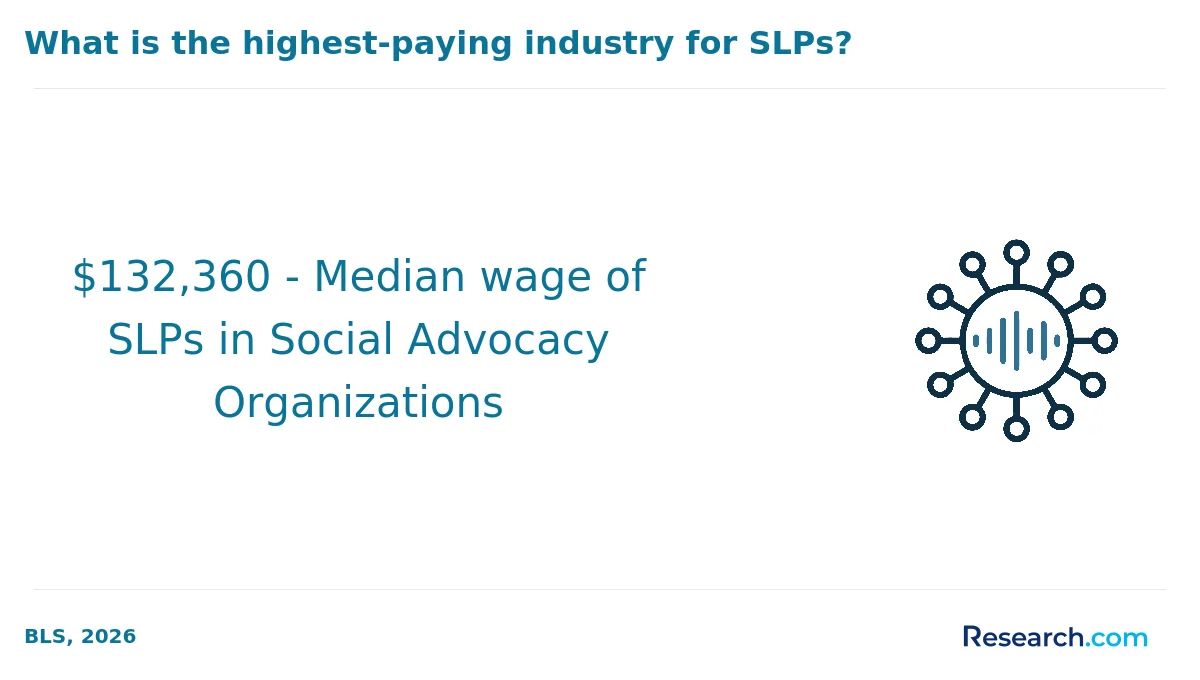
Employer-paid education can improve long-term earning potential when it helps an employee complete a required or career-advancing credential with less debt. According to the U.S. Bureau of Labor Statistics, speech pathologists' median annual wages typically increase with experience and advanced certifications, emphasizing the value of educational support. The financial benefit comes from both sides: lower education cost and stronger access to roles that require advanced preparation.
- Increased promotion opportunities: A speech pathology degree may help employees qualify for higher-responsibility roles, clinical advancement, supervisory tracks, or specialized service areas within an organization.
- Faster career progression: Tuition support can make it easier to enroll sooner, take a manageable course load, and complete the degree without pausing for financial reasons.
- Access to higher-paying roles: Advanced qualifications and relevant experience can support movement into specialized positions that may offer stronger compensation than entry-level or support roles.
- Stronger skills and credentials: Employer-sponsored study can help employees gain current knowledge in assessment, intervention, documentation, collaboration, and client or student support.
- Improved return on investment: Reducing tuition costs lowers the amount graduates must recover through future earnings, which can improve the financial case for pursuing the degree.
The outcome is not guaranteed. Salary growth depends on licensure, credentials, setting, location, experience, job availability, and the employee's ability to complete all professional requirements. Students who need a shorter or more flexible graduate route may compare 1 year master's programs online, but they should verify that any program under consideration meets their professional goals before relying on speed alone.
The best way to ask your employer to pay for a speech pathology degree is to present the request as a business case, not only as a personal education goal. A 2023 National Center for Education Statistics report found that over 60% of employers offer some form of tuition assistance, but approval often depends on showing how the degree benefits the organization.
- Start with the written policy: Review the employee handbook, HR portal, or benefits documents. Note eligibility rules, deadlines, annual caps, covered expenses, grade requirements, and service commitments.
- Choose a relevant program: Select a program that aligns with your role, department, or future internal position. Be ready to explain why this program is a practical fit.
- Prepare a concise proposal: Include the school, degree name, tuition estimate, timeline, accreditation details, expected schedule impact, and the specific skills you will bring back to the workplace.
- Connect the degree to employer needs: Explain how your training could improve client outcomes, student services, care coordination, documentation quality, compliance, staffing capacity, or retention.
- Offer a work plan: Show how you will manage coursework without disrupting essential duties. If you need schedule flexibility, state exactly what you are requesting.
- Meet with your manager and HR: Ask for a dedicated conversation. Keep the tone collaborative and focus on mutual benefit.
- Follow up in writing: Send a summary of the discussion, requested support, documents provided, and next steps. Written confirmation reduces confusion later.
If your employer cannot support a speech pathology degree immediately, ask whether a smaller benefit is available, such as partial reimbursement, schedule flexibility, exam fee support, or funding for prerequisite coursework. Some employees also explore broader professional development options, including the easiest online degree, when they need a more flexible academic starting point.
If your employer does not pay for a speech pathology degree, build a funding plan before enrolling. Recent studies show that nearly 60% of graduate students depend on scholarships, loans, or financial aid to manage their educational expenses. The goal is to reduce avoidable borrowing while keeping your program choice aligned with your professional requirements.
- Apply for federal and state aid: Complete the Free Application for Federal Student Aid (FAFSA) to determine eligibility for federal loans and other aid options. Review interest rates, borrowing limits, and repayment terms before accepting funds.
- Seek scholarships and grants: Look for awards from universities, professional associations, nonprofits, healthcare organizations, school systems, and community foundations. Prioritize funds that do not require repayment.
- Compare total program cost: Do not focus on tuition alone. Include fees, books, clinical placement costs, travel, technology, exam expenses, and lost wages.
- Consider part-time or online programs: Flexible formats may allow you to keep working, preserve income, and reduce relocation or commuting costs. Confirm that the program still meets your academic and professional needs.
- Use savings carefully: Personal savings can reduce debt, but avoid draining emergency funds. Keep a buffer for housing, healthcare, transportation, and unexpected program expenses.
- Evaluate loans cautiously: Borrow only what you need and compare repayment scenarios. Future salary should be considered, but it should not be treated as guaranteed.
- Explore income-share agreements: Some programs offer tuition coverage in exchange for a percentage of your income after graduation. Review the payment cap, income threshold, term length, and total possible cost before agreeing.
- Ask about institutional payment plans: Monthly payment plans may reduce the need for lump-sum payments, though they do not lower the total cost unless paired with scholarships or grants.
What Graduates Say About Employers Paying for Their Speech Pathology Degrees
- : "Completing my speech pathology degree seemed daunting because the average cost of attendance can easily exceed $30,000. My employer's tuition assistance program covered a significant portion of my expenses, which let me focus more on coursework and clinical preparation instead of taking on as much financial stress. The support also helped me move toward advanced clinical positions. — Skylar"
- : "I was worried about the high tuition fees typical of speech pathology programs, especially when costs averaged around $25,000 annually for many students. Employer sponsorship reduced that pressure and made the degree feel more realistic. Looking back, the support strengthened my professional credibility and helped me compete for opportunities in healthcare settings. — Braxley"
- : "Investing in my speech pathology degree was a major financial commitment, often averaging over $20,000 per semester when factoring in tuition and materials. Employer tuition assistance covered much of that cost and allowed me to pursue specialized training. Professionally, it helped deepen my expertise and expand the ways I could contribute in clinical environments. — Ione"
Other Things You Should Know About Speech Pathology Degrees
Employers sponsoring a speech pathology degree in 2027 may impose restrictions such as employment tenure, requiring you to stay with the company for a specified period. If you leave early, you might need to repay the funds. Additionally, sponsored programs may have grade requirements or specific work obligations after graduation.
Employees can inquire about sponsorship for a speech pathology degree by reviewing their company's employee handbook or benefits portal for educational assistance programs. Additionally, they should consult with their HR department or manager to verify the availability of such programs and understand specific conditions.
- U.S. Bureau of Labor Statistics - Speech-Language Pathologists https://www.bls.gov/ooh/healthcare/speech-language-pathologists.htm
- ASHA EdFind - Accredited Speech-Language Pathology Programs https://find.asha.org/ed/
- ETS Praxis - Speech-Language Pathology (5331) https://praxis.ets.org/test/speech-language-pathology-5331.html
- New England Institute of Technology - Master of Science in Speech Language Pathology https://www.neit.edu/academics/graduate-degrees/speech-language-pathology-ms
- James Madison University - Master of Science (M.S.) in Speech-Language Pathology (Distance Education / Online) https://www.jmu.edu/chbs/csd/online_ms/index.shtml
- Delaware Valley University - Master of Science in Speech-Language Pathology (M.S.) https://delval.edu/programs/graduate-programs/speech-language-pathology
- University of North Carolina at Greensboro - Speech-Language Pathology, M.A. (Online) https://csd.uncg.edu/graduate/masters-of-arts-online/
- Pennsylvania Western University - Master of Science in Speech-Language Pathology https://online.pennwest.edu/programs/speech-language-pathology-grad/index.php