2027 Competency-Based Online Communication Disorders Master's Degrees

Co-Founder and Chief Data Scientist

Reviewed by Rhea Paul, PhD
SLP Education & Research Expert
Choosing a master's in communication disorders is not only a question of where to enroll. It is also a question of whether the program format fits your schedule, your prior experience, your clinical goals, and any certification or licensure requirements you may need to meet. A competency-based education model can be attractive because it shifts the focus from time spent in class to evidence that you have mastered defined skills.
For working adults, career changers, and students with family responsibilities, that difference matters. Instead of moving through a fixed semester schedule, students in a CBE program typically complete learning modules, submit assessments, revise work when needed, and advance after demonstrating competency. According to the Online Learning Consortium, 38% of graduate students in allied health fields enroll in competency-based online programs seeking more adaptable learning paths.
This guide explains how competency-based online communication disorders master's programs work, what admissions teams usually review, how GPA and prior learning may affect your application, what to ask about accreditation, and how to evaluate costs, technology, assessments, and career outcomes before you commit.
Key Benefits of Competency-Based Online Communication Disorders Master's Degree
- Competency-based online communication disorders master's degrees offer flexible pacing, enabling working professionals to balance studies with employment and personal commitments efficiently.
- Students accelerate skill acquisition by progressing upon demonstrated mastery, often reducing program length compared to traditional credit-hour models.
- These programs provide access to global networking opportunities, connecting learners with diverse peers, faculty, and industry experts internationally.
What Is a Competency-Based Communication Disorders Master's Degree, and How Does It Work?
A competency-based communication disorders master's degree is a graduate program built around measurable learning outcomes rather than a traditional schedule of weekly class meetings and credit-hour accumulation. Students move forward when they can show mastery of required concepts and applied skills, usually through projects, clinical scenarios, written work, simulations, or faculty-evaluated assessments.
The model can work well for disciplined students who want flexibility, but it is not automatically easier. In many cases, CBE requires more self-management because students must plan their own pace, track assessment deadlines, and seek feedback before falling behind.
- Progress is tied to mastery: Students advance after demonstrating proficiency in defined competencies, not simply after attending class for a set number of weeks.
- Learning is often self-paced: Modules may allow students to move faster through familiar material and spend more time on complex areas such as assessment, intervention planning, ethics, or evidence-based practice.
- Assessments replace many traditional exams: Instead of relying only on timed tests, programs may use case analyses, treatment plans, reflective assignments, portfolios, and performance-based tasks.
- Mentorship remains important: Strong CBE programs provide faculty guidance, academic coaching, and clear feedback so students understand what mastery looks like before submitting or revising work.
- The format appeals to many adult learners: Approximately 67% of adult students favor competency-based programs that recognize prior experience and offer accelerated completion opportunities.
Before choosing this model, ask whether the program publishes its competency map, explains how assessments are graded, and provides enough instructor access for students who need clarification. If you are comparing tuition structures across online graduate programs more broadly, reviewing affordable online MBA programs can help you understand how pricing and pacing vary by field.
What Are the Admission Requirements for a Competency-Based Online Communication Disorders Master's Program?
Admission to a competency-based online communication disorders master's program usually combines standard graduate requirements with evidence that the applicant can succeed in a self-directed, outcomes-based format. Schools still review academic preparation, but they may also place strong weight on professional experience, prerequisite readiness, motivation, and the ability to document relevant skills.
- Bachelor's degree and official transcripts: Applicants generally need a completed bachelor's degree from an accredited institution. Programs may prefer or require prior coursework in communication sciences, health sciences, psychology, linguistics, biology, statistics, or related areas, depending on the curriculum.
- Prerequisite coursework: Students without a communication disorders background may need leveling courses before or during the program. This is especially important for applicants planning to pursue speech-language pathology pathways.
- Letters of recommendation: Programs commonly request two or three letters from faculty, supervisors, clinicians, or professional mentors who can speak to the applicant's readiness for graduate-level work and independent learning.
- Statement of purpose: A strong statement should explain why the applicant wants the degree, how prior experience connects to communication disorders, and why a competency-based online format is a good fit.
- Professional or volunteer experience: Experience in schools, clinics, rehabilitation settings, healthcare offices, special education environments, or community service may strengthen an application, even when it is not required.
- Standardized test policies: Many competency-based education programs waive GRE or GMAT requirements, placing more emphasis on demonstrated preparation and relevant achievements.
- Holistic review: Admissions committees may consider GPA, transcripts, recommendations, work history, interviews, writing samples, and prerequisite completion together rather than relying on a single metric.
Applicants should not assume that "competency-based" means open admission. The best approach is to request a prerequisite review early, ask whether clinical or licensure-track preparation is included, and prepare application materials that show both academic readiness and practical commitment to the field. Students comparing future graduate pathways can also review online doctoral programs to understand how admission expectations may change at more advanced levels.
What Is the Minimum GPA Requirement for a Communication Disorders Competency-Based Master's Program?
Many communication disorders master's programs look for a minimum undergraduate GPA near 3.0 on a 4.0 scale, although exact requirements vary by institution. In competency-based admissions, GPA still matters because it signals academic preparation, but it may not be the only factor considered.
- A 3.0 GPA is a common benchmark: Most accredited programs use a minimum undergraduate GPA near 3.0 on a 4.0 scale as evidence that the applicant can manage graduate-level reading, writing, research, and applied coursework.
- Lower GPAs may receive additional review: Applicants below 3.0 may still be considered if they can show recent academic improvement, relevant work experience, strong recommendations, or evidence of readiness through prerequisite coursework.
- Recent coursework can help: Completing communication sciences, anatomy, statistics, language development, or related prerequisites with strong grades may help offset an older or weaker undergraduate record.
- Some programs use alternative evidence: CBE programs may review portfolios, interviews, writing samples, competency demonstrations, or professional documentation to evaluate applied knowledge beyond grades.
- Policies differ by school: Some programs enforce GPA minimums strictly, while others allow conditional admission or require additional materials from borderline applicants.
If your GPA is close to or below the stated minimum, contact admissions before applying. Ask whether the program considers conditional admission, prerequisite retakes, post-baccalaureate coursework, or professional portfolios. A clear explanation of your academic history is helpful, but it should be paired with concrete evidence that you are prepared for graduate study.
One professional who entered a competency-based online communication disorders master's program said his GPA was initially a concern. He strengthened his application by documenting extensive clinical work and discussing his background with advisors. "It wasn't easy navigating the expectations without a high GPA," he recalled, "but the ability to showcase my practical skills through portfolios and conversations with advisors made a significant difference." His advice to other applicants was to be transparent, organized, and proactive before submitting materials.
The completion time for a competency-based online communication disorders master's degree depends on the program design, the student's pace, transfer or prior learning options, and any clinical or practicum requirements. Motivated students may finish in as few as 12 months, while others balancing work and family responsibilities may take up to three years.
- Self-paced progression can shorten the timeline: Students who already understand some content areas or can study consistently may complete assessments faster than in a fixed semester model.
- Clinical requirements can affect pacing: If the program includes supervised clinical experiences, externships, or field-based components, scheduling availability may limit how quickly students can progress.
- Subscription tuition may reward speed: When tuition is charged per term, students who complete more competencies during each term may reduce the total number of terms they pay for.
- Prior learning assessment can reduce duplication: Programs that accept transfer credits or prior learning assessment may allow qualified students to bypass material they have already mastered.
- Part-time study may be more sustainable: Students working full time should be realistic about weekly study hours, assessment turnaround times, and the mental load of graduate-level applied work.
A practical timeline starts with three questions: How many hours can you study each week, how quickly does faculty feedback arrive, and are there clinical placements or synchronous requirements that could slow your pace? Students who underestimate the workload may save no time at all, while students who plan carefully may benefit from the flexibility CBE is designed to provide.
Students exploring related education and career options can also review majors that make the most money to compare long-term earnings considerations across fields.
The cost of a competency-based online communication disorders master's degree depends on how tuition is charged, how quickly the student completes competencies, and whether additional fees apply. Because CBE programs may use pricing models that differ from traditional per-credit tuition, students should calculate total cost by expected completion time rather than looking only at one term or one course.
- Subscription-based tuition: Some programs charge a fixed fee per term. Students who complete more competencies during that term may lower their total cost by finishing sooner.
- Per-credit or per-competency pricing: Other programs charge by credit, course, or competency. This can feel more predictable, but slower pacing may increase total cost if students need additional terms or repeat attempts.
- Potentially lower total cost than traditional programs: Competency-based degrees can cost less when students complete requirements quickly or receive credit for prior learning, but savings are not guaranteed.
- Financial aid may be available: Students should ask whether the program is eligible for federal loans, institutional scholarships, employer tuition reimbursement, or awards for communication disorders graduate students.
- Fees and indirect costs matter: Budget for technology fees, textbooks, assessment materials, software, background checks, clinical placement expenses, travel for any required in-person components, and possible reduced work hours.
To compare programs fairly, request a full cost-of-attendance estimate and ask what happens financially if you need more time than planned. A low term price may not be the best value if the program has limited support, unclear assessment expectations, or placement delays. Likewise, a higher published price may be reasonable if it includes strong advising, transparent competency rubrics, and reliable student services.
A career changer who used a subscription pricing model said the format helped her budget because she could move quickly without paying a separate charge for every additional competency completed in the same term. She also noted that financial aid helped cover unexpected expenses such as specialized software and textbooks. Her main takeaway was simple: estimate the full investment before enrolling, not after the first bill arrives.
Accreditation is one of the most important factors in evaluating any communication disorders master's program, including competency-based and online options. It affects institutional legitimacy, federal financial aid eligibility, employer acceptance, and, in some pathways, whether the degree supports certification or professional licensing goals.
- Regional accreditation is essential: Institutions may be accredited by recognized regional accreditors such as the Higher Learning Commission (HLC), the Southern Association of Colleges and Schools Commission on Colleges (SACSCOC), and the WASC Senior College and University Commission (WSCUC). This confirms that the school meets broad standards for academic quality and institutional integrity.
- Discipline-specific accreditation may be critical: In communication disorders, specialized accreditation from the Council on Academic Accreditation in Audiology and Speech-Language Pathology (CAA) under ASHA evaluates areas such as learning outcomes, clinical preparation, faculty qualifications, and assessment practices.
- Licensure and certification requirements must be checked separately: A program may be legitimate but still not meet every requirement for a student's intended state, credential, or professional role. Students pursuing speech-language pathology should verify whether a program aligns with the pathway they need; comparing online speech language pathology programs masters can also help clarify affordability and accreditation questions.
- Accreditation can be verified independently: Prospective students can confirm accreditation status through the U.S. Department of Education's Database of Accredited Postsecondary Institutions and Programs (DAPIP).
- Unrecognized accreditors are a warning sign: Avoid relying on accreditation claims from unfamiliar or unrecognized organizations without verifying them through official sources.
Before enrolling, ask the program to identify both the institutional accreditor and any programmatic accreditor. Then confirm that information yourself. If your goal is clinical practice, certification, school-based employment, or state licensure, contact the relevant licensing board or credentialing organization before you make a tuition deposit.
A communication disorders CBE master's program organizes learning around competencies that students must demonstrate before progressing. While curriculum details differ by school, the strongest programs clearly connect each competency to professional expectations, applied practice, and the assessments used to verify mastery.
- Foundations of communication and swallowing: Programs may cover speech, language, hearing, cognition, fluency, voice, swallowing, and related developmental or acquired disorders, depending on the degree focus.
- Assessment and diagnosis: Students learn to interpret case information, select appropriate assessment tools, analyze results, and explain findings in clear professional language.
- Intervention planning: Competencies often require students to design evidence-informed treatment or support plans that reflect client needs, goals, context, and progress monitoring.
- Ethics and professional responsibility: Students must understand confidentiality, documentation, informed consent, professional boundaries, referral decisions, and ethical decision-making.
- Cultural and linguistic responsiveness: Communication disorders professionals serve diverse individuals and communities, so programs should address bias, access, language variation, disability, and culturally responsive practice.
- Research and evidence-based practice: Graduate students should be able to read research, evaluate evidence quality, and apply findings responsibly to clinical or educational decisions.
- Leadership and collaboration: Many programs include teamwork, interprofessional communication, supervision concepts, advocacy, and service coordination.
When reviewing a curriculum, do not stop at course titles. Ask for the competency framework, sample rubrics, assessment examples, and details about clinical or applied experiences. A good curriculum should make it clear what you will be able to do by graduation and how the school verifies that you can do it.
Online communication disorders CBE programs usually combine self-paced digital coursework with structured faculty feedback, assessment submissions, and occasional live interaction. The quality of the technology platform matters because it shapes how easily students access materials, communicate with instructors, complete simulations, and track progress toward mastery.
- Learning management systems: Programs commonly use platforms such as Canvas or Blackboard, or proprietary systems designed for competency tracking. The platform should show completed competencies, pending assessments, feedback, and remaining requirements clearly.
- Asynchronous modules: Recorded lectures, readings, quizzes, case materials, and multimedia activities allow students to study on a flexible schedule.
- Synchronous sessions: Some programs include live webinars, virtual labs, faculty meetings, discussion groups, or assessment preparation sessions. These can improve engagement but may reduce schedule flexibility.
- Simulation and case-based tools: Communication disorders coursework may use video cases, virtual clients, interactive scenarios, or structured documentation tasks to support applied learning.
- Accessibility features: Strong programs support closed captioning, screen readers, keyboard navigation, accessible documents, and mobile compatibility.
- Technical support: Online students need reliable help by chat, email, or phone, especially when assessments or live sessions depend on the platform working correctly.
Before enrolling, ask for a platform demo. Check whether you can submit assignments easily, view rubric feedback, access materials on your devices, and reach support outside standard business hours. If you are comparing online learning formats in other advanced fields, a PhD in leadership and management online can provide a useful contrast in how graduate programs structure distance education.
Assessment in communication disorders CBE programs is designed to answer one question: can the student apply the required knowledge and skills at the expected level? Instead of relying only on grades from weekly assignments or timed exams, CBE programs typically use performance evidence judged against defined rubrics.
- Performance tasks: Students may complete case analyses, assessment interpretations, intervention plans, documentation samples, or decision-making exercises that reflect professional scenarios.
- Simulations: Interactive or video-based simulations can test how students respond to client needs, ethical issues, family concerns, or interprofessional communication challenges.
- Portfolios: A portfolio may collect major projects, reflections, clinical reasoning samples, and revised work to show growth across the program.
- Capstone projects: Some programs require a final applied project that integrates research, practice, ethics, and professional communication.
- Standardized rubrics: Faculty or trained assessors evaluate submissions using criteria aligned with program competencies and professional expectations.
- Revision and resubmission: Students who do not meet mastery criteria may receive feedback and revise work until it reaches the required level, depending on program policy.
This approach can be valuable because it creates concrete evidence of skill, not just a transcript. However, students should ask how many revision attempts are allowed, how quickly feedback is returned, whether assessments are graded by course faculty or separate evaluators, and how the program prevents delays in progression. Students interested in other project-heavy online fields can compare this approach with a game development online degree, where portfolios and applied work also play a major role.
Transfer credit and prior learning assessment can make a competency-based program more efficient, but policies vary widely. Some schools allow students to apply previous graduate coursework, professional training, certifications, or documented work experience toward degree requirements. Others limit prior learning credit, especially for clinically sensitive competencies.
- Transfer coursework: Students may be able to transfer completed graduate credits if the coursework is recent, relevant, and earned at an accredited institution.
- Portfolio review: A portfolio can document professional experience, training, work samples, reflective narratives, and evidence that the student has already mastered specific competencies.
- Challenge exams or institutional assessments: Some programs allow students to test out of certain competencies by passing school-designed assessments.
- Standardized exams: Standardized tests like CLEP and DSST may also be accepted in some contexts, though graduate-level communication disorders programs may restrict where these apply.
- Credit limits: Institutions typically cap the amount or percentage of credits students can transfer or earn through PLA, often between 25% and 50% of the total degree requirements.
- Documentation requirements: Applicants should gather transcripts, syllabi, certificates, supervisor letters, job descriptions, licenses, training records, and work samples before requesting evaluation.
Ask for the prior learning policy in writing before enrolling. Important questions include which competencies can be satisfied through PLA, whether accepted credit reduces tuition, how long the evaluation takes, whether denied credits can be appealed, and whether transferred work affects eligibility for clinical preparation, certification, or licensure pathways.
A competency-based online communication disorders master's degree can support advancement in communication, healthcare, education, rehabilitation, and related service settings, depending on the program's focus and whether it meets required credentialing standards. The value of the degree depends heavily on accreditation, clinical preparation, state requirements, and how well graduates can document their competencies.
- Speech-language pathology pathways: Graduates may pursue roles related to speech-language pathology when the degree and clinical preparation meet applicable certification and licensure requirements.
- Audiology-related or communication support roles: Depending on the curriculum and credential requirements, graduates may work in roles connected to hearing, communication access, rehabilitation, or support services.
- Education and school settings: Some graduates work with children, families, teachers, and support teams in school or early intervention environments, subject to state and employer requirements.
- Healthcare and rehabilitation settings: Hospitals, clinics, long-term care facilities, rehabilitation centers, and community health organizations may value graduates with applied communication disorders training.
- Research, advocacy, and administration: Graduates may also contribute to program coordination, disability services, nonprofit work, public health initiatives, or policy-related roles.
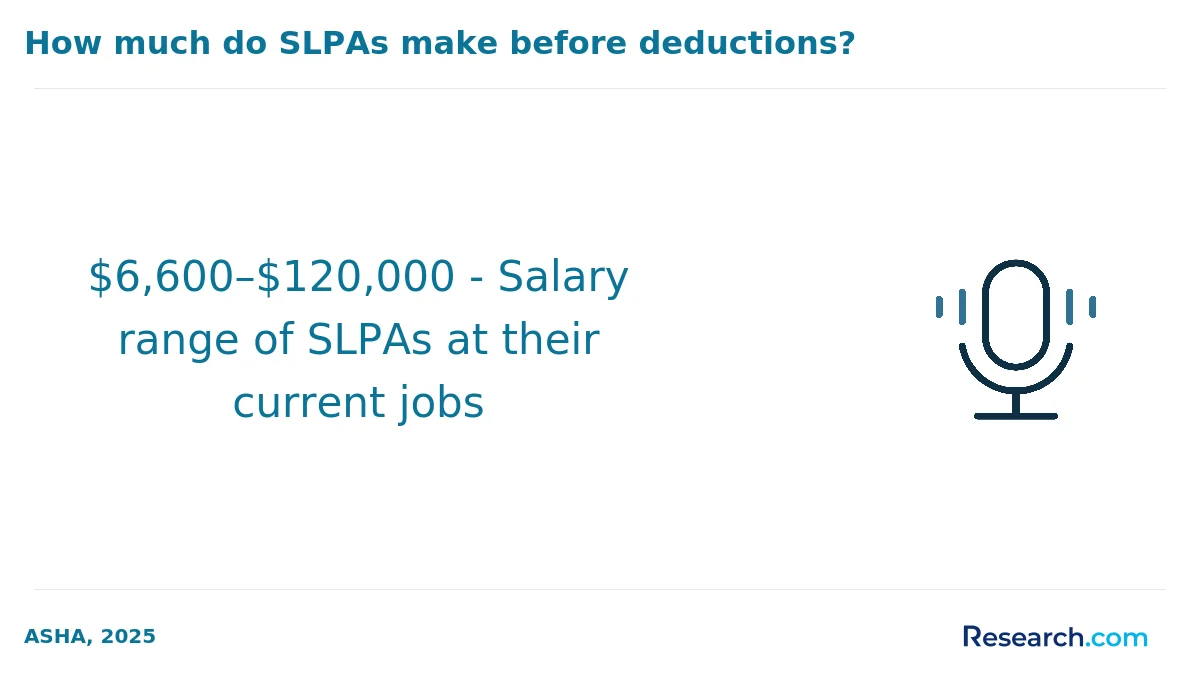
- Salary expectations: Graduates often enter roles such as speech-language pathologists, audiologists, communication therapists, and rehabilitation specialists. Entry-level salaries typically start near $60,000 annually, with seasoned professionals earning $90,000 or more across clinical, academic, and private practice settings.
Competency-based graduates can strengthen job applications by presenting a portfolio that includes case analyses, intervention plans, assessment examples, research summaries, and evidence of ethical and culturally responsive practice. Employers may still prioritize accreditation, supervised experience, licensure eligibility, and references, so students should not rely on the CBE format alone as a career advantage.
Professional networking also matters. Groups such as the American Speech-Language-Hearing Association (ASHA), alumni networks, clinical supervisors, and local professional organizations can help students learn about openings, credentialing expectations, continuing education, and career development.
What Graduates Say About Their Competency-Based Online Communication Disorders Master's Degrees
- Rose: "Choosing a competency-based online communication disorders master's was a game-changer for me because it gave me the flexibility to keep working and care for my family while moving through material at a pace that matched my schedule. The affordability of the program reduced the financial pressure I expected. Now, as a practicing clinician, I can see how the real-world competencies connect directly to the decisions I make every day."
- Hayden: "The competency-based format helped me focus on actually mastering each skill instead of just completing credits. I had to revise, apply feedback, and prove that I understood the material, which made the experience more meaningful. The cost-effectiveness also mattered because I wanted to strengthen my career without taking on massive student debt. Looking back, the degree gave me more confidence and expanded my opportunities in communication disorders."
- Caleb: "What stood out most was that the program recognized skills I already had while still holding me accountable for the competencies I needed to build. That tailored approach helped me finish faster than I expected. The reasonable cost was reassuring compared with higher-priced options I had considered. Professionally, the degree helped open doors to leadership roles and advanced practice opportunities I had not fully anticipated when I started."
Other Things You Should Know About Communication Disorders Degrees
In 2027, online competency-based education (CBE) programs in communication disorders offer diverse student support services, including virtual academic advising, online tutoring, career counseling, and access to online libraries. These services aim to ensure students receive comprehensive support tailored to their individual needs and learning styles.
A competency-based communication disorders master's program focuses on mastering specific skills and knowledge essential for the field, allowing students to progress at their own pace. It emphasizes practical, hands-on experience, contrasting a traditional program's structured schedule and time-based progression.
Advantages of competency-based online communication disorders degrees include flexible pacing, personalized learning paths, and often cost savings due to accelerated completion. Challenges include the need for strong self-management skills and fewer opportunities for synchronous classroom interaction. Some students may also find that external stakeholders have varying levels of familiarity with the CBE format, which can impact professional acceptance.
- U.S. Bureau of Labor Statistics - Speech-Language Pathologists https://www.bls.gov/ooh/healthcare/speech-language-pathologists.htm
- ASHA EdFind - Accredited Speech-Language Pathology Programs https://find.asha.org/ed/
- O*NET OnLine - Speech-Language Pathologists https://www.onetonline.org/link/summary/29-1127.00
- Auburn University, Montgomery - Master of Science in Speech-Language Pathology https://www.aum.edu/degree/ms-speech-language-pathology/
- Pennsylvania Western University - Master of Science in Speech-Language Pathology https://online.pennwest.edu/programs/speech-language-pathology-grad/index.php
- University of Scranton - Master of Science (M.S.) in Speech-Language Pathology https://www.scranton.edu/academics/pcps/health-and-human-performance/programs/speech-language-pathology/index.shtml
- Nova Southeastern University - SLP Program - Master of Science in Speech-Language Pathology https://osteopathic.nova.edu/degrees/masters/speech-language-pathology/index.html
- University of Nebraska at Kearney - Speech-Language Pathology, Master of Science in Education (Online Track) https://www.unk.edu/online/degrees-programs/speech-language-pathology-online.php