2027 Best Social Work Degree Programs Ranking in Cleveland

Co-Founder and Chief Data Scientist
Choosing the right social work degree program is an important step toward a rewarding career in helping others. This article presents the 2027 Best Social Work Degree Programs Ranking in Cleveland, thoughtfully created by the Research.com team of data scientists.
Our goal is to guide you in finding programs that match your goals and aspirations. By exploring these rankings, you'll gain confidence in making a well-informed decision about your education and future.
Social work offers meaningful opportunities to impact lives positively, and the right degree can open many doors.
Key benefits of getting social work degree in Cleveland
- Social work degree graduates in Cleveland can expect competitive salaries, such as a Social Worker earning around $68,800 annually and Youth Workers making about $83,400, reflecting strong financial rewards in the field.
- Graduates from Cleveland State University often pursue diverse careers like Child Welfare Specialist, Community Organizer, or Residential Counselor, providing meaningful opportunities to impact the community positively.
- Online social work degrees from local institutions offer flexibility, allowing students to balance work and study while gaining the same respected credentials as traditional programs, ideal for busy adults.
- Key benefits of getting social work degree in Cleveland
- What can I expect from social work degree in Cleveland?
- Where can I work with social work degree in Cleveland?
- How much can I make with social work degree in Cleveland?
- 2027 Best Social Work Degree Programs Ranking in Cleveland
- Key Findings
- How long does it take to complete social work degree in Cleveland?
- Student Support and Campus Life Resources
- What's the difference between online and on-campus social work degree?
- Licensure and Certification Requirements in Ohio
- What is the average cost of social work degree in Cleveland?
- Licensure and Certification in Ohio
- What financial aid is available to social work degree students in Cleveland?
- Budgeting and Financial Planning for Social Work Students in Cleveland, OH
- What are the prerequisites for enrolling in social work degree program in Cleveland?
- Return on Investment (ROI): Balancing Cost and Career Outcomes
- What courses are typically in social work degree programs in Cleveland?
- What types of specializations are available in social work degree programs in Cleveland?
- How do you choose the best social work degree in Cleveland?
- What career paths are available for social work degree students in Cleveland?
- What is the job market for social work degree in Cleveland?
- Top Trending Social Work Rankings
- See What Experts Have To Say About Studying Social Work
What can I expect from social work degree in Cleveland?
Students pursuing social work degrees in Cleveland often find the average cost varies depending on the institution and degree level. For example, graduates from well-known local universities report total tuition for a Bachelor of Social Work (BSW) program typically ranges from $25,000 to $40,000 for the full four years. Master of Social Work (MSW) programs can cost between $15,000 and $30,000 for two years, reflecting a more specialized curriculum.
Many students recall balancing the expense with financial aid and scholarships tailored to Cleveland's community-focused social work programs. One graduate described how local scholarships aimed at supporting future social workers in underserved neighborhoods eased the financial burden. This personalized support enhances their motivation and connects academic investment directly to meaningful career paths.
As social work evolves to meet complex urban challenges, emerging trends may influence costs, such as integrating advanced technology or expanding field internships with high-impact agencies. Cleveland's strong commitment to social advocacy could increase funding opportunities, making social work degrees more accessible and keeping education costs aligned with students' hopeful aspirations.
Where can I work with social work degree in Cleveland?
Graduates with a social work degree from Cleveland State University or Case Western Reserve University often find fulfilling opportunities in healthcare settings like the Cleveland Clinic, where they help patients manage complex treatment plans. One recent graduate shared how supporting families through mental health challenges at a local hospital sparked a deep sense of purpose and growth. Such experiences highlight the gratifying impact social workers have in hospital and rehabilitation environments.
Many peers also pursue roles in community agencies like the Cuyahoga County Department of Children and Family Services, where they engage directly in child welfare and crisis intervention. Working in schools within the Cleveland Metropolitan School District offers another rewarding path, as school social workers collaborate to create nurturing environments for students facing emotional or behavioral struggles.
Emerging trends suggest expanding opportunities in specialized nonprofit organizations tackling homelessness and substance abuse, providing graduates with diverse ways to advocate for vulnerable populations. Additionally, those earning LCSW credentials are increasingly exploring private practice, offering personalized therapy services that deepen connections with clients and boost community well-being.
How much can I make with social work degree in Cleveland?
Graduates with a social work degree in Cleveland can anticipate varied salary outcomes depending on their chosen career path. For instance, roles like Child Welfare Specialist or Residential Counselor typically earn around $59,190 annually, reflecting steady entry-level opportunities in the local community. Those who pursue positions as Community Organizers or Youth Workers, often supported by programs at Cleveland State University or other local colleges, may see mean annual wages closer to $83,400, aligning with more dynamic roles that involve advocacy and youth engagement.
Many graduates find motivation in knowing that clinical social work, especially with advanced licensure like the LISW, can elevate earnings beyond the average, sometimes approaching or exceeding $70,000 in Cleveland. Experienced social workers managing teams or focusing on specialized areas like mental health services may reach salaries over $80,000, illustrating a clear path for growth. Students often share enthusiasm about internships in local hospitals and government agencies, which deepen practical skills while encouraging higher salaries.
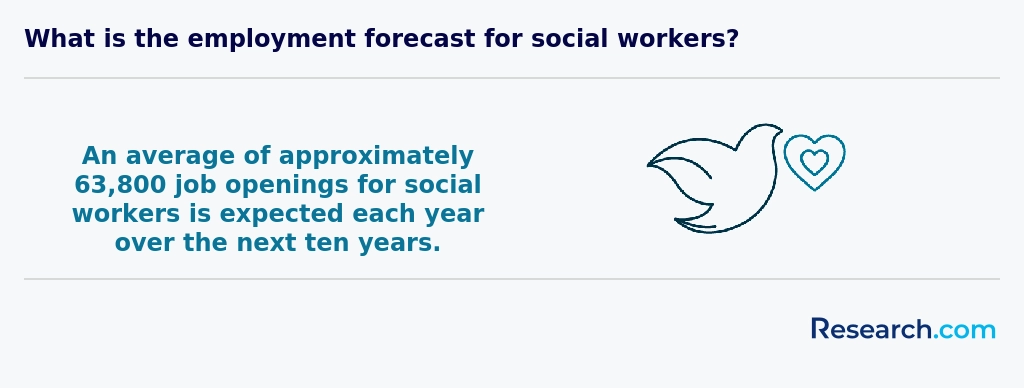
As Ohio's demand for social workers grows by 10% through 2030, Cleveland graduates are hopeful their evolving expertise, enhanced by certifications or specializations obtained at regional universities, will translate into rewarding careers and increasing compensation.
2027 Best Social Work Degree Programs Ranking in Cleveland
How do we rank schools?
Investing in your education is a significant decision that can shape your future, and the Research.com team understands the importance of making informed choices. To support prospective students in Cleveland, we have carefully developed the "2027 Best Social Work Degree Programs Ranking in Cleveland." Our dedication to quality, credibility, and accuracy is demonstrated through the rigorous research and thorough analysis behind this ranking.
We utilized the following reputable data sources to ensure a comprehensive evaluation of social work programs:
By exploring this ranking, readers will gain valuable insights into the leading social work degree programs in Cleveland, enabling them to make well-informed decisions about their educational journey. For more information on how this ranking was created, please visit our Research.com methodology page.


Key Findings
- Tuition for social work degrees in Cleveland ranges from $10,000 to $25,000 per year for in-state students at public universities, with private schools charging more.
- Entry-level social workers in Cleveland earn between $40,000 and $48,000 annually, while experienced workers can make $60,000 to $75,000 depending on experience and specialization.
- The job market for social workers in Cleveland is projected to grow about 7% over the next decade, matching the national average.
- Field practicum is a required part of many social work programs in Cleveland to help students gain practical experience.
- Licensing in Ohio requires passing the ASWB exam, with common licenses including Licensed Social Worker (LSW) and Licensed Independent Social Worker (LISW).
How long does it take to complete social work degree in Cleveland?
Completing a social work degree in Cleveland generally aligns with national timelines but carries a local flavor that many graduates appreciate. For instance, students enrolled in BSW programs at popular Cleveland institutions often share how the traditional four-year full-time schedule felt manageable, balancing rigorous coursework with fulfilling field placements at nearby community centers.
Many graduates highlight that part-time options stretched their journey to five or six years, offering flexibility for those working or managing family commitments. MSW students, particularly at universities known for their accelerated tracks, describe an intense but rewarding one- to two-year experience that deepened their practical skills through supervised fieldwork in social service agencies around Cleveland.
Looking ahead, emerging trends suggest these durations could shorten further as programs integrate more online learning combined with virtual internships, helping students speed up without sacrificing quality. Doctoral candidates appreciate the varied three-to-five-year windows, reflecting personalized research timelines. This evolving landscape promises rapidly adaptable pathways to fit diverse lifestyles and career goals within Cleveland's vibrant social work community.
Student Support and Campus Life Resources
Social work students in Cleveland, OH, benefit from a wide array of support services that enrich both their academic journey and personal growth. Institutions often offer dedicated counseling centers, peer mentoring programs, and career guidance services designed to help students navigate academic challenges and transition into successful professional lives. Whether you are on campus or pursuing an online program, many schools ensure that you have access to tutoring, networking events, and mental health resources that create a nurturing community and foster lifelong connections. Additionally, students enrolled in online programs can discover flexible options, such as the cheapest online social work degree, which combine convenience with comprehensive academic support. This integrated approach not only enhances learning outcomes but also empowers graduates to thrive in both their personal and professional endeavors.
What's the difference between online and on-campus social work degree?
Online social work degrees in Cleveland offer remarkable flexibility, allowing students to balance studies with jobs or family life, a benefit frequently praised by graduates from local institutions like Cleveland State University. These students often describe how online formats let them tailor their schedules around busy days while still meeting rigorous accreditation standards set by bodies like the Council on Social Work Education.
Conversely, students attending on-campus programs at colleges such as John Carroll University often highlight the invaluable face-to-face interaction and immediate networking opportunities. The daily routine of attending classes and engaging in hands-on learning creates a strong sense of community and supports deeper connections with faculty and peers.
Both pathways demand fieldwork experiences within Cleveland's social service agencies, yet online learners may face extra challenges coordinating placements while managing a flexible schedule. Still, many find this blend of virtual learning and real-world practice empowering and motivating, fueling their passion to serve diverse communities across the city.
Licensure and Certification Requirements in Ohio
Obtaining the appropriate licensure is a critical step for Social Work graduates in Ohio, ensuring compliance with state regulations and enhancing professional credibility. Ohio offers a tiered licensure pathway: • Licensed Social Worker (LSW): Requires a Bachelor of Social Work (BSW) from a CSWE-accredited program, passing the ASWB Bachelor’s exam, and a criminal background check. • Licensed Independent Social Worker (LISW): Requires a Master of Social Work (MSW) from a CSWE-accredited program, 3,000 supervised post-master’s clinical hours, and passing the ASWB Clinical exam. • Licensed Independent Social Worker-Clinical (LISW-C): Builds on the LISW with an additional 4,000 supervised hours focusing on diagnosis and psychotherapy. Key steps to streamline the process: 1. Verify your program’s CSWE accreditation and ensure coursework covers ethics, human behavior, and clinical practice. 2. Track supervised practicum hours during internships; maintain detailed logs to satisfy the Ohio Counselor, Social Worker, and Marriage and Family Therapist Board. 3. Schedule and prepare for the ASWB exam as early as possible, leveraging exam prep workshops offered by local universities. 4. Complete the Ohio licensure application online, upload official transcripts, exam scores, and supervisee affidavits. 5. Plan for biennial license renewal by completing at least 30 hours of continuing education credits, including ethics and telehealth training. For prospective students seeking cost-effective online options to support licensure preparation, explore the Most Affordable Online Social Work Degree Programs Ranking in California to compare tuition rates and program flexibility. By understanding Ohio’s licensure requirements early, graduates can chart a clear path toward clinical practice and long-term career success.
What is the average cost of social work degree in Cleveland?
The average cost of a social work degree in Cleveland currently centers around a median total of about $56,594, reflecting both in-state and out-of-state tuition combined. For many students attending well-regarded institutions in Cleveland, such as those known for their social work programs, this cost represents a significant investment but one that graduates often describe as worthwhile due to the rewarding career paths it opens.
Graduates from these programs frequently share positive reflections on balancing tuition fees with practical experiences and job readiness. For example, students often mention how financial aid and scholarships helped ease the burden, making the average cost manageable over time. The social work degree tuition fees Cleveland in 2027 might continue to reflect this balance, potentially influenced by expanded funding opportunities and institutional support, which could help mitigate rising costs.
In a real-world scenario, students at popular Cleveland colleges might navigate their budgets by planning for additional expenses such as textbooks and field education fees, which are crucial to hands-on learning. These students often find that the comprehensive training prepares them well for diverse social challenges ahead. Considering career choices, some graduates explore paths related to forensic psychology roles and responsibilities, blending interests and opening unique interdisciplinary opportunities.
Licensure and Certification in Ohio
To practice legally in Ohio, social work graduates must be licensed by the Ohio Counselor, Social Worker & Marriage & Family Therapist Board. Two key credentials exist:
- Licensed Social Worker (LSW): Requires a CSWE-accredited BSW degree, passage of the ASWB Bachelor’s exam, and completion of board-approved supervised practice hours.
- Licensed Independent Social Worker (LISW): Requires a CSWE-accredited MSW degree, 3,000+ hours of post-graduate clinical supervision, and passage of the ASWB Clinical exam.
Licenses renew every two years with a minimum of 30 continuing education hours. Many graduates fast-track this process by enrolling in accelerated pathways; explore 1 year msw programs online no bsw for options.
What financial aid is available to social work degree students in Cleveland?
Many social work students in Cleveland find crucial support through federal aid like Pell Grants and Federal Work-Study, which ease financial strain during their studies at institutions such as Cleveland State University or Case Western Reserve University. Graduates often recall how the Ohio College Opportunity Grant helped bridge gaps for in-state undergraduates, making a meaningful difference in managing tuition fees.
State and local scholarships from organizations like the National Association of Social Workers Foundation also play a vital role. These awards, tailored to social work students' commitment and merit, frequently empower individuals to pursue their degrees without overwhelming debt, fostering hope and dedication.
Employer tuition assistance programs are emerging as an exciting trend, especially for those already working in Cleveland's social services sector. Graduates share stories of how tuition reimbursement from local agencies allowed them to advance their education while maintaining their careers, opening doors to leadership roles.
Meanwhile, student loan forgiveness through Public Service Loan Forgiveness offers a future-oriented incentive, motivating many to envision sustained careers in nonprofit social work across Cleveland neighborhoods.
Budgeting and Financial Planning for Social Work Students in Cleveland, OH
To navigate the financial aspects of pursuing a social work degree in Cleveland, OH, it's essential for students to have a clear understanding of budgeting and financial planning. Creating a personalized budget that accounts for tuition, living expenses, and other costs is crucial. Many students find it helpful to explore financial aid options, such as scholarships and grants, to offset the costs of their education. For those looking to minimize their expenses, considering the cheapest social work school in ohio can be a strategic move. By prioritizing financial planning and seeking out affordable options, social work students in Cleveland can focus on their studies and career goals without undue financial stress. Effective financial management also involves understanding loan forgiveness programs and other forms of assistance available to social work graduates, which can significantly impact their long-term financial stability and career choices.
What are the prerequisites for enrolling in social work degree program in Cleveland?
In Cleveland, gaining admission to social work programs already demands a thoughtful blend of academic achievement and meaningful experience, and this is only expected to evolve. Graduates from popular institutions like Cleveland State University often reflect on how foundational courses in English, math, and social sciences prepared them not just for exams but for real-world challenges in community settings. These prerequisites ensure students can engage deeply with coursework and professional practice.
Looking ahead, MSW programs in Cleveland may increasingly value hands-on experience, such as volunteering with local agencies or interning at child welfare organizations, as essential prerequisites rather than just extras. Many graduates attribute their success to early exposure in human services, which shaped their empathy and professional dedication. This trend aligns with the Council on Social Work Education's standards, emphasizing practical commitment through internships or job roles.
Applicants likely will continue needing strong personal statements and recommendations that vividly communicate career passion and readiness for social work's demands. Meanwhile, evolving policies might require greater focus on holistic backgrounds-combining academic records with impactful community involvement-to capture the full potential of future social workers in Cleveland.
Return on Investment (ROI): Balancing Cost and Career Outcomes
Prospective students in Cleveland, OH, should assess the return on investment (ROI) of social work degrees by comparing tuition costs, average debt, and anticipated salaries. On average, bachelor’s graduates accumulate around $30,000–$40,000 in student loans, while MSW students may incur $45,000–$60,000 in debt. With mean annual wages of $64,360 for social workers and $79,310 for community organizers, most graduates can expect a debt-to-income ratio that allows full loan repayment within 4–6 years of entering the workforce. Key factors influencing ROI include: • Average Annual Salary vs. Debt: A social worker earning $64,360 who carries $47,965 in loans can achieve a 10% debt-to-income ratio by applying a standard 10-year repayment plan. • Payback Period: Assuming a moderate living cost, the breakeven point for an MSW graduate typically falls between 3–5 years post-graduation, accelerated by loan forgiveness programs for service in underserved areas. • Cost-Saving Strategies: To optimize ROI, consider in-state tuition options, part-time work-study, and scholarships. For insights into lower-cost pathways and online alternatives, explore how much does it cost to get a masters in social work, detailing affordable online MSW programs that can reduce overall expenses without sacrificing quality.
What courses are typically in social work degree programs in Cleveland?
Typical social work degree programs in Cleveland include core courses like Introduction to Social Work, Human Behavior in the Social Environment, Social Welfare Policy, Research Methods, and Social Work Practice. Graduates from popular institutions such as Cleveland State University often recall how these courses helped them build a strong foundation by connecting theory with their local community's realities.
In Cleveland, students frequently encounter coursework tailored to regional challenges, including urban poverty, mental health, and opioid addiction, which directly reflect the city's social landscape. Many describe feeling empowered as they study these topics, knowing their learning applies to real neighborhoods in Cuyahoga County.
Experiential learning through internships is another vital part of the curriculum. Graduates share how working with local hospitals and nonprofits offered hands-on skills that classroom lessons alone couldn't provide, enhancing their confidence and readiness for social work careers.
Future trends may see Cleveland programs integrating technology-driven courses or stronger emphasis on trauma-informed care, given the city's evolving needs and student enthusiasm for practical, impactful education.

What types of specializations are available in social work degree programs in Cleveland?
Social work specializations in Cleveland are evolving to address both traditional and emerging community needs, offering students focused paths within their degrees. Graduates from well-known Cleveland institutions often highlight Clinical Social Work and Healthcare Social Work for their direct impact on mental health and medical environments, reflecting a citywide rise in integrated care models. These tracks prepare students for meaningful roles in hospitals and clinics, where they witness first-hand the difference personalized support makes to patients and families.
Other Cleveland social work degree focus areas include Child and Family Welfare and Gerontology, which respond to local demographic shifts and social challenges. Graduates frequently share rewarding experiences working with at-risk youth or older adults, feeling a strong connection to community resilience efforts and caregiving innovations in urban settings.
School Social Work is gaining attention too, especially as socio-economic factors increasingly affect student well-being in Cleveland schools. Students appreciate field placements through partnerships with local agencies, a distinctive feature compared to programs in other states like Minnesota universities for psychology. This practical exposure helps them develop skills that align closely with Cleveland's unique social landscape and professional demands.
How do you choose the best social work degree in Cleveland?
Choosing the best social work degree in Cleveland means looking beyond just course content to imagine how programs will evolve with the city's dynamic social landscape. Graduates from Cleveland's top universities often praise flexible schedules that allow balancing family, work, and study-key when envisioning your future path. Many find that programs offering robust field placements near the city's diverse community agencies provide invaluable hands-on experience, making the theory come alive in real-world settings.
Considering affordable social work programs Cleveland is known for, public institutions remain popular, with graduates appreciating the cost-effectiveness without sacrificing quality. As the discipline grows, more online and part-time options emerge, allowing you to tailor your education to your life's demands while still accessing top-tier instruction. Reflecting on success stories of recent graduates, accreditation ensures they enter the workforce ready and competitive.
For those seeking a forward-thinking approach, exploring connections to urban social services can open doors for future careers. You might also want to compare programs with a future eye on salary prospects and job placement rates. For additional ideas on affordable education paths, consider exploring affordable florida psychology programs, which offer innovative online learning models that could inspire local offerings soon.
What career paths are available for social work degree students in Cleveland?
Graduates from Cleveland's well-regarded social work programs often find dynamic career paths that evolve alongside the city's social landscape. Many embark on roles as clinical social workers or healthcare social workers at institutions like the Cleveland Clinic, where they assist patients dealing with complex health challenges. These positions offer not only competitive salaries but also a deep sense of fulfillment in making tangible differences in people's lives. Others gravitate toward school social work within Cleveland Metropolitan School District, addressing behavioral and family issues to support thousands of students.
Emerging trends show growing demand for substance abuse social workers, spurred by Ohio's ongoing opioid crisis, creating meaningful opportunities for graduates passionate about addiction counseling. Community advocacy roles are also expanding, with nonprofit organizations seeking social workers who develop programs around homelessness and social justice, reflecting the city's commitment to inclusivity.
Many graduates appreciate the practical preparation offered by Cleveland colleges, finding their hands-on experiences directly relevant for these diverse roles. For those interested in advancing further, exploring lpc renewal new jersey pathways can be part of a broader career strategy. These varied social work careers in Cleveland provide hopeful futures for students determined to impact their communities positively.

What is the job market for social work degree in Cleveland?
The social work employment opportunities Cleveland offers are steadily growing, driven by the city's unique social challenges and a strong demand for community support. Graduates from well-known Cleveland universities often share how their internships at local hospitals and nonprofit agencies quickly led to meaningful job offers. Many find themselves working with vulnerable families or mental health programs, where their skills make a noticeable difference. The job outlook for social workers Cleveland is especially promising in public child welfare and substance abuse counseling, fields that continue to expand regionally.
At popular Cleveland colleges, students appreciate the balanced tuition rates paired with opportunities for hands-on learning. This combination prepares them well for the demanding roles they will encounter. Some even explore additional certifications to specialize, knowing it can enhance their earning potential. While salaries start around $40,000, licensed social workers report growing earnings, reflecting their experience and licenses.
Those interested in expanding their career horizons might look beyond Ohio, but many find Cleveland rewarding both professionally and personally. For students curious about related fields or comparing locations, the best psychology schools in Hawaii provide an intriguing alternative to complement social work studies.
Frequently Asked Questions About social work
Social work degree students in Cleveland can maximize their learning experience by engaging in local community organizations and field placements, which are often integral to accredited programs. Practical experience in Cleveland's diverse social service agencies offers valuable insight into urban challenges like poverty and substance abuse. According to the Council on Social Work Education (CSWE), hands-on training significantly improves graduate readiness.
Students should also leverage resources at institutions such as Cleveland State University, which provides strong practicum partnerships. Networking with local professionals and attending regional workshops boosts career opportunities. Cleveland's social work job market expects growth by 12% through 2030, underscoring the value of practical experience and local connections.
Additionally, staying current with federal and Ohio state policies related to social welfare enhances academic and professional competence. Access to Cleveland-area research centers can deepen understanding of effective intervention strategies.
The social work field in Cleveland is evolving, with several emerging niches gaining attention among professionals and students alike. One significant area is geriatric social work, reflecting Cleveland's aging population; By 2030, nearly 21% of Cuyahoga County residents will be 65 or older, increasing demand for specialized elder care services (U.S. Census Bureau, 2020).
Another growing niche is healthcare social work, especially in hospitals and community health settings, where professionals address mental health and chronic illness management. Additionally, trauma-informed social work is expanding, focusing on helping individuals affected by violence and substance abuse, critical issues within Cleveland's urban communities.
Child welfare and school social work remain vital but are also adapting to include support for diverse families and digital access challenges.
Preparing for the job market after completing a social work degree in Cleveland involves several key steps. First, gaining practical experience through internships or field placements during your studies is crucial. Local agencies like the Cleveland Department of Public Health often partner with universities to provide such opportunities.
Networking also plays an important role. Attending events hosted by the Ohio Chapter of the National Association of Social Workers (NASW) can connect graduates with professionals in the area. According to the U.S. Bureau of Labor Statistics, social work jobs in Ohio are projected to grow by 10% from 2022 to 2032.
Finally, obtaining relevant licenses within Ohio, such as the Licensed Social Worker (LSW) credential, increases employability in Cleveland's competitive social service sector.
Employers in Cleveland seeking social work degree graduates prioritize a combination of technical and interpersonal skills. According to the Ohio Department of Jobs and Family Services, key skills include case management, effective communication, and cultural competence. These abilities allow social workers to serve diverse populations across urban and suburban communities effectively.
Critical thinking and problem-solving are also essential, enabling graduates to assess client needs and develop tailored intervention plans. Knowledge of local social services and state regulations adds significant value, as Cleveland's social work landscape includes challenges like poverty and addiction.
Lastly, employers appreciate graduates who demonstrate empathy, resilience, and ethical judgment, which are crucial for building trust in client relationships.
Finding internships in Cleveland relevant to a social work degree involves several practical steps. Start by contacting local universities with accredited social work programs, as they often have dedicated internship coordinators who maintain partnerships with community organizations. Institutions like Cleveland State University offer resources to connect students with field placement opportunities.
Look for agencies licensed by the Ohio Department of Mental Health and Addiction Services or nonprofit organizations registered in Cuyahoga County, as these are common internship hosts for social work students. The Cleveland/Cuyahoga County Workforce Development Board also provides lists of social service agencies actively offering internships.
Networking through professional associations, such as the Ohio Chapter of the National Association of Social Workers, can also be helpful. Early applications during academic terms improve chances since placements are competitive due to high demand in Cleveland's social services sector.
A social work degree in Cleveland significantly enhances career mobility and advancement opportunities. According to the Bureau of Labor Statistics, the demand for social workers in Ohio is expected to grow by 9% from 2022 to 2032, slightly faster than the national average. Holding a Bachelor of Social Work (BSW) or a Master of Social Work (MSW) improves eligibility for specialized roles in healthcare, child welfare, and mental health services. Local employers, including hospitals and nonprofit organizations, often require or prefer candidates with accredited social work degrees, making higher education essential for promotion. Additionally, licensure in Ohio depends on degree completion, directly impacting career progression.
Studying for a social work degree in Cleveland equips students with essential skills to collaborate across various professional fields. Many programs emphasize interdisciplinary learning by integrating coursework in psychology, healthcare, education, and public policy. This approach prepares graduates to work effectively with medical professionals, educators, and community leaders.
The Cleveland metropolitan area has numerous social service agencies and hospitals that partner with universities, providing students with hands-on experience in diverse settings. According to the Council on Social Work Education, Cleveland schools rank well nationally for field placement opportunities.
Such experiences build abilities to navigate complex social systems, a key to success in interdisciplinary roles.
Choosing between a thesis and a non-thesis social work degree program in Cleveland depends largely on your career goals and learning preferences. Thesis programs typically focus on research and require students to complete an extensive research project. This path is ideal for those considering a future in research, academia, or advanced social work roles.
Non-thesis programs emphasize practical skills and fieldwork, often appealing to students who want to enter the workforce quickly. According to the Cleveland State University social work department, about 60% of local social work graduates prefer non-thesis tracks due to their career readiness orientation.
Consider also program length and flexibility. Non-thesis options may offer faster completion, while thesis tracks demand additional time for research and writing.
Students based in Cleveland who want to study social work abroad have several pathways through U.S. universities. Institutions like Case Western Reserve University offer partnerships and exchange programs with universities overseas, allowing students to gain international experience. These programs often last a semester or a summer and expose students to global social work practices.
Additionally, many accredited Bachelor of Social Work (BSW) and Master of Social Work (MSW) programs in Cleveland encourage study abroad options within their curricula, supported by scholarships and financial aid. The Council on Social Work Education (CSWE) provides guidance on international program quality, ensuring credits transfer properly.
While exact statistics on Cleveland students studying social work abroad are limited, growing interest reflects national trends of increased global engagement in social work education, reported by the U.S. Department of Education. Prospective students should consult their schools' international offices for tailored opportunities.
Social work students in Cleveland have several part-time job options that enhance their educational experience. Many find opportunities as case aides or behavioral health technicians, roles that provide hands-on experience with vulnerable populations. According to the Ohio Department of Job and Family Services, Cleveland's social services sector has grown by 8% since 2020, increasing demand for support staff.
Additionally, positions at local non-profits and community centers such as the Cleveland Food Bank or Family Promise offer practical exposure to client advocacy and resource coordination. These roles often provide flexible hours compatible with academic schedules.
Working as a research assistant at Cleveland-based universities can also benefit social work students by deepening their understanding of social policies and intervention outcomes.
Social work students in Cleveland benefit from numerous networking opportunities through local universities and community organizations. Institutions like Cleveland State University and Case Western Reserve University offer active social work student associations that host networking events, workshops, and guest lectures. These events connect students with professionals and alumni working in various social services sectors.
Additionally, Cleveland is home to several nonprofit agencies and government bodies, such as the Cuyahoga County Department of Health and Human Services, where students can intern and build professional relationships. The Ohio Chapter of the National Association of Social Workers (NASW) also provides conferences and regional meetings, fostering connections within the state's social work community.
Alumni networks play a significant role for social work degree students in Cleveland by providing access to professional connections and career opportunities. These networks often include graduates working in local agencies, nonprofits, and government sectors, enhancing job placement prospects. According to the Council on Social Work Education, strong alumni ties can increase employment rates by up to 20% for recent graduates nationwide, a trend mirrored in Cleveland's community-focused workforce.
Moreover, alumni groups frequently host mentorship programs that help students navigate field placements and licensing exams specific to Ohio's social work regulations. This guidance is vital given that Cleveland social workers face unique urban challenges requiring specialized knowledge. Networking events and workshops organized through alumni channels further support ongoing professional development.
Social work degree programs in Cleveland offer various ways to customize your education to match your career goals. Many local universities provide specialized tracks or concentrations such as clinical social work, community practice, or policy advocacy. This flexibility allows you to focus on areas that align with your interests and intended work settings.
Additionally, internships and field placements are essential components, enabling students to gain hands-on experience tailored to specific populations like children, families, or elderly adults. According to the Council on Social Work Education, Cleveland programs emphasize practical training to prepare graduates for the state's diverse social services landscape.
Elective courses in mental health, substance abuse, or nonprofit management can further shape your skill set, enhancing job readiness in Ohio's growing social work sector.
Social work students in Cleveland commonly face several challenges as they pursue their degrees. One key difficulty is balancing rigorous coursework with field placements, which are often unpaid and require significant time commitments. Many students juggle part-time or full-time jobs alongside their studies, making time management crucial.
Additionally, financial stress is significant. According to the College Board, the average annual cost for public universities in Ohio hovers around $11,000, while many social work degrees require additional fees for background checks and certifications.
Students also frequently report emotional strain from engaging with challenging social issues during internships and class discussions. Support services can be limited, intensifying stress levels.
With a social work degree, graduates in Cleveland can pursue several professional certifications to enhance their career prospects. One of the most common credentials is the Licensed Social Worker (LSW), which allows practice under supervision. Many then advance to Licensed Independent Social Worker (LISW), offering more autonomy and clinical opportunities.
Other certifications include Clinical Social Work Certification (CSW), helping professionals specialize in mental health services. Cleveland professionals may also consider certifications in school social work or gerontology to address local community needs. According to the Ohio Counselor, Social Worker, and Marriage and Family Therapist Board, these credentials require passing state exams and completing supervised hours.
Writing a winning application for a social work program in Cleveland requires attention to both academic credentials and personal motivation. Most programs expect applicants to have a bachelor's degree with a strong GPA, typically above 3.0, and relevant volunteer or work experience in social services.
Applicants should clearly articulate their commitment to social justice and community support in their personal statement. Citing local issues, such as Cleveland's focus on urban poverty and mental health services, can demonstrate awareness of the community's needs.
Letters of recommendation from supervisors familiar with your social work potential are vital. Additionally, highlighting any experience in Cleveland-area organizations, like the Greater Cleveland Food Bank, can strengthen your application. Testing requirements vary, so check each program's specifics early.
Social work careers are viewed through varied global lenses, yet the core mission remains consistent: supporting vulnerable populations and promoting social justice. In the United States, including Cleveland, social work education aligns with standards set by the Council on Social Work Education (CSWE), which also influences international social work curricula.
Globally, social workers often address similar issues such as poverty, mental health, and child welfare, but approaches differ due to cultural and policy contexts. For prospective students in Cleveland, understanding these perspectives enriches their learning and prepares them for diverse environments.
According to the Bureau of Labor Statistics, Ohio is projected to grow its social work jobs by 7% through 2031, reflecting steady demand locally and nationally.
Gaining practical experience while studying for a social work degree in Cleveland is essential for career readiness. Many universities in the area, such as Cleveland State University and Case Western Reserve University, offer supervised field placements as part of their curriculum. These internships typically require students to complete between 400 and 900 hours, depending on the program, working directly with local social service agencies.
Students can also participate in community-based projects or volunteer with organizations like the Greater Cleveland Food Bank or local mental health clinics. According to the Ohio Social Work Education Consortium, hands-on experience significantly improves job placement rates upon graduation.
Choosing the right concentration within a social work degree program in Cleveland involves evaluating your career goals and local community needs. Cleveland, known for diverse urban challenges, offers opportunities in concentrations like clinical social work, community organizing, and healthcare social work. According to the Ohio Department of Higher Education, programs often reflect regional priorities such as substance abuse, mental health, and child welfare.
Consider internships and practicum placements available in Cleveland, as hands-on experience in local agencies enhances learning and employability. Check if the program is accredited by the Council on Social Work Education (CSWE), ensuring quality education recognized nationally.
Research Cleveland's social services landscape to align your concentration with areas showing growth, such as aging services or school social work. This strategy increases job prospects within the city's expanding social work sector.
Related Social Work Rankings for Nearby Cities
- 2027 Best Social Work Degree Programs Ranking in Detroit
- 2027 Best Social Work Degree Programs Ranking in Columbus
- 2027 Best Social Work Degree Programs Ranking in Marion
- 2027 Best Social Work Degree Programs Ranking in Cincinnati
- 2027 Best Social Work Degree Programs Ranking in Grand Rapids
- 2027 Best Social Work Degree Programs Ranking in Rochester
- 2027 Best Social Work Degree Programs Ranking in Indianapolis
- 2027 Best Social Work Degree Programs Ranking in Lexington
- 2027 Best Social Work Degree Programs Ranking in Washington
- 2027 Best Social Work Degree Programs Ranking in Chicago
Top Trending Social Work Rankings
See What Experts Have To Say About Studying Social Work
Read our interview with Social Work experts

References
- How to Overcome the Top Challenges Social Workers Face https://www.pacificoaks.edu/voices/social-work/social-work-challenges/
- 1+ Social Worker Cover Letter Examples (with In-Depth Guidance) https://www.tealhq.com/cover-letter-examples/social-worker
- Web Exclusive https://www.socialworktoday.com/archive/exc_081823.shtml
- Social Work https://international.pwsztar.edu.pl/studying/faculty-of-administration-and-economics/social-work/
- Social Work Careers https://socialworklicensemap.com/social-work-careers/
- Preparing For A Career In Social Work: Tips For New Graduates https://www.tripodpartners.com/career-advice/social-work/preparing-for-a-career-in-social-work-tips-for-new-graduates/
- Practice & Networking Groups | AASW https://www.aasw.asn.au/about-aasw/practice-networking-groups/
- Social Work Internships https://www.stjude.org/education-training/professional-development/internships/social-work.html
- Social Work Networking Nights - National Association of Social Workers https://www.naswma.org/page/218
- Social Work https://al.edu.pl/en/studies/english-courses-for-erasmus-students/social-work