2027 Best Marketing Degree Programs Ranking in Colorado

Co-Founder and Chief Data Scientist
Choosing the right marketing degree program is a big step toward a successful career, especially in a vibrant state like Colorado. This article introduces the 2027 Best Marketing Degree Programs Ranking in Colorado, created by the Research.com team of data scientists to guide you in making an informed decision.
By exploring this ranking, you'll discover which programs offer the best opportunities for growth and learning. Earning a marketing degree can open doors to exciting fields and help you stand out in today's competitive job market. Dive in and find the program that fits your goals and passion.
Key benefits of getting marketing degree in Colorado
- Marketing degree graduates in Colorado can earn competitive salaries, such as $83,190 annually for Marketing Assistants and $159,420 for Public Relations Specialists, showing strong financial potential.
- Career options range widely, with opportunities as Digital Marketing Specialists, Media Planners, or Sales Associates, reflecting diverse paths for Colorado graduates to find their passion.
- Completing a marketing degree online offers flexibility and access to local resources, helping graduates balance work and study while still gaining valuable hands-on experience.
- Key benefits of getting marketing degree in Colorado
- What can I expect from marketing degree in Colorado?
- Where can I work with marketing degree in Colorado?
- How much can I make with marketing degree in Colorado?
- 2027 Best Marketing Degree Programs Ranking in Colorado
- Key Findings
- How long does it take to complete marketing degree in Colorado?
- What's the difference between online and on-campus marketing degree?
- Return on Investment of Marketing Degrees in Colorado
- What is the average cost of marketing degree in Colorado?
- Emerging Marketing Trends and Future Opportunities in Colorado
- What financial aid is available to marketing degree students in Colorado?
- What are the prerequisites for enrolling in marketing degree program in Colorado?
- Accreditation and Professional Certifications
- What courses are typically in marketing degree programs in Colorado?
- What types of specializations are available in marketing degree programs in Colorado?
- How do you choose the best marketing degree in Colorado?
- What career paths are available for marketing degree students in Colorado?
- What is the job market for marketing degree in Colorado?
- Related Marketing Rankings for Nearby States
- Top Trending Marketing Rankings
- See What Experts Have To Say About Studying Marketing
What can I expect from marketing degree in Colorado?
The average cost of earning a marketing degree in Colorado varies by institution but typically ranges from $25,000 to $50,000 for a bachelor's degree at public universities, while private colleges may charge upwards of $60,000. Graduates from institutions like the University of Colorado Boulder or Colorado State University often describe their investment as worthwhile, citing strong internship opportunities and connections to local businesses that offer real-world marketing experience.
Many students find financial aid options and scholarships specifically designed for marketing majors, helping to reduce out-of-pocket costs. For example, a graduate from Metropolitan State University of Denver shared how combining work-study with partial scholarships eased the financial burden while gaining hands-on experience through internships with Denver tech startups.
Choosing a school in Colorado also means tapping into a growing job market where competitive salaries can help quickly recoup education expenses. Graduates often emphasize how practical skills in digital marketing and data analytics learned during their studies translated directly into well-paid roles, making the cost of their degree a smart investment in their future.
Where can I work with marketing degree in Colorado?
Graduates from Colorado universities in marketing often land roles in bustling metro hubs like Denver and Boulder, where digital marketing, brand management, and market research are in high demand. Many find rewarding jobs at startups and corporate headquarters, benefiting from the state's dynamic economy. For example, a recent graduate securing a marketing manager role in Denver can expect a median salary near $115,000, highlighting the value of local expertise.
Marketing students focusing on Colorado Springs or Aspen frequently pursue careers in tourism marketing, organizing events and crafting campaigns that boost visitor spending-an industry that generated over $23 billion in 2022. Graduates eager to impact healthcare fields discover opportunities in hospitals and biotech companies around Colorado, where marketing talents help with patient outreach and brand communication in a $20 billion bioscience sector.
Many graduates also contribute to nonprofits, educational institutions, and government agencies, developing community engagement and donor campaigns. With marketing job growth projected to rise by 8% through 2032, Colorado offers diverse, fulfilling career paths that align with local industries and economic strengths.
How much can I make with marketing degree in Colorado?
Graduates from marketing programs at schools like the University of Colorado Boulder or Colorado State University can expect a range of earning opportunities in Colorado's vibrant market. Entry-level roles such as Marketing Assistants offer a mean annual wage of about $83,190, providing a solid starting point for new professionals. Those who specialize and gain experience often move into positions like Digital Marketing Specialists or Media Planners, which share similar average salaries around $83,190 annually, reflecting steady demand across industries.
Public Relations Specialists, another common career path for marketing graduates, command higher salaries, with mean annual earnings reaching $159,420 in Colorado. This shows how specialized skills in communication and branding can significantly boost income.
Graduates from Colorado universities appreciate how local industries-technology, healthcare, and outdoor recreation-fuel competitive marketing salaries. Real-life stories from alumni reveal that combining internships with targeted certifications in digital marketing or analytics often leads to faster salary growth and exciting freelance opportunities, sometimes charging $50 to $150 hourly.
Overall, marketing degrees in Colorado unlock diverse career paths with clear salary progression tied to skill development and industry focus.
2027 Best Marketing Degree Programs Ranking in Colorado
How do we rank schools?
Investing in your education is a significant decision that can shape your future, and the Research.com team understands the importance of making informed choices. To assist prospective students, we have meticulously crafted the "2027 Best Marketing Degree Programs Ranking in Colorado." Our commitment to quality, credibility, and accuracy is reflected in the extensive research and analysis conducted to compile this ranking.
We utilized the following reputable data sources to ensure a comprehensive evaluation of marketing programs:
By exploring this ranking, readers will gain valuable insights into the best marketing degree programs available in Colorado, helping them make informed decisions about their educational paths. For more details on our methodology, please visit our Research.com methodology page.


Key Findings
- Tuition for marketing programs in Colorado's public universities ranges from $10,000 to $15,000 per year for in-state students, while private schools often exceed $30,000 annually.
- Entry-level marketing salaries average between $50,000 and $55,000 per year, with mid-career professionals earning around $75,000 to $85,000 annually.
- Colorado's job market for marketing and related roles is expected to grow by over 10% in the next decade, which is above the national average growth rate.
- Accredited marketing programs in Colorado offer specializations like digital marketing and brand management, along with internship opportunities for practical experience.
- The cost of living varies widely, with Denver being moderately expensive, while smaller towns and suburbs provide more affordable options for students.
How long does it take to complete marketing degree in Colorado?
Completing a marketing degree in Colorado typically takes four years of full-time study for a bachelor's program, especially at well-known schools like the University of Colorado Boulder or Colorado State University. Graduates often recall balancing around 120 credit hours, mixing core business classes with specialized marketing courses and general education requirements. This path reflects the standard pace for most undergraduate marketing students in the state.
For those eager to finish sooner, accelerated programs are a practical option. Some institutions allow finishing a bachelor's in three years, often by attending summer sessions or taking heavier course loads. Alumni who chose this route highlight the intense but rewarding experience, emphasizing the importance of strong time management skills.
Graduate studies, such as a master's degree or an MBA with marketing focus, usually take one to two years full-time. Some accelerated MBA tracks available in Colorado can be completed in 12 to 18 months, providing flexibility while maintaining quality. Whether traditional or fast-tracked, students find these options align well with their career goals and life commitments.
What's the difference between online and on-campus marketing degree?
Choosing between online and on-campus marketing degrees in Colorado often comes down to personal lifestyle and learning preferences. On-campus programs at schools like the University of Colorado Boulder offer vibrant face-to-face interaction, allowing students to network with peers, engage in hands-on projects, and benefit from direct mentorship during in-person workshops. Graduates frequently mention how being on campus helped them build real connections valuable for launching their marketing careers.
Meanwhile, online degrees, such as those from Regis University, provide flexibility crucial for students balancing work or family. Many Colorado residents in rural areas appreciate the chance to access accredited courses without relocating. Online formats often include accelerated or self-paced modules, ideal for motivated learners seeking to finish faster without sacrificing quality.
Cost differences also play a role: on-campus attendance may add commuting and housing expenses, while online students can save on these. Both formats typically qualify for federal aid and offer similar credit value, so your choice should align with your priorities for interaction, flexibility, and budget.
Return on Investment of Marketing Degrees in Colorado
Evaluating the return on investment (ROI) for a marketing degree in Colorado involves balancing tuition costs, student debt, and post-graduation earnings to ensure long-term financial well-being. On average, students graduating from public universities in Colorado carry $28,000 in student loan debt, while private-college graduates incur around $35,000. By comparing these figures with median starting salaries-approximately $50,000 for entry-level marketing assistants and $78,880 for roles in public relations-you can estimate a payback period of just 3–5 years. Beyond salary, ROI is amplified by the industry’s growth trajectory. With a projected 6% increase in marketing management roles through 2032, graduates benefit from both rising wage floors and abundant job openings. Furthermore, internships and practicum partnerships at Colorado institutions often lead directly to full-time positions, reducing the time spent job hunting and shrinking the gap between degree completion and income generation. Cost-saving strategies, such as beginning at a community college ($3,501 annual tuition) before transferring to a four-year program, can lower overall debt by up to 40%. Online program options, which range from $26,000 to $63,405 in total tuition, offer flexible payment plans and the ability to work part-time-factors that can further accelerate loan repayment. Finally, consider how specialized skill sets, like data analytics or digital branding, enhance ROI by qualifying graduates for premium roles. Those who pair their marketing expertise with a focus on media relations may find a seamless path into a career in communications, where median salaries often exceed $85,000 and networking opportunities abound.
What is the average cost of marketing degree in Colorado?
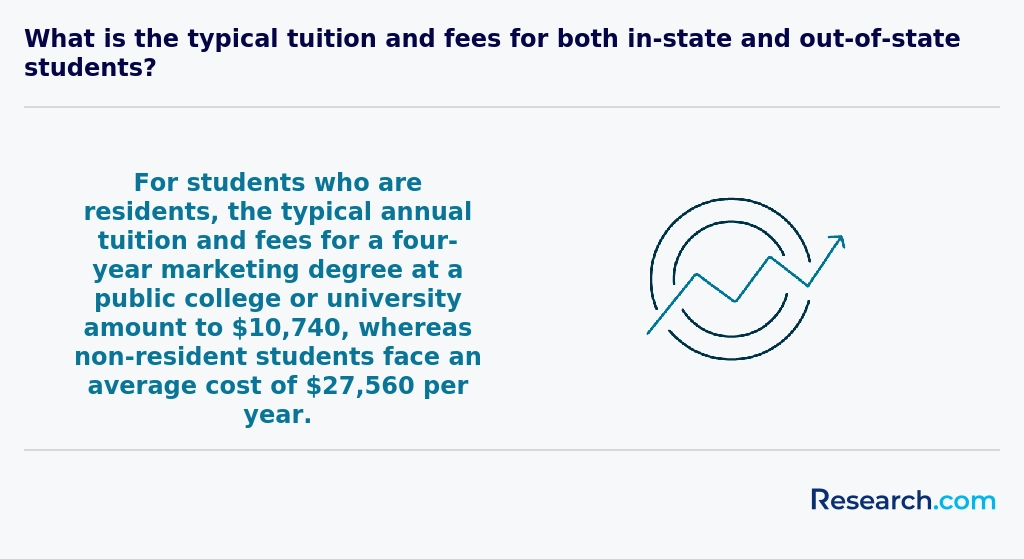
The average cost of a marketing degree in Colorado varies significantly depending on whether you attend a public or private institution and your residency status. For in-state students attending public universities, the median total cost is around $11,124, which includes tuition, fees, and other academic expenses. Out-of-state students typically face higher costs, with a median total expense near $48,929. This range reflects common experiences among marketing graduates from top schools in Colorado, who often highlight the value of attending public institutions due to their balanced cost and quality.
Many students pursuing marketing degrees in Colorado's popular universities find they can manage expenses by seeking financial aid or merit scholarships offered specifically for business and marketing programs. Choosing community colleges or online programs can also make a notable difference in reducing the total cost of marketing degree Colorado learners might incur. For example, some graduates mention how starting their studies at a community college before transferring saved them significant money compared to going directly into a four-year program.
Besides tuition, it's important to budget for books, supplies, and living expenses, which vary based on your location-urban areas like Denver and Boulder usually have higher rents. Graduates often advise planning ahead for these costs alongside tuition. To explore options, check out the most affordable marketing schools in colorado as a practical step for making informed decisions about your education investment.
Emerging Marketing Trends and Future Opportunities in Colorado
As the marketing landscape rapidly evolves, today’s programs are increasingly adapting to meet emerging industry demands. Colorado’s marketing degree programs are now integrating courses on artificial intelligence, data analytics, and omni-channel engagement to equip students with the skills needed for tomorrow’s challenges. These trends are not only redefining traditional marketing methods but are also opening avenues for innovation in campaign strategy and customer experience. Students are encouraged to explore real-time projects that delve into emerging digital platforms and sustainable branding practices, ensuring they remain competitive as the industry shifts. Additionally, strategic partnerships with local tech firms and creative agencies offer invaluable networking opportunities, providing graduates a headstart in the job market. Prospective students interested in exploring budget-friendly options can also check out the most affordable marketing schools in colorado, which highlight programs that combine cost-efficiency with cutting-edge curriculum developments. Embracing these changes, marketing programs in Colorado are committed to fostering forward-thinking professionals who are ready to drive success in a dynamic, digitally-dominated world.
What financial aid is available to marketing degree students in Colorado?
Colorado marketing students often rely on a mix of federal, state, and institutional aid to manage tuition costs effectively. Many graduates from the University of Colorado and Colorado State University recall how applying early for FAFSA unlocked Pell Grants, which can provide up to $7,395 annually based on financial need. These grants, combined with flexible federal student loans, create manageable payment plans that relieve stress during their studies.
State programs like the Colorado Opportunity Scholarship Initiative (COSI) offer targeted scholarships for business and marketing majors, giving hopeful students a real chance to fund their education. One recent graduate shared how COSI's support made attending college in-state financially feasible without drowning in debt.
Merit-based scholarships also play a big role at Colorado institutions where academic and extracurricular achievements often lead to substantial tuition reductions. Private scholarships from groups such as the American Marketing Association further boost financial aid options, rewarding students who demonstrate passion for marketing.
Finally, work-study jobs and assistantships provide practical experience and steady income, especially for marketing grad students aiming to get a head start professionally while easing financial pressure.
What are the prerequisites for enrolling in marketing degree program in Colorado?
To enroll in a marketing degree program in Colorado, you need a high school diploma or equivalent like a GED. Most programs expect you to have completed courses in English, math, and social studies to build a strong foundation. Graduates from universities such as the University of Colorado report that math skills, especially in statistics, helped them tackle data-driven marketing projects with confidence.
Standardized test scores like the SAT or ACT may still be required, but many Colorado schools, including Colorado State University, have shifted to test-optional policies. Instead, they emphasize your high school GPA and course rigor, so maintaining solid grades is key.
If you're transferring or aiming for graduate marketing studies, having prior coursework in principles of marketing, economics, statistics, and basic finance greatly improves your application. Many students find their communication skills, cultivated through business or economics classes, crucial for success. Demonstrating interest or experience in these areas resonates well with admissions teams.
Accreditation and Professional Certifications
Choosing an accredited marketing degree program in Colorado guarantees that your education meets rigorous academic standards and is recognized by employers nationwide. Most public and private universities in Colorado hold regional accreditation from the Higher Learning Commission (HLC), ensuring that credits are transferable and degrees are respected. Additionally, several top-ranked institutions boast programmatic accreditation from bodies such as the Association to Advance Collegiate Schools of Business (AACSB) or the Accreditation Council for Business Schools and Programs (ACBSP), affirming specialized excellence in marketing curricula and faculty qualifications. Beyond institutional accreditation, many Colorado marketing programs integrate professional certification preparation into their coursework. Earning credentials like the American Marketing Association’s Professional Certified Marketer (PCM), Google Ads Certification, HubSpot Content Marketing Certification, or Salesforce Marketing Cloud Certification can give graduates a competitive edge. Coursework often includes dedicated modules on digital analytics and campaign management that align with these industry-recognized exams, enabling students to sit for certification immediately upon graduation. When evaluating programs, verify both regional and programmatic accreditation on the school’s website or via the U.S. Department of Education’s Database of Accredited Postsecondary Institutions and Programs (DAPIP). Confirm whether tuition covers exam fees or if additional grants are available through campus career centers. Finally, for students seeking budget-friendly options beyond Colorado, explore our Low Cost Marketing Degree Programs Ranking in San Diego, CA to compare tuition rates and accreditation status at comparable institutions.
What courses are typically in marketing degree programs in Colorado?
Marketing degree programs in Colorado typically include core courses like Principles of Marketing, where graduates recall exciting projects analyzing real local businesses in Denver's diverse markets. Marketing Research and Analytics equips students at universities such as the University of Colorado Boulder with data tools to interpret trends, sharpening skills essential for Colorado's growing tech scene.
Digital Marketing classes focus on hands-on experience with social media campaigns and SEO strategies, crucial for engaging Colorado's digital audiences. Consumer Behavior courses often involve exploring local cultural factors, helping students understand why Boulder's consumers choose certain brands, boosting empathy and strategic thinking.
Advertising and Promotion classes simulate campaign planning, echoing experiences of graduates who launched ads for Colorado startups. Sales Management and Marketing Strategy teach leadership and competitive positioning, skills directly applied during internships at Denver-based companies. Business Communication rounds out the curriculum by strengthening clear messaging, a vital ability praised by recent graduates navigating Colorado's collaborative work environments.
What types of specializations are available in marketing degree programs in Colorado?
Marketing degree specializations in Colorado offer focused paths that align with the dynamic business landscape of the state. For instance, many graduates from universities in Denver and Boulder choose digital marketing, where they gain hands-on skills in SEO, social media, and data analytics-tools crucial for Colorado's thriving tech hubs. This specialization equips students to land roles in innovative start-ups or established firms prioritizing digital growth.
Brand management is another practical specialization, popular among students aiming to work with local Colorado companies or larger national corporations. Graduates often share that learning to craft compelling brand identities and understanding consumer behavior helps them confidently manage marketing campaigns that resonate with diverse audiences.
Colorado marketing programs with specializations also commonly include market research and analytics. Students enjoy applying data-driven strategies to real business challenges, a skill increasingly sought after by Colorado businesses adapting to competitive markets. Others explore international marketing, benefiting from Colorado's global trade ties, or sales management and advertising, which fuel revenue growth in the state's retail and small business sectors. Many who pursue marketing find pathways to a rewarding career in communications through these targeted tracks.
How do you choose the best marketing degree in Colorado?
To choose the best marketing degree in Colorado, start by evaluating the type of program that fits your goals. Graduates from the University of Colorado Boulder often highlight how their bachelor's degree combined foundational marketing theories with hands-on projects involving Denver-based companies, making learning practical and exciting. If you aim to advance your career or shift paths, consider master's programs such as an MBA with a marketing focus available at Colorado State University, praised for developing leadership skills in students.
Look closely at experiential learning opportunities. Many successful students enrolled in affordable marketing colleges in Colorado found value in internships linked to burgeoning industries like renewable energy and tech hubs in Boulder. These real-world projects help build networks that boost job prospects immediately after graduation.
Cost matters too; Colorado public universities mirror the national average tuition, but private schools can be pricier. To explore budget-friendly options, check out the Low Cost Marketing Degree Programs Ranking in San Diego, CA for inspiration on finding value without sacrificing quality. Consider accreditation as well-programs with AACSB or ACBSP accreditation ensure respected credentials recognized by employers.
Finally, review graduate outcomes. Many marketing veterans from Colorado report starting salaries near $50,000 and strong career support, making their degrees worthwhile investments. The best marketing degree programs Colorado offer combine solid academics, affordability, and real-world experience to set you up for success.
What career paths are available for marketing degree students in Colorado?
Graduates with a marketing degree in Colorado find diverse career opportunities that match the state's dynamic economic landscape. Many pursue digital marketing and social media management, using skills honed at popular institutions like the University of Colorado Boulder to craft compelling online brand stories that engage local and national audiences. Others thrive in market research analysis roles, helping companies decipher consumer data to stay competitive in Colorado's evolving markets.
Jobs with marketing degree in Colorado also include sales management and advertising, where graduates use their strategic insights to lead teams or create campaigns that resonate within industries such as aerospace and tourism. Public relations specialist positions are another key avenue, often embraced by graduates from Colorado State University, who enjoy building strong community and corporate reputations.
For those seeking innovative paths, careers in data analytics and marketing technology are growing rapidly. Leveraging technical skills alongside creativity, graduates often combine their marketing education with insights from programs linked to the best accelerated associate degree programs in Colorado for quicker entry into the workforce. This blend of expertise opens doors to roles that fuse data-driven decision-making with innovative marketing strategies.
What is the job market for marketing degree in Colorado?
The marketing degree job outlook Colorado is promising, especially for graduates from well-known institutions like the University of Colorado Boulder and Colorado State University. Marketing graduates often find roles in digital marketing, social media strategy, and content creation, fields that are growing quickly in Denver and other metropolitan areas. Many report that internships and cooperative education programs offered by their schools were key to securing competitive positions shortly after graduation.
Colorado's diverse economy fuels demand for marketing specialists beyond traditional roles, with opportunities in brand management and data analytics growing in sectors such as technology and energy. Graduates frequently highlight how the state's vibrant startup scene has given them hands-on experience, making their transition from campus to career smoother and more rewarding.
For students exploring their options, understanding what marketing degree programs cost and the potential return on investment is important. Those seeking lower-cost pathways might explore what is the easiest associate degree to get online as a starting point, before advancing to a bachelor's degree.
Overall, Colorado marketing career opportunities 2027 look strong, driven by the state's commitment to innovation and the increasing need for savvy marketing professionals in multiple industries.
Frequently Asked Questions About marketing
Marketing degree students in Colorado can maximize their learning by engaging with the state's diverse business community. Colorado hosts a growing marketing sector, particularly in Denver and Boulder, where numerous startups and established firms offer internships. Practical experience through internships or cooperative education programs enhances understanding beyond the classroom. Additionally, students should leverage local networking events and professional organizations, such as the American Marketing Association's Colorado chapter, to build industry connections.
Colorado's universities often incorporate digital marketing tools and data analytics in their curriculum, reflecting national trends. Keeping skills current with these technologies is vital, as the U.S. Bureau of Labor Statistics projects a 10% employment growth for market research analysts through 2032.
Students benefit from active participation in case competitions and marketing clubs, which sharpen critical thinking and teamwork skills crucial for career success.
The marketing field is evolving rapidly, with several emerging niches gaining prominence, especially in Colorado. Digital marketing remains a core area, but specialties like data analytics and artificial intelligence-driven marketing are becoming crucial. According to the Colorado Department of Labor and Employment, demand for professionals skilled in marketing analytics is expected to grow by 8% through 2028. Another rising niche is sustainability marketing, as Colorado businesses increasingly focus on eco-friendly practices.
Influencer marketing and content creation also offer growing opportunities, driven by social media platforms popular among younger demographics. These niches require strong storytelling combined with tech skills, making them attractive for students earning a marketing degree in Colorado.
After completing a marketing degree in Colorado, preparing for the job market involves building practical experience and networking within the local industry. Participating in internships during your studies is essential, as Colorado's growing economy-especially in Denver and Boulder-offers numerous opportunities in digital marketing, advertising, and brand management.
Students should also develop technical skills in data analytics, SEO, and social media platforms, which are highly valued by employers. According to the Colorado Department of Labor and Employment, marketing-related jobs in the state are expected to grow by 8% through 2030, emphasizing the need for up-to-date skills.
Joining professional organizations, such as the American Marketing Association's Colorado chapter, can enhance connections and access to job openings.
Employers in Colorado highly value marketing graduates who possess strong analytical skills. The ability to interpret data and turn it into actionable business insights is critical, especially given Colorado's growing digital marketing sector. According to the Colorado Department of Labor & Employment, data-driven decision-making is a top requirement for marketing positions statewide.
Communication skills are equally essential. Graduates must demonstrate proficiency in clear writing, presentation, and interpersonal communication to collaborate effectively within diverse teams. Creativity also ranks highly, as businesses in Colorado's competitive markets seek innovative marketing campaigns that engage local and regional audiences.
Technical knowledge in digital marketing tools and platforms, including SEO, social media, and content management systems, is increasingly demanded. Employers emphasize adaptability and a continuous learning mindset due to fast-changing marketing technologies and consumer behaviors.
Finding internships in Colorado related to marketing degrees involves strategic steps. Start by exploring university career centers, which often connect students with local businesses and marketing agencies seeking interns. Many Colorado schools, such as the University of Colorado Boulder, report strong partnerships with Denver's growing marketing industry.
Use online job platforms focused on internships, including Handshake and Internships.com, filtering for Colorado locations. The Denver metropolitan area hosts numerous companies in advertising, digital marketing, and public relations, offering diverse opportunities. According to the Colorado Workforce Development Council, marketing internships have grown by 12% statewide since 2020.
Networking at local marketing meetups or joining professional groups like the American Marketing Association's Colorado chapter also helps students access unadvertised internships. Early and proactive engagement increases chances of placement in competitive roles aligned with marketing career goals.
A marketing degree significantly enhances career mobility and advancement opportunities in Colorado's dynamic job market. According to the Colorado Department of Labor and Employment, marketing-related jobs are expected to grow by 8% from 2022 to 2032, faster than the national average. This growth reflects strong demand for skilled professionals in fields like digital marketing, market research, and advertising.
Graduates with a marketing degree often qualify for higher-level positions such as marketing managers, brand strategists, or sales directors. These roles commonly offer greater salary potential and leadership responsibilities. Additionally, a degree provides foundational knowledge of consumer behavior, analytics, and communication skills, which employers highly value.
Regional business hubs such as Denver and Boulder provide ample networking and internship opportunities, facilitating career advancement. Overall, holding a marketing degree in Colorado can open doors to diverse industries, improving long-term job stability and salary growth.
Studying for a marketing degree in Colorado equips students with skills that extend beyond traditional marketing concepts. Many Colorado universities emphasize interdisciplinary learning by integrating courses in data analytics, communications, psychology, and business management. This approach helps students understand consumer behavior, digital technologies, and strategic planning from multiple perspectives.
Colorado's growing tech and startup ecosystems provide real-world opportunities for marketing students to collaborate across fields like IT and finance. According to the Colorado Department of Higher Education, 45% of marketing degree programs in the state include internships or projects with cross-disciplinary teams.
This interdisciplinary focus prepares graduates to adapt to varied roles in competitive markets, making them valuable in fields such as product development, digital media, and sales strategy.
Choosing between a thesis and a non-thesis marketing degree program in Colorado depends on your career goals and learning preferences. A thesis program involves conducting original research and writing a detailed paper, suitable for students considering doctoral studies or roles in research-intensive marketing fields. Non-thesis programs focus more on coursework and practical skills, ideal for students aiming to enter the workforce quickly or pursue professional certifications.
Colorado's university system offers both options, with some schools highlighting project-based learning in non-thesis tracks. According to the Colorado Department of Higher Education, about 40% of marketing graduates pursue research roles, showing strong demand for thesis-trained students.
Consider your interest in research, time commitment, and future plans when deciding the best fit for your marketing education.
Students in Colorado who wish to study marketing abroad have several pathways through U.S. institutions offering global programs. Many Colorado universities with marketing degrees, such as the University of Colorado Boulder, participate in study abroad partnerships with universities worldwide. These programs typically last a semester or a year, combining general education with specialized marketing courses.
Colorado State University also offers faculty-led trips and exchange programs focusing on international business and marketing strategy. According to the Institute of International Education, over 10,000 U.S. students studied abroad in business fields in recent years, with strong interest from Colorado students.
Externally, students may also explore summer internships or certificate programs abroad tied to marketing analytics or digital marketing, which complement traditional degrees. These opportunities provide valuable exposure to global markets and diverse consumer behaviors.
Students pursuing marketing degrees in Colorado have access to a variety of part-time job opportunities that enhance their education and skills. Roles such as social media coordinator, marketing assistant, and content creator are common among college campuses and local businesses. These positions provide practical experience in digital marketing, branding, and consumer engagement.
According to the Colorado Department of Labor and Employment, marketing-related positions in the state are expected to grow by 7% through 2030, making internships and part-time jobs valuable for students seeking industry connections. Additionally, Boulder and Denver host numerous startups where students can gain hands-on experience in market research and advertising campaigns.
Marketing students in Colorado benefit from diverse networking opportunities that can enhance their academic and professional growth. Many universities, including the University of Colorado Boulder and Colorado State University, host marketing clubs and student organizations that connect members with local industry professionals. These groups often sponsor guest lectures, workshops, and networking events.
Colorado's vibrant business community, particularly in Denver and Boulder, offers numerous internship and job shadowing programs in marketing and advertising agencies. Events like the Denver AMA (American Marketing Association) chapter meetings provide students access to mentors and recruiters.
According to the Colorado Department of Labor and Employment, over 7,000 marketing-related jobs exist statewide, highlighting ample chances for professional interaction.
Alumni networks offer significant advantages for marketing degree students in Colorado. These networks connect students with graduates who have industry experience and local market knowledge. According to the Colorado Department of Higher Education, about 70% of job placements in marketing fields result from networking and referrals, highlighting the importance of these connections.
Many Colorado universities with marketing programs host alumni events and mentorship initiatives. These provide students with career guidance, internships, and job leads in key sectors such as digital marketing, advertising, and market research. Active alumni can also share insights about the competitive Colorado job market and emerging trends.
Through alumni networks, students gain access to professional development resources and exclusive workshops. In a state where marketing jobs are projected to grow by 8% from 2022 to 2032, strong alumni ties can enhance career opportunities and support ongoing learning within the local industry environment.
Customizing a marketing degree program in Colorado allows students to align their education with specific career goals. Many universities offer elective courses focusing on digital marketing, consumer behavior, or market research, letting students deepen expertise in their preferred area. Internships and cooperative education programs are widely available, providing practical experience in Colorado's diverse economy, including sectors like technology and tourism.
The Colorado Department of Higher Education notes that tailoring coursework combined with experiential learning improves job placement rates. Additionally, some schools partner with local businesses, enabling students to work on real projects and build professional networks. Choosing a program that offers flexible schedules and online options also supports balancing work and study commitments.
Marketing students in Colorado often face challenges related to the competitive job market and evolving digital skills requirements. According to the Colorado Department of Labor and Employment, the marketing sector in the state is growing at an average annual rate of 3%, intensifying competition for internships and entry-level roles. Many students must also adapt quickly to emerging technologies like data analytics and social media marketing, which require continuous learning beyond traditional coursework.
Balancing practical experience with academic demands is another common issue. Access to hands-on opportunities varies between institutions, affecting skill development.
Additionally, students report financial stress due to rising tuition costs combined with living expenses in cities like Denver and Boulder.
Graduates with a marketing degree in Colorado can enhance their careers by pursuing professional certifications that are widely recognized in the US. Popular options include the Certified Marketing Professional (CMP) and the American Marketing Association's Professional Certified Marketer (PCM) credentials. These certifications demonstrate expertise in key areas like digital marketing, content strategy, and market research.
Colorado's growing marketing sector, supported by data from the Colorado Office of Economic Development, shows a rising demand for certified marketing professionals. Earning certifications can lead to higher salaries and better job prospects in vibrant cities such as Denver and Boulder.
Other notable certifications include Google Analytics Individual Qualification and HubSpot Content Marketing Certification, which focus on data analysis and inbound marketing skills essential today.
Writing a winning application for a marketing program in Colorado requires careful preparation and clear communication of your goals. Start by researching programs offered at Colorado universities, such as the University of Colorado Boulder or Colorado State University, which are known for strong marketing curricula. Highlight your relevant experience, including internships or jobs in marketing-related fields, as Colorado's vibrant tech and outdoor industries offer many practical opportunities.
Admissions committees in Colorado focus on applicants who demonstrate strong analytical skills paired with creativity. Include specific examples of projects or campaigns you have worked on. Also, emphasize your understanding of digital marketing trends, as over 70% of Colorado marketing roles require digital expertise (Bureau of Labor Statistics, 2023).
Make sure to tailor your personal statement to each school, aligning your career goals with the strengths of their marketing faculty. Lastly, request recommendations that reflect your teamwork and leadership skills, which are highly valued in Colorado's collaborative business environments.
The global perspective on a marketing career emphasizes the increasing importance of cultural awareness and digital skills. Marketing professionals must navigate diverse markets and consumer behaviors worldwide. According to the U.S. Bureau of Labor Statistics, employment of marketing managers is expected to grow 10% from 2022 to 2032, reflecting strong demand both domestically and internationally.
For students in Colorado, the state's growing tech and tourism sectors offer diverse opportunities to apply marketing knowledge globally. The Denver Metro area's expanding international business connections, reported by the Colorado Office of Economic Development, support careers that engage with global brands and audiences.
In addition, data analytics and digital marketing are vital skills as global markets become more integrated. Colorado's universities increasingly include global marketing perspectives in their curricula to prepare graduates for this reality.
Gaining practical experience while studying for a marketing degree in Colorado is essential for career readiness. Many universities, such as the University of Colorado Boulder and Colorado State University, offer internship programs that connect students with local businesses in industries like tech, tourism, and retail, which are key markets in Colorado.
Students can also engage in cooperative education (co-op) programs that integrate classroom learning with paid work experience. According to the Colorado Department of Labor and Employment, marketing internships in Denver have grown by 12% over recent years, reflecting strong industry demand.
Additionally, student-run marketing clubs and campus projects provide hands-on opportunities to develop campaign strategies and use digital tools, preparing students for professional roles.
Choosing the right concentration within a marketing degree program in Colorado depends on your career goals and interests. Popular options include digital marketing, brand management, and market research. Colorado's growing tech and outdoor industries create strong demand for skills in digital and social media marketing, with the U.S. Bureau of Labor Statistics projecting a 10% employment growth for marketing managers in the state by 2030.
Consider programs offering hands-on internships or partnerships with local companies in Denver or Boulder, key marketing hubs. Reviewing course content and faculty expertise can also guide your decision. Research recent alumni outcomes to see which concentrations lead to successful job placements locally.
Related Marketing Rankings for Nearby States
- 2027 Best Marketing Degree Programs Ranking in Nebraska
- 2027 Best Marketing Degree Programs Ranking in Arizona
- 2027 Best Marketing Degree Programs Ranking in Missouri
- 2027 Best Marketing Degree Programs Ranking in Idaho
- 2027 Best Marketing Degree Programs Ranking in Iowa
- 2027 Best Marketing Degree Programs Ranking in California
- 2027 Best Marketing Degree Programs Ranking in Illinois
- 2027 Best Marketing Degree Programs Ranking in Mississippi
- 2027 Best Marketing Degree Programs Ranking in Alabama
- 2027 Best Marketing Degree Programs Ranking in Georgia
Top Trending Marketing Rankings
See What Experts Have To Say About Studying Marketing
Read our interview with Marketing experts

John R. Meindl
Marketing Expert
Adjunct Assistant Professor of Marketing
Hofstra University

Aidin Namin, Ph.D.
Marketing Expert
Associate Professor of Marketing Analytics
Loyola Marymount University

References
- Why study Marketing? https://blogs.tees.ac.uk/students/2024/04/15/why-study-marketing-2/
- Business and Marketing https://coloradostateplan.com/business-and-marketing/
- How Niches Provide New Growth Opportunities for Business https://visionedgemarketing.com/niche-marketing-provides-new-growth-opportunities/
- Academic Challenges of Marketing Students - Blog – Expert Tips & Insights for Students https://affordableassignments.co.uk/blog/academic-challenges-of-marketing-students/
- The Ultimate Guide to Choosing the Right Business or Marketing Degree: A Pathway to Success https://urbeuniversity.edu/blog/the-ultimate-guide-to-choosing-the-right-business-or-marketing-degree-a-pathway-to-success
- A Sample of Personal Career Goals and Career Strategy for Marketing Manager https://research-methodology.net/a-sample-of-personal-career-goals-and-career-strategy-for-marketing-manager/
- Tips for Marketing Students - Impact Marketing https://impactmt.com/tips-for-marketing-students/
- Career Goals: 17 Inspirational Examples for you in 2026 https://www.imd.org/blog/learning-and-development/career-goals/
- Study Marketing Abroad | Go Overseas https://www.gooverseas.com/study-abroad/marketing
- Student Jobs and Networking: Unlock Career Success Early https://ydiak.hu/en/student-jobs-why-is-networking-important