2027 Most Popular Computer Science Degree Programs Ranking in New York

Co-Founder and Chief Data Scientist
Choosing the right computer science degree program can shape your future career and open exciting opportunities. If you're a student in New York, this article presents the 2027 Most Popular Computer Science Degree Programs Ranking in New York. Created by the Research.com team of data scientists, it offers reliable insights to help you make an informed decision.
Discover which programs stand out in quality and popularity. This guide highlights options that match your goals and passions, making your path to a rewarding tech career clearer and more achievable.
Key benefits of getting computer science degree in New York
- Salary for computer science degree graduates: Graduates in New York can expect strong earning potential, with software engineers and developers earning an average annual wage of $138,110, while data analysts make around $119,040 per year.
- Career paths: Many computer science graduates from popular New York universities pursue diverse roles like software development, web development, and IT support, enjoying a variety of exciting and rewarding job opportunities.
- Online degree benefits: Earning a computer science degree online from a well-known New York university offers flexibility and convenience, making it easier to balance studies with work or personal life without sacrificing quality education.
- Key benefits of getting computer science degree in New York
- What can I expect from computer science degree in New York?
- Where can I work with computer science degree in New York?
- How much can I make with computer science degree in New York?
- 2027 Most Popular Computer Science Degree Programs Ranking in New York
- Key Findings
- How long does it take to complete computer science degree in New York?
- Student Life and Campus Experience
- What's the difference between online and on-campus computer science degree?
- How to Apply for a Computer Science Degree in New York, NY
- What is the average cost of computer science degree in New York?
- Internships and Experiential Learning
- What financial aid is available to computer science degree students in New York?
- Continuing Education: Advanced Degrees and Certifications
- What are the prerequisites for enrolling in computer science degree program in New York?
- Continuing Education and Certifications
- What courses are typically in computer science degree programs in New York?
- What types of specializations are available in computer science degree programs in New York?
- How do you choose the best computer science degree in New York?
- What career paths are available for computer science degree students in New York?
- What is the job market for computer science degree in New York?
- Top Trending Computer Science Rankings
- See What Experts Have To Say About Studying Computer Science
What can I expect from computer science degree in New York?
The average cost of pursuing a computer science degree in New York varies significantly depending on the type of institution. Graduates from well-known universities such as New York University (NYU) or Columbia University often face tuition fees ranging between $50,000 and $60,000 per year. These programs offer access to advanced research facilities and faculty expertise, which many students find justifies the investment. Conversely, students attending smaller public colleges in New York typically experience lower annual tuition, around $10,000 to $15,000, making the degree more affordable while still providing quality education.
Many students report value in the state's strong industry connections, especially in New York City's Silicon Alley, where internships and job placements help offset educational costs through practical experience and early employment. Graduates often describe feeling motivated by both the academic rigor at institutions like Columbia and the vibrant tech job market fueled by startups and major companies. This combination fosters optimism about the return on investment from a New York-based computer science education.
Where can I work with computer science degree in New York?
Graduates with a computer science degree in New York find diverse employment opportunities across multiple high-demand sectors. For instance, alumni from institutions like New York University and Columbia University often secure roles within the financial industry, which dominates New York City's job market. Positions such as software engineers and data scientists at leading firms like JPMorgan Chase involve developing secure trading platforms and financial analytics tools, reflecting the city's status as a global financial hub.
Healthcare technology is another expanding field for computer science professionals. Graduates frequently join hospitals and healthcare providers, working on electronic medical records and telemedicine applications. The New York State Department of Labor projects continued growth here due to digital innovations enhancing patient care.
Startups located in Brooklyn's tech corridor and Manhattan's Silicon Alley also attract computer science graduates. These environments offer dynamic roles in artificial intelligence, blockchain, and app development, fueling enthusiasm among graduates eager to innovate.
Government roles, especially within agencies like the New York City Department of Information Technology and Telecommunications, provide opportunities to manage digital infrastructure and implement smart city projects, aligning with graduates' tech skills and public service interests.
How much can I make with computer science degree in New York?
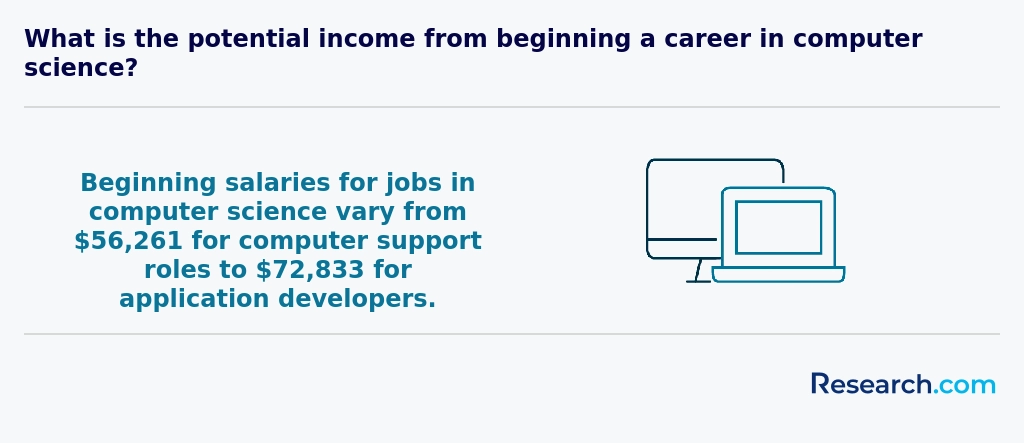
Graduates holding a computer science degree from New York's leading institutions often enter the job market with competitive earnings. For example, individuals securing roles as software engineers or developers in New York typically see mean annual wages of around $138,110, reflecting the strong demand for these skills in the city's tech and finance sectors. Starting salaries for graduates working as web developers average about $95,570 annually, while those entering IT support roles can expect approximately $63,640 per year.
Data analysts with a computer science background in New York earn a mean annual wage near $119,040, underscoring the value of analytical expertise in both startups and established firms. These figures align with reports from graduates of prominent New York universities who often express satisfaction with their ability to secure roles offering salaries above the national average soon after graduation. The dynamic environment in places like Manhattan and Brooklyn adds an exciting layer to career growth, making a computer science degree a promising investment.
2027 Most Popular Computer Science Degree Programs Ranking in New York
How do we rank schools?
Investing in your education is a significant decision that can shape your future, and the Research.com team understands the importance of making informed choices. To assist prospective students in New York, we have meticulously crafted the "2027 Most Popular Computer Science Degree Programs Ranking in New York." Our commitment to quality, credibility, and accuracy is reflected in the extensive research and analysis conducted to compile this ranking.
We utilized the following reputable data sources to ensure a comprehensive evaluation of computer science programs:
By exploring this ranking, readers will gain valuable insights into the most popular computer science degree programs available in New York, helping them make confident and well-informed decisions about their educational futures. For more details on our methodology, please visit our Research.com methodology page.


# 10 position
Touro University
Bachelor of Science in Computer Science

Key Findings
- Public universities in New York, like SUNY, charge $10,000 to $15,000 per year for in-state computer science students, while private colleges can cost over $50,000 annually.
- Entry-level computer science jobs in New York offer median salaries between $70,000 and $85,000 per year.
- Mid-career computer science professionals in New York can earn between $110,000 and $140,000, especially in fields like software development, data science, and cybersecurity.
- The computer and information technology job market in New York is expected to grow by approximately 15% over the next decade.
- New York's tech industry, finance, healthcare, and government sectors provide diverse job opportunities for computer science graduates.
How long does it take to complete computer science degree in New York?
Completing a computer science degree in New York typically takes about four years for full-time students attending well-known institutions like New York University or the City University of New York. This duration aligns with national trends, reflecting a standard 120 to 130 credit hour requirement. Graduates often recall balancing a full course load of approximately 15 credits per semester, which fosters a steady academic rhythm and timely graduation.
Many students, however, navigate different timelines based on part-time enrollment or work commitments, especially at schools offering flexible options such as evening or weekend classes. For instance, those enrolled in part-time or working while studying may extend their degree completion to 4.5 years or more. These students frequently share positive experiences of managing both education and career growth simultaneously, appreciating their programs' adaptability.
Graduate degrees in computer science usually add one to two years beyond the bachelor's, with programs at institutions like Columbia University designed to support working professionals, enabling progress without sacrificing job responsibilities.
Community colleges and technical schools in New York provide two-year associate degrees as valuable stepping stones, particularly for students seeking a quicker entry into the technology sector before deciding on a bachelor's program.
Student Life and Campus Experience
Attending a computer science program in New York, NY goes far beyond lectures and textbooks. The vibrant campus culture plays an integral role in shaping your overall educational journey. Students thrive not only through challenging coursework but also by engaging in extracurricular activities, tech clubs, hackathons, and networking events that cultivate both personal and professional growth. Schools in New York often provide state-of-the-art innovation labs, collaborative study spaces, and career development programs that simulate real-world tech environments, enhancing your readiness for future industry challenges. Moreover, immersive campus experiences offer opportunities to build lasting relationships with peers and industry mentors. These connections frequently lead to collaborative projects, internship opportunities, and even lifelong friendships. Many institutions host regular tech meetups, guest lectures, and panel discussions that bring experts from across the field right to campus. For instance, prospective students can gain valuable insights into campus life at the most popular computer science school, where a tight-knit community and robust support services underpin academic success. Overall, the blend of rigorous academics with a dynamic and supportive campus environment in New York equips you with both the technical expertise and soft skills necessary to excel in the competitive tech industry. Embracing all aspects of the college experience-from class projects and study groups to social gatherings and networking events-ensures a well-rounded education that prepares you for both immediate career success and long-term professional development.
What's the difference between online and on-campus computer science degree?
Online and on-campus computer science degrees in New York differ notably in delivery, interaction, and cost. On-campus students at universities like NYU or Columbia often benefit from direct access to labs, libraries, and face-to-face collaboration with professors and peers, which enhances hands-on learning and networking. Graduates frequently recall the immediate feedback and real-time group projects as key to their success in tech roles.
Conversely, online students enjoy flexibility, studying remotely at their own pace-ideal for working professionals or those balancing family commitments in New York. While virtual labs and discussion forums replicate some aspects of campus life, online learners sometimes miss spontaneous interactions and direct mentorship opportunities that on-campus students access daily.
Tuition costs vary: public in-state on-campus degrees typically range from $10,000 to $15,000 annually. Online tuition can be lower but, at elite New York institutions, fees often remain similar, reflecting equal curriculum quality. Both paths yield respected, accredited degrees valued by local employers in New York's competitive tech market.
How to Apply for a Computer Science Degree in New York, NY
Applying to a top‐ranked Computer Science program in New York requires careful planning, attention to deadlines, and strong supporting materials. Here’s a step-by-step guide to help you submit a competitive application: 1. Research Deadlines and Requirements • Visit each university’s admissions page to confirm application deadlines-most fall between December and February for fall entry. • Note required materials: official high school or college transcripts, SAT/ACT scores (if applicable), personal statement or essay, and letters of recommendation. 2. Craft a Compelling Personal Statement • Focus on your passion for computing, relevant projects or internships, and career goals. • Use clear, concise language and concrete examples to demonstrate problem-solving skills and teamwork experiences. 3. Secure Strong Recommendations • Request letters from teachers or mentors who can attest to your technical aptitude, work ethic, and collaborative spirit. • Provide recommenders with your resume and personal statement draft at least a month before deadlines. 4. Highlight Technical Experience • Showcase coding boot camps, open-source contributions, hackathon awards, or relevant internships. • Include links to GitHub repositories or project portfolios in your application. 5. Prepare for Interviews (if required) • Practice common technical and behavioral questions, such as data structure challenges or STAR-method responses. • Attend virtual info sessions and connect with current students to gain insights. 6. Explore Cost-Saving Options • Compare tuition and financial aid packages. While focusing on New York programs, you may also find value and affordability in other regions-consider our Affordable Computer Science Degree Programs Ranking in Montana for additional options. By following these steps-and starting at least six months before your intended enrollment-you’ll be well-positioned to gain admission to a program that aligns with your goals and budget.
What is the average cost of computer science degree in New York?
The average total tuition and fees for computer science degrees in New York highlight notable differences depending on residency status. In-state students pursuing a degree at public universities typically encounter a median total cost of around $37,870. This makes SUNY campuses an appealing option for many local students, as reflected in the experiences of recent graduates who appreciated the balance of quality education and manageable expenses. Conversely, out-of-state students face significantly higher median costs, often nearing $62,997, influenced by elevated tuition fees at institutions like SUNY Stony Brook and the University at Buffalo.
Private institutions such as New York University and Columbia University, well-regarded for their computer science programs, tend to have tuition rates that surpass $60,000 annually. Graduates from these universities often mention that while the financial commitment is substantial, the investment was offset by strong alumni networks and comprehensive financial aid options. Living expenses in New York City further affect the overall budget, frequently increasing the yearly cost by approximately $15,000, due to rent and daily necessities. This reality is crucial when calculating the average cost of a computer science degree in New York, as it encapsulates both tuition and life expenses.
Students contemplating their options should also explore the varied resources offered by schools, including scholarships and work-study opportunities that alleviate some financial pressure. For those interested in understanding which institutions offer the most value, examining the most popular computer science school choices provides a practical starting point. Considering these factors together paints a clearer picture of the total tuition and fees for computer science degrees NY students will encounter.

Internships and Experiential Learning
New York computer science programs often integrate real-world projects to ensure graduates hit the ground running. Look for these key opportunities:
- Co-op programs: alternating semesters of coursework and paid work, common at CUNY and SUNY Poly.
- Corporate internships: summer placements at startups, finance firms, and tech giants like Google, IBM, and JPMorgan.
- Research assistantships: collaborate on AI, cybersecurity, and data science projects under faculty mentorship at institutions such as Columbia and NYU.
- Hackathons and tech labs: on-campus events sponsored by student clubs and industry partners help sharpen coding skills and build portfolios.
- Special tracks: for creative technologists, a game art degree online can complement programming expertise with design fundamentals.
What financial aid is available to computer science degree students in New York?
Students pursuing computer science degrees in New York benefit from several financial aid options that mitigate the significant tuition costs, which typically range from $30,000 to $70,000 annually. Federal aid begins with the FAFSA, unlocking access to Pell Grants of up to $7,395 for the 2023-2024 year and subsidized loans that ease repayment post-graduation. For example, graduates from SUNY schools often highlight how Pell Grants and loans made attending affordable despite initial sticker shock.
State aid includes the New York State Tuition Assistance Program (TAP), providing up to $5,665 annually to in-state students. This is particularly helpful at public institutions like CUNY, where many computer science students rely on TAP to cover substantial tuition portions. Over 500,000 students recently benefited from TAP, reflecting its broad impact.
Merit-based scholarships targeting STEM fields add extra support. SUNY campuses often award partial to full tuition scholarships for high-achieving computer science students, enabling them to focus more on studies and less on finances. Private scholarships from tech companies and nonprofit diversity initiatives further ease costs while rewarding commitment to the field.
Many students also engage in work-study or on-campus jobs related to their degree, gaining practical experience and income simultaneously. Nearly 40% of undergraduates nationwide use these opportunities, with computer science students at New York universities frequently sharing positive experiences balancing work and study efficiently.
Continuing Education: Advanced Degrees and Certifications
After earning your bachelor’s degree, many graduates choose to deepen their expertise through master’s programs and professional certificates that align with evolving industry demands. A master’s degree not only sharpens your technical skills but also enhances your competitiveness for leadership roles. Top universities in New York offer on-campus and flexible online options, allowing you to continue working while studying. For those interested in analyzing large datasets or pursuing AI research, a data science masters online can be an ideal next step, combining rigorous coursework with practical projects. In addition to master’s programs, specialized certifications-such as AWS Certified Solutions Architect, Google Professional Cloud Architect, and Certified Information Systems Security Professional (CISSP)-are highly valued by employers. These credentials demonstrate your commitment to staying current with cutting-edge technologies and best practices. Many New York institutions also partner with tech companies to offer boot camps and short-form certificate tracks in cybersecurity, machine learning, and blockchain development. By strategically choosing an advanced degree or certification pathway that aligns with your career goals, you can position yourself for roles in data engineering, AI research, cloud architecture, or cybersecurity leadership-fields that continue to see robust growth in New York’s dynamic tech ecosystem.
What are the prerequisites for enrolling in computer science degree program in New York?
To enroll in a computer science degree program in New York, students typically must have completed a high school diploma or equivalent certification, like a GED. Successful applicants often demonstrate strong skills in mathematics-algebra, geometry, and precalculus are essential-as these subjects underpin the logical and quantitative reasoning required in computer science courses at colleges such as NYU or Columbia.
Admissions generally ask for standardized test scores like the SAT or ACT, although several well-known New York institutions are adopting test-optional policies, easing entry barriers. Many students who have excelled in advanced science and math classes report feeling more confident and prepared for the rigorous curriculum.
Additional materials such as letters of recommendation and personal statements are common. For example, graduates from popular programs often highlight coding camp experiences or internships in tech companies, which helped their applications stand out and built practical skills.
- Graduate applicants usually need a bachelor's degree with relevant coursework and proficiency in programming languages.
- GRE scores might be required but can be waived depending on the university's policy.
The commitment is significant but rewarding, with many students appreciating how these prerequisites set a solid foundation for success in New York's competitive tech environment.

Continuing Education and Certifications
Postgraduate options and professional credentials that boost your career:
- Master’s programs in AI, cybersecurity, or data science, including an online masters in data science for greater flexibility and cost-effectiveness.
- Industry certifications such as AWS Certified Solutions Architect, CompTIA Security+, and Cisco CCNA to validate in-demand skills.
- Accelerated bootcamps or nano-degrees in software development, machine learning, or cloud computing for targeted, hands-on training.
- Research assistantships and teaching fellowships at New York universities to gain practical experience while advancing academic credentials.
What courses are typically in computer science degree programs in New York?
Computer science degree programs in New York are structured to provide students with both theoretical foundations and hands-on experience. Graduates from institutions like NYU and Columbia often recall their early coursework focused on programming fundamentals using languages such as Python, Java, and C++. This initial phase sharpens problem-solving and algorithmic thinking skills essential for software development roles.
- Core courses typically include Data Structures and Algorithms, crucial for creating efficient and scalable applications.
- Computer Architecture covers the inner workings of processors and memory, linking hardware to software design.
- Theory of Computation introduces formal models that underpin modern computing complexity.
- Operating Systems classes teach resource management and process scheduling, skills vital for system-level programming.
- Database courses emphasize SQL and data management techniques used ubiquitously in tech jobs.
- Software Engineering imparts best practices in development workflows, testing, and maintenance.
Students often appreciate how electives in AI, machine learning, or cybersecurity enable specialization aligned with New York's vibrant tech industry. Practical projects and internships integrated into these curricula provide a realistic preview of workplace challenges, enhancing confidence and job readiness upon graduation.
What types of specializations are available in computer science degree programs in New York?
Computer science degree specializations in New York reflect the state's diverse and evolving tech sector. Popular tracks include software engineering, emphasizing application development and maintenance, and data science, which leverages analytics to inform decisions in industries like finance and media. Graduates from institutions such as Columbia University and New York University often praise hands-on AI courses covering machine learning, natural language processing, and robotics as pivotal to their career readiness. Cybersecurity is another critical specialization aligned with New York's workforce expansion efforts, focusing on protecting complex information systems.
Students pursuing the best computer science majors in New York can also explore mobile app development and cloud computing, fields experiencing strong job growth locally. Interdisciplinary options combining computer science with business analytics or bioinformatics provide additional career flexibility. Many find that completing a data science masters online enhances their expertise and employability beyond undergraduate offerings, responding to increasing employer demand for specialized skills.
How do you choose the best computer science degree in New York?
Choosing the best computer science degree in New York requires analyzing multiple factors such as program quality, curriculum relevance, and cost. Graduates from popular institutions report that programs with strong courses in algorithms, AI, and cybersecurity provide a solid foundation for entering the competitive tech job market. Many New York schools benefit from their proximity to tech hubs like New York City, where internships and networking with companies such as Google and IBM significantly boost career prospects.
Tuition costs vary widely; in-state public university fees average around $10,000 annually, while private colleges can charge between $28,000 and $40,000. Students looking for affordable options might consider reviewing financial aid opportunities, as well as scholarship availability. For comparative cost insights, visiting the Affordable Computer Science Degree Programs Ranking in Montana can help hone decision-making strategies.
Flexibility in program delivery is a vital consideration, especially for working professionals. Part-time and online study options allow for balancing work and academics, which many graduates find invaluable. When evaluating the best computer science degree programs New York offers, prospective students should prioritize accredited programs with strong faculty credentials and high job placement rates.
What career paths are available for computer science degree students in New York?
Graduates holding a computer science degree in New York have access to a variety of career paths fueled by the state's dynamic tech ecosystem. Many find fulfilling roles in software development, designing and maintaining applications while earning median salaries near $113,000, which surpasses the national average. These high paying tech jobs for computer science graduates New York include specialties in data science and analysis, capitalizing on the city's prominence as a financial and media hub. Professionals skilled in interpreting large datasets are highly sought after as data scientists or machine learning engineers to drive critical business insights.
Cybersecurity remains a vital and expanding sector. Graduates frequently secure positions as cybersecurity analysts or information security managers, working to mitigate increasing cyber threats in organizations across New York. The state is known for strong demand and competitive pay in this area. Those interested in emerging technologies can pursue careers in artificial intelligence, blockchain, and cloud computing at startups or established firms, enriched by hands-on experiences at esteemed institutions like Columbia University or NYU.
Additional paths include system administration, network engineering, and IT consulting roles, which continue to underpin the technology infrastructure. Graduates report positive experiences balancing rigorous academics with internships that enhance job readiness. For students exploring advanced education, relevant options include 1 year masters programs usa, facilitating accelerated entry into New York's vibrant tech workforce.
What is the job market for computer science degree in New York?
The computer science job outlook New York is strong, driven by diverse industries in urban centers like New York City. Graduates from institutions such as Columbia University and New York University often secure positions quickly due to the high concentration of tech startups, financial firms, and media companies demanding advanced computing skills. Many find themselves working on cutting-edge projects in artificial intelligence or cybersecurity, reflecting the region's dynamic tech industry employment New York offers.
Starting salaries for computer science graduates are notably higher in New York compared to the national average. For example, graduates report offers exceeding $80,000 annually in New York City, which accounts for higher living costs and competitive demand. This makes pursuing a computer science degree in New York financially rewarding despite generally higher tuition rates.
Graduates commonly share how the evolving digital economy enables remote and hybrid work, expanding opportunities beyond city limits. Those weighing academic choices often consider easy degrees alongside traditional ones to balance workload and career goals effectively.
Frequently Asked Questions About computer science
Computer science students in New York can maximize their learning by engaging in internships, which are abundant due to the state's strong tech sector. According to the New York State Department of Labor, tech roles grew by 15% between 2019 and 2023, offering many practical opportunities. Students should also take advantage of research programs at universities such as NYU and Columbia, known for cutting-edge projects in artificial intelligence and cybersecurity.
Networking through tech meetups and professional groups in New York City helps students connect with industry experts and potential employers. Additionally, mastering programming languages like Python and Java, in high demand locally, improves job prospects. Utilizing online platforms and joining student organizations can further strengthen skills and knowledge.
The field of computer science in New York is rapidly expanding, with several emerging niches attracting growing attention. Artificial intelligence (AI) and machine learning remain at the forefront, driven by strong academic programs and growing industry demand. According to the New York State Department of Labor, tech jobs related to AI are projected to grow 22% by 2030.
Cybersecurity is another critical area, supported by New York's financial sector, which requires advanced protective technologies. Blockchain and cryptocurrency technologies are also developing quickly, with New York City being a hub for fintech startups.
Data science and big data analytics have become essential, enabling businesses across health care, finance, and media to make informed decisions. These specialties offer vibrant opportunities for students pursuing degrees in the state's universities.
Preparing for the job market after earning a computer science degree in New York involves strategic steps tailored to the local tech landscape. New York City ranks as one of the top U.S. tech hubs, housing over 300,000 technology workers, according to the NYC Tech Talent Report 2023. Graduates should focus on building a strong portfolio that includes practical projects and internships, which are highly valued by employers in the region.
Networking is crucial, with many tech meetups and events held throughout the city, such as those organized by NY Tech Alliance. Additionally, familiarity with in-demand skills like cloud computing, cybersecurity, and data science can increase employability. Utilizing career services at universities and engaging in online platforms like LinkedIn are also effective strategies for job placement.
Employers in New York seeking computer science degree graduates prioritize a strong foundation in programming languages such as Python, Java, and C++. According to a 2023 report by the New York State Department of Labor, 78% of tech job postings emphasize software development skills. Additionally, data analysis and machine learning have become essential, with 62% of listings requiring experience in these areas. Employers also value problem-solving abilities and teamwork, especially in collaborative environments common in New York's tech hubs.
Knowledge of cloud computing platforms like AWS and Azure is increasingly requested, reflecting industry trends. Communication skills remain crucial for bridging technical and non-technical teams.
Finding internships in New York relevant to a computer science degree involves using multiple strategies. Start by exploring your college's career services, which often connect students to local tech companies and startups.
New York City hosts over 300,000 tech jobs, making it a prime location for internships in software development, data science, and cybersecurity (NYC Tech Report 2023). Online platforms like Handshake and LinkedIn also list numerous internship opportunities specifically targeting computer science students.
Networking through tech meetups, such as those organized by New York Tech Alliance, and attending career fairs at universities like NYU or Columbia can increase your chances. Additionally, some companies offer structured internship programs designed specifically for students studying computer science.
A computer science degree significantly enhances career mobility and advancement opportunities in New York. According to the New York State Department of Labor, jobs in computer and information technology fields are expected to grow by 15% between 2020 and 2030, faster than the average for all occupations. This growth opens numerous entry-level and experienced roles.
Graduates with a computer science degree often qualify for higher-paying positions in finance, technology, healthcare, and media industries, which are robust in New York City and surrounding areas. The median annual wage for computer and IT jobs in New York is approximately $99,000, exceeding the national average.
Furthermore, a degree provides foundational knowledge for specialized fields like cybersecurity, data science, and software development, fostering career advancement. Employers in New York prioritize formal education combined with demonstrated skills, so degree holders typically experience faster promotion paths and better job stability.
Studying computer science in New York offers students unique exposure to interdisciplinary roles due to the state's diverse economy and academic resources. Many programs incorporate opportunities to collaborate across fields like finance, healthcare, and media, reflecting New York's industry demands. For instance, Columbia University and NYU provide specialized courses combining computer science with data science, business, and bioinformatics.
According to the National Center for Education Statistics, New York is among the top states awarding computer science degrees, highlighting strong institutional support. This environment encourages practical, cross-disciplinary projects, preparing graduates to apply computing skills in varied sectors effectively.
Choosing between a thesis and a non-thesis computer science degree program in New York depends largely on your career goals and learning preferences. Thesis programs require conducting original research and writing a substantial paper, ideal for students interested in pursuing a PhD or research careers. Non-thesis options focus more on coursework and practical skills, appealing to those aiming for industry roles.
In New York, top universities like Columbia and NYU offer both tracks, with thesis students often receiving more research funding. According to the National Center for Education Statistics, about 40% of master's students in New York choose thesis programs, reflecting strong academic demand.
Consider time commitment and personal interests; thesis programs usually take longer due to research requirements. Employers in New York's tech sector value practical experience, so a non-thesis degree combined with internships can be advantageous.
Students based in New York interested in studying computer science abroad have several options through exchange and study abroad programs offered by local universities. Institutions like New York University (NYU) and Columbia University have partnerships with universities worldwide, allowing students to spend a semester or year abroad while earning credits toward their degree.
Many programs focus on destinations known for strong computer science research, including the United Kingdom, Canada, Germany, and Singapore. According to the Institute of International Education, over 50% of New York-based study abroad participants choose STEM fields, including computer science.
These opportunities enable students to gain global perspectives, access specialized courses, and build international networks, which are valuable in the tech industry.
Students pursuing a computer science degree in New York have access to various part-time job opportunities that can enhance their education. Many firms in New York City specialize in technology and software development, offering roles such as junior developer, IT support, and data analyst internships. According to the New York State Department of Labor, the demand for computer and information technology occupations is expected to grow by 14% from 2022 to 2032, supporting numerous part-time positions.
Part-time work in startups and established tech companies provides practical experience with programming languages and project management. Additionally, tutoring in coding or assisting professors with research can deepen technical understanding.
These opportunities not only build skills but also expand professional networks within New York's vibrant tech community.
New York offers abundant networking opportunities for computer science students through its vibrant tech ecosystem. The state ranks among the top in the US for technology employment, with over 300,000 professionals in the tech sector as of 2023, according to the New York State Department of Labor. Many universities host regular career fairs and tech meetups, connecting students directly with employers such as IBM, Google, and local startups. Additionally, organizations like the New York Tech Alliance and Women Who Code provide mentoring and events tailored to students.
Internships and co-op programs arranged by universities frequently lead to valuable industry contacts. Conferences such as TechDay NYC attract thousands of professionals annually, enhancing students' exposure to current trends and potential employers.
Alumni networks play a crucial role for computer science students in New York by connecting them to a broad community of professionals and experts. These networks often facilitate mentorship opportunities, helping students navigate the competitive job market. Many universities in New York maintain strong alumni connections that offer internships and job placements, especially valuable in tech hubs like New York City. According to the New York State Department of Labor, computer science-related jobs are projected to grow 15% from 2020 to 2030, highlighting the importance of early career support.
In addition, active alumni networks host events and workshops focused on the latest industry trends, strengthening students' practical skills. These relationships often lead to collaborations on projects or startups, which is vital in a rapidly evolving field like computer science.
Customizing a computer science degree program in New York involves selecting specializations and electives that align with your career goals. Many universities offer concentrations such as artificial intelligence, cybersecurity, data science, and software engineering.
Students can also engage in research projects or internships within New York's robust tech industry, which includes hubs like NYC and the Albany area, home to growing sectors in finance and biotech. According to the New York State Education Department, close to 40% of institutions provide flexible course options to tailor skills.
Additionally, some programs allow part-time study or online courses, enabling working professionals to balance education with job commitments.
Computer science students in New York often face several challenges during their academic journey. One major hurdle is the high cost of living and tuition, especially in urban centers like New York City, which adds financial stress to many students. According to the College Board, the average annual tuition for in-state students at public universities in New York exceeds $7,000, while private institutions average over $35,000, contributing to high student debt.
Another common difficulty is the competitive nature of computer science programs. New York's universities enroll a growing number of students in this popular field, leading to competitive coursework and limited faculty availability for individual support. Additionally, balancing internships and part-time jobs is essential for hands-on experience but can be challenging alongside demanding studies.
Finally, students often report struggles with rapidly evolving technology and the pressure to continuously update their skills to remain relevant in the job market. Staying current with new programming languages and tools can be overwhelming without adequate academic resources or mentorship.
With a computer science degree in New York, graduates can pursue a variety of professional certifications that enhance their career prospects. Popular options include Certified Information Systems Security Professional (CISSP) for cybersecurity roles and Certified Software Development Professional (CSDP) for advanced programming expertise. Many also seek certifications like AWS Certified Solutions Architect, reflecting New York's growing demand for cloud computing skills, as noted by the New York State Department of Labor.
Other valuable credentials include CompTIA Security+ and Project Management Professional (PMP), which support roles in IT security and project leadership. These certifications align with industry needs and can increase earning potential.
Writing a winning application for a computer science program in New York requires careful preparation and attention to detail. Start by highlighting your academic achievements, especially in math and science courses, as these are critical for computer science. According to the New York State Education Department, top-tier programs often expect a strong GPA and competitive SAT or ACT scores.
Next, emphasize relevant experience, such as coding projects, internships, or participation in competitions like hackathons. Many successful applicants include a compelling personal statement explaining their passion for computer science and career goals.
Letters of recommendation from teachers or mentors who know your skills well can strengthen your case. Lastly, research specific programs thoroughly and tailor your application to match their values and focus areas, improving your chances of acceptance.
Computer science careers have a strong global appeal, driven by rapid technology adoption worldwide. In the US, including New York, demand for skilled computer science professionals continues to grow, with the Bureau of Labor Statistics projecting a 21% growth rate through 2031. This reflects global trends where digital transformation fuels need for software developers, data scientists, and cybersecurity experts.
New York is a key tech hub, hosting companies and startups that operate internationally, creating opportunities to work on global projects. Graduates from New York's computer science programs often engage with industry standards used worldwide, preparing them for careers beyond the local market.
Industry reports by CompTIA highlight that computer science skills are among the most transferable across countries, making New York degrees valuable globally. Students pursuing these degrees gain competitive skills aligned with international trends in artificial intelligence, cloud computing, and data analytics.
Gaining practical experience while studying for a computer science degree in New York is highly achievable through multiple avenues. Many universities offer co-op programs and internships that connect students with top tech companies based in New York City, one of the largest tech hubs in the U.S. According to the New York State Department of Labor, internships in tech fields have grown by over 10% annually.
Additionally, students can participate in research projects or join coding clubs and hackathons, which are frequent in the state's academic and tech communities. These activities help develop real-world skills and build professional networks.
Online platforms and local meetups also provide opportunities to work on open-source projects or freelance, enhancing practical knowledge alongside formal education.
Choosing the right concentration within a computer science degree in New York begins with understanding your career goals and interests. Popular concentrations include cybersecurity, data science, artificial intelligence, and software engineering. According to the New York State Department of Labor, fields like data science and AI are growing rapidly, offering strong job prospects.
Research each concentration's curriculum and check if the program offers specialized electives or labs. Many New York universities also provide internships with local tech companies, which can influence your decision based on hands-on experience.
Additionally, consider the faculty's expertise and research opportunities related to your concentration. This will enrich your learning and professional network.
Related Computer Science Rankings for Nearby Cities
- 2027 Most Popular Computer Science Degree Programs Ranking in Brooklyn
- 2027 Most Popular Computer Science Degree Programs Ranking in Staten Island
- 2027 Most Popular Computer Science Degree Programs Ranking in Princeton
- 2027 Most Popular Computer Science Degree Programs Ranking in Philadelphia
- 2027 Most Popular Computer Science Degree Programs Ranking in Albany
- 2027 Most Popular Computer Science Degree Programs Ranking in Amherst
- 2027 Most Popular Computer Science Degree Programs Ranking in Providence
- 2027 Most Popular Computer Science Degree Programs Ranking in Worcester
- 2027 Most Popular Computer Science Degree Programs Ranking in Baltimore
- 2027 Most Popular Computer Science Degree Programs Ranking in Ithaca
Top Trending Computer Science Rankings
See What Experts Have To Say About Studying Computer Science
Read our interview with Computer Science experts

Kathleen M. Carley
Computer Science Expert
Professor of Computer Science
Carnegie Mellon University

Martin Kang
Computer Science Expert
Assistant Professor
Loyola Marymount University

Elan Barenholtz
Computer Science Expert
Associate Professor
Florida Atlantic University

Derek Riley
Computer Science Expert
Professor, Program Director
Milwaukee School of Engineering

References
- Challenges That Frustrate Computer Science Teachers https://codeeasy.io/blog/challenges-that-frustrate-computer-science-teachers
- New and Future Computer Science and Technology Trends https://www.computerscience.org/resources/computer-science-trends/
- Best Computer Science Degree Programs in New York, 2026 Rankings https://hakia.com/degrees/computer-science/new-york/
- How can I network with computer science professionals and find job opportunities? https://2sigma.school/t/a/cfaq/how-can-network-with-computer-science-professionals-and-find-job
- 8 Reasons to study computer science at university https://students.studygroup.com/blog/why-study-computer-science-in-the-usa
- Computer Science Cover Letter: How to Show You're a Top Tech Candidate https://arc.dev/talent-blog/computer-science-cover-letter/
- How to choose a bachelor's in computer science | edX https://www.edx.org/resources/how-to-choose-a-bachelors-in-computer-science
- Study Computer Science Abroad | Go Overseas https://www.gooverseas.com/study-abroad/computer-science
- Letter of Motivation for applying Computer Science related fields https://essayforum.com/letters/motivation-applying-computer-science-related-11858/
- 555 Computer Science Internships https://internshala.com/internships/computer-science-internship/